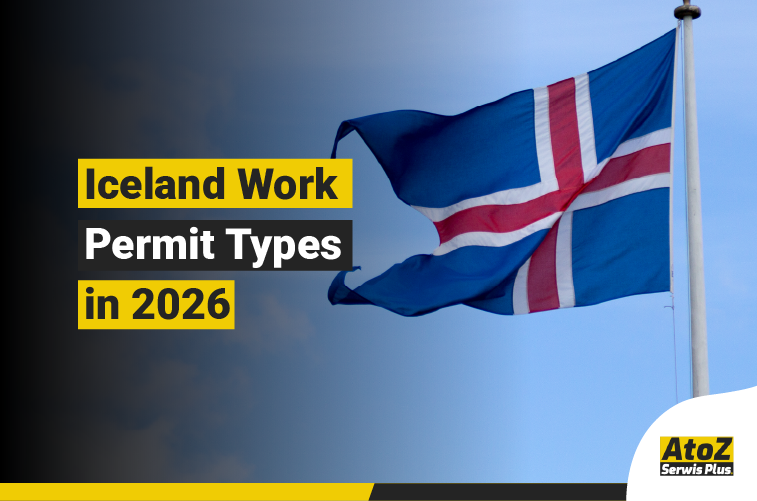
Iceland Work Permit Types in 2026

Iceland, a small North Atlantic nation inside the European Economic Area but outside the EU, offers spectacular nature, high wages and one of the world’s most stable societies. For foreign workers in 2026, the key distinction is between EEA/EFTA citizens, who enjoy free movement, and everyone else, who needs a residence permit based on work combined with a work permit. This two-agency process is genuinely selective.
This guide explains how Icelandic work authorisation works in 2026, the main permit categories, the process and timelines, and the path to settlement. Each application is decided by the Directorate of Immigration (Útlendingastofnun) and the Directorate of Labour, and permits are employer-specific.
Iceland is an EEA member but not an EU member, so there is no EU Blue Card here. Non-EEA workers need both a residence permit (from the Directorate of Immigration) and a work permit (from the Directorate of Labour), and the employer must usually show the role could not be filled locally or within the EEA/EFTA.
How Iceland’s Work Permit System Works in 2026
EEA, EFTA and Faroese citizens have free movement and registration. Non-EEA nationals need a work-based residence permit plus a linked work permit; the employer initiates the process, the worker stays abroad until approval, and the permit must be in effect before arrival. Applications go to the Directorate of Immigration, which forwards the work-permit element to the Directorate of Labour. Most permits are valid for one year, tied to a specific employer, and renewable. The 2026 residence-permit fee is around ISK 80,000.
Residence Permit for a Qualified Profession (Expert Knowledge)
For highly qualified non-EEA experts. Eligibility: university-level education or recognised industrial, artistic or technical training relevant to the role, and an employer who could not find someone locally or within the EEA/EFTA with the same expertise. Validity: typically one year, renewable. This is the main route for skilled professionals and the most common skilled track.
Residence Permit Due to Shortage of Labour
For roles facing a genuine labour shortage. Eligibility: granted in exceptional circumstances to respond to temporary fluctuations, when workers cannot be found in Iceland or the EEA/EFTA; the employer must advertise (often via EURES) unless exempted. Note: it does not require a university degree, making it the route for in-demand non-graduate roles. A holder who loses the job can get a six-month permit to seek another.
Residence Permit for Athletes
A dedicated route for professional athletes and coaching staff with a contract with an Icelandic club. It reflects Iceland’s specific sporting needs and follows the same two-agency structure.
Residence Permit Based on Collaboration or Service Contract
For specialised workers temporarily provided to an Icelandic project by an employer without an office in Iceland — for example, on research projects or service contracts. It is a temporary, project-specific route.
Why Work in Iceland
Iceland offers high wages, exceptional safety, clean energy, breathtaking scenery and a strong work-life balance. It attracts talent in healthcare, IT, renewable energy, construction and tourism. The trade-offs are a very high cost of living, a remote location and a selective, employer-led permit system that does not cater to independent job-seekers.
Labour Market and Economy
Iceland’s economy rests on fishing and seafood, renewable energy (geothermal and hydro), aluminium smelting, tourism and a growing tech sector. Persistent shortages exist in healthcare, construction, IT and tourism, which fuels demand for foreign labour — especially in shortage occupations that receive faster processing. Unemployment is low, and wages are high.
Salaries, Cost of Living and Tax
Iceland has no single statutory minimum wage; collective agreements set pay, andit is high by international standards, but the cost of living — among the highest in Europe — absorbs much of it. Income tax is progressive with municipal components, plus pension contributions. Confirm current figures with the tax authority (Skatturinn) and Statistics Iceland.
In-Demand Jobs and Best Cities
The strongest demand is in healthcare and nursing, construction and skilled trades, IT and engineering, renewable energy, and tourism and hospitality. Reykjavík (and the capital region) dominates for services, tech and healthcare; Akureyri is the main northern hub; tourism roles spread across the south and the Reykjanes peninsula.
Documents, Process and Settlement
Applicants generally need a valid passport, an employment contract meeting collective-agreement standards, proof of qualifications or experience, health insurance, a criminal-record check and proof of secure income and accommodation. The employer applies to the Directorate of Immigration before the worker arrives; both residence and work permits must be granted before starting work. Permanent residence generally follows after four years of continuous residence, and citizenship after seven years (with Icelandic-language requirements). Confirm current rules before applying.
Work Culture, Hours and Leave
Iceland’s standard working week is around 40 hours (with a recent trend toward shorter weeks), generous paid leave and a flat, egalitarian workplace culture. English is widely spoken, but collective agreements govern pay and conditions, and union membership is high. Trust, punctuality and work-life balance are valued.
Common Reasons for Refusal and How to Avoid Them
Refusals commonly arise from an employer failing to show the role could not be filled locally or in the EEA/EFTA, not advertising via EURES where required, pay below collective-agreement levels, or starting work before both permits are granted. Avoid them by ensuring the employer documents the labour-market search, advertises the role, meets collective-agreement pay, and waits for both permits before you travel.
Final Thoughts
Iceland in 2026 is a high-wage, high-cost destination with a selective, two-agency permit system and no EU Blue Card. Skilled professionals use the qualified-profession route; in-demand non-graduate roles use the shortage route, which gets faster processing. Secure an employer willing to drive the application, ensure pay meets collective agreements, and have both permits in hand before you travel. The decision rests with the Icelandic authorities, so verify current rules before applying.
Official Government Sources
- Directorate of Immigration (Útlendingastofnun): https://utl.is
- Directorate of Labour (Vínnumalastofnun): https://vinnumalastofnun.is
- Work in Iceland: https://work.iceland.is
- Iceland. is (services portal): https://island.is/en
- Statistics Iceland: https://www.statice.is
Register With Us Today
Take the first step toward your Europe career. Choose the option that fits you best.
Advertising & Sponsorships
Please complete this form, and an account executive will get back to you quickly.
Register Now!Need Help With an Iceland Work Permit?
Explore Iceland's qualified professionals, shortage of labour, and other work routes, with document guidance from AtoZ Serwis Plus.
Important Information About Iceland Work Permits
Icelandic work authorisation is a two-agency process (Directorate of Immigration plus Directorate of Labour), and Iceland is in the EEA but not the EU, so there is no EU Blue Card. Permits are employer-specific. Rules and fees may change, so always check the latest requirements before applying.
Disclaimer: AtoZ Serwis Plus provides guidance and documentation support only. Icelandic permits and residence approvals remain subject to the decisions of the Icelandic authorities.