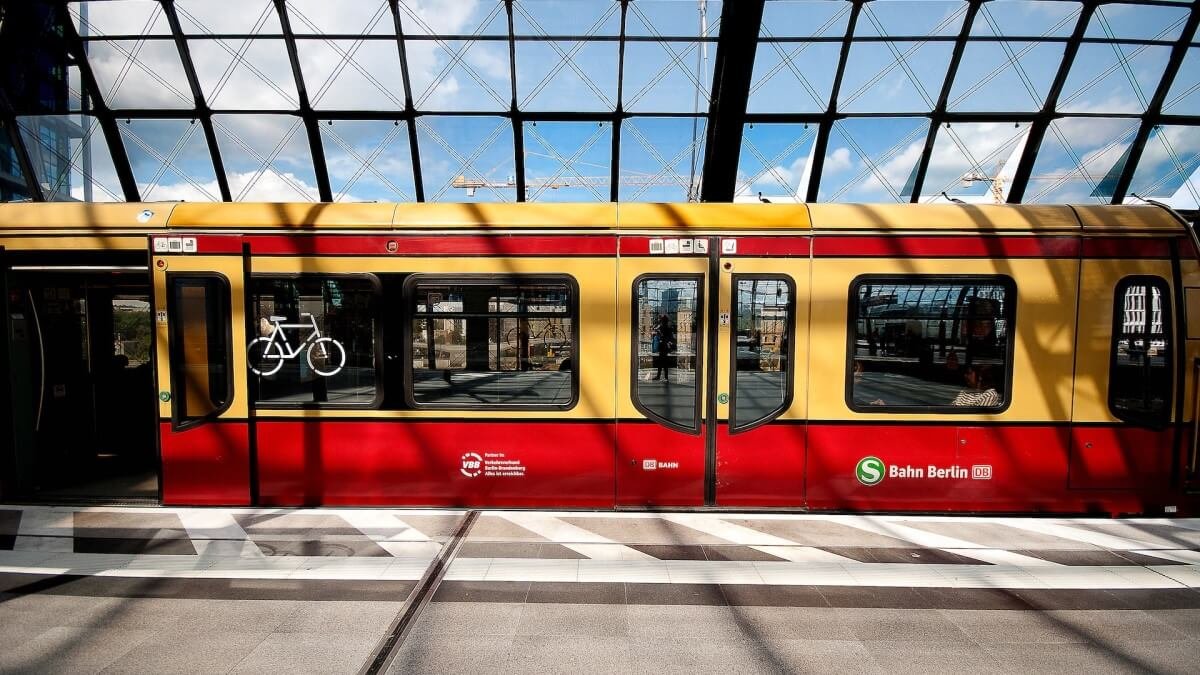
Germany’s €9 Ticket Was Sold 52 Million Times Within 3 Months

“Since the start of sales at the end of May, around 52 million 9-euro tickets have been sold nationwide. In addition, there are around ten million subscribers who have automatically received the discounted ticket,” the statement of the government reads.
The €9 ticket was a one-time special offer that could be purchased only in June, July, and August 2022. The offer applied throughout Germany in buses as well as trains in local and regional transport. Excluded from this were the long-distance traffic of the DB AG and Flix trains and long-distance buses.
According to the German government, the €9 ticket was an initiative that aimed to relieve citizens financially and provide an incentive to switch to climate-friendly public transport.
The Association of German Transport Companies (VDV) has already published its final balance sheet. Data provided by VDV show that Germany has experienced a clear shifting effect. During the period in which the €9 ticket was valid, the country registered more transfers.
According to VDV, 17 per cent of the ticket users switched from other means of transport to public transport in August. In addition, the same shows that there were fewer car journeys as ten per cent of €9 ticket buyers eliminated at least one of their daily car journeys.
“The popularity of the 9-euro ticket is unbroken, and the positive effect on combating climate change is demonstrable,” VDV said.
As for the climate impact that the €9 ticket, VDV said that the average savings in greenhouse gases per month with the €9 ticket were around 600,000 tons of CO2.
Moreover, the same pointed out that the extrapolated savings in greenhouse gases through the €9 ticket were around 1.8 million tons of CO2 in the campaign period. Taking into account such data, it was concluded that three months of the €9 ticket saved as much CO2 as a year of speed limit.
Thus, the German government is now planning to expand and modernise the pact in which the authorities will agree, among other things, on the financing of public transport up to 2030. A group has been set for this purpose, and the results are expected to be presented in autumn.