Italy Criticizes Austria’s Decision to Keep Their Common Border Closed

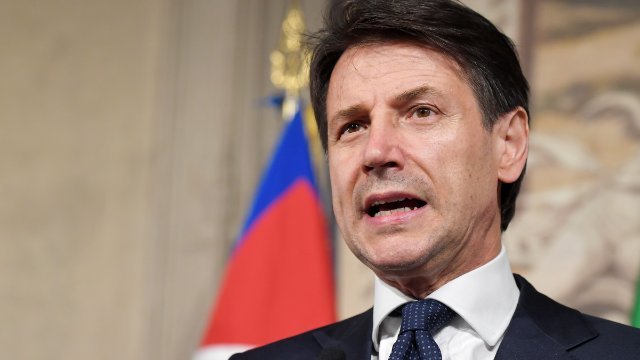
Italian Prime Minister Giuseppe Conte and the Foreign Minister Luigi Di Maio have reacted to Austria’s latest decision to reopen their borders to all its neighbouring countries, but Italy.
Italy’s Prime Minister called Austria’s decision “unacceptable”, stressing that there is no reason for these discriminatory measures,
“I do not want Italy to pay more for transparency,” PM Conte said, asserting that Italy was being excluded only because it was transparent on what was going on.
Whereas, Foreign Minister Luigi Di Maio asked European countries not to treat Italy as a “colony of lepers”, applauding other countries, like Switzerland, for opening up their borders but did not include Italy in their list.
“Individualism distorts the community spirit and damages Europe and the single market. Italy can show that some of our regions are better than other parts of Europe,” Di Maio said during an announcement.
“We do not accept blacklists. We have always acted responsibly and transparently, and we will continue to do so. That is exactly why we expect respect,” Di Maio also said.
The Austrian head of diplomacy, Alexander Schallenberg, responded to the criticism noting that that the exemption applied to Italy regarding the reopening of borders is because “the numbers do not allow it yet.”
Schallenberg clarified that the latest decision of Austria’s government wasn’t against Italy and that Austria would want to return to the pre-coronavirus situation as soon as possible.
The possibility of reopening borders with Italy will be estimated next week, based on the epidemiological situation. Austria’s Health Minister Rudolf Anschober did not rule out the possibility of the partial reopening of borders as of June 15.
On June 4, Austria’s government allowed the entry for all residents coming from Switzerland, Liechtenstein, Germany, Slovakia, Hungary, Slovenia and the Czech Republic.
Italy has already reopened its borders on June 3 for all Schengen area and European Union nationals, as well as the citizens coming from the United Kingdom, as an effort to revive the tourism sector, which has been highly affected by the Coronavirus pandemic.





