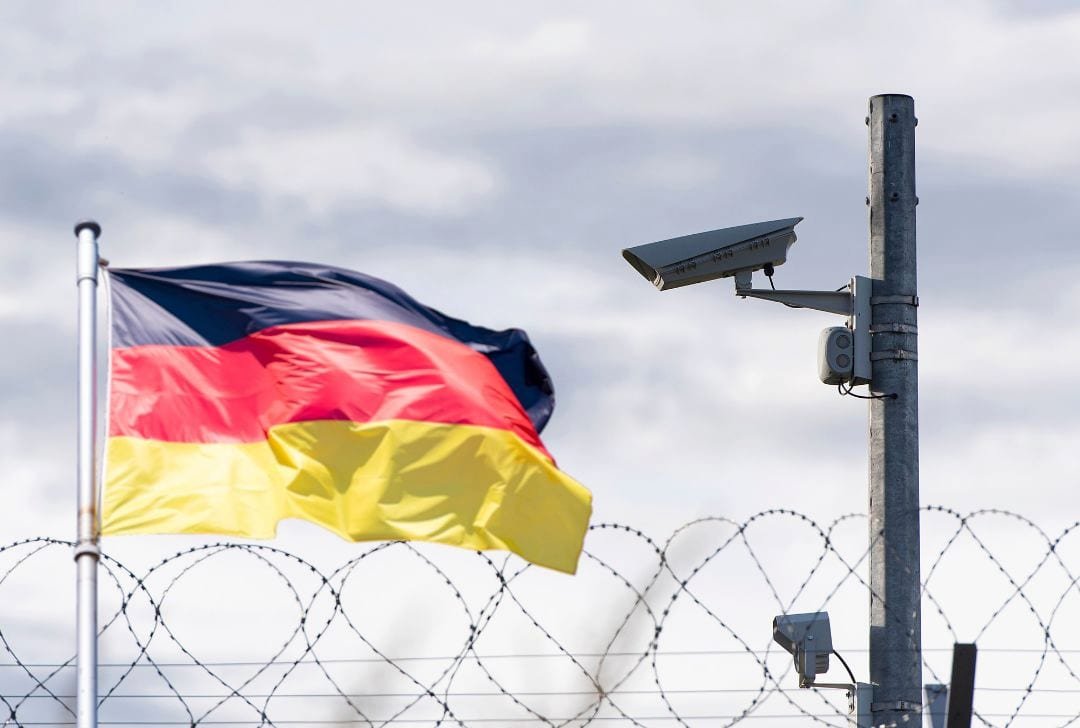
Pro Asyl Refugee Aid Organization Calls Germany’s Border Controls With Austria Illegal

In a statement for RND.de, the Head of the Europa Department, Karl Kopp, who also represents Pro Asyl at the European Council on Refugees and Exiles (ECRE), said that the permanent extension of internal border controls is against the spirit of the European Union and certainly against the bloc’s laws.
“Because the Schengen Agreement stands for a Europe without internal borders – with the downside of isolation to the outside. Schengen freedom of movement is now up for grabs, and at the same time the fortifications are being massively expanded on the outside,” Kopp said.
Last Saturday, on April 15, the German Minister of the Interior, Nancy Feaser, sent a letter to the EU Commission announcing the extension of internal border controls with Austria.
The reason behind this decision was cited the high number of asylum seekers reaching EU through irregular routes, with Germany topping the table as the Member State with the highest number of asylum applications received in 2022, AtoZSerwisPlus.com reports.
“It is worrying that in 2022 the number of irregular migrations detected at the EU’s external borders was the highest since 2016,” the Minister wrote in her letter to the Commission.
On Monday, April 17, the German Federal Office for Migration and Refugees (BAMF) revealed that in the three first months of 2023, Germany has received 87,777 asylum applications, which is 80.3 per cent more than in the same period last year. If the trends continue, Germany is expected to accept twice more applications this year than in 2022.
Throughout the whole last year, the EU countries received 881,200 first-time asylum applications, in addition to the 4.3 million temporary protection statuses that were granted to non-EU citizens from Ukraine.
Pro Asyl is not the only one criticising Germany’s decision, as the police union (GdP) and the political party The Greens have also called for other types of controls, that according to them are were more effective against illegal migration.
“In order to really get more security, we need more cross-border police cooperation, event-related priority checks and more police officers within our country,” the parliamentary group leader of the Bavarian state parliament Greens, Katharina Schulze, has said.
Germany had imposed internal border checks with Austria back in 2015, as a measure to fight irregular border-crossing. Since then, border controls have been extended every six months. The current ones are scheduled to expire on May, but the same have now been prolonged until November.
In the past weeks, Austria has also decided to extend border controls with Slovenia and Hungary, due to the same reasons. According to the country’s Minister of the Interior, Gerhard Karner, while border controls are costly, they have turned out to be effective for preventing illegal human smuggling. Only in the first quarter of 2023, Austrian police have detected 80 human smugglers at the borders.





