Latvia's construction, infrastructure, manufacturing, and building services sectors are expanding across Riga, Daugavpils, Liepāja, Jelgava, and Jūrmala, creating strong demand for skilled electricians and electrical technicians. With continuous residential and commercial construction activity, a growing industrial and logistics sector, significant EU-funded infrastructure investment, and Latvia's commitment to achieving climate neutrality and expanding its renewable energy capacity under the National Energy and Climate Plan, Latvian employers require experienced electricians capable of installing, maintaining, and repairing electrical systems, wiring networks, control panels, industrial machinery, and energy-efficient building technologies.
From residential and commercial electrical installations and industrial panel wiring to building automation systems, wind energy electrical works, photovoltaic solar installations, EV charging infrastructure, port and logistics facility electrical maintenance, and smart building technologies, organisations across Latvia rely on qualified electricians who understand European electrical standards, Latvian workplace safety regulations (LVS standards and the State Labour Inspectorate requirements), and modern installation practices used across the Baltic region's growing construction and industrial environment.
AtoZ Serwis Plus provides specialised electrician recruitment services in Latvia, helping employers hire qualified electricians, electrical engineers, industrial electricians, building services technicians, and renewable energy installation specialists from trusted international labour markets. Our recruitment solutions support construction companies, engineering contractors, industrial facilities, port operators, and facility management organisations in building reliable and efficient electrical teams.
Our recruitment strategy aligns with Latvia's growing construction market, industrial expansion, EU-funded infrastructure modernisation programmes, and renewable energy development targets. We provide access to skilled international electrical professionals while ensuring structured and compliant hiring processes.
Key strengths
Our services help Latvian employers reduce hiring gaps, improve workforce efficiency, and ensure long-term workforce stability.
AtoZ Serwis Plus recruits qualified professionals for a wide range of electrician and electrical technician roles in Latvia:
These professionals support construction projects, industrial facilities, port operations, and infrastructure programmes across Latvia.
Our electrician recruitment services support multiple high-demand industries in Latvia:
Each candidate is carefully matched based on employer requirements, project scope, and technical specifications.
AtoZ Serwis Plus sources skilled electricians from trusted international labour markets to meet Latvia's workforce demand.
All candidates are screened based on:
Our candidates meet the high standards required in Latvia's construction, industrial, and energy sectors.
This ensures improved project efficiency, reduced delays, and high-quality electrical system performance across Latvia.
We follow a structured and transparent recruitment process:
This ensures smooth hiring and full compliance with Latvian labour regulations, the Labour Law (Darba likums), and the requirements of the State Labour Inspectorate (Valsts darba inspekcija).
Whether companies require electricians for residential construction, port and logistics infrastructure, renewable energy installations, industrial facilities, or building maintenance services, AtoZ Serwis Plus provides skilled professionals ready to support business growth across Latvia.
We are a trusted recruitment partner for electrician jobs in Latvia, delivering workforce solutions aligned with real market demand.
Employers in Latvia can register to hire experienced electrical professionals.
Employer benefits
https://www.atozserwisplus.com/employer/registration
Recruitment agencies can collaborate on electrician workforce projects in Latvia.
Recruiter benefits
https://www.atozserwisplus.com/recruiter/registration
Skilled electricians seeking job opportunities in Latvia can register and apply.
Worker benefits
https://www.atozserwisplus.pl/work-in-europe
Registration ensures:
Latvia offers solid employment opportunities for electricians, electrical technicians, and building services professionals due to its growing construction sector, strategic port and logistics infrastructure, expanding renewable energy capacity, and EU-funded infrastructure modernisation programmes. Skilled electrical professionals who meet Latvian LVS and EU safety standards are well-positioned to secure stable, competitive employment across the country.
AtoZSerwisPlus is a European workforce and immigration advisory platform specialising in compliant recruitment guidance, structured work authorisation support, and labour market insights across European countries.
Latvian Government – https://www.mk.gov.lv
Ministry of Welfare – https://www.lm.gov.lv
State Employment Agency (NVA) – https://www.nva.gov.lv
Office of Citizenship and Migration Affairs – https://www.pmlp.gov.lv
This content is independently created and provided for informational purposes only. It does not constitute legal advice, employment guarantees, or immigration approval. All recruitment and work authorisation decisions are subject to Latvian labour laws and approval by competent authorities.
Electrician recruitment in Latvia involves hiring skilled elektromontieri (electricians), electrical installation technicians, industrial electricians, and building services professionals to install, maintain, and repair electrical systems, wiring networks, control panels, and energy infrastructure. Latvian employers recruit electricians for residential and commercial construction, port and logistics infrastructure, industrial manufacturing, renewable energy projects, and building maintenance services across the country.
Electricians are in demand in Latvia due to continuous residential and commercial construction growth, significant EU-funded infrastructure and transport modernisation investments, expanding port and logistics electrical infrastructure in Riga, Ventspils, and Liepāja, growing wind and solar energy development under the National Energy and Climate Plan, industrial facility modernisation, and a structural shortage of qualified electrical tradespeople caused in part by emigration of skilled workers to higher-wage EU countries in preceding years.
Yes. Latvia recruits foreign workers in skilled trades, including electrical work, to address domestic labour shortages. EU citizens benefit from freedom of movement and can work in Latvia without a permit. Non-EU nationals require a work permit and residence permit before starting employment, obtained through the Office of Citizenship and Migration Affairs (Pilsonības un migrācijas lietu pārvalde — PMLP).
Electricians in Latvia are employed across construction and real estate development companies, port and logistics infrastructure operators in Riga, Ventspils, and Liepāja, industrial manufacturing plants, wood processing and timber industry facilities, food and agricultural processing operations, renewable energy developers, building services and facility management firms, rail and transport infrastructure contractors, and public sector infrastructure organisations.
Yes. Non-EU nationals require a temporary residence permit for employment in Latvia, obtained from the Office of Citizenship and Migration Affairs (PMLP). The employer must first register the vacant position with the State Employment Agency (Nodarbinātības valsts aģentūra — NVA) and demonstrate that no suitable candidate was available within the Latvian or EU labour market before sponsoring a non-EU worker. EU citizens work freely in Latvia without a permit.
Employers in Latvia require a recognised vocational qualification in electrical installation or engineering, typically obtained through the Latvian vocational education and training system (profesionālā izglītība). Knowledge of Latvian LVS (Latvijas Standarts) electrical installation standards, which implement the relevant European EN and IEC standards, is essential. A professional competence certificate (profesionālās kompetences apliecība) issued by the Latvian Construction Council (Latvijas Būvniecības padome) or the relevant certification body is required for electricians carrying out independent electrical work on construction projects in Latvia.
Processing times depend on the employer's prior registration of the vacancy with the NVA, the completeness of documentation submitted to the PMLP, and the applicant's country of origin. The NVA labour market review typically takes up to 10 working days. The PMLP then processes the temporary residence permit application, with timelines ranging from a few weeks to approximately two months, depending on application volume and the specific case.
Latvian is the official state language and is required for workplace safety communication, reading LVS technical standards, and integration into Latvian working culture. Russian is widely spoken in industrial and logistics environments, particularly in Riga, Daugavpils, and the eastern regions of the country. English is increasingly used in international companies, technology sector organisations, and modern construction projects. A basic working level of Latvian or Russian is generally sufficient for most construction and industrial electrical roles.
Yes. Most electrician jobs in Latvia are full-time positions. The standard working week is 40 hours, as defined by the Labour Law (Darba likums). Many construction, industrial, and port facility roles involve shift arrangements or on-call maintenance requirements to support continuous operations, particularly in the logistics and processing industry sectors.
Electricians in Latvia are responsible for installing, testing, and commissioning electrical systems, including wiring, distribution boards, control panels, lighting systems, and power supply networks. They carry out fault diagnosis, preventive maintenance, and corrective repairs, and ensure all work complies with Latvian LVS electrical standards, the Labour Protection Law (Darba aizsardzības likums), and the requirements of the State Labour Inspectorate (Valsts darba inspekcija). Industrial electricians additionally maintain production machinery, automation systems, pport-handling equipmentt andelectrical infrastructure.
The profesionālās kompetences apliecība (professional competence certificate) is a mandatory certification for construction professionals in Latvia, including electricians carrying out independent installation work on construction projects. It is issued by the Latvian Construction Council (Latvijas Būvniecības padome) upon verification of the applicant's qualifications, practical experience, and knowledge of Latvian construction and electrical regulations. The certificate is graded by level, corresponding to the complexity and scope of work the holder is authorised to perform. International electricians seeking to carry out independent construction electrical work in Latvia must obtain the relevant level of this certification.
Yes. Latvia has ambitious renewable energy targets under the National Energy and Climate Plan, with significant investments in onshore wwind solar Ps, and biomass energy systems. Electricians are increasingly involved in the installation and commissioning of wind turbine electrical systems, solar PV arrays, battery storage units, and EV charging infrastructure. Latvia's natural and geographic conditions make wind energy a particularly significant and growing sector for employment in the electrical sector.
Yes. Workers legally employed in Latvia are covered by the Latvian social insurance system, administered by the State Social Insurance Agency (Valsts sociālās apdrošināšanas aģentūra — VSAA). Benefits include access to health insurance through the National Health Service (NVD), sickness benefit, maternity benefit, pension contributions, unemployment benefit, and workplace accident insurance. Social insurance contributions are mandatory for all legally employed workers in Latvia.
Electrician salaries in Latvia have been growing steadily and are competitive within the Baltic region, though they remain below those in Western and Northern European countries. The minimum wage (minimālā alga) sets a baseline, and skilled electricians with construction competence certificates and specialist experience typically earn significantly above it. Port, industrial, and renewable energy roles generally offer the strongest compensation packages in the Latvian electrical trade.
Yes. Employees in Latvia pay personal income tax (iedzīvotāju ienākuma nodoklis — IIN) under a progressive rate system, as well as mandatory social insurance contributions (valsts sociālās apdrošināšanas obligātās iemaksas — VSAOI). Latvia's progressive income tax system applies different rates based on annual income, with a basic tax relief allowance reducing the burden for lower- and middle-income earners. The State Revenue Service (Valsts ieņēmumu dienests — VID) administers the Latvian tax system.
Overtime may occur during construction project deadlines, industrial maintenance shutdowns, port operational peaks, and urgent repair situations. The Labour Law (Darba likums) governs overtime compensation and maximum working hours. Overtime work must be agreed to in writing by the employer and the employee and is compensated either at an enhanced rate or through time off in lieu, as defined in the employment contract or applicable collective agreement.
Employers in Latvia seek electricians skilled in LVS-compliant low-voltage installation and wiring, industrial PLC and automation system maintenance, port and logistics facility electrical infrastructure, wind energy and solar PV installation, building automation systems (KNX, BACnet), EV charging infrastructure, high-voltage cable jointing, and compliance with the State Labour Inspectorate's workplace safety requirements. A valid profesionālās kompetences apliecība at the appropriate level is a baseline requirement for electrical work on construction sites.
International electrical qualifications from EU member states are recognised in Latvia under the EU Professional Qualifications Directive, with the Academic Information Centre (Akadēmiskās informācijas centrs — AIC) responsible for formal qualification assessments. Non-EU qualifications can be assessed through the same authority. Regardless of prior qualifications, electricians wishing to carry out independent construction electrical work in Latvia must obtain the relevant profesionālās kompetences apliecība from the Latvian Construction Council.
Yes. Latvian employment law recognises both fixed-term and open-ended employment contracts. Fixed-term contracts may be concluded for up to two years and can be extended once, after which the employment relationship becomes open-ended by operation of law. Many electrician roles in stable industrial and port facility environments offer direct open-ended employment, given the sustained demand for electrical professionals across Latvia's key sectors.
EU citizens can change employers freely in Latvia. Non-EU nationals must ensure their temporary residence permit allows for an employer change, as the permit is linked to a specific employe,r and a new permit application may be required. Guidance from the PMLP should be sought before making any employment change to ensure continued legal compliance.
Yes. Eligible workers may apply for family reunification under Latvian immigration law once they hold a valid temporary residence permit and meet the required income, accommodation, and health insurance conditions. Applications are processed by the Office of Citizenship and Migration Affairs (PMLP), and processing times vary depending on the applicant's circumstances.
Yes. Employers typically verify electrical qualifications, the profesionālās kompetences apliecība certification level, work experience references, and identity documentation before confirming employment. Roles involving critical national infrastructure, port security areas, or defence-related facilities may require additional security screening in accordance with Latvian state security regulations.
Yes. Latvia faces a structural shortage of qualified electricians, driven by construction growth, EU-funded infrastructure investment, port and industrial facility modernisation, and the ongoing expansion of the renewable energy sector. The departure of skilled workers to higher-wage EU countries in previous years has further reduced the domestic supply of qualified electrical tradespeople, making international recruitment an increasingly important strategy for Latvian employers.
The average salary for electricians in Latvia generally ranges between €1,400 and €2,800 per month gross, depending on experience, qualifications, certification level, and sector. Port sector, industrial automation, and renewable energy electricians typically earn at the top of this range. Salaries have been rising consistently in recent years, reflecting the growing demand for skilled electrical professionals and Latvia's broader economic wage growth trajectory.
The greatest concentration of employment among electricians is in Riga, the capital and largest city, which hosts the majority of Latvia's construction, industrial, port, and commercial activity. Daugavpils offers significant opportunities in industrial manufacturing and logistics, Liepāja and Ventspils in port and maritime infrastructure, and Jelgava in food processing and manufacturing. EU-funded transport corridor infrastructure projects also create employment in the electrical sector across multiple regions of the country.
Yes. Latvian employers require full compliance with LVS electrical installation standards, the Labour Protection Law (Darba aizsardzības likums), and the requirements of the State Labour Inspectorate (Valsts darba inspekcija). Pre-task risk assessments, mandatory PPE, and strict electrical isolation procedures are required on all Latvian construction and industrial sites. The State Labour Inspectorate conducts regular site inspections and has the authority to issue enforcement notices or suspend work for safety breaches.
Yes. Latvian employers strongly prefer candidates with a recognised electrical qualification, a valid profesionālās kompetences apliecība at the appropriate level, and practical installation and maintenance experience. The port, industrial, and renewable energy sectors particularly value candidates with demonstrated experience in technically complex electrical environments, where safety compliance and operational reliability are paramount.
Yes. Workers legally employed in Latvia are protected under the Labour Law (Darba likums), the Labour Protection Law (Darba aizsardzības likums), and EU employment and workplace safety regulations. These provide comprehensive protections, including the right to a written employment contract, minimum wage entitlements, regulated working hours, paid annual leave, protection against unfair dismissal, and full access to the Latvian social insurance system through the VSAA.
Yes. The electrical trade in Latvia is stable and growing, supported by ongoing construction activity, significant EU-funded infrastructure investment under the Cohesion Fund and CEF (Connecting Europe Facility) programmes, port and logistics facility modernisation, expanding renewable energy capacity, and broader industrial development in the Latvian economy. Latvia's EU membership and access to structural funds ensure a sustained pipeline of infrastructure investment that underpins long-term demand for qualified electrical professionals.
Employers must define the specific electrical trade roles and profesionālās kompetences apliecība certification levels required, register the vacancy with the State Employment Agency (NVA), ensure compliance with the Labour Law and the Labour Protection Law, prepare legally compliant employment contracts, submit the temporary residence permit application to the PMLP for non-EU candidates, and partner with a specialist recruitment agency such as AtoZ Serwis Plus to source, verify, and place qualified international electrical professionals efficiently and in full compliance with Latvian labour and immigration regulations.
Global clients share how AtoZ Serwis Plus helped them secure work permits, visas, and career support across Europe. Real stories. Real results.
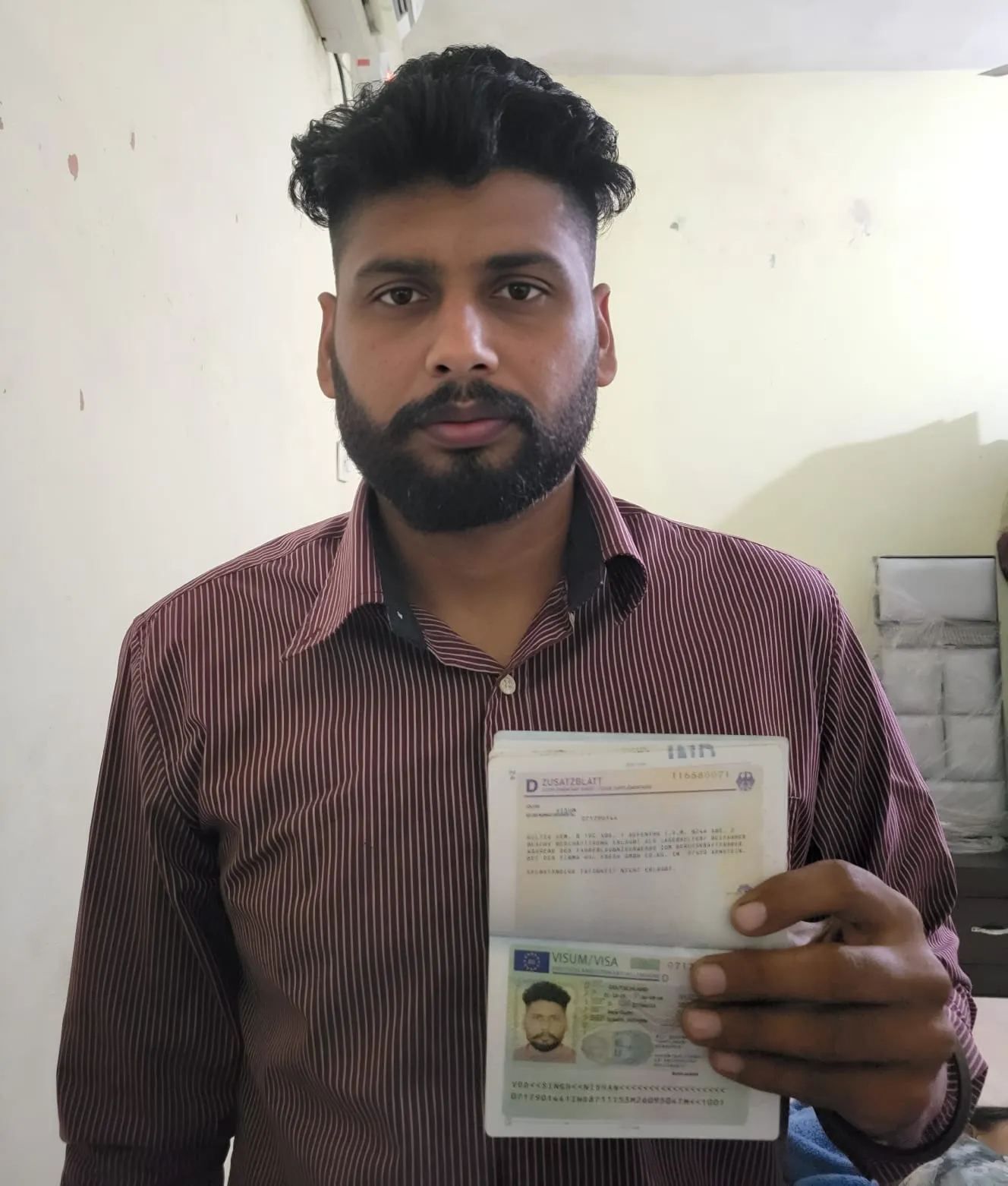
At AtoZ Serwis Plus, we help you become a global citizen with trusted support for jobs abroad, overseas education, and visa processing tailored to your goals.
Read More
Connecting employers, job seekers, students, and agencies across Europe and beyond.
Looking to hire skilled or semi-skilled workers from Asia, Africa, the CIS, or EU countries? AtoZ Serwis Plus supports your recruitment needs for Poland, Germany, Slovakia, Hungary, Lithuania, Estonia, and beyond. We deliver comprehensive legal recruitment services, visa support, and seamless onboarding solutions tailored to your business goals. Partner with us to build a reliable, compliant, and efficient workforce.
EmployerLooking to hire skilled or semi-skilled workers from Asia, Africa, the CIS, or EU countries? AtoZ Serwis Plus supports your recruitment needs for Poland, Germany, Slovakia, Hungary, Lithuania, Estonia, and beyond. We deliver comprehensive legal recruitment services, visa support, and seamless onboarding solutions tailored to your business goals. Partner with us to build a reliable, compliant, and efficient workforce.
Job SeekersAre you a recruiter looking to place workers in Poland, Germany, Slovakia, or other EU destinations? AtoZ Serwis Plus provides you with trusted employer connections, legal recruitment solutions, verified job placements, and full visa assistance. Expand your recruitment business with confidence, supported by clear processes, reliable documentation, and transparent migration services.
RecruiterLooking to work and live in Europe? At AtoZ Serwis Plus, we’re here to guide you every step of the way. Our experts provide support with job search assistance, work visa applications, qualification recognition, and European language learning. To connect with us and get started on your European journey, click one of the contact icons below.
Copyright © 2009-2026 AtoZ Serwis Plus. All Rights Reserved.