France (République française) is the largest country in Western Europe by area, covering 551,695 km² (metropolitan France), with a population of approximately 68.4 million. Its capital is Paris (approximately 2.1 million in the city; 12 million in the Île-de-France metropolitan area). France is an EU founding member, a eurozone member, a Schengen Area member, and a permanent UN Security Council member. The euro (€) is the currency. GDP per capita: approximately €38,000 (20world'sance has the world's 7th largest economy, driven by luxury goods (LVMH; Hermès; Chanel), tourism (approximately 90 million international visiworld'snually — the world's most visited country), aviation (Airbus), automotive (Renault; Stellantis; Peugeot), pharmaceuticals, nuclear energy, and a large agricultural sector. Major cities: Paris (capital; fashion; culture; finance); Lyon (gastronomy; biotech; 500,000 city); Marseille (Mediterranean port; 860,000); Toulouse (aerospace/Airbus; 4d'Azur); Nice (Côte d'Azur; 340,000); Bordeaux (wine; 250,000); Strasbourg (European Parliament; 280,000).
The domestic services sector in Europe is one of Europe's largest, employing over 1.5 million people in personal services,, including cleaning, housekeeping, childcare, elderly care, and France's elderly support. France's CESU system (Chèque Emploi Service Universel) is similar to Belgium's dienstencheques — it allows householdsto employ and declare domestic workers with significant tax advantages easilys. Employers can deduct 50% of domestic service expenses from income tax (up to €12,000/year — €15,000 for the first year, €20,000 for households with elderly or disabled members). This makes professional household employment significantly more affordable for French families, driving formalised demand for housekeepers, cleaners, and household managers across the country. Key demand drivers: Paris and major cities have large professional dual-income households; the Côte d'Azur (Nice, Monaco, Cannes, Saint-Tropez) has an extraordinary concentration of ultra-high-net-worth residents and holiday properties; Normandy, Brittany, Loire Valley, and Provence have large country estate markets requiring estate management and seaFrance's usekeeping; France's luxury hospitality sector (palace hotels — Hôtel de Crillon, Le Meurice, Hôtel Ritz Paris) demands the highest housekeeping standards.
French employment law (Code du Travail) is comprehensive and strongly protective of employees. The SMIC (Salaire Minimum Interprofessionnel de Croissance — minimum wage): approximately €1,802/month gross (2025; adjusted annually by government decree). Domestic worker wages: governed by the Convention Collective Nationale des Salariés du Particulier Employeur (CCN SPE) for workers employed directly by households, or sectoral agreements for cleaning companies; domestic worker minimum rates start from approximately €12.23/hour gross (2024 CCN SPE). Employer social contributions: approximately 40–45% of gross salary (total employer cost including social charges); employee social contributions: approximately 22–23% of gross. Income tax (impôt sur le revenu): progressive rates from 0% to 45%; withholding at source (prélèvement à la source) introduced in 2019. Annual leave: 5 weeks (25 working days or 30 working days on a 6-day basis); French congés payés include the right to take leave in summer. The thirteenth-month salary is not legally required but is common in collective agreements. VAT: 20% standard.
AtoZ Serwis Plus provides professional hrecruitment of housekeepersand domestic services rcross France, connecting employers with verified housekeeping professionals for private households, luxury properties, country estates, d'Azur hotels, Côte d'Azur villas, and commercial cleaning companies from Paris to Provence.
France's CESU system and the formal Convention Collective des Particuliers Employeurs create a structured environment for domestic employment. We navigate French employment law, titre CESU procedures, and immigration rules for non-EU workers to ensure compliant, professional household staffing solutions.
Key to France's
We recruit skilled, reliable housekeeping professionals for European households through a well-established global talent network. Our international sourcing strategy supports both urgent staffing needs and long-term domestic workforce planning.
Our Global Recruitment Reach Includes:
This diversified talent pool enables rapid response to household staffing needs while supporting long-term compliance and placement quality.
Employer benefits
https://www.atozserwisplus.com/employer/registration
Recruiter, France's
https://www.atozserwisplus.com/recruiter/registration
Worker benefits
https://www.atozserwisplus.pl/work-in-europe
France's URSSAF and DIRECCTE rigorously enforce labour regulations. Undeclared work (travail non déclaré) is subject to criminal prosecution — fines of up to €45,000 and imprisonment for employers; significant penalties for workers. CESU and PAJEMPLOI registration is simple and fast, and it protects both the employer and the worker. For non-EU workers, employment without a valid autorisation de travail is a serious offence. Registration provides access to the full French social security world, one of the world's most comprehensive welfare states.
1. What is housekeeper recruitment in France?
Housekeeper recruitment in France involves placing professional domestic cleaners, household managers, governesses, room attendants, laundry specialists, and estate caretakers with private households, luxury villas, country estates, palace hotels, and commercial cleaners across France's diverse regions. France employs over 1.5 million domestic service workers. The SMIC minimum wage is approximately €1,802/month gross. France's
2. What is France's CESU system?
The CESU (Chèque Emploi Service Universel) is a simplified system allowing private households to declare domestic workers and pay social contributions easily. Through CESU, employers can declare wages online in minutes, with URSSAF automatically calculating and collecting social contributions. The system covers cleaning, housekeeping, cooking, childcare, gardening, and assistance with elderly care. Employers benefit from a 50% income tax credit on domestic service expenditures. CESU makes formal household employment straightforward and affordable for French families.
3. What is the minimum wage for housekeepers in France?
The SMIC (Salaire Minimum Interprofessionnel de Croissance) is approximately €1,802/month gross (2025; based on the legal working time of 35 h/week). Under the CCN SPE (Convention Collective Nationale des Particuliers Employeurs), domestic workers have sector-specific minimum hourly rates starting at approximately €12.23/hour (2024 rates). More experienced and senior household professionals earn significantly above these minimums, particularly in Parisian luxury households, Côte d'Azur villas, and palace hotels.
4. What are the social contribution rates in France for domestic employers?
French employer social contributions (cotisations patronales) total approximately 40–45% of gross salary and cover: Sécurité Sociale (healthcare, maternity, disability, death), retirement contributions (AGIRC-ARRCO), unemployment insurance (Unédic/France Travail), and accident at work insurance. Employee contributions are approximately 22–23% of gross salary. For CESU household employers, URSSAF automatically manages all contribution calculations. The high social costs make the employer's total cost approximately 1.4–1.45× the gross salary.
5. What visa or permit does a non-EU housekeeper need in France?
Non-EU/EEA nationals require an autorisation de travail (work authorisation) and a titre de séjour (residence permit — carte de séjour) to work legally in France. The employer applies for the work authorisation through DRIEETS/DREETS (regional labour and employment authority); the worker then applies for a long-stay visa (visa de long séjour D) from a French consulate in their home country; upon arrival, they register with OFII l'Immigrationais de l'Intégration et d'Intégration) for integration formalities. Processing takes approximately 2–4 months. The permit is initially for 1 year, renewable annually.
6. What is the working week for homemakers in France?
France's legal working week is 35 hours — one of the shortest in the EU. For domestic workers under the CCN SPE, working time arrangements can vary: full-time (35h/week); part-time (very common in domestic cleaning — many clients require 2–4 hours per week); multiple part-time employer arrangements are possible where the same worker is shared between several households, with each employment relationship subject to its own mini CCN SPE contract. Overtime above 35 hours is paid at: +25% for hours 36–43; +50% for hours 44+. The 35-hour working week is a fundamental feature of French employment law (introduced in 2000).
7. What are annual leave entitlements for housekeepers in France?
French employees earn 2.5 working days of paid leave per month worked (30 days per year on a 6-day working week or 25 days on a 5-day working week). This means 5 weeks of annual leave. Congés payés (paid leave) are funded by employer contributions to the Caisse de Congés Payés du BTP (for construction) or directly by the employer (for domestic workers under CESU/CCN SPE). Workers have the legal right to take at least 4 consecutive weeks of main leave between May and October. France also observes 11 national public holidays per year.
8. What sick leave applies in France?
From day 4 of illness: Sécurité Sociale pays indemnités journalières de maladie at approximately 50% of the average gross salary (subject to a daily ceiling). From day 8 (after 1 year of seniority with the employer): the employer must pay a complementary allowance bringing total sick pay to approximately 90% of net salary for the first 30 days, then 66% for the next 30 days. Workers must provide a medical certificate within 48 hours (arrêt de travail). For domestic workers, the CCN SPE sets out specific provisions for sick pay that complement the basic Sécurité Sociale payment. The first 3 waiting days (délai de carence) are not paid by Sécurité Sociale (only employer complementary pay may cover these from day 8 onwards).
9. What is maternity leave in France?
Maternity leave (congé de maternité) in France: 16 weeks for the first two children (6 weeks before + 10 weeks after birth); 26 weeks from the third child; 34 weeks for twins; 46 weeks for triplets. Maternity benefit (indemnités journalières de maternité): approximately 100% of average daily salary (up to a ceiling of approximately €100.36/day — 2025) funded by Sécurité Sociale. The employer cannot dismiss during pregnancy or maternity leave. Paternity leave: 28 calendar days (including 7 mandatory days); paid at the same Sécurité Sociale rate. Parental leave (congé parental d'éducation): up to 3 years per parent after maternity or paternity leave, with job protection and partial income replacement through PreParE (Prestation Particulière d'Enfant d'éducation de l'Enfant).
10. What are the typical duties of a French housekeeper?
French housekeepers are expected to: thoroughly clean all rooms including dusting, vacuuming, mopping, and polishing; laundry (including the famously precise French ironing standards — Frenchmen and women are known for their very high ironing expectations); changing bed linens; grocery shopping and market visits; basic cooking or full meal preparation; table setting for formal or informal meals; silver and porcelain cleaning and storage; flower arranging; maintaining household inventories; greeting and hosting guests; coordinating with tradespeople; and in luxury positions, managing household budgets and other domestic staff. The level of sophistication varies from simple weekly cleaning to running a full luxury Parisian pied-à-terre or château.
11. What French language level is required for housekeepers?
For most private household positions across metropolitan France, functional French (at least A2–B1 CEFR level) is expected — the ability to understand instructions, communicate about duties, and interact with household members. In international Paris households (particularly in the 8th, 16th, and 17th arrondissements where many foreign executives and diplomats live), English or other languages may substitute ' Azurr luxury Côte d'Azur, Monte-Carlo border area, or Paris luxury hotel positions, professional French and often additional languages (English, Russian, Arabic) are advantageous. Our recruitment process assesses and matches language profiles to employer France's2. How does France's income tax credit for domestic services work?
French households using domestic services (cleaning, housekeeping, childcare, gardening, elderly care) declared through CESU or PAJEMPLOI benefit from a 50% income tax credit (crédit d'impôt emploi à domicile) on expenses. The maximum annual expenditure eligible is €12,000/year (giving a maximum credit of €6,000); higher caps apply for the first year of employment (€15,000), households with young children under 6 (additional childcare credits), households with disabled members, and households over 70. This tax advantage effectively makes formal domestic employment in France approximately 50% cheaper for taxpaying households, sthereby ignificantly incentivising legalised employment over undeclared arrangements and sustaining fdemand for ormalised household sservices
Is 1d'Azurt the Côte d'Azur luxury household market?
The Fd'AzurRiviera (Côte d'Azur — Nice; Cannes; Antibes; Cap d'Antibes; Saint-Jean-Cap-Ferrat; Villefranche-sur-Mer) is one of the world's most concentrated luxury property markets. Villas, palatial residences, and estates of billionaires, A-list celebrities, and heads of state require immaculate, highly professional household management teams year-round (caretakers, housekeepers, gardeners, pool staff, private chefs, chauffeurs) and full-strength seasonal teams during summer (June–September). Specific red'Azurents for Côte d'Azur housekeeping: impeccable standards of cleanliness in marble and stone-floored Mediterranean villas; pool maintenance awareness; outdoor entertaining area maintenance; discretion at the highest level; multilingual ability (French plus English, Russian, Arabic, or other languages depending on the owner); ability to manage high-pressure seasonal periods. These positions offer the highest salaries in French domestic service.
14. What is working in Paris like for a housekeeper?
One of the world's most vibrant and beautiful cities, and one of the most demanding domestic service markets. Key aspects: Parisian apartment cleaning requires expertise in parquet floor care, ornate mouldings and decorative details common in classic Haussmann buildings; many Parisian employers travel frequently and require reliable independent workers; the 1st, 6th, 7th, 8th, and 16th arrondissements have the highest concentration of luxury private households; a large diplomatic community (approximately 180 foreign embassies) creates demand for formally trained household stafFrance's also hosts France's luxury hotel sector (Hôtel Ritz; Le Bristol; Le Meurice; Hô" el de "rillon; all "palace" hotel designations) requiring top-tier hospitality housekeeping. Living in Paris is expensive — rent for a studio: €900–€ 1,000 per month — but the city's extraordinary cultural, culinary, and lifestyle offerings are unmatched globally.
15. What collective agreement governs domestic workers in France?
The CCN SPE (Convention Collective Nationale des Salariés du Particulier Employeur) is the national collective agreement governing workers employed directly by private households in France. It sets out minimum hourly wages by seniority and skill classification; working time provisions; paid leave entitlements; sick pay supplements; trial period rules; notice periods; and specific provisions for live-in workers (with regulated accommodation and meal deductions). For workers employed by cleaning companies or agencies, the applicable collective agreement is the CCN des Entreprises de Propreté (Convention Collective Nationale des Entreprises de Propreté et Services Associés), which sets different (often higher) minimum rates. All domestic workers in France are protected by one of these frameworks, regardless of nationality.
16. What protection against exploitation do domestic workers have in France?
France provides robust legal protections for domestic workers. The Inspection du Travail (Labour Inspectorate) investigates complaints and can impose significant fines. The CESU and PAJEMPLOI systems create an electronic paper trail that protects workers from wage theft. Trade unions (CFDT, CGT, FO, CFTC) organise domestic workers and provide legal assistance. Anti-discrimination laws (Défenseur des droits) protect workers from discrimination based on ethnicity, gender, and religion. France also has specific legal protection against human trafficking and forced labour. Workers who experience exploitation can contact the SAMU Social (emergency social services), the Défenseur des droits, or their local inspection du travail anonymously. The high fines for undeclared work also provide employers with a strong incentive to formalise employment rather than exploit workers through informal arrangements. How does France's unemployment insurance benefit workers?
France's unemployment insurance ' Emploiau Retour à l'Emploi ' is one of the world's most generous systems. Workers who lose their job (including domestic workers) after at least 6 months of employment in the previous 24 months are eligible for: ARE payments at approximately 57–75% of previous average daily salary; duration: 6 months (182 days) minimum to 24 months maximum depending on contribution history; additional support from France Travail (formerly Pôle Emploi): job search assistance, retraining programmes, and skill validation. For domestic workers with multiple part-time CESU employers, all contributions are aggregated for ARE eligibility — meaning a worker with 3 part-time cleaning clients earning a combined full salary is fully covered by unemployment insurance even though no single employer employs them full-time.
18. What is the notice period for domestic employment in France?
Under the CCN SPE, notice periods for domestic workers are: trial period: typically 2 weeks (or as specified); after trial period: notice period increases with seniority — less than 6 months: 1 week; 6 months to 2 years: 1 month; 2+ years: 2 months. For live-in domestic workers, additional accommodation provisions apply — if the employer provides accommodation, the termination of employment triggers specific obligations to arrange or fund alternative accommodation. Employers who terminate without providing proper notice must pay an indemnité compensatrice de préavis (notice compensation). For unfair dismissal (licenciement sans cause réelle et sérieuse), workers can claim damages before the prud'hommes (industrial tribunal).
19. Are there special household positions in Versailles and châteaux country?
Yes — the Loire Valley, Île-de-France, Normandy, and Burgundy regions have extraordinary concentrations of historic châteaux, country estates, and aristocratic properties. These positions are among the most specialised in French domestic service: estate caretakers (gardiens de propriété) who manage the property year-round when owners are absent; seasonal housekeeping teams for summer parties and estate visits; specialist care of antique furnishings, tapestries, paintings, and silver; preparation of formal rooms for entertaining; coordination of outdoor events and weddings; management of vineyard estate domestic operations (the Bordeaux, Burgundy, and Champagne wine regions have many domain properties with resident staff requirements). These positions require exceptional attention to detail, cultural knowledge, and ofteFrench-language fluencycy to interact with the typically French clientele.
20. What is France's pension system for domestic workers?
All legally employed domestic workers in France contribute to the French pension system. Pension contributions: employer approximately 8.55% (pension de base CNAV); employee approximately 6.90% (pension de base). Additionally,y: complementary pension (AGIRC-ARRCO): approximately 4.72% employer + 3.15% employee (standard rate for wages uto the the ceiling). The French pension system provides a defined-benefit pension at retirement age (currently being raised from 62 to 64 following the 2023 pension reform). Workers who have contributed for the full required number of trimesters receive a full pension. For migrants, many of France's bilateral social security agreements allow contribution periods in other countries to be recognised for French pension eligibility — worth verifying for your specific nationality.
21. What is France's approach to au pair and combined housekeeper-childcarer roles?
France has a specific legal framework for au pairs (the European Council of Europe's 1969 European Agreement on Au Pair Placement) and a broader framework for combined childcare/housekeeping roles. Au pairs: maximum 30 hours of light household tasks per week; pocket money approximately €100–€200/week; accommodation and meals provided; language course participation required; not a formal employment relationship. For formal employee childcare/housekeeping combinations: PAJEMPLOI (Guichet Pajemploi) is the French equivalent of CESU, specifically for parents employing cd'enfantsrs (gardes d'enfants à domicile); a Complément de libre choix du mode de garde (CMG) subsidy helps families fund formal childcare — making legitimate employment more affordable. Workers combining childcare and housekeeping as formal employees have full social security rights.
22. What unique opportunities exist for English-speaking households in France?
France's large English-speaking expatriate community — particularly in Paris (Saint-Germain-en-Laye; Neuilly-sur-Seine; the 8th, 16th arrondissements), the "ordogne (nick"amed "Dordogneshire" for its large British population),d'Azurnce, the Côte d'Azur, and Burgundy — creates consistent demand for English-speaking domestic staff. Additionally, the large French-speaking portion of international luxury travel means English-speaking staff with basic French are highly valuable in palace hotels; the superyacht sector on the Riviera is overwhelmingly English-language in its operations; international schools in Paris (British School, American School, Deutsche Schule) are surrounded by English-speaking families seeking household help. English-speaking housekeepers with domestic experience and some French language skills occupy a very strong position in the French premium domestic services market.
23. What are the rules for domestic staff accommodation in France?
Live-in domestic workers in France are subject to the CCN SPE provisions on chambres de service (staff rooms) or live-in accommodation. Key rules: the accommodation must meet minimum habitability standards set by the CCN SPE (minimum surface area; adequate heating; private access); the accommodation deduction from salary is set at a legally regulated rate (cannot exceed a fixed amount regardless of market rent value — protecting workers from disproportionate deductions); workers retain privacy rights in their accommodation; dismissal triggers obligations for the employer regarding housing assistance or notice — if accommodation is linked to employment, additional notice and relocation support may be required. In Paris, chambres de service (typically small 6th-floor rooms in Haussmann buildings) are the traditional accommodation for domestic workers and are legally regulated separately from the main apartment.
24. How does France handle health and safety in domestic work?
While French occupational health and safety law (Code du Travail, Section Santé-Sécurité) is primarily targeted at commercial workplaces, domestic workers retain important protections. Employers must: provide safe working conditions; supply appropriate personal protective equipment (PPE) — gloves, non-slip footwear, eye protection for chemical use; ensure that cleaning products comply with EU chemical regulations (REACH); not require workers to use ladders or equipment for which they have not been trained; declare any work-related accidents to d'AssurancePrimaire d'Assurance Maladie (CPAM) for accident at work compensation. The CESU system automatically includes accident insurance (assurance accidents du travail), which covers domestic workers during their employment with each registered employer. Professional cleaning companies have more comprehensive safety management obligations under the Code du Travail.
25. What are the prospects for career development in French domestic service?
France's vocational training system supports France's development in France's domestic service sector (Association pour la Formation Professionnelle des Adultes), GRETA (regional vocational training centres), and sector-specific training providers offer: Titre Professionnel de Gouvernant(e) en Hôtellerie (professional qualification for hotel housekeeping management); BTS Hôtellerie-Restauration specialising in accommodation services; and sector CPF (Compte Personnel de Formation) training days. All employed workers in France accumulate CPF training rights (€500/year up to a maximum of €5,000) that can be used for professional development at any time. Domestic workers who develop language skills, management ability, and specialist expertise (silver cleaning; fine linen care; formal service) can progress to senior household manager, estate manager, or head housekeeper roles.
26. What is France's family benefit system, and how does it affect domestic workers? Europe has one of Europe's most generous family support systems, administered by the Caisse d'Allocations Familiales. For domestic workers with children resident in France: allocations familiales (from the 2nd child; approximately €133/month per child); complément familial (for families with 3+ children aged 3–21); prime à la naissance (birth bonus); logement social access; various other supplements depending on income. Domestic workers who are parents of school-age children can access free public education (école publique—one of the world's best primary school systems) and subsidised childcare (crèche and accueil de loisirs). These family benefits significantly supplement the wages of domestic workers, itcontributing to the attractiveness of the country as an employment destination for workers who plan to bring or reunite with their families.
27. What is the French Alps ski chalet housekeeping market?
The French resorts (Val d'Isère, La Plagne, Tignes, Courchevel, Méribel, Les Deux Alpes) are among the world's most prestigious ski chalets and resorts, generating significant seasonal housekeeping demand from November/December to April. Luxury chalet companies (Scott Dunn, Mark Warner, Purple Ski, VIP SKI, and independent chalet operators) employ: chalet hosts who combine housekeeping, cooking, and guest services; daily cleaning teams for large chalets during peak season; linen and laundry teams managing the high-turnover rental market. Seasonal chalet work is one of the most popular and competitive segments of the French domestic services market. Workers typically receive: salary + accommodation + meals + ski pass (key benefit) + tips. The season runs approximately December–April; many workers return year after year and develop loyal client relationships with regular chalet guests.
28. What are the rules for night and Sunday work for Travailleurs in France?
Night work (travail de nuit) is defined as work between 21:00 and 06:00. Under French law, regular night work is subject to: a minimum 40% hourly pay supplement (specific rates per collective agreement); specific health monitoring requirements; and special protections for pregnant workers. Sunday work (travail du dimanche): in principle, Sunday is the legal day of rest (repos dominical) in France. Derogations exist for hospitality, cleaning companies with continuous service requirements, and households requiring care. Sunday work supplements under CCN SPE: typically 25–50% premium. For live-in household staff:o n-call time (astreinte) at nnight and on weekendsis compensated at a regulated rate lower than active working time. These provisions ensure domestic workers are fairly compensated for unsociable hours.
29. What is France's approach to undeclared domestic work?
Undeclared work (travail non déclaré or travail au noir) is a serious offence in France, particularly in the domestic services sector. Penalties for employers: fines of up to €45,000 (10× the minimum wage per undeclared worker per year); criminal prosecution and prison sentence possible; liability for unpaid social contributions retroactively; loss of income tax deduction benefits. Penalties for undeclared workers: liability for back taxes and contributions; loss of social security rights (no healthcare, unemployment, pension coverage for the undeclared period). The URSSAF and DIRECCTE conduct regular inspections of domestic service providers. The CESU system was specifically designed to eliminate undeclared domestic work by making formal declaration simple, fast, and financially advantageous (the 50% tax credit makes declared employment nearly as cheap as undeclared arrangements for taxpaying households).
30. How can a French household or company recruit a housekeeper through AtoZ Serwis Plus?
French employers — whether a Pad'Azurusehold, Côte d'Azur villa owner, Loire Valley château manager, luxury hotel, or cleaning company — should register at the link below. Our team will match your language requirements, schedule, and household profile to pre-screened candidates, and manage all compliance, including CESU/PAJEMPLOI registration, CCN SPE contracts, and autorisation de travail for non-EU candidates. We provide end-to-end housekeeper placement solutions across allofh France's
France's domestic services sector — with over 1.5 million workers, the CESU tax credit system, strong CCN SPE worker protection and one of Europe's best welfare states — provides an outstanding employment environment for professional housekeepers. From Parisian apartments to Côte d'Azur villas, Loire Valley châteaux to Alpine ski chalets, the diversity and quality of French household employment opportunities are unmatched. AtoZ Serwis Plus connects French employers with verified housekeeping talent from across the world, fully compliant with French employment law and social security obligations.
AtoZSerwisPlus is a European workforce and immigration advisory platform specialising in compliant recruitment guidance, structured work authorisation support, and labour market insights across European countries.
Ministère du Travail, de la Santé et des Solidarités – https://travail-emploi.gouv.fr
URSSAF (Social contribution collection) – https://www.urssaf.fr
CESU (Chèque Emploi Service Universel) – https://www.cesu.urssaf.fr
Assurance Maladie (Sécurité Sociale) – https://www.ameli.fr
France Travail (employment agency) – https://www.francetravail.fr
OFII l'Immigration et de l'Intégration et de l'Intégration Travail – https://www.ofii.fr
Inspection du Travail – https://www.gouvernement.fr/services/inspection-du-travail
This content is provided for informational purposes only and does not constitute legal advice. Employment conditions, minimum wages, and immigration procedures in France are subject to change. Employers and workers are advised to consult qualified French legal and tax counsel before making employment or immigration decisions.
Global clients share how AtoZ Serwis Plus helped them secure work permits, visas, and career support across Europe. Real stories. Real results.
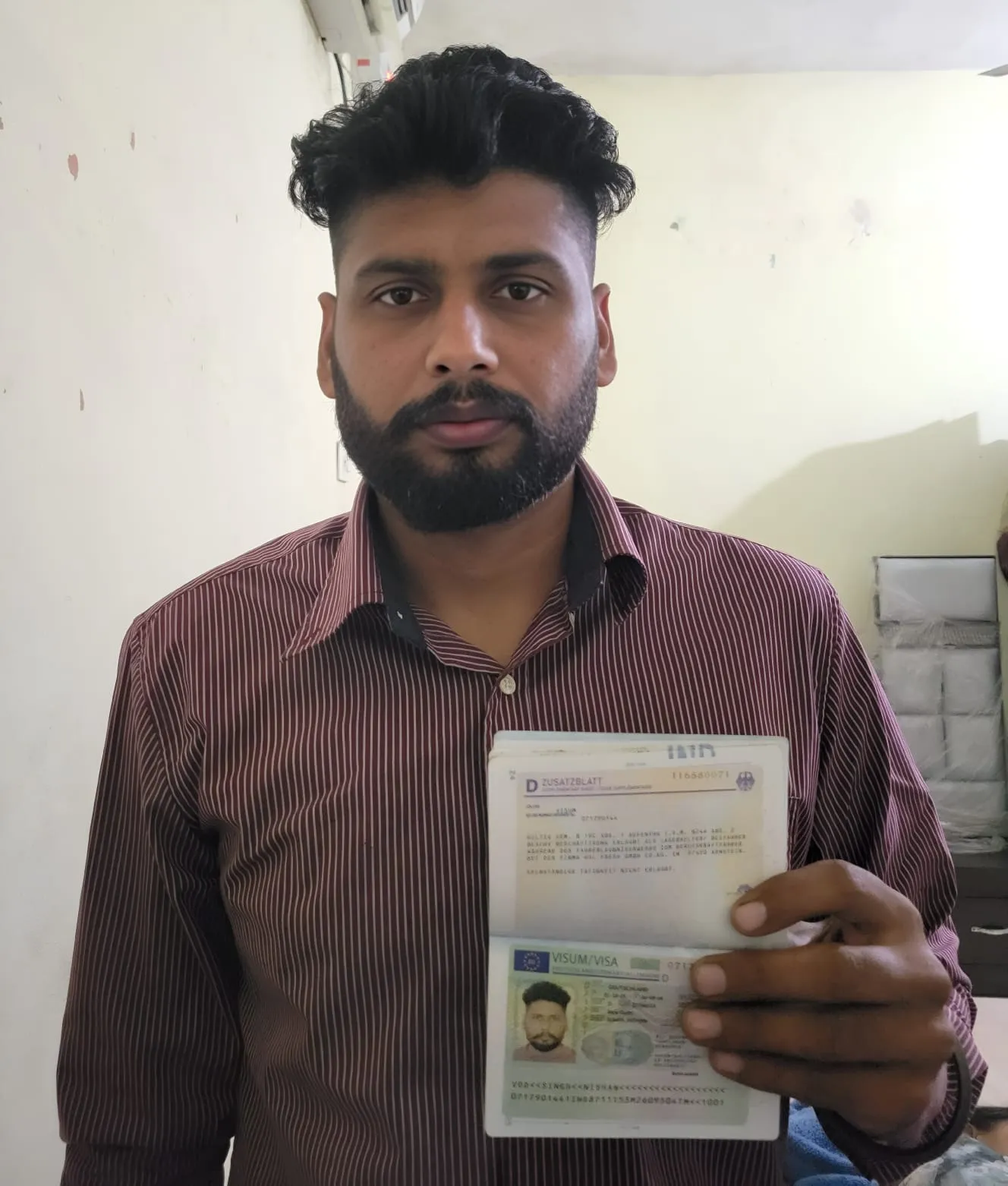
At AtoZ Serwis Plus, we help you become a global citizen with trusted support for jobs abroad, overseas education, and visa processing tailored to your goals.
Read More
Connecting employers, job seekers, students, and agencies across Europe and beyond.
Looking to hire skilled or semi-skilled workers from Asia, Africa, the CIS, or EU countries? AtoZ Serwis Plus supports your recruitment needs for Poland, Germany, Slovakia, Hungary, Lithuania, Estonia, and beyond. We deliver comprehensive legal recruitment services, visa support, and seamless onboarding solutions tailored to your business goals. Partner with us to build a reliable, compliant, and efficient workforce.
EmployerLooking to hire skilled or semi-skilled workers from Asia, Africa, the CIS, or EU countries? AtoZ Serwis Plus supports your recruitment needs for Poland, Germany, Slovakia, Hungary, Lithuania, Estonia, and beyond. We deliver comprehensive legal recruitment services, visa support, and seamless onboarding solutions tailored to your business goals. Partner with us to build a reliable, compliant, and efficient workforce.
Job SeekersAre you a recruiter looking to place workers in Poland, Germany, Slovakia, or other EU destinations? AtoZ Serwis Plus provides you with trusted employer connections, legal recruitment solutions, verified job placements, and full visa assistance. Expand your recruitment business with confidence, supported by clear processes, reliable documentation, and transparent migration services.
RecruiterLooking to work and live in Europe? At AtoZ Serwis Plus, we’re here to guide you every step of the way. Our experts provide support with job search assistance, work visa applications, qualification recognition, and European language learning. To connect with us and get started on your European journey, click one of the contact icons below.
Copyright © 2009-2026 AtoZ Serwis Plus. All Rights Reserved.