The Netherlands is one of Europe's most rewarding destinations for international students, combining respected universities, structured degree pathways, and a welcoming environment for learners from across the world. Whether you plan to study in Amsterdam or another major city such as Rotterdam, the country offers strong academic standards, well-equipped campuses, growing research opportunities, and a clear immigration framework for international students.
At AtoZ Serwis Plus, we guide students through every stage of the Netherlands journey — from choosing the right course and university to preparing documents, applying for the MVV (Provisional Residence Permit) and VVR (Residence Permit) for Study, organising health insurance, and settling into student life. Our consultants understand Netherlands's admission rules, language requirements, and immigration procedures, so you can focus on your studies while we handle the paperwork.
Netherlands is one of Europe's most respected study destinations, home to a well-developed higher-education system that combines traditional universities, universities of applied sciences, and specialised institutions. The country hosts thousands of international students every year from across the world, drawn by the quality of teaching, the affordability of tuition compared to many Western destinations, and the structured immigration pathways that allow graduates to work and settle after their studies. From the capital Amsterdam to historic university cities such as Rotterdam, The Hague, and Utrecht, Netherlands offers a strong academic environment with well-equipped libraries, modern laboratories, active student associations, and growing industry collaboration.
For many international students, Netherlands is more than just a place to study; it is a launchpad for a successful European career and, for those who wish, long-term settlement in Europe.
Universities in Netherlands such as University of Amsterdam (UvA), Delft University of Technology (TU Delft), and Utrecht University are listed in respected global rankings including QS, Times Higher Education, and ARWU. Their degrees are recognised by employers and graduate schools across Europe and beyond, opening doors to global careers.
Compared to top study destinations such as the United Kingdom, the United States, Australia, and Canada, Netherlands offers high-quality higher education at a significantly lower cost. Public universities are particularly competitive, with undergraduate fees usually between €8000 and €20000 per year.
The Netherlands offers more than 2,100 English-taught programmes, the most in continental Europe, across all major universities. This makes it possible for international students to complete a full degree in English while gradually picking up Dutch for everyday life and improved employability.
Netherlands is widely regarded as a safe, well-organised country with reliable public services, good healthcare, and student-friendly transport. Cities such as Amsterdam and Rotterdam regularly feature in international quality-of-life rankings.
International students can apply for a wide range of government, university, EU, and private scholarships. Notable options include Holland Scholarship for non-EEA students and several others coordinated through the national education ministry, universities, and partner foundations.
As a Schengen Area member, Netherlands allows students to travel across 27 European countries with the same residence permit, making weekend trips, internships abroad, and conferences across Europe far more accessible. This mobility supports semester exchanges, summer schools, and international networking, which strengthen your academic and professional profile.
The Netherlands offers a one-year Orientation Year residence permit (Zoekjaar) for graduates to seek employment or start a business. After securing a Highly Skilled Migrant job, students may obtain a longer residence permit and apply for EU long-term residence after five years. This makes Netherlands an attractive long-term destination, not just for studying but for building a career and life in Europe.
The higher-education system in Netherlands follows the European Bologna Process, ensuring that degrees are structured around comparable cycles, credit systems (ECTS), and quality-assurance standards. This means a qualification earned in Netherlands is generally accepted across the European Higher Education Area and recognised in many other countries through bilateral agreements.
The academic year in Netherlands usually consists of two semesters: a winter semester (autumn start) and a summer semester (spring start). Most international intakes happen in the autumn semester, although several universities offer mid-year admissions for selected programmes. Application deadlines typically fall 3–9 months before the start of the semester.
Below are some of the most prominent universities and higher-education institutions in Netherlands that welcome international students. Each institution has its own admission criteria, language requirements, and tuition structure. Most offer undergraduate, postgraduate, and doctoral programmes, and international applicants should verify specific entry requirements, application deadlines, and language criteria through the university's official admissions office before applying.
The largest research university in the Netherlands, globally ranked in top 100.
The Netherlands' top engineering and technology university.
A leading research university with strong life sciences and humanities.
The oldest Dutch university, founded in 1575, with strong law and humanities.
Internationally known for business (RSM), economics, and medicine.
A leading engineering university with strong industry partnerships.
A top research-intensive university in the north of the country.
The world's number one university in agriculture and environmental sciences.
In addition to the universities listed above, Netherlands hosts a number of specialised colleges, art and music academies, and universities of applied sciences that may be of interest depending on your field of study.
Netherlands offers strong programmes across a wide range of disciplines. International students typically choose the following fields, although the complete catalogue across Netherlands universities is much broader and includes many niche and interdisciplinary options.
Tuition fees in Netherlands depend on the type of institution (public or private), the level of study, and your nationality. The figures below are indicative ranges that can change between academic years and between programmes, so always verify on the university's official page.
Students from countries on the OECD DAC list of Least Developed Countries may qualify for tuition exemptions or substantially reduced fees at several public universities in Netherlands. Refugees, exchange students, and certain scholarship holders may also receive partial or full waivers. Always check eligibility criteria with the international office of the university you are applying to.
The cost of living in Netherlands is moderate by Western European standards. Larger cities such as Amsterdam and Rotterdam are usually the most expensive, while smaller cities such as Groningen tend to be more affordable for student budgets.
Students who live in shared accommodation, cook at home, and use student transport passes can usually stay well within the lower end of this range. Part-time work, scholarships, and family support also help to ease everyday financial pressure.
Netherlands does not have a single "student visa". Your status depends on the length of stay, your nationality, and the type of programme you are enrolled in. The main categories below outline the most common options for international students.
For visits of up to 90 days within any 180-day period, including short language courses, summer schools, and exchange visits. This visa allows free movement across all Schengen countries.
Issued by Embassy or Consulate of the Kingdom of the Netherlands for stays of more than 90 days. This visa allows you to enter Netherlands and apply for or collect your Residence Permit for Study Purposes (Verblijfsvergunning voor Studie) after arrival. It is the primary entry route for full-degree international students.
The principal permit for non-EU students enrolled in degree programmes of more than 6 months. Issued by the local immigration authority — Immigration and Naturalisation Service (IND) — and renewable for the duration of your studies, subject to academic progress and continued proof of financial means.
For PhD researchers, postdoctoral fellows, and visiting scholars. Often issued under the relevant EU research-mobility directive in EU member states, with specific variations for non-EU countries.
Students enrolled in an EU mobility programme may be able to study in Netherlands for short periods under simplified rules, sometimes without applying for a new permit. Specific conditions depend on the home country and the receiving institution.
EU/EEA/Swiss nationals do not require a visa or residence permit to study in Netherlands. They must register their address with the local registration office shortly after arrival (typically within 3–4 months) and may be asked to show proof of enrolment, health insurance, and sufficient funds.
This is one of the most important parts of the application. Immigration and Naturalisation Service (IND) requires applicants to prove that they have sufficient funds to cover their living expenses for the duration of their studies — typically 12 months at a time.
Funds must remain genuinely accessible to the student during the stay. Accounts that are heavily restricted, joint accounts with limited access, or recently inflated balances can raise concerns and lead to refusals. Plan your financial proof at least 6 months before the application.
Non-Dutch documents typically need to be translated by a sworn or court-certified translator. Depending on the issuing country and the bilateral agreements with Netherlands, documents may also require an apostille under the Hague Convention or full consular legalisation. Plan extra time for these procedures, as they can take several weeks.
Research programmes that match your academic background, career goals, and budget. Compare official course pages, language requirements, tuition fees, scholarship options, and application deadlines. Most universities in Netherlands have separate intakes for the winter semester (autumn start) and the summer semester (spring start), with application windows opening 4–8 months before each semester begins.
Submit your application online through the university's admissions portal or through the relevant national admissions service. Many universities require academic transcripts, language test scores, a motivation letter, a CV, and one or two letters of recommendation. Pay any required application fee and keep confirmation copies of all submissions.
If admitted, you will receive an official letter of admission from the university. This letter is essential for the visa and residence permit application. Confirm your place by paying any required deposit and accepting the offer within the deadline indicated by the university.
Collect all the supporting documents listed above. Arrange certified translations into Dutch (or English where accepted) through a sworn translator. Obtain apostilles or consular legalisation for educational certificates, birth certificates, police clearance, and any other documents that require official authentication.
Book an appointment with Embassy or Consulate of the Kingdom of the Netherlands or the relevant visa application centre serving your region. Slots can fill up quickly during peak intakes, so book as early as possible — ideally 3 months before your intended travel date. Prepare all originals and copies of your documents in the order specified by the embassy checklist.
Attend your visa appointment on time, submit your documents, provide biometric data, and pay the visa fee. Some applicants are invited for a short interview to discuss their study plans, financial proof, and post-study intentions. Answer honestly, clearly, and with full knowledge of your programme and university.
Once your visa is granted, travel to Netherlands within the validity period of your visa. After arrival, register your address with the local registration office, apply for or collect your Residence Permit for Study Purposes (Verblijfsvergunning voor Studie) from Immigration and Naturalisation Service (IND), open a local bank account, finalise health insurance enrolment, and complete university registration formalities.
Always confirm current fee schedules on the official website of Embassy or Consulate of the Kingdom of the Netherlands before paying, as fees may be updated periodically.
Netherlands offers a wide range of scholarships and funding opportunities for international students, coordinated through government agencies, universities, EU programmes, and private foundations. Award amounts, eligibility, and deadlines vary — always check official sources before applying.
International students in Netherlands may work part-time during their studies, which helps to cover living expenses and gain valuable professional experience in a European labour market.
Student income is generally subject to income tax and social-security contributions, although special student regimes may reduce these charges up to certain monthly thresholds. Register for a tax number after arrival and ask your employer to apply the correct withholding to your salary.
The Netherlands offers a one-year Orientation Year residence permit (Zoekjaar) for graduates to seek employment or start a business. After securing a Highly Skilled Migrant job, students may obtain a longer residence permit and apply for EU long-term residence after five years.
study in the Netherlands with structured visa and admission support. Whether you study in Amsterdam or in other major student cities such as Amsterdam, Rotterdam, The Hague, Utrecht, Eindhoven, AtoZ Serwis Plus stands beside you with personalised consulting, end-to-end documentation help, and structured visa support tailored to Netherlands's specific requirements. From the very first call, we work to understand your academic background, career goals, language ability, and budget so that the programmes we recommend genuinely match your profile.
Our consultants know the admission timelines for universities across Netherlands, the financial proof requirements for the MVV (Provisional Residence Permit) and VVR (Residence Permit) for Study, the documents that must be sworn-translated and apostilled, and the steps to obtain the Residence Permit for Study Purposes (Verblijfsvergunning voor Studie) after arrival from Immigration and Naturalisation Service (IND). We aim to make your transition from your home country to a new academic life in Netherlands as smooth, predictable, and stress-free as possible — with clear weekly check-ins, transparent timelines, and honest answers when something needs to change.
From shortlisting universities and structuring your motivation letter to booking embassy appointments, attending mock interviews, and helping with post-arrival registration, AtoZ Serwis Plus is committed to being a long-term partner in your Netherlands study journey — not just a one-off paperwork service.
Yes, compared to several Western European destinations, Netherlands can be relatively affordable. Tuition typically ranges from €8000 to €30000 per year, and average monthly living costs are around €900—€1400.
Yes. Many universities in Netherlands offer English-medium bachelor's and master's programmes, especially in business, engineering, computer science, medical sciences and international relations. The Netherlands offers more than 2,100 English-taught programmes, the most in continental Europe, across all major universities.
Not always. If your course is fully taught in English you can usually study without prior Dutch skills, although basic language ability helps with daily life. For programmes taught in Dutch, you will need to provide an official language certificate.
For English-taught programmes, universities in Netherlands commonly accept IELTS 6.0–7.0, TOEFL iBT 80–100, or Cambridge English; specific minimums vary by programme. Some universities have their own internal English tests or accept other recognised certificates.
As a rough guide, you should be ready to show access to at least €16800 for a year of study, although exact thresholds are set by the immigration authority and can change. Funds can come from savings, sponsors or scholarships.
Most long-term student visa applications take between 4 and 12 weeks, depending on the country of application and the season. Apply at least 3 months before your programme start date.
Yes, international students are usually allowed to work part-time during the semester (commonly up to about 20 hours per week) and full-time during official holiday periods. Job options include retail, hospitality, tutoring and on-campus roles.
Family reunification is possible in many cases, subject to income, accommodation and insurance requirements set by the immigration authority. Conditions vary depending on whether your Residence Permit for Study Purposes (Verblijfsvergunning voor Studie) is granted for the full programme duration.
Smaller cities such as Groningen are usually cheaper than Amsterdam in terms of rent and daily costs. However, the choice should balance affordability with the specific university and programme.
Yes, in most cases. The Netherlands offers a one-year Orientation Year residence permit (Zoekjaar) for graduates to seek employment or start a business. After securing a Highly Skilled Migrant job, students may obtain a longer residence permit and apply for EU long-term residence after five years. Always check current rules with the immigration authority before making long-term plans.
Degrees from accredited universities in Netherlands, including University of Amsterdam (UvA), are generally recognised across Europe and in many other countries. Recognition for regulated professions (such as medicine or law) may require additional checks in your home country.
Yes. Health insurance is required both for your student visa and during your stay. You can use a national student health scheme where eligible, or a private insurance policy that meets the country's minimum requirements.
Yes, after graduation many students transition from their Residence Permit for Study Purposes (Verblijfsvergunning voor Studie) to a job-seeker or work permit, provided they meet salary, qualification and contract requirements set by national law.
Most universities have intakes around autumn and spring. Application deadlines often fall 4—8 months before the start of the semester, so it is wise to start at least one year in advance.
Popular options include Holland Scholarship for non-EEA students and other government, university and Erasmus-linked schemes. AtoZ Serwis Plus can help you map your eligibility and assemble a strong scholarship application.
We help with university shortlisting, application submission, document preparation, language test planning, MVV (Provisional Residence Permit) and VVR (Residence Permit) for Study support, financial proof guidance and post-arrival registration. Our consultants keep you informed at each step and respond to changes in immigration rules.
From shortlisting universities and preparing your application to securing the MVV (Provisional Residence Permit) and VVR (Residence Permit) for Study and settling into student life, AtoZ Serwis Plus offers complete consulting for students planning to study in Netherlands. Book a consultation today to receive a personalised checklist, document review and a clear roadmap for your admission, visa and accommodation steps.
The information on this page about studying in Netherlands is provided for general guidance only. AtoZ Serwis Plus is an independent consulting firm and is not an agent of any government, embassy or university. Final decisions on admission rest with the educational institution, while the MVV (Provisional Residence Permit) and VVR (Residence Permit) for Study and Residence Permit for Study Purposes (Verblijfsvergunning voor Studie) are issued at the sole discretion of Embassy or Consulate of the Kingdom of the Netherlands and Immigration and Naturalisation Service (IND).
Tuition fees, scholarship rules, financial thresholds, visa requirements and processing times may change at any time according to government policy and university regulations. Applicants are advised to verify all details on the relevant official websites before making any financial or travel commitments.
Global clients share how AtoZ Serwis Plus helped them secure work permits, visas, and career support across Europe. Real stories. Real results.
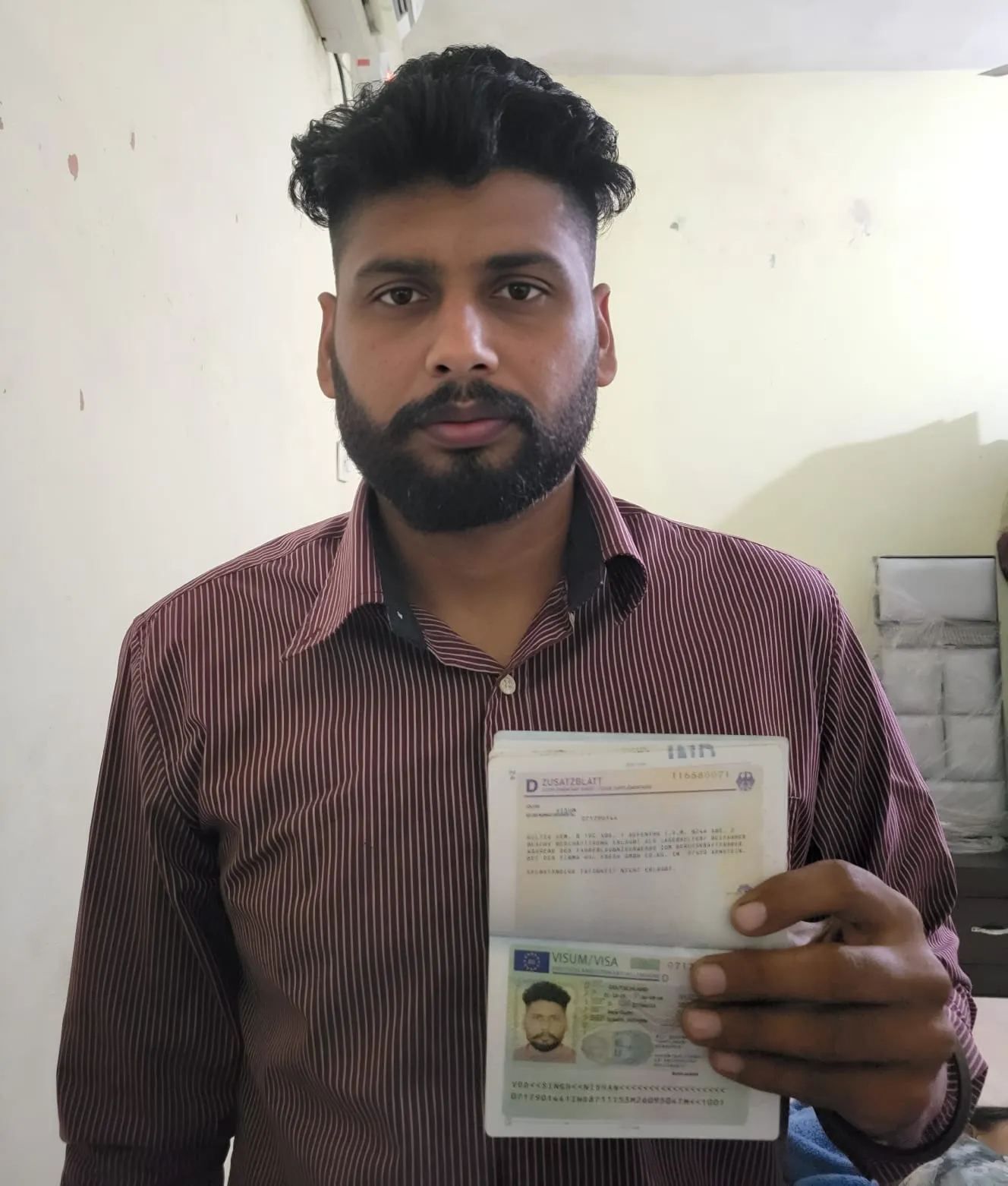
At AtoZ Serwis Plus, we help you become a global citizen with trusted support for jobs abroad, overseas education, and visa processing tailored to your goals.
Read More
Connecting employers, job seekers, students, and agencies across Europe and beyond.
Looking to hire skilled or semi-skilled workers from Asia, Africa, the CIS, or EU countries? AtoZ Serwis Plus supports your recruitment needs for Poland, Germany, Slovakia, Hungary, Lithuania, Estonia, and beyond. We deliver comprehensive legal recruitment services, visa support, and seamless onboarding solutions tailored to your business goals. Partner with us to build a reliable, compliant, and efficient workforce.
EmployerLooking to hire skilled or semi-skilled workers from Asia, Africa, the CIS, or EU countries? AtoZ Serwis Plus supports your recruitment needs for Poland, Germany, Slovakia, Hungary, Lithuania, Estonia, and beyond. We deliver comprehensive legal recruitment services, visa support, and seamless onboarding solutions tailored to your business goals. Partner with us to build a reliable, compliant, and efficient workforce.
Job SeekersAre you a recruiter looking to place workers in Poland, Germany, Slovakia, or other EU destinations? AtoZ Serwis Plus provides you with trusted employer connections, legal recruitment solutions, verified job placements, and full visa assistance. Expand your recruitment business with confidence, supported by clear processes, reliable documentation, and transparent migration services.
RecruiterLooking to work and live in Europe? At AtoZ Serwis Plus, we’re here to guide you every step of the way. Our experts provide support with job search assistance, work visa applications, qualification recognition, and European language learning. To connect with us and get started on your European journey, click one of the contact icons below.
Copyright © 2009-2026 AtoZ Serwis Plus. All Rights Reserved.