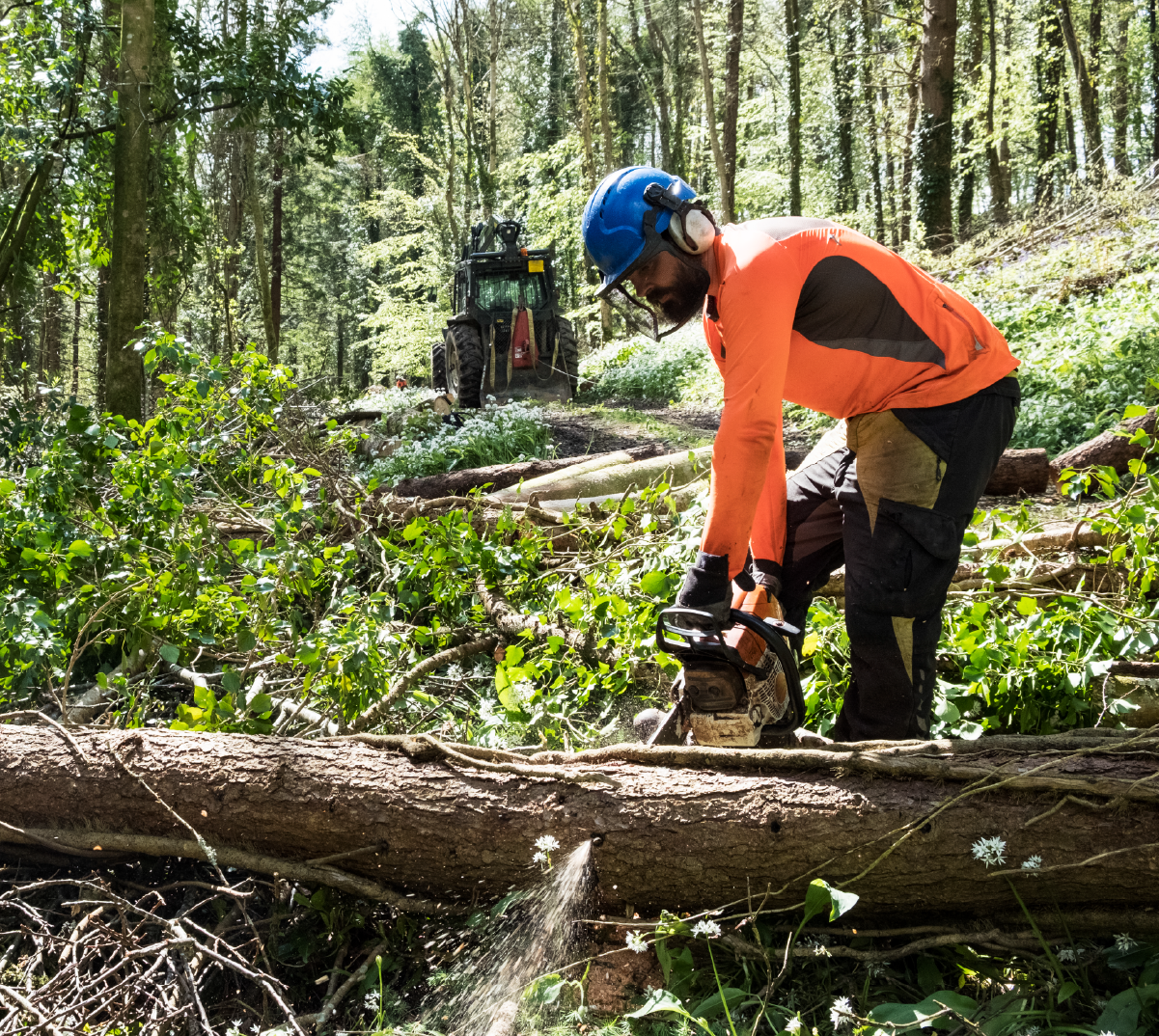
Your Gateway to Forestry Jobs, Skilled Workers, and Timber Recruitment in Hungary
Searching for a dependable forestry recruitment agency in Hungary? AtoZ Serwis Plus supplies certificate-verified harvester and forwarder operators, chainsaw crews, arborists and foresters to a lowland country whose forestry is built largely on species planted deliberately rather than inherited from natural woodland.
Black locust is the distinguishing feature. Hungary is among Europe’s principal producers of this fast-growing hardwood, grown on short rotations across the plains, and it behaves quite differently from the conifer and oak most European forestry is organised around.
We recruit harvester and forwarder operators, chainsaw crews, floodplain and plantation specialists, arborists, foresters and planners, with certification verified against the awarding body before anyone reaches your shortlist.
Plantation species, floodplain forest and lowland conditions combine into requirements unlike upland European forestry.
Black locust and poplar plantations grow rapidly on the plains, harvested on short rotations that keep operations moving continuously.
Floodplain forests along major rivers require working around seasonal inundation and species adapted to wet ground.
Oak and mixed forest in the hills supports higher value production requiring careful felling and grading.
Meanwhile, the plains face drought stress and groundwater decline, which affects species choice, establishment success and where planting is viable at all.
We recruit into forestry specifically rather than as general industrial staffing, and here that begins with recognising how different lowland plantation work is.
We recruit knowing short rotation work moves continuously rather than seasonally.
We confirm certification at source rather than accepting a card from a wallet.
We check experience with seasonal inundation and wet ground working.
We assess against the specific configuration rather than treating harvesters as interchangeable.
Workers pay nothing, and we decline where a fee has been paid to an intermediary upstream.
We brief candidates on how plantation hardwoods differ from conifer working.
Black locust plantation. Fast-growing hardwood on short rotations across the plains.
Poplar plantation. Rapid rotation production supplying panel, packaging and pulp industries.
Floodplain and riparian forest. River forests with seasonal inundation and adapted species.
Oak and hill forest. Higher value production requiring careful felling and grading.
State-managed forest—publicly administered holdings across a substantial share of the forest area.
Private forest owners. Holdings requiring contracted management, harvesting and establishment.
Sawmilling and wood processing. Mills requiring log yard, grading, sawing and maintenance personnel.
Arboriculture and urban forestry. Tree work in municipal settings requiring climbing competence.
We confirm which felling certificates, machine tickets and additional competences the work requires before any sourcing begins.
We establish ground conditions, slope, stand type, access and distance from emergency services, because those determine who is genuinely suitable.
We source across Hungary and among Hungarian forestry workers abroad, distinguishing plantation, floodplain and hill forest competence rather than treating them as one.
Chainsaw and felling certification is confirmed at source rather than accepted from a candidate copy, since a card proves nothing about its validity.
We assess judgement through real situations, including hung-up trees, windblown timber and when a candidate decided a tree was beyond their ticket.
We check first aid provision, emergency procedure, communications, lone working arrangements and how long definitive medical care would actually take.
Pay basis, protective equipment provision and any accommodation arrangement are documented in writing before anyone starts.
We stay in contact after placement and ask directly about safety practice, hours and whether equipment is actually being provided.
Forestry consistently ranks among the most dangerous occupations recorded anywhere, and the reasons are structural rather than a matter of carelessness.
The work combines cutting tools capable of severing a limb in an instant, trees weighing several tonnes falling under tension, unstable ground, and weather that changes what is safe within minutes.
Distance is what makes it different from equally hazardous work elsewhere. A serious chainsaw injury on a remote site is not measured against how quickly a first aider arrives. Still, against how long definitive medical care actually takes, and that is frequently measured in hours.
Hungarian conditions add heat and water rather than terrain. Summer temperatures create genuine heat illness risk in protective equipment, while floodplain sites can become inaccessible quickly when river levels rise.
Certification exists because of that. Felling qualifications are tiered by tree size and complexity for a reason, and someone working beyond their ticket is not being resourceful but operating without the competence the tier was designed to require.
Lone working multiplies every other risk, since an incapacitated worker alone in a stand cannot summon help, and arrangements that look adequate on paper frequently have not been tested.
We verify certification with the awarding body, assess judgement through real decisions rather than credentials, confirm emergency arrangements before placement, and decline work where the safety framework cannot be established.
Hungarian plantation forestry is organised around species chosen for growth rate, and their characteristics shape the work in ways worth understanding.
Black locust reaches usable size in a fraction of the time oak requires, which allows short rotations and continuous rather than generational harvesting cycles.
The wood is dense, durable and naturally resistant, making it valuable for posts, outdoor use, flooring and firewood, with markets that reward straightness and size.
It also carries substantial thorns on younger growth, which is a genuine handling consideration that crews unfamiliar with the species underestimate.
Regeneration happens largely from suckers rather than seed, meaning a harvested stand regrows from existing root systems and requires management to control rather than encourage spread.
That makes the species vigorous to the point of invasiveness in some contexts, which affects where planting is appropriate and what management follows harvesting.
Poplar plantation operates on similar rhythms, planted in rows on fertile ground and harvested within a small number of years for panel and packaging markets.
Both are closer to agricultural cropping than to traditional forestry in tempo, with defined operations, predictable ground and machinery that works without terrain constraint.
We brief candidates on species behaviour including handling hazards, and match operators to plantation rhythm rather than assuming forestry experience transfers directly.
Three further conditions shape Hungarian placements, and each is established rather than assumed.
Floodplain forests along the major rivers flood seasonally, which means access windows are dictated by water levels rather than by planning convenience.
Ground that carries machinery comfortably in one period may be saturated or submerged in another, and misjudging that can strand equipment.
Species there are adapted to periodic inundation, and management works with the flood cycle rather than attempting to exclude it.
The plains face the opposite problem, with drought stress and declining groundwater affecting tree survival and growth across substantial areas.
Establishment failure has become more common as a result, which means planting operations increasingly require follow-up and replacement rather than single interventions.
Species choice has shifted toward drought tolerance, changing what gets planted and what future harvesting will involve.
Summer heat is a direct working hazard, since protective equipment traps heat and reduced concentration precedes any recognition that something is wrong.
Early starts, hydration and genuine rest are operational requirements rather than welfare gestures, and pay basis affects whether they actually happen.
We assess floodplain and plantation competence separately, check working patterns against heat, and describe conditions honestly before anyone accepts.
Forestry uses seasonal labour heavily, particularly for planting and thinning, and that is where the sector’s worst employment practices concentrate.
Payment by output rather than time is common in planting work, and it creates a direct incentive to work faster, longer and through conditions where stopping would be safer.
A worker paid per tree does not lose money by taking a break; they lose money by taking a break, which is a distinction that sounds pedantic until someone is exhausted on steep ground with a spade or a saw.
Recruitment fees compound it severely. Someone who paid an intermediary to obtain a season’s work arrives already in debt, needing to earn it back before anything counts as income.
Accommodation tied to the job creates the third layer, since a worker who leaves loses housing as well as pay, frequently in a remote area with no alternative and no transport.
Those three arrangements together produce a worker who cannot refuse unsafe instructions, cannot stop when tired and cannot leave, which is the condition every serious forestry incident report tends to describe in hindsight.
We charge workers nothing anywhere in the chain, decline where a fee has been paid upstream, insist that protective equipment is employer-provided, and document pay basis and accommodation terms in writing before anyone starts.
Great Plain regions. Extensive plantation forestry on lowland ground with short rotation working.
River floodplains. Riparian forest with seasonal access constraints and adapted species.
Northern hills. Oak and mixed forest with higher value production and varied terrain.
Transdanubia. Mixed forest areas with substantial harvesting and processing activity.
Sawmilling and processing centres. Log yard, grading, sawing and maintenance employment.
Urban and municipal arboriculture. Tree work requiring climbing and aerial rescue competence.
Ask whether the agency distinguishes plantation, floodplain and hill forest competence rather than treating them as one.
Ask whether it briefs candidates on species handling hazards rather than assuming familiarity.
Ask what workers pay, where the only acceptable answer is nothing anywhere in the chain.
Fast-growing species allow harvesting cycles measured in years rather than generations.
Thorns on younger growth are a genuine consideration crews underestimate.
Suckering means management controls spread rather than encouraging establishment.
Windows are dictated by river levels rather than by planning convenience.
Planting increasingly requires follow-up and replacement rather than single intervention.
Protective equipment traps heat and concentration falls before anyone recognises it.
We assess plantation, floodplain and hill forest competence as separate capabilities.
We confirm certification at source rather than accepting a card presented by a candidate.
We tell candidates about handling hazards rather than assuming familiarity.
We account for access windows dictated by water rather than by schedule.
We charge no fee and decline where one has been paid upstream, without exception.
We check working patterns, rest provision and pay basis together.
Away from the plains, Hungarian forestry looks considerably more like the rest of continental Europe, and the competences required change with it.
Northern hill forests carry oak and mixed broadleaves grown on long rotations, where individual stem quality determines a substantial part of the value.
Felling there rewards precision rather than throughput, since a stem that splits or lands badly loses grade that decades of growth produced.
Terrain is moderate rather than mountainous, but slopes are sufficient to change felling behaviour and to require judgement that flat plantation work never develops.
Extraction routes matter more, because damage to remaining stems in a stand managed over long rotations carries consequences that a short rotation crop does not.
Access infrastructure is generally good, though forest tracks in hill districts deteriorate in wet weather and can limit both harvesting and emergency response.
Species mixtures require a broader understanding than a monoculture plantation, since different trees behave differently under saw and respond differently to release.
An operator moving from plains plantation to hill oak therefore needs genuine adjustment rather than a simple change of location.
We assess hill and plantation competence separately, and prepare candidates honestly for the different pace and precision hill forest demands.
Take the first step toward your forestry career or a fully crewed operation. Choose the option that fits you best.
Are you a harvester or forwarder operator, plantation harvesting specialist, floodplain crew member, chainsaw cutter or forester? We brief you on species handling and never charge you a fee.
Register Now!Hire certificate-verified harvester operators, plantation specialists, floodplain crews and foresters for your Hungarian operation, with systems distinguished properly.
Register Now!Partner with our trusted European network to place certificated forestry professionals with verified employers on documented terms, with no worker-paid fees anywhere.
Register Now!It is a specialist firm that sources, certificate-verifies and places harvester operators, chainsaw crews, arborists and foresters with Hungarian employers.
It is built largely on species planted deliberately for growth rate rather than inherited from natural woodland.
Hungary is among Europe’s principal producers of this fast-growing hardwood, grown on short rotations across the plains.
It reaches usable size in a fraction of the time oak requires, allowing continuous rather than generational harvesting cycles.
Posts, outdoor use, flooring and firewood, with markets that reward straightness and size.
Yes. Substantial thorns on younger growth are a genuine consideration that crews unfamiliar with the species underestimate.
Largely from suckers rather than seed, so a harvested stand regrows from existing root systems.
It makes the species vigorous to the point of invasiveness in some contexts, so management controls spread rather than encouraging it.
It operates on similar rhythms, planted in rows on fertile ground and harvested within a small number of years for panel and packaging markets.
Closer to agricultural cropping in tempo, with defined operations, predictable ground and machinery working without terrain constraint.
Yes, on species behaviour and handling hazards, and we match operators to plantation rhythm rather than assuming transfer.
Water levels rather than planning convenience, so ground that carries machinery in one period may be submerged in another.
Yes, including stranding equipment when levels rise.
Adapted to periodic inundation, and management works with the flood cycle rather than attempting to exclude it.
The opposite one. Drought stress and declining groundwater affect tree survival and growth across substantial areas.
Yes. Failure has become more common, so planting increasingly requires follow-up and replacement rather than single interventions.
It has shifted toward drought tolerance, changing what gets planted and what future harvesting will involve.
Directly. Protective equipment traps heat, and reduced concentration precedes any recognition that something is wrong.
Early starts, hydration and genuine rest, which are operational requirements rather than welfare gestures.
Yes, since payment by output discourages exactly the breaks heat makes necessary, so we check them together.
Always. Plantation, floodplain and hill forest competence are assessed as separate capabilities.
Nothing, at any stage, and we decline where a fee has been paid to an intermediary upstream.
The employer, and we confirm that before placement rather than assuming it.
Great Plain regions, river floodplains, northern hills, Transdanubia and processing centres.
Nothing, at any stage, in any country. We also decline to proceed where a fee has been paid to an intermediary before someone reaches us.
Because a worker carrying recruitment debt cannot afford to stop, and stopping is frequently the safe decision in this work.
The employer. Chainsaw trousers, boots, helmet, hearing and eye protection are not optional and are not a worker expense.
No. An employer unwilling to provide protective equipment is telling you what its safety culture is.
With the awarding body rather than accepted from a candidate copy, since a card in a wallet proves nothing about current validity.
Because tree size, lean, tension and surroundings change the difficulty enormously, and each tier exists to match competence to complexity.
They are operating without the competence that tier was designed to require, which is where serious incidents concentrate.
Yes, through real situations including hung-up trees, windblown timber and the occasions a candidate decided a tree was beyond them.
Because knowing when to stop is the competence that keeps forestry workers alive, and someone who has never refused a tree has either not faced one or did not recognise it.
Yes. Harvester and forwarder competence depends on machine type, head, control system and terrain, and experience on one does not transfer automatically.
Considerably. Steep ground, wet ground, frozen ground and windblown stands each demand competence that flat clearfell work does not develop.
First aid provision, trauma equipment, communications coverage, extraction route and how long definitive medical care would genuinely take.
Because a catastrophic bleed is survivable within minutes and not within hours, and remote sites are frequently hours from a hospital.
Always. An incapacitated worker alone in a stand cannot summon help, and arrangements that look adequate on paper are frequently untested.
Yes. Where a safety framework cannot be established, we do not supply people into it, whatever the commercial consequence.
It creates a direct incentive to work faster and longer, and through conditions where stopping would be safer, which is why we document pay basis explicitly.
A serious one. Where housing depends on the job, leaving means losing both at once, frequently in a remote area with no alternative.
Before anyone starts, covering pay basis, hours, equipment provision and any accommodation arrangement.
Always. We do not participate in any arrangement involving retention of identity documents.
Yes. Aerial work requires climbing competence and aerial rescue capability, since a casualty in a canopy cannot be reached by ordinary first aid.
It is a distinct competence from ground felling and must be certified separately rather than assumed from experience.
Yes, and we treat it as specialist work, because windblown timber under tension behaves unpredictably and kills experienced operators.
Genuinely. Wind, ice and saturated ground change what is safe, and an employer who works regardless is one we would ask questions about.
Yes, asking directly about safety practice, hours and whether equipment is actually being provided rather than merely promised.
Where a role requires it, including chain of custody and sustainable management scheme competence.
Not by us. The same verification, the same fee prohibition and the same written terms apply regardless of contract length.
Because seasonal crews are where exploitation concentrates, and a shorter contract is not a reason for weaker protection.
The employing owner or contractor, covering safety, training, equipment and every other regulatory requirement.
No. Awarding bodies decide certification and employers decide appointments. We verify thoroughly and represent honestly.
An employer receives only what a specific vacancy requires, after the candidate has agreed. Records are held while a lawful reason exists.
Employers can register at atozserwisplus.com/employer/registration, candidates at atozserwisplus.com/jobseeker, and partner agencies at atozserwisplus.com/recruiter/registration. Workers are never charged a fee at any stage.
Speak to a specialist and skip the slow hiring cycle. Get certificate-verified harvester and forwarder operators, short rotation plantation specialists, floodplain and riparian crews, oak and quality hardwood felling teams, arborists, foresters and planners for operations across the Great Plain, river floodplains, northern hills, Transdanubia and processing centres. Plantation, floodplain and hill forest competence assessed as separate capabilities, species behaviour including handling hazards briefed rather than assumed, seasonal flooding access windows planned for, heat exposure checked alongside rest provision and pay basis, and no fee charged to any worker anywhere.
Hungarian plantation forestry is organised around species chosen for growth rate. Black locust reaches usable size in a fraction of the time oak requires, allowing short rotations and continuous rather than generational harvesting cycles, and the wood is dense, durable and naturally resistant, valuable for posts, outdoor use, flooring and firewood. It carries substantial thorns on younger growth, which is a genuine handling consideration crews unfamiliar with the species underestimate, and it regenerates largely from suckers rather than seed, meaning a harvested stand regrows from existing roots and management controls spread rather than encouraging establishment. Poplar operates on similar rhythms, and both are closer to agricultural cropping than traditional forestry in tempo.
Floodplain forests along the major rivers flood seasonally, so access windows are dictated by water levels rather than planning convenience, and ground that carries machinery in one period may be submerged in another. The plains face the opposite problem, with drought stress and declining groundwater making establishment failure more common and shifting species choice toward drought tolerance.
Summer heat is a direct working hazard, since protective equipment traps heat and reduced concentration precedes any recognition that something is wrong.
The employing owner or contractor retains regulatory responsibility for safety, training and equipment. Requirements change, and nothing here is legal advice.





Copyright © 2009-2026 AtoZ Serwis Plus. All Rights Reserved.