Your Gateway to Textile Jobs, Skilled Hiring, and Garment Industry Recruitment in Germany.
Looking for a trusted Textile Worker Recruitment Agency in Germany? AtoZ Serwis Plus helps German garment manufacturers, fashion houses, textile mills, apparel exporters, and clothing factories hire skilled sewing operators and textile production staff quickly, legally, and cost-effectively across Germany. From factory worker recruitment and apparel factory staffing to senior production supervision, we cover the full spectrum of the textile manufacturing workforce. Textile workers, sewing machine operators, and garment production specialists are on Germany's shortage occupations list, qualifying for fast-track processing for the German Skilled Worker Visa.
In today's competitive German apparel economy, the right textile production team makes the difference between meeting export deadlines and losing buyer orders to faster competitors. We connect German employers with skilled sewing machine operators, tailors, fabric cutters, embroidery workers, quality checkers, pattern makers, garment packers, and production helpers who deliver consistent output from day one across Berlin, Munich, Düsseldorf, Stuttgart, Hamburg, and Münster.
Whether you need ten sewing operators for a Berlin garment factory or a complete production team for an apparel exporter, AtoZ Serwis Plus delivers reliable, compliant, and scalable German textile worker recruitment and factory staffing solutions tailored to your production targets and German Skilled Worker Visa requirements. Browse current openings via our job seeker portal or explore textile career opportunities in Germany.
Germany is facing a structural shortage of skilled sewing machine operators, tailors, fabric cutters, embroidery specialists, and garment production workers across the German textile and apparel industry. The German Federal Office for Migration and Refugees (BAMF) and the Federal Employment Agency confirm strong sectoral demand, with Germany's textile salary minimums starting at €2,156 per month (German Mindestlohn gross).
Industry data show that German textile employers face sustained labour gaps across the Düsseldorf fashion capital, Munich Trachten production, and Stuttgart technical textiles. The shortage is most pronounced for experienced sewing machine operators, pattern makers, quality controllers, and factory supervisors who can deliver consistent output and meet international buyer quality standards. Local terminology — Näherin, Schneider, and Textilarbeiter — appears widely in German factory job postings, and our recruiters work fluently across these terms when sourcing candidates locally.
This shortage creates real challenges for German employers. Production lead times stretch. Labour costs rise under the Employment Contracts Act and IG Metall textile agreements. Experienced operators receive multiple offers from competing German manufacturers such as Hugo Boss, neighbouring European textile hubs, and brands consolidating production in Germany. Domestic recruitment alone cannot fill the gap.
That is why more German textile manufacturers are partnering with specialised recruitment agencies like AtoZ Serwis Plus. We bring speed, sourcing expertise, technical skills assessment, and global reach that in-house HR teams cannot easily replicate — particularly when navigating shortage occupation pathways and the German Skilled Worker Visa system.
The German textile labour market is hiring across a wide range of production roles in Berlin and other German apparel hubs. The following positions are in the highest demand right now and qualify for German Skilled Worker Visa sponsorship through AtoZ Serwis Plus.
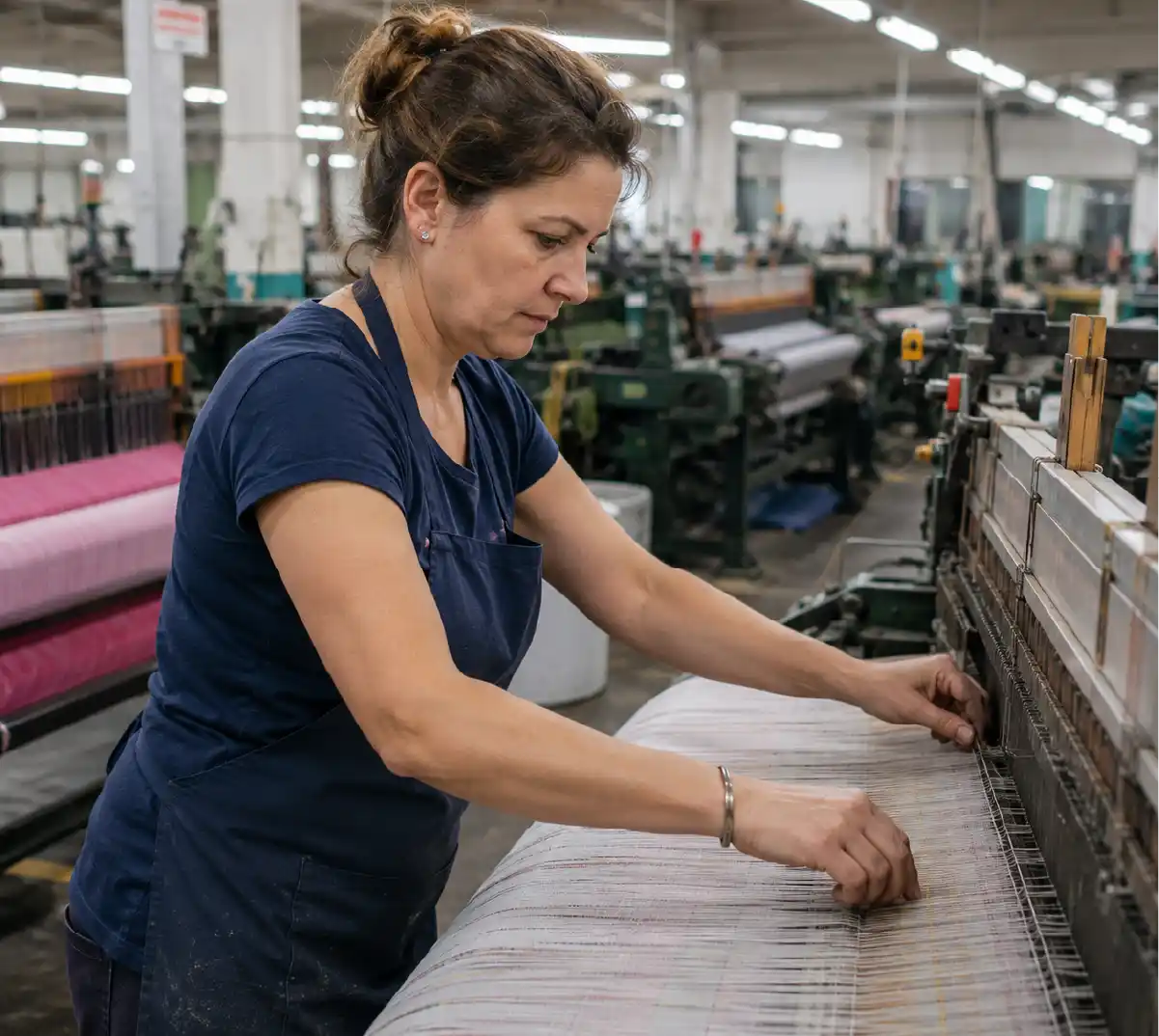
Experienced operators running industrial flatbed, overlock, coverstitch, button-hole, and bar-tack machines for German garment factories, fashion houses, and apparel exporters—both knitwear and woven garment specialisations are in demand.
Skilled tailors and pattern makers for German bespoke houses, fashion brands, and made-to-measure operations. CAD pattern-making experience (Lectra, Gerber, Optitex) is increasingly required for industrial pattern roles.
Industrial cutters operate automated cutting machines (Gerber, Lectra Vector), straight knives, and band knives in German cutting rooms—precision cutting for both woven fabrics and knitwear is required.
Skilled embroidery machine operators running Tajima, Barudan, and Brother industrial embroiderers for German fashion brands, sports apparel, and luxury labels. Manual embroidery skills are valued for couture houses.
Loom operators, knitting machine specialists, and finishing equipment operators for German fabric mills and integrated production facilities. Experience with circular knitting, warp knitting, and weaving is valued.
Quality control specialists inspect finished garments for stitching defects, measurement tolerances, fabric flaws, and finishing standards. Critical for German factories supplying premium international brands.
Roll inspection specialists check fabric quality before cutting, plus production helpers support sewing lines with trim preparation, garment movement, and line balancing across German factories.
Packers handle ironing, folding, tagging, and final packing for export shipments, plus garment finishers perform trimming, buttoning, and final touches before quality inspection.
Senior production technicians manage machine maintenance, line setups, and process improvements, plus factory floor supervisors oversee sewing teams, production targets, and quality standards in German manufacturing facilities.
Textile worker salaries in Germany have risen steadily as production demand outpaces local labour supply. German manufacturers must offer competitive packages aligned with the requirements of the Employment Contracts Act and IG Metall textile agreements to attract reliable production staff.
The minimum wage threshold for textile workers in Germany starts at €2,156 per month (German Mindestlohn gross), with experienced sewing operators and skilled production staff earning well above this baseline. Working textile employees in Germany typically earn €2,400 to €3,800 per month, depending on role, experience, and location. Berlin commands the highest salaries, while regional production sites tend to be slightly lower.
German Skilled Worker Visa applications for non-EU textile workers must meet the German salary threshold. Our recruiters ensure German employers offer competitive packages that satisfy both legal requirements and market expectations.
We are a focused manufacturing recruitment company serving Germany, working exclusively with textile, garment, footwear, and apparel production roles. Our recruiters genuinely understand the differences among a flatbed operator, an overlock specialist, a pattern maker, a master tailor, a quality checker, and a German factory supervisor.
This deep specialisation enables us to evaluate candidates with precision and match them to your German production needs while ensuring full compliance with the German Skilled Worker Visa system and German wage requirements.
We do not just send CVs. We work as your strategic production talent partner, understanding your German factory operations, evaluating candidates against real production criteria, and delivering textile workers who match both your technical needs and your German factory culture.
Hiring textile workers internally in Germany takes time, money, and specialised production knowledge that most HR teams lack. Working with a professional manufacturing recruitment agency in Germany brings clear advantages.
We maintain a global database of qualified candidates who have already been screened for sewing skills, machine experience, German Skilled Worker Visa eligibility, and factory readiness. You skip the slow sourcing phase and move straight to interviewing the strongest textile worker profiles ready for German deployment.
Specialised textile worker roles in Germany can take 3 to 6 months to fill internally due to the complexity of immigration processes. Our focused process significantly compresses that timeline through pre-screened candidate pools and established workflows of the German Federal Office for Migration and Refugees (BAMF) and the Federal Employment Agency.
Bad textile hires are expensive — costing German factories weeks of disrupted production, missed buyer deadlines, and quality reject rates. Our rigorous screening substantially reduces mis-hire risk through machine skills tests, sample work assessments, and reference checks with recognised manufacturers.
Germany's textile immigration landscape includes the Employment Contracts Act and IG Metall textile agreements, GDPR requirements, and German Skilled Worker Visa procedures. We handle every compliance step so your German factory avoids legal exposure and immigration violations.
Hidden hiring costs — sourcing, screening, skills testing, onboarding, and replacement after early departures — add up quickly. Our flat-fee or percentage-based pricing model makes the total cost predictable for German textile employers.
For German factories needing master tailors, industrial pattern makers, embroidery specialists, or production supervisors, our specialist sourcing network reaches into garment manufacturing communities and trade schools that general recruiters cannot access.
Our German textile worker recruitment services support every stage of your hiring journey — from initial role definition through onboarding and beyond.
Full-time, indefinite contracts for German garment manufacturers, fashion houses, textile mills, and apparel exporters. Suitable for sewing machine operators, tailors, fabric cutters, embroidery workers, and senior production leadership.
Project-based and seasonal placements for German textile employers ramping up for fashion seasons, export deadline pushes, and order surges. All contracts comply with the Employment Contracts Act and IG Metall textile agreements requirements.
Confidential executive search for senior German textile leadership — Factory Directors, Production Managers, Quality Heads, and Operations Directors at major German garment manufacturers, fashion houses, and textile mills.
Full coordination of German Skilled Worker Visa applications, EU Blue Card processing, and long-stay visas for non-EU candidates destined for German factories. We work with the German Federal Office for Migration and Refugees (BAMF) and the Federal Employment Agency from initial application through residence registration on arrival. Register as an employer to start hiring.
Specialist sourcing for German factories opening new production lines, expanding capacity, or launching new product categories — placing 20-100+ workers in coordinated batches with synchronised onboarding.
Dedicated sourcing for technical textile specialists, master tailors, pattern makers, embroidery experts, and quality controllers needed by German premium fashion brands and luxury manufacturing facilities. Independent recruiters can join our partner network.
One of the biggest barriers to international hiring in the textile industry in Germany is the complexity of immigration. AtoZ Serwis Plus provides end-to-end work permit and visa support so German factories can hire global talent without administrative burden.
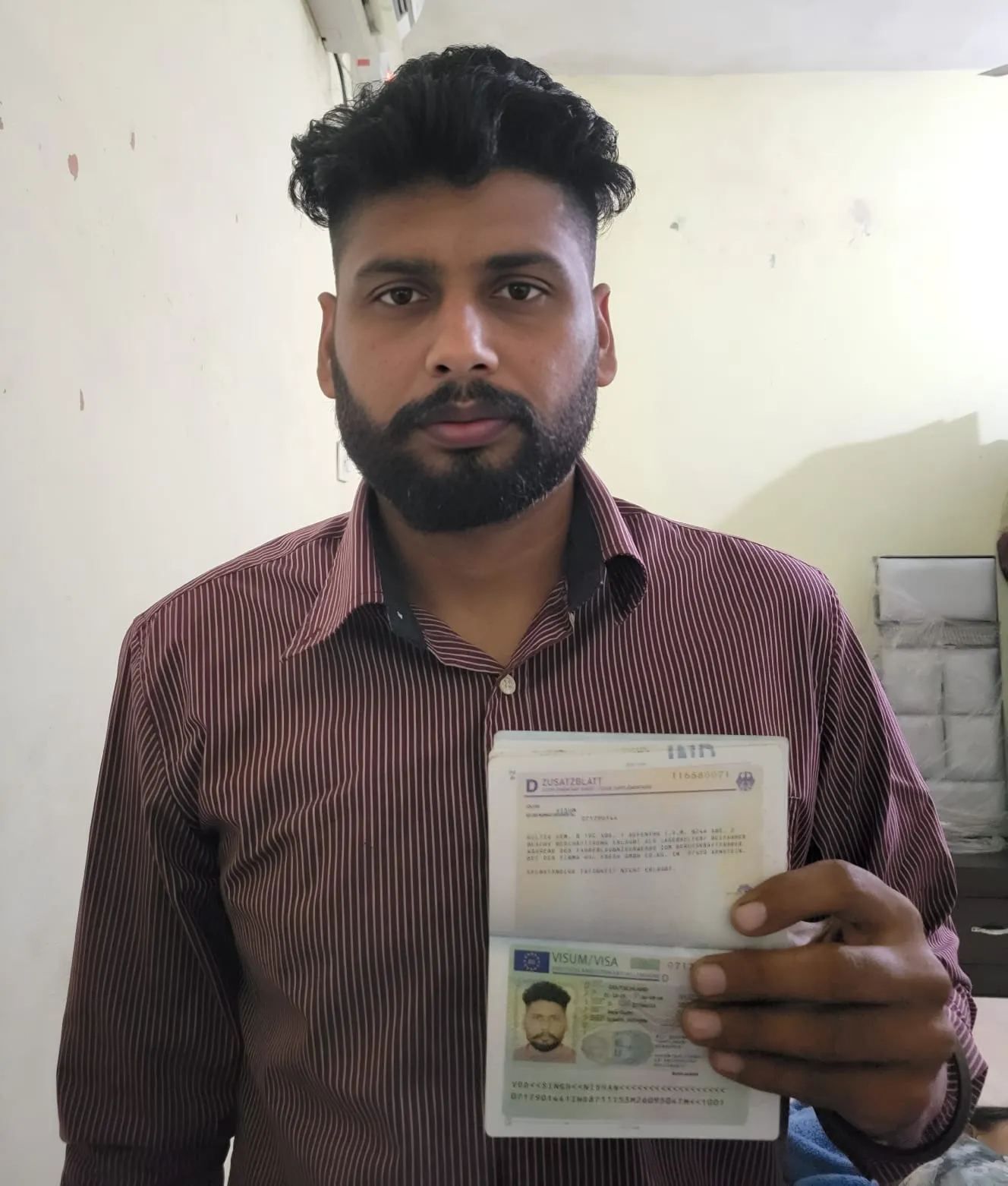
The German Skilled Worker Visa is the primary route for textile workers seeking employment in Germany. The German Federal Office for Migration and Refugees (BAMF) and the Federal Employment Agency process applications through make-it-in-germany.com and bamf.de. We handle the complete application lifecycle, including employment contract drafting aligned to the Employment Contracts Act and IG Metall textile agreements, skills documentation, salary threshold verification, and document apostille and certified translation where required.
Qualified textile workers may access the EU Blue Card Germany route for accelerated processing. Textile and garment production roles are explicitly listed on Germany's shortage occupations list, qualifying for expedited processing.
The EU Blue Card route is available to highly qualified textile specialists seeking to work in Germany. Applicants need recognised qualifications, a binding job offer in Germany, and a salary above the German EU Blue Card threshold. AtoZ Serwis Plus handles the complete EU Blue Card application through the German Federal Office for Migration and Refugees (BAMF) and the Federal Employment Agency, including document collection, certified translations, and employer attestations. Approved holders receive long-term residence rights with intra-EU mobility after 18 months.
For non-EU/EEA workers, we coordinate the national D visa or equivalent long-stay entry visa required to enter Germany. Workers relocating with families benefit from German family reunification provisions, with spouses gaining work authorisation in most cases.
After qualifying periods of legal residence in Germany (typically 5 years for permanent residence), textile workers can pursue long-term status. We brief candidates on these pathways so they can plan their careers in Germany. Explore our Germany work permit guide, or visit textile jobs in Germany.
Our textile worker recruitment services are tailored to the unique needs of every segment of the German apparel industry.
German CMT (Cut-Make-Trim) factories, full-package manufacturers, and apparel exporters require reliable sewing machine operators, fabric cutters, and quality checkers for high-volume production serving European and global brands.
German fashion brands and luxury labels need master tailors, pattern makers, sample sewers, and skilled embroidery specialists who can meet demanding quality standards for premium and couture production.
German textile mills, knitwear producers, and fabric finishers need loom operators, knitting machine specialists, dyeing and finishing technicians, and fabric inspectors for integrated production operations.
German technical textile manufacturers serving automotive, medical, military, and protective wear sectors need specialised operators familiar with technical fabrics, performance materials, and industrial textile applications — particularly serving Düsseldorf as Germany's fashion capital, Munich Trachten and Lederhosen production (Lodenfrey, Steinbock), Stuttgart technical textiles (Hugo Boss, BOSS Industrie), and major German fashion heritage brands.
German home textile producers — bedding, curtains, upholstery, carpets — require operators skilled in industrial sewing, heavy-fabric handling, and finishing processes for both retail and contract markets.
German sportswear brands and performance apparel manufacturers need operators familiar with technical fabrics, bonded seams, ultrasonic welding, and the specific construction techniques required for athletic and outdoor garments.
German workwear and uniform manufacturers need operators familiar with heavy-duty construction. In contrast, embroidery service providers need digitisers and machine operators for industrial Tajima and Barudan equipment serving corporate and fashion clients.
If you are a sewing machine operator, tailor, pattern maker, embroidery worker, or textile production specialist seeking legal employment in Germany, AtoZ Serwis Plus supports you from initial application through your first day at a German factory.
We work only with vetted German textile employers offering legal employment contracts compliant with the Employment Contracts Act and IG Metall textile agreements. Every vacancy includes a verified salary aligned with the €2,400-€3,800 per month range, contract type, factory location, and German Skilled Worker Visa sponsorship status.
Our recruiters review your work history, machine experience, and sample work, and then provide actionable feedback on how to position your skills for the German textile market. We brief you on each German employer's hiring process, sample-work assessments, and factory culture before you commit to interviews.
Once you accept a German offer, our immigration specialists guide you through the German Skilled Worker Visa application step by step. We coordinate with the German Federal Office for Migration and Refugees (BAMF) and the Federal Employment Agency, prepare your document pack, manage translations and apostilles, and brief you on embassy appointments through make-it-in-germany.com and bamf.de.
Moving to Germany involves more than a visa. We help with initial accommodation near your German factory, opening a German bank account, registering your address with local authorities, finding healthcare coverage, and the practical first-week essentials. Beyond initial placement, we maintain long-term relationships with placed workers and support future opportunities across our German employer network.
Ready to start? Register as a job seeker or browse current textile roles in Germany to take the first step.
We follow a structured, transparent process that delivers consistent results for German textile employers.
We start with a detailed conversation about your German factory, product range, role requirements, machines used, salary band aligned with €2,400-€3,800 per month, and timeline expectations. No CV is sent until we fully understand your needs.
Our sourcing draws on our pre-vetted textile worker database, active outreach to passive candidates in Germany and across our 50+ country network, and targeted referrals from operators already placed at recognised German factories.
Shortlisted candidates undergo CV verification, structured behavioural interviews, work-history reference checks, language assessment (German A2 to B2), machine-specific skills tests, where applicable, and sample work evaluation for skilled roles.
You receive a shortlist of qualified candidates with full profiles, machine experience summaries, reference notes, and sample-work assessment results. We then manage the entire interview process — scheduling, video interviews, on-site visits to your German factory, and feedback collection.
We handle salary negotiations within your approved range, contract drafting aligned with the requirements of the Employment Contracts Act and IG Metall textile agreements, shift premium discussions, and the formal offer acceptance process.
For international hires, we coordinate the complete German Skilled Worker Visa application through make-it-in-germany.com and bamf.de, embassy appointments, document apostille and translation, and pre-arrival preparation. Our specialists handle complex documentation requirements in the textile sector.
We assist with flights, initial accommodation near your German factory, registration of your address with local authorities, opening a German bank account, and first-week integration into your team. We check in at 30, 60, and 90 days to ensure successful integration and confirm long-term fit within your German production organisation.
Germany's domestic textile worker labour market cannot meet rising production demand. That is why we have built a global sourcing infrastructure spanning more than 50 countries — bringing qualified international sewing operators, tailors, and production specialists directly to German factories.
Bangladesh, India, Sri Lanka, Pakistan, Vietnam, Cambodia, Indonesia, and the Philippines produce hundreds of thousands of trained sewing operators each year, many with experience in international apparel operations and ready for sponsorship under the German Skilled Worker Visa.
Ukraine, Moldova, Belarus, Georgia, Armenia, and Uzbekistan offer significant textile workforce pools with cultural proximity to German factory expectations, strong tailoring traditions, and shorter onboarding curves for European production environments.
Egypt, Tunisia, Morocco, Ethiopia, Turkey, Lebanon, and growing Latin American textile workforces — strong manufacturing ecosystems producing experienced operators with rising German employer interest under bilateral skills partnerships.
We source mobile EU and EEA textile workers from Romania, Bulgaria, Portugal, Poland, Hungary, and the Balkans — operators with the right to work in Germany without permit restrictions under EU freedom of movement.
Our German textile worker recruitment activity is concentrated in the regions where apparel production, fashion industry investment, and skilled worker shortages are most pronounced.
Beyond these primary hubs, we also recruit for emerging German textile production locations, regional factories, speciality workshops, and contract manufacturers across Germany.
Not all textile recruitment agencies in Germany are created equal. Use this checklist to identify a trustworthy partner.
Choose an agency that works exclusively or predominantly with textile, garment, and apparel production roles. General recruiters often miss the technical nuances and sensitivities of German factory culture in these specialised positions.
Make sure the agency can source workers internationally, not just from within Germany or the EU. Verify that they understand the Employment Contracts Act and IG Metall textile agreements, the GDPR, the procedures of the German Federal Office for Migration and Refugees (BAMF) and the Federal Employment Agency, the German Skilled Worker Visa categories, the EU Blue Card requirements, and the German textile sectoral wage structures.
Ask how the agency screens textile candidates. Look for machine skills tests, sample work evaluations, factory reference checks, German A2-B2 language assessments, and structured interviews aligned with German production standards.
Check client testimonials, case studies, and references from recognised German textile manufacturers. Avoid German agencies with hidden fees — choose partners who communicate openly about wage rates and immigration timelines.
The best German agencies handle everything from sourcing through onboarding, including coordination of the German Skilled Worker Visa, approvals from the German Federal Office for Migration and Refugees (BAMF) and the Federal Employment Agency, relocation, accommodation guidance, and integration support.
The German textile and garment industry is changing fast. Here are the key trends shaping textile worker recruitment in Germany.
German Federal Office for Migration and Refugees (BAMF) and the Federal Employment Agency continue to support international textile recruitment through shortage-occupation fast-track processing. Sewing operator, tailor, and production specialist roles increasingly qualify for processing under the EU Blue Card in Germany.
German brands are investing in sustainable production, recycled fabrics, and circular fashion — creating demand for workers familiar with eco-fabrics, deadstock handling, repair-and-reuse production, and certified sustainable practices.
Rising shipping costs, supply chain disruptions, and ESG pressure are pushing German brands to relocate production closer to home markets — driving demand for skilled workers across Germany and neighbouring European manufacturing hubs.
German factories are adopting CAD pattern systems (Lectra, Gerber, Optitex), automated cutting machines, and digital production tools — creating demand for technically literate operators who can work alongside automation rather than be replaced by it.
German sectoral wages for textile workers now start at €2,156 per month (German Mindestlohn gross), with skilled operators and supervisors earning at the upper end of the €2,400-€3,800 per month range. More German factories are sponsoring placements for the German Skilled Worker Visa and the EU Blue Card to attract global talent.
Beyond general sewing skills, German employers now prioritise specialist expertise — technical fabric handling, automated machine operation, premium quality finishing, and complex construction techniques — for higher-paid production roles.
We have built our reputation in Germany on three core principles: quality, compliance, and partnership.
Quality comes from our exclusive focus on textile, garment, and apparel manufacturing roles, rigorous skills screening, and presenting only candidates who genuinely match your German factory culture and production standards.
Compliance comes from adhering to the Employment Contracts Act, IG Metall textile agreements, GDPR, German Skilled Worker Visa requirements, and the procedures of the German Federal Office for Migration and Refugees (BAMF) and the Federal Employment Agency at every step, thereby protecting your German textile business from legal and regulatory risk. Partnership comes from acting as your long-term German production workforce planning advisor — we invest in understanding your factory operations and helping you build sustainable manufacturing capabilities in Germany. Our German clients stay with us because we help them build stronger teams faster, with less risk and less administrative burden.
Take the first step toward your German textile manufacturing career. Choose the option that fits you best.
Are you a qualified sewing machine operator, tailor, pattern maker, or embroidery worker looking for legal textile jobs in Germany with full Skilled Worker Visa sponsorship and relocation support?
Register Now!Hire pre-screened sewing operators, tailors, and textile production specialists from our verified international talent pool for your German garment factory, fashion house, or textile mill.
Register Now!Partner with our trusted German recruitment network to place qualified textile workers and sewing operators with verified German textile employers.
A textile worker recruitment agency in Germany is a specialised firm that helps German garment manufacturers, fashion houses, textile mills, and apparel exporters find, screen, and hire qualified sewing operators, tailors, pattern makers, embroidery workers, and production staff. It handles candidate sourcing, skills screening, coordination of German Skilled Worker Visas, and visa support for international textile placements in Germany.
German textile recruitment agencies save time, reduce hiring risk, provide access to pre-vetted candidates, and handle compliance with the Employment Contracts Act, IG Metall textile agreements, and the German Skilled Worker Visa system. They are especially valuable for specialised, hard-to-fill, and shortage-occupation textile roles where local German supply is limited.
Most German agencies charge a percentage of the candidate's annual salary, usually between 12 and 22 per cent for permanent placements. Bulk team hiring, seasonal placements, and contractor arrangements use different pricing models based on German market rates.
Operator-level roles typically take 4 to 10 weeks, including processing for the German Skilled Worker Visa. Specialist roles such as pattern makers and master tailors can take 8 to 14 weeks. Bulk team hiring for German factory expansions typically takes 8 to 16 weeks, depending on visa requirements.
Yes — textile workers, sewing operators, and garment production roles are on Germany's shortage list, qualifying for fast-track processing of the German Skilled Worker Visa through EU Blue Card Germany.
Yes. We source qualified sewing operators, tailors, and production specialists from over 50 countries and coordinate German Skilled Worker Visa applications, EU Blue Card processing, and long-stay visa applications for non-EU hires destined for German factories.
We recruit across Germany, with strong activity in Berlin, Munich, Düsseldorf, Stuttgart, Hamburg, and Münster, and other German apparel production hubs.
We recruit sewing machine operators (flatbed, overlock, coverstitch), tailors, pattern makers, fabric cutters, embroidery workers, quality checkers, fabric inspectors, garment finishers, apparel packers, textile technicians, production helpers, and factory supervisors for German textile manufacturing operations.
Yes. We support t permanent, fixed-term contract hiring r for export-driven projects, seasonal cover for fashion peaks, and bulk team placements for German factory expansions. All contract types meet the requirements of the Employment Contracts Act and the IG Metall textile agreements.
We conduct detailed CV reviews, work history verification, factory reference checks, machine-specific skills tests, sample work evaluations for skilled roles, German A2 to B2 language assessments, and culture-fit evaluations aligned with German factory environments.
Yes. We maintain full GDPR compliance throughout the recruitment lifecycle, including obtaining proper consent, securely storing candidate data, and sharing data only with authorised parties in accordance with German data protection regulations.
Yes. We work with German textile businesses of all sizes, from boutique fashion ateliers hiring their first sample sewer to large garment manufacturers building new production lines in Berlin.
We cover German garment manufacturing, fashion houses and luxury brands, textile mills and fabric production, technical and industrial textiles, home textiles and furnishing, sportswear and performance apparel, and workwear and uniform production.
No. German authorities, including the German Federal Office for Migration and Refugees (BAMF) and the Federal Employment Agency, make all immigration decisions. Hiring decisions are made by individual German textile employers. We coordinate the process, prepare documents, and provide expert support, but we never guarantee outcomes.
We focus exclusively on textile, garment, and apparel manufacturing roles. We offer global talent reach across 50+ countries. We coordinate German Skilled Worker Visa and visa processes end-to-end. We act as long-term workforce planning partners rather than transactional vendors. And we maintain transparent communication and full compliance with German regulatory requirements at every stage.
Yes. German textile employers increasingly run two- and three-shift operations to meet export demand. We source operators willing to work shift patterns, with all contracts including required shift premiums under the Employment Contracts Act and IG Metall textile agreements.
We maintain ongoing relationships with experienced operators across Europe and globally, conduct discreet outreach to supervisors at competitor factories, leverage textile trade school networks, and use specialist databases of pre-qualified workers already screened for suitability for the German market.
Textile worker candidates typically need a valid passport, a signed German employment contract, evidence of textile experience or vocational qualifications, a criminal record certificate from the country of origin, proof of accommodation in Germany, valid health insurance, passport photographs, and the application fee. Documents not in the official German language(s) require certified translation. The German Federal Office for Migration and Refugees (BAMF) and the Federal Employment Agency provide the complete, up-to-date document checklist on make-it-in-germany.com and bamf.de.
Yes. Executive search is a core service. We conduct discreet, confidential searches for Factory Director, Production Manager, Quality Head, and Operations Director placements at major German garment manufacturers, fashion houses, and textile mills.
The EU Blue Card for Germany is an EU-wide work and residence permit for highly qualified professionals. For textile applications, it generally fits master tailors, senior pattern makers, production managers, and technical specialists with recognised qualifications and salaries above the German EU Blue Card threshold. Applicants need recognised qualifications (or equivalent professional experience), a German job offer, and a salary above the official threshold.
Getting started is simple. Contact our team via atozserwisplus.com or our employer registration form. We will arrange a discovery call to understand your German factory, production needs, role requirements, and timeline. Within days, you will receive a customised textile worker recruitment proposal aligned with your hiring needs and budget in Germany.
Speak to a Recruitment Specialist. Skip the slow German hiring process. Get pre-vetted sewing operators, tailors, and textile production specialists with full Skilled Worker Visa sponsorship and relocation support. Trusted by leading German garment manufacturers, fashion houses, and textile mills.
Hiring the right textile workers is one of the most important decisions your German factory in Germany will make this year. The right hires deliver consistent quality, meet export deadlines, and create lasting production value. The wrong hires waste time and money and create quality issues that hurt your buyer relationships for years.
AtoZ Serwis Plus combines deep German textile expertise across Germany, global talent reach across 50+ countries, full compliance including German Skilled Worker Visa coordination, and end-to-end recruitment support to help German garment manufacturers, fashion houses, and textile mills build stronger production teams faster and with less risk.
Whether you need ten sewing operators for a Berlin garment factory, a complete production team for an apparel exporter anywhere in Germany, or a Factory Director to lead your German production strategy, we are ready to help. Contact us today and take the first step toward building a stronger, more productive German textile organisation.
AtoZ Serwis Plus provides professional recruitment and immigration coordination services for German employers in Germany seeking qualified textile worker talent. We do not guarantee employment outcomes, German Skilled Worker Visa approvals, or visa decisions. All immigration and hiring decisions are made solely by official Germany government authorities including German Federal Office for Migration and Refugees (BAMF) and Federal Employment Agency, and by registered German employers. The information on this page is for general guidance only and may vary based on Germany regulations and individual circumstances. For specific advice, please consult licensed German immigration professionals and refer to official government portals such as make-it-in-germany.com and bamf.de.
Global clients share how AtoZ Serwis Plus helped them secure work permits, visas, and career support across Europe. Real stories. Real results.
At AtoZ Serwis Plus, we help you become a global citizen with trusted support for jobs abroad, overseas education, and visa processing tailored to your goals.
Read More
Connecting employers, job seekers, students, and agencies across Europe and beyond.
Looking to hire skilled or semi-skilled workers from Asia, Africa, the CIS, or EU countries? AtoZ Serwis Plus supports your recruitment needs for Poland, Germany, Slovakia, Hungary, Lithuania, Estonia, and beyond. We deliver comprehensive legal recruitment services, visa support, and seamless onboarding solutions tailored to your business goals. Partner with us to build a reliable, compliant, and efficient workforce.
EmployerLooking to hire skilled or semi-skilled workers from Asia, Africa, the CIS, or EU countries? AtoZ Serwis Plus supports your recruitment needs for Poland, Germany, Slovakia, Hungary, Lithuania, Estonia, and beyond. We deliver comprehensive legal recruitment services, visa support, and seamless onboarding solutions tailored to your business goals. Partner with us to build a reliable, compliant, and efficient workforce.
Job SeekersAre you a recruiter looking to place workers in Poland, Germany, Slovakia, or other EU destinations? AtoZ Serwis Plus provides you with trusted employer connections, legal recruitment solutions, verified job placements, and full visa assistance. Expand your recruitment business with confidence, supported by clear processes, reliable documentation, and transparent migration services.
RecruiterLooking to work and live in Europe? At AtoZ Serwis Plus, we’re here to guide you every step of the way. Our experts provide support with job search assistance, work visa applications, qualification recognition, and European language learning. To connect with us and get started on your European journey, click one of the contact icons below.
Copyright © 2009-2026 AtoZ Serwis Plus. All Rights Reserved.