A Maltese study visa is the official document that allows international students from non-EU/EEA/Swiss countries to enter Malta and study at a recognised university, college, or language school for the duration of their programme. It is issued by the Maltese Embassy / Consulate / Identity Malta after admission and document verification.
Malta is a sunny English-speaking EU island with affordable tuition and a unique Mediterranean student lifestyle. Malta is one of two English-speaking EU countries (alongside Ireland) and a global hub for English-language schools.
This guide is written in clear, simple language to make the process easy to follow. Whether you are an applicant from India, Pakistan, Nigeria, China, Iran, or any other country, you will find every essential detail covered here. We have built this guide based on real student experiences, official government sources, and 17+ years of immigration consulting expertise from AtoZ Serwis Plus.
Before any of your dreams become possible, you need one essential thing: a valid Malta study visa. Without it, you cannot board your flight or start your degree. This page walks you through every step, with realistic expectations and zero false promises.
Malta is more than just a study destination. It offers a long-term gateway to academic excellence, career growth, cultural exposure, and personal development. Every year, thousands of international students choose Malta for its modern campuses, structured programmes, and strong support systems. With the right preparation, the application process becomes simple and predictable.
Malta has become a popular study destination for international students. The country offers high educational standards, recognised qualifications, and a welcoming environment. Here is why so many students choose Malta every year:
Malta offers different visa categories based on the type and length of study. Choosing the right category is one of the most important first steps in your application.
For short courses, summer schools, or language programmes lasting up to 90 days. Best for students attending exchange programmes or short academic visits.
The main visa for international students enrolled in degree programmes lasting more than 90 days. It allows entry to Malta and is later converted into a residence permit for study purposes upon arrival.
The renewable long-term legal status for full-time students at Maltese universities. It is usually valid for 12 months and can be renewed each year while studies continue.
Designed for PhD candidates, postdoctoral researchers, and academic professionals affiliated with Maltese research institutions or universities.
For students enrolled in long-term Maltese and English or English language preparation courses, which are often required before starting a full degree programme.
You can apply for a Malta study visa if you are a citizen of a non-EU, non-EEA, or non-Swiss country and plan to study in Malta for more than 90 days. EU, EEA, and Swiss students do not need a study visa, although they must register their stay if it lasts longer than 3 months.
The most common countries of origin for Malta study visa applicants include:
These countries make up the majority of Malta's growing international student community.
The National Long-Stay Student Visa (Type D) is usually valid for entry to Malta and an initial stay. After arrival, students must apply for a residence permit through the Identity Malta Agency. The residence permit is valid for 12 months and is renewable each year.
To keep the residence permit active, students must demonstrate academic progress each year, typically by passing a minimum number of credits.
Before starting your application, make sure you meet all the basic requirements. Missing even one document can delay your application by weeks or even months.
Here is a complete checklist of what you must prepare:
Each requirement plays a key role in your visa approval. The Maltese consulate evaluates each application on a case-by-case basis.
Document preparation is one of the most important steps in the visa journey. Maltese authorities are strict about clarity, accuracy, and authenticity.
Here is the full list of documents you must submit:
A useful tip: always carry at least 2 sets of photocopies for every document. Many embassies require duplicates during the appointment.
Proof of financial means is one of the most important parts of any study visa application. Maltese authorities want to see that students can support themselves throughout their studies.
Typical financial requirements include:
Always check with the Maltese embassy in your country for the most up-to-date financial requirements.
Here are realistic processing times based on real consulate data:
Always apply early — at least 3 months before your planned travel date. Maltese consulates are usually busiest from May to September due to high demand for admissions.
The cost of applying for a Malta study visa includes several components:
Fees are subject to change and may vary slightly by consulate location. Always verify current fees at the official Maltese embassy or government website.
The process is simple if followed carefully. Here is the full step-by-step process:
Start by applying to a recognised Maltese university or higher education institution, such as the University of Malta or the Malta College of Arts, Science and Technology (MCAST). Once accepted, you will receive an official admission letter, which is mandatory for the visa application.
Collect every required document on the checklist. Translate and legalise them as required. Take your time at this stage — it directly affects your chances of approval.
Visit the Maltese embassy or consulate website in your home country and book a visa appointment. Online booking is mandatory in most regions, and slots fill up quickly during peak admission seasons.
On the day of the appointment, submit the completed visa form, passport, all supporting documents, and pay the visa fee. Biometric data will also be collected at the appointment.
Some applicants are called for a short interview. The consular officer may ask:
Answer honestly and confidently. The interview is just a routine verification step, not a test.
After review, the consulate issues the decision. If approved, the National Long-Stay Student Visa (Type D) is stamped in your passport, and you are ready to travel to Malta. After arrival, you must apply for a residence permit at the Identity Malta Agency.
Most refusals come from small, avoidable mistakes. The top reasons include:
A careful pre-submission review can prevent most of these issues. AtoZ Serwis Plus offers a complete document review service to avoid such risks.
Here are practical tips to increase your visa approval chances:
Malta offers competitive education costs for international students.
€1,080 to €14,000, depending on the programme, university, and study level (Bachelor, Master, or PhD).
Here is a realistic monthly budget for a single student in Malta:
Total monthly budget: €800-€1,300.
Living in Valletta is usually 20 to 30 per cent more expensive than in smaller cities like Sliema and St. Julian's.
Health insurance is mandatory for all international students in Malta. Most consulates require proof of valid coverage before issuing the study visa.
Common options include:
Make sure your insurance covers hospitalisation, doctor visits, and emergency care for the entire duration of your studies.
Some of the most popular universities for international students include:
These universities offer programmes in both Maltese and English, with strong international support services for students from abroad.
International students often choose programmes in:
Many programmes are available in English, making Malta an accessible study destination for global students.
Malta offers several scholarship opportunities to support international students:
Scholarships often cover tuition fees, monthly stipends, health insurance, and travel grants. Apply early as competition is high.
Studying in Malta comes with several long-term benefits:
Before flying out to Malta, prepare a complete pre-departure file. Missing items at the airport or on arrival can cause major stress. Here is what every student should pack and arrange:
Always keep digital backups of every document on a secure cloud service. If your bag is lost, you will still have full access to your records.
The first 30 days after arrival are the most important. This is when you complete all the legal and administrative steps that make your stay official. Here is what to expect:
Most Maltese universities have international student offices that walk new students through these steps. Use them. They are designed to make the transition smooth.
Adapting to life in Malta takes time, but the experience becomes easier with a few practical tips:
Cultural adaptation is part of the international student journey. The more open you are, the richer your experience in Malta will be.
For many students, Malta is not just a study destination — it is the first step toward long-term settlement in Europe. Here is how the pathway typically works:
Each step requires careful planning, documentation, and timing. AtoZ Serwis Plus supports students from the first visa application through to long-term residence and family settlement.
At AtoZ Serwis Plus, we have been helping international students with European study visa applications for over 17 years. We understand the Malta study visa process from every angle — and we know that even small mistakes can lead to long delays or refusals.
Here is how we help:
We do not make false promises. We focus on real, honest, and structured support — from your first consultation to your first day in Malta, and beyond.
For official and up-to-date information, always check trusted government sources:
AtoZ Serwis Plus supports international students with complete study visa services across Malta, helping applicants access top-quality education opportunities in major cities such as Valletta, Sliema, St. Julian's, Msida, Birkirkara. We assist with university admissions, Maltese student visa procedures, and application standards to ensure a smooth, structured, and reliable process.
From preparing documentation to guiding students through each stage of the Maltese study visa process, we focus on accuracy, compliance with Maltese education and immigration regulations, and practical support. Our goal is to make the journey to studying in Malta more transparent, efficient, and accessible for students and their families.
It is a long-stay national visa (National Long-Stay Student Visa (Type D)) or residence permit that allows non-EU students to enter Malta and study at a recognised institution for more than 90 days.
All non-EU, non-EEA, and non-Swiss students who plan to study in Malta for more than 90 days.
Short-stay (Type C) is for studies up to 90 days. Long-stay (Type D) is for studies lasting more than 90 days, including degree programmes.
Most applications are processed within 4 to 12 weeks, depending on the consulate's workload and the quality of the documents.
The visa fee is around €100, and the residence permit fee is around €95. Costs may vary slightly by country.
Adult students must show around €600 per month for living expenses, usually one full year upfront.
Not always. Many programmes are taught in English. However, Maltese and English skills are required for Maltese- and English-taught courses or for daily convenience.
Yes, many countries allow international students to work part-time during their studies. Check the specific rules with the Identity Malta Agency.
Yes. Health insurance is mandatory for all international students in Malta.
Around €800-€1,300 per month, depending on the city and lifestyle.
Yes. Family members can apply for family reunification once they hold a valid residence permit.
Some applicants are called for a short interview at the Maltese consulate.
Yes. The most common reasons are incomplete documents, weak finances, or unclear study plans.
Yes. Students apply for a residence permit renewal each year while studying.
You can stay for up to 12 months to find a job, then apply for a work permit.
Yes. Malta Government Scholarships and several other scholarships are popular options for international students.
Yes. Degrees from recognised institutions are accepted internationally, especially within Europe via the Bologna Process.
Yes. After graduation, you can apply for a job-seeker option or directly for a work permit if you find a sponsoring employer.
Approval rates are high for genuine students with proper documentation and a clear study purpose, usually above 80 per cent.
Bring your original passport, admission letter, financial proof, accommodation proof, insurance, and all supporting documents.
Yes. Most consulates collect fingerprints and a digital photo at the visa appointment.
Yes. We guide students through every step, from university selection to visa interview preparation and post-arrival support.
With expert support from AtoZ Serwis Plus, your dream of studying in Malta becomes simple and achievable. Let our team guide you with documents, applications, and trusted advice every step of the way.
AtoZ Serwis Plus provides professional guidance, documentation support, and study visa assistance only. Final visa approval depends entirely on the embassy, consulate, immigration authority, or education department of the respective country. We do not guarantee admission or visa approval. Applicants should always verify the latest requirements directly with the official embassy, university, or visa application centre before applying.
Global clients share how AtoZ Serwis Plus helped them secure work permits, visas, and career support across Europe. Real stories. Real results.
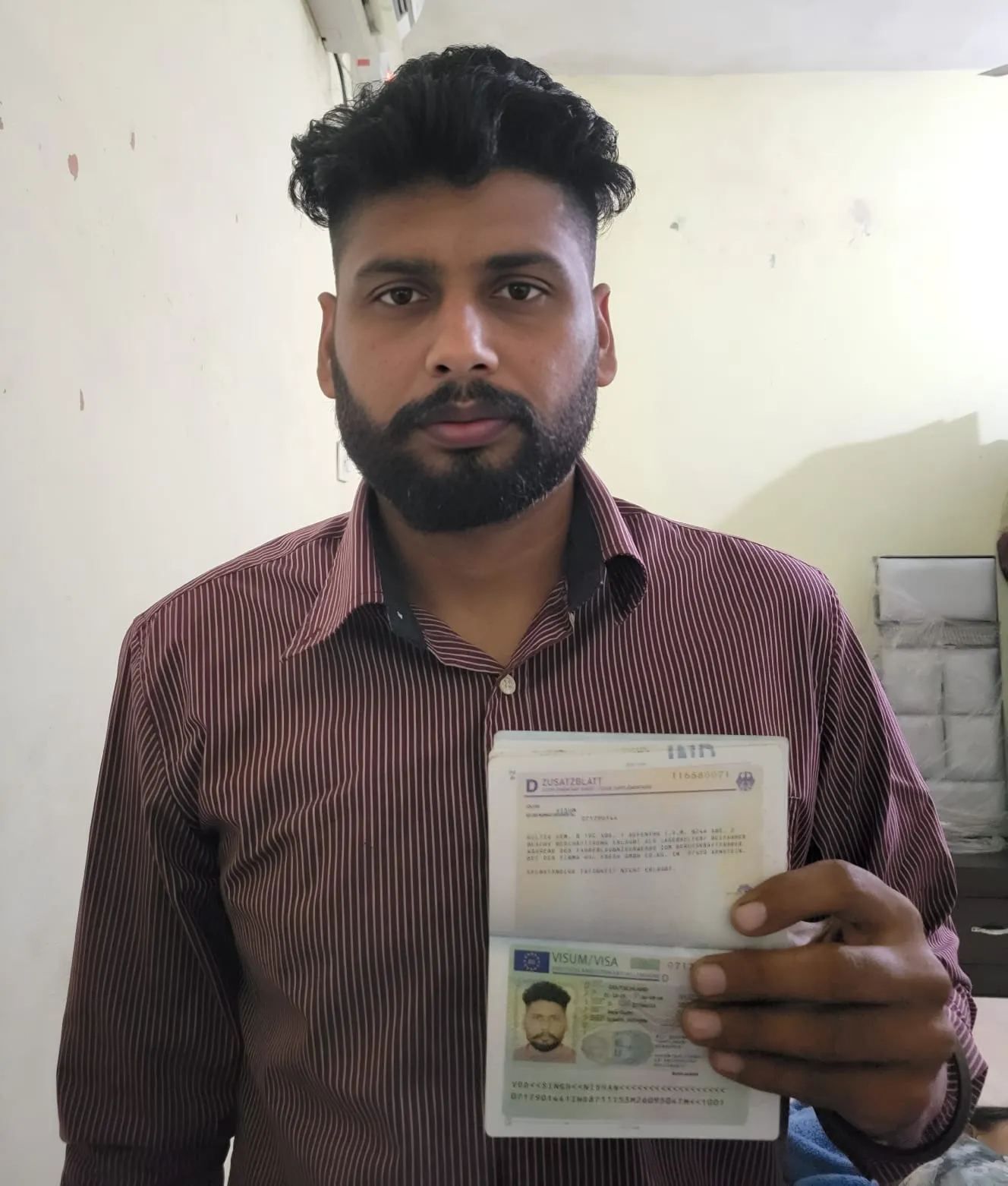
At AtoZ Serwis Plus, we help you become a global citizen with trusted support for jobs abroad, overseas education, and visa processing tailored to your goals.
Read More
Connecting employers, job seekers, students, and agencies across Europe and beyond.
Looking to hire skilled or semi-skilled workers from Asia, Africa, the CIS, or EU countries? AtoZ Serwis Plus supports your recruitment needs for Poland, Germany, Slovakia, Hungary, Lithuania, Estonia, and beyond. We deliver comprehensive legal recruitment services, visa support, and seamless onboarding solutions tailored to your business goals. Partner with us to build a reliable, compliant, and efficient workforce.
EmployerLooking to hire skilled or semi-skilled workers from Asia, Africa, the CIS, or EU countries? AtoZ Serwis Plus supports your recruitment needs for Poland, Germany, Slovakia, Hungary, Lithuania, Estonia, and beyond. We deliver comprehensive legal recruitment services, visa support, and seamless onboarding solutions tailored to your business goals. Partner with us to build a reliable, compliant, and efficient workforce.
Job SeekersAre you a recruiter looking to place workers in Poland, Germany, Slovakia, or other EU destinations? AtoZ Serwis Plus provides you with trusted employer connections, legal recruitment solutions, verified job placements, and full visa assistance. Expand your recruitment business with confidence, supported by clear processes, reliable documentation, and transparent migration services.
RecruiterLooking to work and live in Europe? At AtoZ Serwis Plus, we’re here to guide you every step of the way. Our experts provide support with job search assistance, work visa applications, qualification recognition, and European language learning. To connect with us and get started on your European journey, click one of the contact icons below.
Copyright © 2009-2026 AtoZ Serwis Plus. All Rights Reserved.