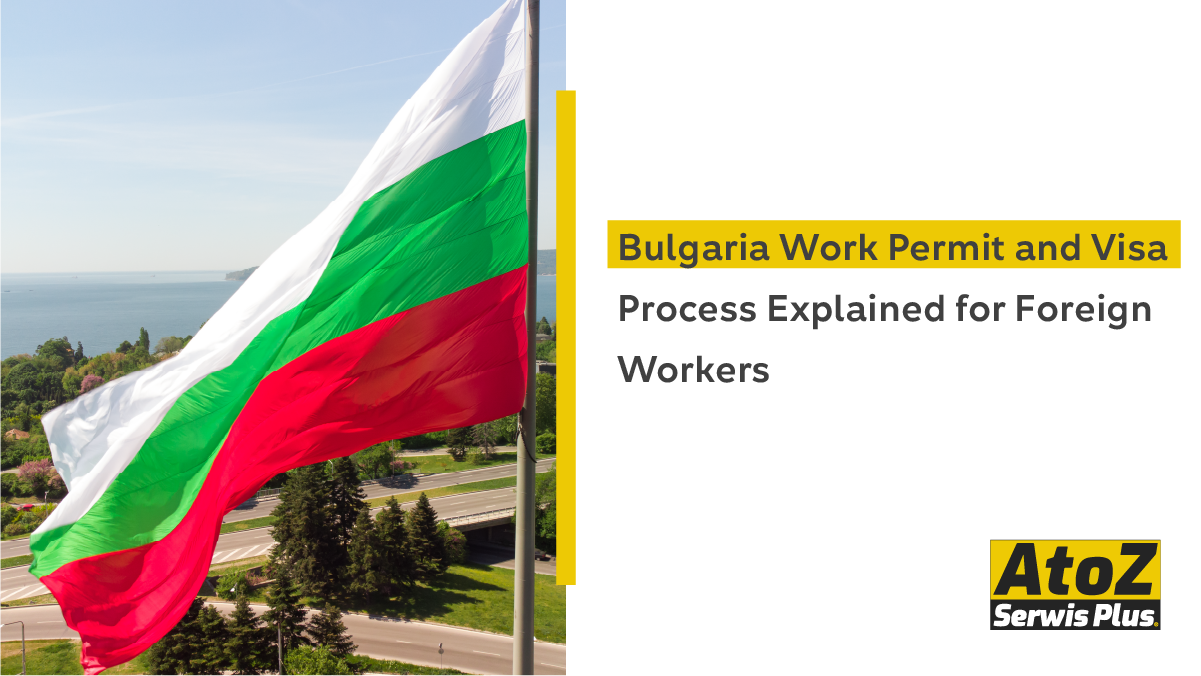
Bulgaria Work Permit and Visa Process Explained for Foreign Workers
Introduction to Bulgaria
Bulgaria is a Balkan country located in Southeast Europe, bordered by Romania, Serbia, Greece, Turkey, and the Black Sea. Its capital city is Sofia, and the currency is the Bulgarian Lev (BGN), which is pegged to the Euro at a fixed exchange rate. Bulgaria is a member of the European Union but not yet part of the Schengen Zone. With a population of around 6.4 million, Bulgaria is renowned for its low cost of living, rich cultural heritage, and growing demand for foreign workers in both blue-collar and white-collar sectors.
Living and Working in Bulgaria
Bulgaria offers a very affordable lifestyle compared to Western Europe. Rent for a one-bedroom apartment in Sofia ranges between €350 €500, while smaller cities provide housing for less than €250. Food, transportation, and utilities are inexpensive, making Bulgaria a popular destination for expats seeking to save money while enjoying European life. The healthcare system is a mix of public insurance coverage and private clinics, with employers required to contribute to health and pension funds. Safety levels are stable, and English is widely spoken in business environments, especially among younger generations.
Job Opportunities in Bulgaria
Bulgaria’s economy is experiencing rapid development, and labour shortages are prevalent in many sectors.
- Blue-collar jobs: construction workers, truck drivers, machine operators, seasonal farm workers, hotel staff, and welders.
- White-collar jobs: IT professionals, engineers, teachers, accountants, healthcare workers, and finance specialists.
Average Salaries in Bulgaria
|
Job Role |
Salary (BGN) |
Salary (EUR) |
|---|---|---|
|
Construction Worker |
1,800 |
~€920 |
|
Truck Driver |
2,200 |
~€1,125 |
|
Hotel/Waiter Staff |
1,400 |
~€715 |
|
IT Specialist |
4,500 |
~€2,300 |
|
Engineer |
3,500 |
~€1,800 |
|
Doctor/Nurse |
3,800 |
~€1,950 |
While salaries are lower compared to Western Europe, Bulgaria’s low cost of living makes it possible for foreign workers to save and enjoy a comfortable lifestyle.
Finding Jobs in Bulgaria
Foreigners can apply for jobs through the official Bulgarian Employment Agency (Агенция по заетостта).
Official Employment Agency of Bulgaria
This government portal lists verified vacancies, work permits, and information about foreign worker quotas. Direct applications to employers, recruitment agencies, and networking within professional circles are also effective ways to find jobs.
Types of Work Permits in Bulgaria
Foreigners are required to obtain a work permit before commencing employment. The main categories include:
- General Work Permit – Valid for up to 1 year for most foreign workers.
- EU Blue Card – For highly skilled professionals, valid up to 4 years.
- Seasonal Work Permit – For short-term jobs in agriculture, tourism, and hospitality (up to 90 days, extendable to 9 months).
- Intra-Corporate Transfer (ICT) Permit – For multinational employees transferred within branches.
Types of Work Visas in Bulgaria
Foreigners also need visas to stay legally in Bulgaria:
- Visa Type D (Long-term Visa) – Required for employment or residence permits, valid for 6–12 months.
- Short-term Visa (Type C) – For business visits or temporary stays up to 90 days.
- Residence Permit Visa – Linked to employment contracts for more extended stays.
Validity of Work Permits and Visas
- General work permits are valid for 1 year and are renewable.
- EU Blue Card: valid for up to 4 years.
- Seasonal permits are valid for up to 90 days and can be extended to 9 months.
- Type D Visa: valid for 6–12 months.
Step-by-Step Visa Application Process
- Secure a job offer from a registered employer in Bulgaria.
- The employer applies for a work permit at the Employment Agency.
- Gather required documents: passport, job contract, health insurance, accommodation proof, and police clearance.
- Apply for a Type D Visa at the Bulgarian embassy in your home country.
- Travel to Bulgaria once the visa is approved.
- Register your address with local authorities.
- Apply for a residence permit at the Directorate of Migration.
- Receive your residence card and begin working legally.
Required Documents for a Work Visa in Bulgaria
- Valid passport (at least 6 months remaining)
- Signed employment contract
- Proof of funds and financial stability
- Health insurance coverage
- Proof of accommodation (rental or employer-provided)
- Police clearance certificate
- Passport-sized photos
- Completed the visa application form and paid the fees
Accommodation and Real Estate in Bulgaria
Housing is affordable, with Sofia being the most expensive city. Rents outside Sofia are significantly lower, often below €250 per month. Foreigners are allowed to purchase property in Bulgaria, and ownership records can be verified through the Bulgarian Property Register.
Appeal Process for Visa Refusal
If your visa application is refused, you may appeal within 14 days of the refusal. Additional supporting documents, employer confirmations, or financial evidence can strengthen your case. The Bulgarian Ministry of Interior handles appeals.
Pathway to Permanent Residency in Bulgaria
Foreigners can apply for permanent residency after 5 years of continuous legal residence. Family members of Bulgarian citizens may qualify earlier. Applicants must show proof of employment, stable income, housing, and integration.
Documents Required for Permanent Residency
- Previous residence permits
- Proof of employment or business activity
- Evidence of income and tax contributions
- Rental or property documents
- Family documents (if applicable)
- Proof of integration, if required
Hiring in Bulgaria
Employers must comply with government rules when hiring foreigners. They are required to check labour market conditions, apply for permits, and register employees with the relevant tax and social authorities.
Recruiting in Bulgaria.
The Employment Promotion Act regulates recruitment. Employers must treat applicants fairly and equitably, and job postings must comply with applicable legal standards.
Laws Against Discrimination in Bulgaria
Bulgarian labour law prohibits discrimination based on race, gender, religion, nationality, age, or disability.
How to Hire Employees in Bulgaria
Employers must provide written contracts, register workers with the National Revenue Agency, and ensure compliance with Bulgarian labour codes.
Employment Contracts in Bulgaria
Contracts must be in writing and specify role, salary, hours, benefits, and termination rules. Probation periods of up to 6 months are allowed.
Working Hours in Bulgaria
The standard working week is 40 hours, with overtime strictly regulated and compensated at higher pay rates.
Public Holidays in Bulgaria
Bulgaria observes around 12 official public holidays, including Easter, Christmas, and National Day (March 3). Employees are entitled to paid leave on these days.
Vacation Days in Bulgaria
Employees receive a minimum of 20 working days of paid annual leave per year.
Additional Leave in Bulgaria
Special leave may be granted for marriage, childbirth, examinations, and other personal reasons.
Sick Leave in Bulgaria
Employees are entitled to paid sick leave, provided they submit supporting medical documentation to substantiate their absence. Employers cover the first three days, and Social Security pays the rest.
Parental Leave in Bulgaria
Mothers are entitled to 410 days of paid maternity leave, while fathers are entitled to take paternity leave. Parents can also share childcare leave.
Termination and Severance in Bulgaria
Employment may be terminated with notice. Severance pay is provided in redundancy or unlawful dismissal cases, calculated by years of service.
Onboarding in Bulgaria
Employers must register new hires, provide orientation, and comply with workplace safety regulations.
Bulgaria Employment Laws
Employment is governed by the Bulgarian Labour Code, which covers contracts, working conditions, benefits, and termination rules.
Taxation Rules in Bulgaria
Bulgaria applies a flat 10% personal income tax rate. Employers also contribute to pension, health, and unemployment funds.
Bulgaria Payroll Options for Companies
Payroll can be handled internally, outsourced to payroll providers, or managed via Employer of Record (EOR) services.
How to Establish Payroll in Bulgaria
Employers must register with the National Revenue Agency, open bank accounts, and comply with monthly reporting obligations.
Bulgaria Compensation Laws
Minimum wages and overtime payments are regulated by law. Compensation must meet national standards.
Guaranteed Benefits in Bulgaria
Mandatory benefits include paid leave, healthcare, pension contributions, maternity leave, and social insurance.
Restrictions for Benefits and Compensation
Employers cannot bypass mandatory entitlements. Benefits must comply with labour and tax regulations.
Bulgaria Competitive Benefits Planning
Employers often offer additional perks, such as meal vouchers, transportation allowances, and health packages, to attract skilled workers.
Bulgaria Employee Benefits Plans
Standard plans include public health and pension contributions. Some companies provide private insurance or retirement schemes.
Requirements for Employee Benefits in Bulgaria
Employers are required to contribute to social and health insurance for all registered employees.
How to Design Your Employee Benefits Program
Companies can combine legally required benefits with additional perks to improve recruitment and retention.
Average Cost of Benefits per Employee
Employers typically contribute 30%–32% of gross salary to cover benefits and taxes.
How to Calculate Employee Benefits
Benefits are calculated based on the gross salary, with fixed percentages applied to pensions, healthcare, and unemployment insurance.
Employee Health Benefits Plans
Public health insurance covers most services. Many employers also provide private health insurance for better coverage.
How to Establish a Bulgarian Subsidiary
Foreign companies may establish a subsidiary in Bulgaria by registering with the Bulgarian Trade Register, obtaining a tax identification number, and opening a local office.
Bulgaria Subsidiary Laws
Subsidiaries operate as independent entities under Bulgarian company law, with their own rights and obligations.
Benefits of Establishing a Bulgarian Subsidiary
A subsidiary enables employers to hire locally, access tax benefits, and establish long-term operations in accordance with Bulgarian regulations.
Requirements to Obtain Bulgaria Work Visas
Applicants need a job offer, employer sponsorship, valid documents, and proof of accommodation and health insurance.
Application Process for Bulgaria Work Visas
Applications are made at Bulgarian embassies abroad. After approval, workers must register locally and apply for residence permits.
Other Important Considerations for Bulgaria Work Visas
Knowledge of Bulgarian or English, cultural adaptation, and adherence to deadlines are key to long-term success.
Official Government Resources
- Bulgarian Employment Agency (Агенция по заетостта)
- Ministry of Interior – Migration Directorate
- Ministry of Foreign Affairs
- National Revenue Agency (NRA)
- Bulgarian Property Register
Start Your Journey with AtoZ Serwis Plus
Bulgaria is a gateway to affordable living and stable job opportunities in the EU. At AtoZ Serwis Plus, we assist foreign workers in finding employment, obtaining work permits, and applying for visas legally. Whether you’re a seasonal worker or a skilled professional, our experts make the process simple and reliable.
Our Solutions
Connecting employers, job seekers, recruiters, and students with opportunities across Europe and beyond.
For Workers – Start Your Career in Europe
Looking for a stable job and a legal pathway to Europe?
We help non-EU citizens secure verified opportunities in various sectors, including construction, warehouses, factories, hospitality, agriculture, and logistics.
- Verified job offers
- Work permit & visa support
- Document preparation & training guidance
- Post-arrival support (housing, registration, settlement)
Apply Now – Worker Registration
For Employers – Hire Reliable Workers in Europe
Struggling with a labour shortage?
We connect European companies with vetted non-EU candidates, ensuring safe and legal recruitment.
- Recruitment of skilled and general workers
- Work permit & visa assistance
- Compliance and document verification
- Onboarding and post-arrival support
Register Your Company – Employer Registration
For Recruiters – Partner With Us in Europe
Are you a recruiter or agency?
We collaborate with trusted partners worldwide to provide a workforce for European employers.
- Partnership with a leading immigration consultancy
- Access to verified job opportunities
- Full visa & work permit support
- Transparent policies and long-term collaboration
Register Now – Become a Recruitment Partner
Truck Driver Jobs in Europe
For Drivers – Start Your Career in Europe
If you are a non-EU driver with a C+E license and want to work in Europe, AtoZ Serwis Plus can help you secure legal and well-paid truck driving jobs.
- Verified job offers with trusted logistics companies
- Complete assistance with work permits and visas
- Guidance for Code 95 training and license conversion
- Post-arrival support with housing and residence permits
Apply Now – Driver Registration
Final Thoughts – AtoZ Serwis Plus
The Moldova work permit and visa process is straightforward if you prepare your documents correctly and secure an employer willing to sponsor your application. At AtoZ Serwis Plus, we guide candidates through every step — from finding verified jobs to handling documentation, applying for permits, and providing post-arrival support.
Frequently Asked Questions (FAQs) about Working in Bulgaria
1. Do foreigners need a work permit to work in Bulgaria?
Yes, all non-EU/EEA citizens must obtain a valid work permit before starting employment in Bulgaria.
2. What is the difference between a work permit and a work visa in Bulgaria?
The work permit authorises you to work in Bulgaria, while the Type D work visa allows you to enter and stay in the country for employment.
3. How long is a work permit in Bulgaria valid?
Most general work permits are valid for up to 1 year and can be renewed annually.
4. What is the validity of the Bulgaria Type D Visa?
The Type D long-term visa is typically valid for 6–12 months and is associated with a residence permit.
5. What jobs are most in demand in Bulgaria?
Bulgaria needs workers in various sectors, including construction, transportation, hospitality, agriculture, IT, healthcare, and engineering.
6. What is the average monthly salary in Bulgaria?
The average monthly salary ranges between BGN 1,800 (€920) for blue-collar jobs and BGN 4,500 (€2,300) for white-collar jobs, such as IT.
7. Is the cost of living affordable in Bulgaria?
Yes, Bulgaria is one of the most affordable countries in the EU, with low rent, food, and transportation costs.
8. Can foreigners buy property in Bulgaria?
Yes, foreigners can buy property, and ownership details can be checked in the Bulgarian Property Register.
9. What documents are required for a Bulgarian work visa?
A valid passport, job contract, proof of funds, health insurance, accommodation proof, police clearance, and visa application forms.
10. How do I apply for a Bulgarian work visa?
First, secure a job offer. The employer applies for a work permit. Then, you apply for a Type D Visa at a Bulgarian embassy in your home country.
11. What happens if my Bulgaria visa application is refused?
You may appeal the refusal within 14 days, submitting stronger documentation or employer confirmations to support your case.
12. How many years do I need to live in Bulgaria to get permanent residency?
Foreigners can apply for permanent residency after 5 years of continuous legal residence.
13. What benefits do employees receive in Bulgaria?
Mandatory benefits include paid vacation, maternity leave, sick leave, health insurance, and pension contributions.
14. How many vacation days are employees entitled to in Bulgaria?
Employees receive a minimum of 20 working days of paid annual leave each year.
15. What is the standard working week in Bulgaria?
The standard workweek is 40 hours, with overtime strictly regulated by labour law.
16. Are employees entitled to sick leave in Bulgaria?
Yes, employees are entitled to get paid sick leave. Employers pay for the first three days, after which Social Security covers the costs.
17. What taxes do employees pay in Bulgaria?
Bulgaria has a flat 10% personal income tax, and employers contribute to social security and health insurance.
18. What is the role of the Bulgarian Employment Agency?
The Employment Agency (Агенция по заетостта) manages job postings, foreign worker permits, and labour market data.
19. Can companies in Bulgaria hire foreign workers easily?
Yes, but employers must check quotas, apply for permits, and comply with labour laws before hiring foreign nationals.
20. Why should I use AtoZ Serwis Plus for Bulgaria jobs? AtoZ Serwis Plus offers comprehensive support: from locating verified employers to work permit sponsorship, visa assistance, and post-arrival support in Bulgaria.