Bosnia and Herzegovina is a Western Balkan nation and EU candidate country whose manufacturing sector reflects a complex industrial heritage dating from the socialist era, combined with post-war reconstruction and growing integration into European supply chains. Bosnian industry encompasses metal processing and steel manufacturing (centred on the Zenica-Doboj region and the historic ArcelorMittal Zenica steelworks), automotive parts and component manufacturing, wood and furniture production, food and beverage processing, textiles and footwear manufacturing, chemicals, and construction materials. Bosnia and Herzegovina occupies a strategic geographic position bordering Croatia, Serbia, and Montenegro, with strong historical and economic ties to the EU through its EU candidate status and its large diaspora in Germany, Austria, Switzerland, and other Western European countries. The country's manufacturing sector offers European manufacturers competitive production costs, a skilled workforce with strong engineering and industrial traditions, and improved regulatory alignment with EU standards. Domestic manufacturers face challenges attracting and retaining production workers due to significant emigration of working-age Bosnians to Western Europe, creating a structural need for structured recruitment to sustain industrial output. AtoZ Serwis Plus provides professional recruitment of factory workers in Bosnia and Herzegovina, connecting industrial employers with skilled production workers through a structured, legally compliant staffing process.
AtoZ Serwis Plus is an experienced factory-worker recruitment agency operating in Bosnia and Herzegovina, providing structured staffing solutions for manufacturers, production facilities, and industrial employers seeking to hire factory workers, assembly operatives, machine operators, and production-line staff.
Bosnia and Herzegovina’s manufacturing sector retains significant industrial capacity across metals, wood processing, food, and automotive components, with growing European investment attracted by the country’s skilled workforce, competitive wages, and proximity to EU markets.
Key factors driving factory worker recruitment in Bosnia and Herzegovina include:
Our Global Recruitment Reach Includes:
Whether you operate a steel facility in Zenica, an automotive parts plant, a wood processing factory, or a food processing facility anywhere in Bosnia and Herzegovina, AtoZ Serwis Plus delivers reliable factory workers who sustain your output. We are a long-term partner for factory worker recruitment in Bosnia and Herzegovina.
By registering, employers can:
Register as an Employer:
https://www.atozserwisplus.com/employer/registration
Recruiter registration allows:
Register as a Recruiter / Agency:
https://www.atozserwisplus.com/recruiter/registration
Worker registration helps you:
Register as a Worker / Find Jobs:
https://www.atozserwisplus.pl/work-in-europe
1. What is professional factory worker recruitment in Bosnia and Herzegovina?
Professional factory worker recruitment in Bosnia and Herzegovina refers to the structured and legal hiring of skilled production workers, metal operatives, automotive assembly workers, wood-processing staff, and manufacturing personnel for Bosnian industrial facilities, or for Bosnian workers placed with European employers. A professional agency manages sourcing, skills verification, employment documentation, and legal compliance.
2. Why do Bosnian manufacturers face factory worker shortages?
Bosnia and Herzegovina has experienced significant emigration of its working-age population to Western Europe, particularly Germany, Austria, and Switzerland, where wages are substantially higher. This emigration has created structural workforce gaps in domestic manufacturing that domestic labour supply alone cannot fill. Structured international recruitment and retention strategies are essential for Bosnian manufacturers to maintain production capacity.
3. What does a factory worker recruitment agency in Bosnia and Herzegovina do?
A factory worker recruitment agency in Bosnia and Herzegovina sources qualified production workers, manages skills assessment and employment history verification, ensures legal compliance under applicable labour laws, supports employment contract preparation, and provides ongoing workforce management for both domestic and international placements.
4. Are Bosnian factory workers available for employment in European countries?
Yes. Bosnian workers can be recruited for factory positions in EU countries under various work permit and visa arrangements, depending on the destination country. Many EU member states actively recruit Bosnian production workers, particularly in Germany and Austria, which have strong historical ties to the Bosnian community. AtoZ Serwis Plus supports Bosnian workers seeking employment across Europe.
5. What types of factory worker roles are available in Bosnia and Herzegovina?
Factory worker roles in Bosnia and Herzegovina include steel and metals production operatives, automotive parts assembly workers, wood processing and furniture manufacturing staff, food and beverage processing operatives, textiles workers, CNC machine operators, quality control inspectors, warehouse operatives, and general production line workers.
6. What is the minimum wage for factory workers in Bosnia and Herzegovina?
Bosnia and Herzegovina has separate minimum wage sets in the Federation of Bosnia and Herzegovina and Republika Srpska, the two main entities. Minimum wages are among the lowest in the Western Balkans, though they have been rising as the economy has developed. Many employers, particularly those with foreign investment, pay above the minimum wage to attract and retain workers in a competitive regional labour market.
7. What annual leave are factory workers entitled to in Bosnia and Herzegovina?
Under Bosnian labour law, factory workers are entitled to a minimum of 20 working days of paid annual leave. Workers with longer service, difficult working conditions, or disability may be entitled to additional leave. National and entity-level public holidays are observed separately from annual leave entitlement.
8. What social insurance contributions apply to factory worker employment in Bosnia and Herzegovina?
All formally employed factory workers in Bosnia and Herzegovina must be registered with the relevant social insurance institution (separate systems operate in the Federation and Republika Srpska), which provides pension, health insurance, and unemployment benefits. Both employer and employee contribute. Social insurance registration is mandatory for all formal employment.
9. What income tax applies to factory worker salaries in Bosnia and Herzegovina?
Bosnia and Herzegovina applies a flat personal income tax rate at the entity level. The Federation of Bosnia and Herzegovina and Republika Srpska each administer their own income tax systems. Employers withhold income tax from gross salaries through the payroll system. The overall tax burden on factory workers is moderate, helping keep net wages competitive relative to the cost of living.
10. What languages are important for factory worker jobs in Bosnia and Herzegovina?
Bosnian, Croatian, and Serbian are the three official languages of Bosnia and Herzegovina and are mutually intelligible. German is an important secondary language in factories with Austrian or German investment. AtoZ Serwis Plus matches candidates to employer language requirements for each placement.
11. What is Herzegovina’s EU candidate status, and why does it matter?
Bosnia and Herzegovina was granted EU candidate country status in 2022. This status means the country is committed to progressive alignment of its labour law, employment standards, and regulatory frameworks with EU requirements. EU candidate status is driving improvements in worker protections and is increasing investor confidence in Bosnian manufacturing.
12. Are written employment contracts required for factory workers in Bosnia and Herzegovina?
Yes. Labour law in both entities of Bosnia and Herzegovina requires a written employment contract for all employment relationships. The contract must specify the role, salary, working hours, duration, and other essential conditions. Social insurance registration must accompany all formal employment arrangements.
13. What is the significance of the Zenica steelworks for factory worker recruitment?
The ArcelorMittal steelworks in Zenica is Herzegovina’s largest industrial employer and a cornerstone of the country’s metals manufacturing sector. The Zenica facility produces steel for domestic construction and European export markets, generating sustained demand for metallurgical production workers, rolling mill operatives, and maintenance staff in the Zenica-Doboj region.
14. What working hours apply to factory workers in Bosnia and Herzegovina?
Standard working hours in Bosnia and Herzegovina are 8 hours per day and 40 hours per week. The maximum working week, including overtime, is 48 hours. Workers must receive adequate daily and weekly rest periods. Shift work arrangements must comply with applicable health and safety regulations.
15. Is overtime regulated for factory workers in Bosnia and Herzegovina?
Yes. Overtime must be compensated at enhanced rates above the standard hourly wage under applicable labour law in both entities. Annual overtime hour limits apply. Employers must properly document and compensate all overtime. AtoZ Serwis Plus ensures all placements comply with applicable overtime regulations.
16. What notice periods apply to factory worker employment in Bosnia and Herzegovina?
Notice periods depend on the length of service and applicable collective agreements. Standard notice periods for factory workers range from one week to one month, depending on seniority. Fixed-term contracts expire at their agreed end date. AtoZ Serwis Plus advises on notice period obligations at the start of each placement.
17. What makes wood processing and furniture manufacturing significant for Bosnian factory workers?
Bosnia and Herzegovina is one of the most forested countries in Europe, and its wood processing and furniture manufacturing sectors are major industrial employers and exporters. Factories across the central and northern regions produce sawn timber, wood panels, furniture components, and finished furniture for European markets. This sector consistently creates demand for wood-processing operatives, furniture assembly workers, and finishing staff.
18. What makes the automotive parts sector important for Bosnian factory worker recruitment?
Bosnia and Herzegovina has attracted growing investment from German, Austrian, and Italian automotive component manufacturers seeking a cost-competitive production base close to Central European assembly plants. Automotive wiring harness factories, plastic component producers, and other tier-two automotive suppliers are creating new categories of demand for factory workers in Bosnia and Herzegovina, particularly in areas with special economic zones.
19. Are temporary and permanent factory worker positions available in Bosnia and Herzegovina?
Both fixed-term and open-ended factory worker contracts are available. Fixed-term contracts are used for specific production orders or seasonal peaks. Permanent contracts provide long-term employment security. Labour law in both entities limits the use of successive fixed-term contracts. AtoZ Serwis Plus recruits for both contract types in compliance with applicable law.
20. What qualifications do factory workers need for Bosnian manufacturing jobs?
Qualification requirements vary by sector. Metals and CNC roles benefit from vocational technical education (three or four-year secondary technical school). Automotive assembly and general production roles require practical industrial experience. Food processing roles require basic hygiene certification. AtoZ Serwis Plus assesses qualifications against specific employer requirements.
21. What health and safety standards apply in Bosnian factories?
Factory employers in Bosnia and Herzegovina must comply with the occupational health and safety laws applicable in their respective entity, which are enforced by labour inspection authorities. Employers must conduct risk assessments, provide personal protective equipment, deliver safety training, and maintain safe working conditions. Standards are progressively aligning with EU directives through the EU accession process.
22. Are quality control and inspection roles available in Bosnian manufacturing?
Yes. Quality control operatives and production inspectors are in demand across steel, automotive, wood, and food processing sectors. Automotive quality roles increasingly require knowledge of the IATF 16949 standard as foreign-invested factories adopt European quality management systems. AtoZ Serwis Plus recruits quality-focused workers for Bosnian industrial placements.
23. Do Bosnian factories operate shift work?
Yes. Steel production, chemical processing, and some food processing operations run continuous shift patterns. Standard two-shift working is common across manufacturing. Shift supplements are required under applicable labour law. AtoZ Serwis Plus recruits shift-experienced workers for Bosnian industrial placements.
24. What background checks does AtoZ Serwis Plus conduct for factory workers in Bosnia and Herzegovina?
AtoZ Serwis Plus conducts identity verification, employment history confirmation, and reference checks with previous employers. For international placements of Bosnian workers in European countries, enhanced checks, including criminal record certificates, are arranged as part of the placement process.
25. What is the role of labour inspection in Bosnia and Herzegovina?
Labour inspection is administered separately in the Federation of Bosnia and Herzegovina and Republika Srpska. Labour inspectorates enforce compliance with employment contracts, the minimum wage, working hours regulations, and workplace health and safety standards. AtoZ Serwis Plus ensures all placements fully comply with applicable labour inspection requirements in both entities.
26. Is accommodation provided for factory workers in Bosnia and Herzegovina?
Accommodation arrangements depend on the employer and location. In major industrial cities, workers typically arrange their own accommodation. Some employers in industrial parks or special economic zones may assist with housing for relocated workers. AtoZ Serwis Plus provides relocation guidance during the placement process.
27. What food processing factory roles are available in Bosnia and Herzegovina?
Bosnia and Herzegovina has a significant food and beverage processing sector that produces dairy products, meat, fruit and vegetable products, beverages, and packaged goods for domestic and regional markets. Factory roles include production line operatives, packaging workers, quality control staff, and hygiene operatives. AtoZ Serwis Plus recruits food processing workers for Bosnian placements.
28. Are forklift operators in demand in Bosnian factories?
Yes. Certified forklift operators and materials handling workers are in demand across Bosnian manufacturing, warehousing, and logistics operations. A valid forklift operating certificate is required. AtoZ Serwis Plus recruits certified forklift operators for industries in Bosnia.
29. What is Bosnia and Herzegovina’s diaspora connection to Western European manufacturing?
Bosnia and Herzegovina has one of the largest diaspora communities relative to its population size in Europe, with hundreds of thousands of Bosnians living and working in Germany, Austria, Switzerland, Sweden, and other Western European countries. This diaspora creates strong networks between Bosnian workers and Western European manufacturing employers, facilitating the recruitment and integration of Bosnian production workers into European factories.
30. How can an employer recruit factory workers through AtoZ Serwis Plus in Bosnia and Herzegovina?
Employers in Bosnia and Herzegovina or European employers seeking Bosnian factory workers should register through our online employer portal. Our team matches technical skills, language capability, availability, and legal requirements to specific production needs, managing all employment documentation and compliance throughout the placement process.
Professional factory worker recruitment in Bosnia and Herzegovina, supported by legally compliant industrial staffing solutions and structured workforce management, is essential for manufacturers seeking skilled workers in this industrially capable and strategically positioned Western Balkan economy.
AtoZSerwisPlus is a European workforce and immigration advisory platform specialising in compliant recruitment guidance, structured work authorisation support, and labour market insights across European countries.
Ministry of Labour and Social Policy Federation of Bosnia and Herzegovina – Veterans' w.fmrsp.gov.ba
Ministry of Labour and Veterans' Protection Republika Srpska – https://www.vladars.net
Federation of BiH Tax Administration – https://www.pufbih.ba
Foreign Investment Promotion Agency Bosnia and Herzegovina (FIPA) – https://www.fipa.gov.ba
Indirect Taxation Authority, Bosnia and Herzegovina – https://www.uino.gov.ba
This content is provided for informational purposes only. Employment conditions, wage rates, and immigration procedures in Bosnia and Herzegovina are subject to change. Employers and workers are advised to consult qualified legal counsel before making employment or immigration decisions. AtoZ Serwis Plus does not accept liability for decisions made solely based on the information contained herein.
Global clients share how AtoZ Serwis Plus helped them secure work permits, visas, and career support across Europe. Real stories. Real results.
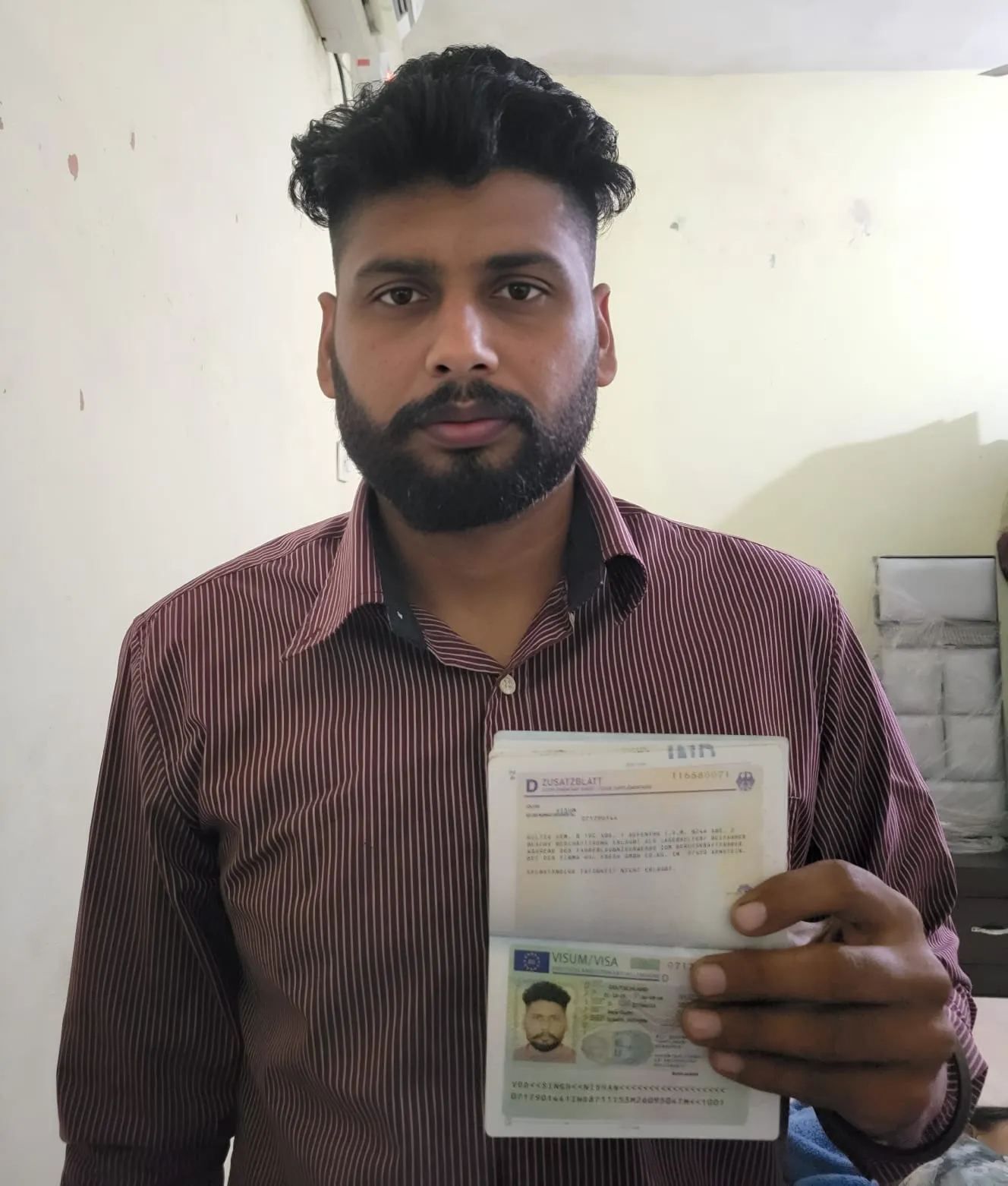
At AtoZ Serwis Plus, we help you become a global citizen with trusted support for jobs abroad, overseas education, and visa processing tailored to your goals.
Read More
Connecting employers, job seekers, students, and agencies across Europe and beyond.
Looking to hire skilled or semi-skilled workers from Asia, Africa, the CIS, or EU countries? AtoZ Serwis Plus supports your recruitment needs for Poland, Germany, Slovakia, Hungary, Lithuania, Estonia, and beyond. We deliver comprehensive legal recruitment services, visa support, and seamless onboarding solutions tailored to your business goals. Partner with us to build a reliable, compliant, and efficient workforce.
EmployerLooking to hire skilled or semi-skilled workers from Asia, Africa, the CIS, or EU countries? AtoZ Serwis Plus supports your recruitment needs for Poland, Germany, Slovakia, Hungary, Lithuania, Estonia, and beyond. We deliver comprehensive legal recruitment services, visa support, and seamless onboarding solutions tailored to your business goals. Partner with us to build a reliable, compliant, and efficient workforce.
Job SeekersAre you a recruiter looking to place workers in Poland, Germany, Slovakia, or other EU destinations? AtoZ Serwis Plus provides you with trusted employer connections, legal recruitment solutions, verified job placements, and full visa assistance. Expand your recruitment business with confidence, supported by clear processes, reliable documentation, and transparent migration services.
RecruiterLooking to work and live in Europe? At AtoZ Serwis Plus, we’re here to guide you every step of the way. Our experts provide support with job search assistance, work visa applications, qualification recognition, and European language learning. To connect with us and get started on your European journey, click one of the contact icons below.
Copyright © 2009-2026 AtoZ Serwis Plus. All Rights Reserved.