Lithuania is the largest of the three Baltic EU member states, an increasingly prosperous Eurozone economy in which the manufacturing sector is a significant and growing component of national output. Lithuanian industry has evolved considerably since independence, diversifying from Soviet-era heavy industry into a competitive export-oriented manufacturing base that today encompasses food and beverage processing, furniture and wood products, textiles and garments, precision engineering, pharmaceuticals and biotechnology, electronics assembly, metal fabrication, and a growing advanced manufacturing and laser technology sector in which Lithuanian companies hold globally recognised expertise. Lithuania's manufacturing geography is concentrated around Vilnius, Kaunas, Klaipėda, and Šiauliai, with the port city of Klaipėda serving as a critical logistics node connecting Lithuanian manufacturers to Baltic Sea trade routes. The country faces a significant industrial labour challenge: like Latvia and Estonia, Lithuania has experienced substantial emigration of working-age citizens to Western Europe, creating a domestic labour shortage that is particularly acute in manufacturing, construction, and logistics sectors. Lithuanian manufacturers across food production, furniture, textiles, and precision engineering consistently report difficulty maintaining sufficient production workforce levels. AtoZ Serwis Plus provides professional recruitment of factory workers in Lithuania, connecting industrial employers with skilled production workers through a structured, legally compliant staffing process.
AtoZ Serwis Plus is an experienced factory-worker recruitment agency operating in Lithuania, providing structured staffing solutions for manufacturers, production facilities, and industrial employers seeking to hire factory workers, assembly operatives, machine operators, and production line staff. Our services cover professional factory worker recruitment, industrial staffing solutions, and long-term manufacturing workforce placement in Lithuania, supporting both immediate production needs and sustained workforce stability.
Lithuania's manufacturing sector is export-intensive and increasingly integrated into Western European supply chains, with growing specialisation in food processing, precision manufacturing, and biotechnology production. The country's industrial labour market is under structural pressure from emigration and demographic change, creating consistent demand for international sourcing of production workers.
Key factors driving factory worker recruitment in Lithuania include:
Because of these dynamics, professional factory worker staffing solutions in Lithuania are important for manufacturers seeking reliable, productive, and legally employed production workforces.
We recruit skilled, reliable factory workers and production operatives for European employers through a well-established global talent network. Our international sourcing strategy supports both urgent staffing needs and long-term industrial workforce planning.
Our Global Recruitment Reach Includes:
This diversified talent pool enables rapid response to industrial workforce needs while supporting long-term compliance and placement quality.
Whether you operate a food processing facility in Kaunas, a furniture manufacturer in Šiauliai, a precision engineering company in Vilnius, a pharmaceutical plant, or a textiles factory anywhere in Lithuania, AtoZ Serwis Plus delivers reliable, legally employed factory workers who sustain your production. We are a long-term partner for factory worker recruitment in Lithuania.
By registering, employers can:
Register as an Employer:
https://www.atozserwisplus.com/employer/registration
Recruiter registration allows:
Register as a Recruiter / Agency:
https://www.atozserwisplus.com/recruiter/registration
Worker registration helps you:
Register as a Worker / Find Jobs:
https://www.atozserwisplus.pl/work-in-europe
1. What is professional factory worker recruitment in Lithuania?
Professional factory worker recruitment in Lithuania refers to the structured, legal hiring of skilled production workers, machine operators, assembly-line operatives, food-processing workers, and manufacturing personnel for Lithuanian industrial facilities. A professional recruitment agency manages candidate selection, skills verification, work permit processing, and legal compliance to ensure that all placements meet the requirements of the Lithuanian Labour Code.
2. Why does Lithuania need international factory workers?
Lithuania has experienced significant emigration of working-age citizens since EU accession, reducing the domestic labour supply available to manufacturers. This structural labour deficit, combined with demographic ageing, means that Lithuanian manufacturers across food, furniture, precision engineering, and pharmaceutical sectors cannot fill production vacancies from the domestic workforce alone. International recruitment supplements local supply to sustain industrial output.
3. What does a factory worker recruitment agency in Lithuania do?
A factory worker recruitment agency in Lithuania sources qualified production workers, manages skills assessment and employment history verification, handles work permits for non-EU workers, ensures legal compliance under the Lithuanian Labour Code, and provides ongoing workforce management to support retention and performance.
4. Are factory worker jobs in Lithuania available for foreign workers?
Yes. EU nationals may work freely in Lithuania. Non-EU workers require a work permit and a temporary residence permit. Lithuania has provisions for non-EU workers filling shortage occupations. AtoZ Serwis Plus manages the full permit process as part of our Lithuanian factory worker recruitment service.
5. What types of factory worker roles are available in Lithuania?
Factory worker roles in Lithuania include food and beverage processing operatives, furniture and wood production workers, textile and garment manufacturing staff, precision engineering and laser production workers, pharmaceutical and biotech production operatives, metal fabrication workers, electronics assembly staff, CNC machine operators, quality control inspectors, and general production line workers.
6. What is the minimum wage for factory workers in Lithuania?
Lithuania has a statutory national minimum wage reviewed annually by the government, following recommendations from the Tripartite Council. Lithuania’s minimum wage has grown significantly in recent years and is now among the highest in the Baltic and Central European EU member states. Many Lithuanian manufacturers pay above the statutory minimum to attract and retain workers in a competitive labour market.
7. What annual leave are factory workers entitled to in Lithuania?
Under the Lithuanian Labour Code, all employees are entitled to a minimum of 20 working days (four calendar weeks) of paid annual leave. Workers in specified hazardous, shift work, or other qualifying categories may be entitled to additional leave. National public holidays are observed separately from annual leave entitlement.
8. What social insurance contributions apply to factory worker employment in Lithuania?
All formally employed factory workers in Lithuania are covered by the State Social Insurance Fund (Sodra), which provides state pension, sickness benefit, maternity benefits, unemployment insurance, and work injury compensation. Both employer and employee contribute to Sodra at rates specified by the Law on State Social Insurance. All employment must be registered with Sodra before work commences.
9. What income tax applies to factory worker salaries in Lithuania?
Lithuania applies a flat personal income tax rate on employment income, with a non-taxable minimum income level that significantly reduces the effective tax burden for lower-wage workers. Employers withhold income tax and social insurance contributions from gross salaries through the payroll system. A portion of social insurance contributions is classified separately from income in Lithuania’s payroll structure.
10. What languages are important for factory worker jobs in Lithuania?
Lithuanian is the official state language and the primary working language in most factory environments. Many older workers understand Russian, but it is less prevalent than in Latvia and Estonia. English is used in some international production environments. AtoZ Serwis Plus matches candidates to employer language requirements and provides language guidance for international workers placed in Lithuania.
11. What work permit process applies to non-EU factory workers in Lithuania?
Non-EU workers in Lithuania require a work permit issued by the Lithuanian Labour Exchange (Lietuvos darbo birža) and a temporary residence permit from the Migration Department. Employers initiate the work permit application and must demonstrate compliance with Lithuanian labour market priority rules. AtoZ Serwis Plus manages the full work permit and residence authorisation process for non-EU candidates placed in Lithuanian factories.
12. Are written employment contracts required for factory workers in Lithuania?
Yes. The Lithuanian Labour Code requires a written employment contract for all workers. The contract must specify the role, salary, working hours, probationary period, applicable leave entitlement, and other essential conditions. All employment relationships must be registered with Sodra before the worker commences duties.
13. What working hours apply to factory workers in Lithuania?
Standard working hours under the Lithuanian Labour Code are 8 hours per day and 40 hours per week. Maximum working time, including overtime, must not exceed 48 hours per week on average over a four-month reference period. Workers are entitled to a minimum daily rest of 11 hours between working days and a minimum weekly rest of 35 consecutive hours.
14. Is overtime regulated for factory workers in Lithuania?
Yes. Under the Lithuanian Labour Code, overtime must be agreed with the worker. Overtime compensation must be at least 150% of the standard hourly rate (i.e., 50% supplement). Workers may not be required to work more than 4 hours of overtime in any two consecutive days. AtoZ Serwis Plus ensures all Lithuanian factory placements comply with overtime regulations.
15. What notice periods apply to factory worker employment in Lithuania?
Under the Lithuanian Labour Code, the employee notice period for resignation is generally two weeks. Employer notice periods for termination depend on length of service: one month for workers with up to one year of service, rising progressively for longer-tenured workers. Employers must also pay severance in many termination circumstances. AtoZ Serwis Plus advises on notice and severance obligations at the start of each placement.
16. Can foreign factory workers change employers in Lithuania?
EU nationals may change employers freely. Non-EU workers must apply for a new work permit when changing employers. The new employer must submit a new permit application. AtoZ Serwis Plus guides employer transitions within the Lithuanian permit framework.
17. What health and safety standards apply in Lithuanian factories?
Lithuanian factory employers must comply with the Law on Safety and Health at Work and the associated regulations, which are enforced by the State Labour Inspectorate (Valstybinė darbo inspekcija – VDI). Employers must conduct workplace risk assessments, provide personal protective equipment, deliver safety training, and maintain occupational health surveillance for workers in hazardous environments.
18. What makes Kaunas significant for Lithuanian factory worker recruitment?
Kaunas, Lithuania’s second-largest city and its most important industrial centre, hosts major food processing, furniture, pharmaceutical, and technology manufacturing facilities. The Kaunas Free Economic Zone (FEZ) attracts international manufacturing investment with tax incentives. Kaunas has the highest concentration of factory-worker demand outside Vilnius and is the primary focus for large-scale manufacturing recruitment in Lithuania.
19. What makes Lithuania’s laser technology sector distinctive for factory worker recruitment?
Lithuania has developed globally recognised expertise in laser optics and photonics, with companies including UAB Ekspla, Šviesos Konversija, and related enterprises producing precision laser equipment for scientific, industrial, and medical applications. This sector requires highly skilled precision production workers with strong technical backgrounds, making Lithuania one of Europe’s most specialised small-nation precision manufacturing economies.
20. What is the significance of Klaipėda for Lithuanian factory worker recruitment?
Klaipėda, Lithuania’s only seaport and the country’s most important logistics gateway. The city hosts significant industrial facilities in metal fabrication, shipbuilding and repair, food processing, and logistics-integrated manufacturing. The Klaipėda Free Economic Zone hosts international manufacturers attracted by port access and industrial incentives. Klaipėda generates substantial demand for factory workers in the western region of Lithuania.
21. Are temporary and permanent factory worker positions available in Lithuania?
Yes. Both permanent and fixed-term factory worker contracts are available in Lithuania's manufacturing sector. The Lithuanian Labour Code regulates fixed-term contracts, limiting their use to specific circumstances and total duration. Permanent contracts provide greater employment security. AtoZ Serwis Plus recruits for both contract types in compliance with Lithuanian employment law.
22. What qualifications do factory workers need for Lithuanian manufacturing jobs?
Qualification requirements vary by role. Precision engineering and laser production roles require relevant technical vocational qualifications. Pharmaceutical production roles benefit from GMP awareness. Food processing roles require food hygiene certification. Furniture manufacturing and general production roles require practical industrial experience. AtoZ Serwis Plus assesses candidates' qualifications against specific employer requirements in Lithuania.
23. Do Lithuanian factories operate shift work?
Yes. Shift work is standard in food processing, pharmaceutical manufacturing, and other continuous production operations in Lithuania. Two-shift and three-shift patterns are common. Shift workers receive supplements as agreed in employment contracts. Lithuanian working time rules require adequate rest between shifts and limit the frequency of night shifts. AtoZ Serwis Plus recruits shift-experienced workers for industrial placements in Lithuania.
24. What is the role of Free Economic Zones in Lithuanian factory worker recruitment?
Lithuania has seven Free Economic Zones (FEZs) in Kaunas, Klaipėda, Šiauliai, Panevėžys, Kėdainiai, Marijampolė, and Akmenė. These zones offer tax incentives and investment support to manufacturers, attracting international companies and generating demand for factory workers in regional areas. FEZ-based employers often have specific workforce requirements suited to modern international production standards. AtoZ Serwis Plus supports recruitment for FEZ-based manufacturers across Lithuania.
25. Is accommodation provided for foreign factory workers in Lithuania?
Accommodation costs in Lithuania are relatively low by European standards, particularly outside Vilnius. Some Lithuanian manufacturers provide or assist with accommodation sourcing for relocated international workers. AtoZ Serwis Plus provides relocation and accommodation guidance for foreign factory workers placed in Lithuania.
26. What is the food processor’s role in Lithuanian factory worker demand?
Food and beverage manufacturing is Lithuania’s largest manufacturing subsector, encompassing dairy processing (Žemaitijos pienas, Rokiškio sūris), meat production, confectionery, beverages, and convenience food manufacturing. This sector consistently generates demand for production line workers, packaging operatives, and food safety and quality staff across facilities throughout Lithuania.
27. Are quality control and inspection roles available in Lithuanian manufacturing?
Yes. Quality control operatives and production inspectors are in demand across Lithuanian food processing, pharmaceutical, precision engineering, and furniture sectors. AtoZ Serwis Plus recruits quality-focused production workers for industrial placements in Lithuania across all major sectors.
28. What background checks does AtoZ Serwis Plus conduct for factory workers in Lithuania?
AtoZ Serwis Plus conducts identity verification, confirmation of industrial employment history, and reference checks with previous employers for all candidates presented for Lithuanian factory placements. Criminal record checks are applied for roles in pharmaceutical, food safety, and security-sensitive production environments.
29. Are forklift operators in demand in Lithuanian factories?
Yes. Certified forklift operators are in demand across Lithuanian manufacturing, warehousing, and port logistics facilities in Klaipėda and other industrial centres. A valid Lithuanian forklift operating certificate or recognised equivalent is required. AtoZ Serwis Plus recruits certified forklift operators for industrial placements in Lithuania.
30. How can a Lithuanian manufacturer recruit factory workers through AtoZ Serwis Plus?
Employers in Lithuania should register through our online employer portal. Our team matches technical skills, language capability, regional availability, and work authorisation to specific production requirements, managing all work permit and Lithuanian employment law compliance documentation throughout the recruitment and placement process.
Professional factory worker recruitment in Lithuania, supported by legally compliant industrial staffing solutions and structured workforce management, is important for Lithuanian manufacturers seeking reliable, skilled production workers to sustain output in a challenging domestic labour market. Employers benefit from vetted production operatives, legal employment support, and stable long-term industrial workforce solutions in one of the region’s most dynamic and growing manufacturing economies.
AtoZSerwisPlus is a European workforce and immigration advisory platform specialising in compliant recruitment guidance, structured work authorisation support, and labour market insights across European countries.
Lithuanian Labour Exchange (Lietuvos darbo birža) – https://uzt.lt
Migration Department of Lithuania – https://www.migracija.lt
State Social Insurance Fund Lithuania (Sodra) – https://www.sodra.lt
State Tax Inspectorate Lithuania (VMI) – https://www.vmi.lt
State Labour Inspectorate Lithuania (VDI) – https://www.vdi.lt
This content is provided for informational purposes only. Employment conditions, wage rates, and immigration procedures in Lithuania are subject to change. Employers and workers are advised to consult qualified legal counsel before making employment or immigration decisions. AtoZ Serwis Plus does not accept liability for decisions made solely based on the information contained herein.
Global clients share how AtoZ Serwis Plus helped them secure work permits, visas, and career support across Europe. Real stories. Real results.
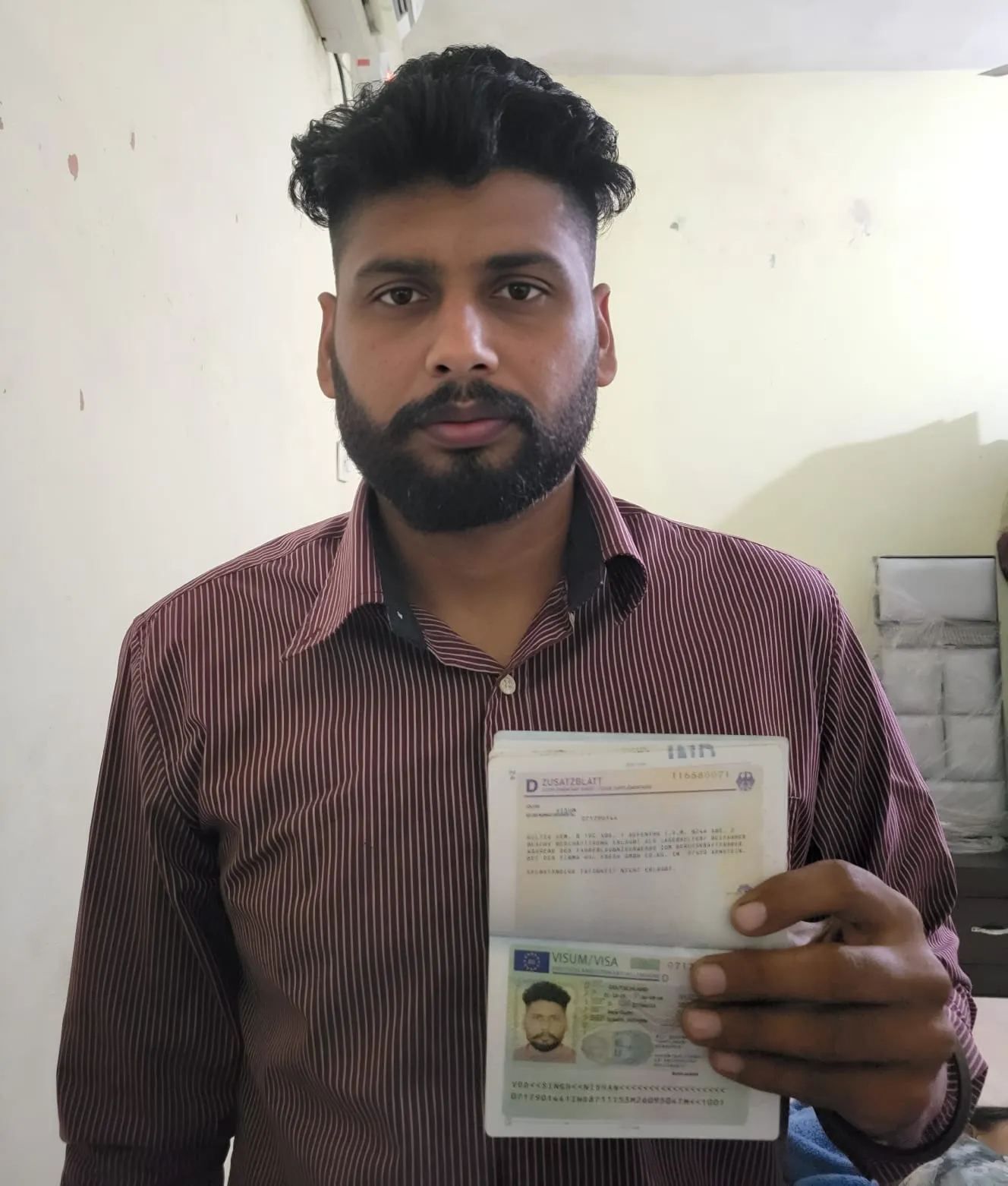
At AtoZ Serwis Plus, we help you become a global citizen with trusted support for jobs abroad, overseas education, and visa processing tailored to your goals.
Read More
Connecting employers, job seekers, students, and agencies across Europe and beyond.
Looking to hire skilled or semi-skilled workers from Asia, Africa, the CIS, or EU countries? AtoZ Serwis Plus supports your recruitment needs for Poland, Germany, Slovakia, Hungary, Lithuania, Estonia, and beyond. We deliver comprehensive legal recruitment services, visa support, and seamless onboarding solutions tailored to your business goals. Partner with us to build a reliable, compliant, and efficient workforce.
EmployerLooking to hire skilled or semi-skilled workers from Asia, Africa, the CIS, or EU countries? AtoZ Serwis Plus supports your recruitment needs for Poland, Germany, Slovakia, Hungary, Lithuania, Estonia, and beyond. We deliver comprehensive legal recruitment services, visa support, and seamless onboarding solutions tailored to your business goals. Partner with us to build a reliable, compliant, and efficient workforce.
Job SeekersAre you a recruiter looking to place workers in Poland, Germany, Slovakia, or other EU destinations? AtoZ Serwis Plus provides you with trusted employer connections, legal recruitment solutions, verified job placements, and full visa assistance. Expand your recruitment business with confidence, supported by clear processes, reliable documentation, and transparent migration services.
RecruiterLooking to work and live in Europe? At AtoZ Serwis Plus, we’re here to guide you every step of the way. Our experts provide support with job search assistance, work visa applications, qualification recognition, and European language learning. To connect with us and get started on your European journey, click one of the contact icons below.
Copyright © 2009-2026 AtoZ Serwis Plus. All Rights Reserved.