Austria (Republik Österreich — Republic of Austria) is a landlocked federal republic in Central Europe, bordered by Germany and the Czech Republic to the north, Slovakia and Hungary to the east, Slovenia and Italy to the south, and Switzerland and Liechtenstein to the west. Population: approximately 9.1 million. Capital and largest city: Vienna (Wien — approximately 1.97 million; one of Europe's most liveable and culturally rich capitals). Other major cities: Graz (Styria; approximately 295,000); Linz (Upper Austria; approximately 205,000); Salzburg (approximately 156,000); Innsbruck (Tyrol; approximately 133,000); Klagenfurt (Carinthia; approximately 101,000). Austria has been an EU member since 1995, a eurozone member since 1999, and a Schengen member. Currency: euro (€). GDP per capita: approximately €52,000 (2024) — well above the EU average. Austria's economy is highly developed: tourism (Austrian Alps; Vienna culture; Mozart; skiing); machinery and metalworking; chemicals; food and beverage (wine; Wiener Schnitzel culture); and an extensive services sector. Official language: German (Österreichisches Deutsch — Austrian German, with distinctive dialect features).
Austria's domestic services market is substantial and growing. The demand for professional housekeepers, Haushälterinnen (household helpers), Reinigungskräfte (cleaning workers), and home carers is driven by: Vienna's large professional and diplomatic community; Austria's high female labour force participation (approximately 72%); the growing elderly population requiring home assistance (Austria has approximately 19% of population over 65); the luxury Alpine resort and hotel sector (Kitzbühel; St. Anton; Verbier; Courchevel-equivalent Tyrolean resorts; Salzburg area chalets); and a well-developed household services culture particularly among Austria's upper-middle and high-income households. Austria has a specific domestic worker framework: Haushaltshilfe und Heimhilfe (household and home help) are regulated professions with their own Kollektivvertrag (collective agreement). The Österreichische Haushalte employ approximately 100,000 private household workers formally. Austria also has the Reinigungsgewerbe (cleaning industry) collective agreement for commercial cleaning workers — a major sector with approximately 75,000 employees.
Austrian employment law is based on the Allgemeines Bürgerliches Gesetzbuch (ABGB), Arbeitsverfassungsgesetz (ArbVG — Labour Constitution Act), and sector-specific Kollektivverträge (collective agreements). The Mindestlohn (minimum wage): Austria has no statutory national minimum wage but relies on Kollektivvertragsminima — collectively agreed minimums by sector; from 2024, the government-agreed Mindeststandard across most sectors is €1,700/month gross (agreed between social partners: WKÖ employer federation and ÖGB unions). For private household employees: Kollektivvertrag für Hausgehilfen und Hausgehilfinnen covers domestic workers employed directly by households; for commercial cleaning: Kollektivvertrag für Denkmal-, Fassaden- und Gebäudereiniger. Social insurance (Sozialversicherung): ASVG (Allgemeines Sozialversicherungsgesetz); employer contributions approximately 21.3% of gross salary; employee contributions approximately 18.2% — total approximately 39.5% of gross. Income tax (Einkommensteuer): progressive 0–55%; the first €12,816 (2024) is tax-free (Existenzminimum). Annual leave: minimum 5 weeks (25 working days) — one of Europe's most generous minimums. Austria observes 13 public holidays per year — the most in the German-speaking world. Austria's Abfertigung Neu (new severance pay) system (since 2003) requires employers to contribute 1.53% of gross salary each month to the worker's individual Mitarbeitervorsorgekasse (MVK — employee provision fund), which provides a significant portable severance entitlement.
AtoZ Serwis Plus provides professional recruitment of housekeepers and domestic workers across Austria, connecting employers in Vienna, Graz, Salzburg, Innsbruck, and the Alpine regions with verified, fully compliant housekeeping professionals.
Key strengths
We recruit skilled, reliable housekeeping professionals for European households through a well-established global talent network. Our international sourcing strategy supports both urgent staffing needs and long-term domestic workforce planning.
Our Global Recruitment Reach Includes:
This diversified talent pool enables rapid response to household staffing needs while supporting long-term compliance and placement quality.
Employer benefits
https://www.atozserwisplus.com/employer/registration
Recruiter benefits
https://www.atozserwisplus.com/recruiter/registration
Worker benefits
https://www.atozserwisplus.pl/work-in-europe
Austria's BUAK (Bauarbeiter-Urlaubs- und Abfertigungskasse) and the Finanzpolizei (Tax Police — the enforcement arm for undeclared work) conduct regular inspections. Schwarzarbeit (undeclared work) under the Lohn- und Sozialdumping-Bekämpfungsgesetz is penalised with fines of €1,000–€50,000 per undeclared worker. ASVG social insurance registration must occur before the worker's first shift — even a partial day before registration is a violation. Proper registration ensures access to Austria's exceptional social security system and the unique Abfertigung Neu portable severance.
1. What is housekeeper recruitment in Austria?
Housekeeper recruitment in Austria involves placing professional domestic cleaners, household managers, Alpine ski resort housekeepers, hotel room attendants, and elderly home helpers with private households, luxury Alpine hotels, diplomatic residences, and commercial cleaning companies. Austria's Kollektivvertrag minimum is approximately €1,700/month gross (2024 social partner agreement). Annual leave is a minimum of 5 weeks (25 working days) — one of Europe's most generous. Vienna ranks #1 globally for quality of life (Mercer QoL Survey).
2. What is Austria's minimum wage for domestic workers?
Austria has no single statutory national minimum wage but relies on Kollektivvertragsminima (collectively agreed sector minimums). From 2024, the government-negotiated Mindeststandard of €1,700/month gross applies across most sectors. The private household Kollektivvertrag für Hausgehilfen und Hausgehilfinnen sets sector-specific minimums. For the Reinigungsgewerbe (commercial cleaning) sector, the sector Kollektivvertrag minimum is typically slightly above €1,700. In practice, wages in Vienna and Alpine resorts are significantly higher than the minimum.
3. What social insurance applies to domestic workers in Austria?
Austrian ASVG (Allgemeines Sozialversicherungsgesetz) social insurance: employer contributions approximately 21.3% of gross salary; employee contributions approximately 18.2%. Total: approximately 39.5%. Covers: Krankenversicherung (KV — health insurance) via ÖGK (Österreichische Gesundheitskasse — Austria's unified health insurer since 2020); Pensionsversicherung (PV — pension); Arbeitslosenversicherung (AV — unemployment); Unfallversicherung (UV — accident at work — employer only contribution). Additionally, Abfertigung Neu — the employer pays 1.53% per month to MVK (portable severance). Austria's e-card (electronic health insurance card) provides cashless access to GPs, specialists, and hospitals nationwide from day one of employment.
4. What is Austria's Abfertigung Neu system?
Austria's Abfertigung Neu (New Severance System — introduced 2003) is unique in Europe. Rather than the old system, where severance was paid only after a minimum period and only upon employer-initiated dismissal, Abfertigung Neu requires the employer to pay 1.53% of the worker's gross salary each month into the employee's personal Mitarbeitervorsorgekasse (MVK — employee provision fund). After 3 years of continuous contributions, the worker owns these funds unconditionally — they can be paid out upon leaving employment, transferred to a new employer's MVK, or accumulated toward retirement. For a worker earning €2,000/monthh, th employer pays €30.60/month to the MVK — after 5 yearss, this accumulates to approximately € 1,836, plus investment returns. This is a significant financial benefit unique to employment in Austria.
5. What annual leave do domestic workers receive in Austria?
Austrian Urlaubsgesetz (Annual Leave Act) provides: 5 weeks (25 working days on a 5-day week) for the first 25 years of service with any employer; 6 weeks (30 working days) from 25 years of service onwards. This 5-week minimum is among Europe's most generous statutory entitlements. Additionally: Austria observes 13 public holidays per year (the most in German-speaking Europe) including: New Year; Epiphany (6 Jan); Easter Monday; Labour Day; Ascension; Whit Monday; Corpus Christi; Assumption (15 Aug); Austrian National Day (26 Oct); All Saints (1 Nov); Immaculate Conception (8 Dec); Christmas (25–26 Dec). Combined leave: approximately 38 non-working paid days per year.
6. What sick leave applies in Austria?
Austrian Entgeltfortzahlungsgesetz: employer pays full salary during illness for a period depending on seniority — in the 1st year: 6 weeks full pay + 4 weeks half pay; increasing with each year until after 25 years: 12 weeks full pay + 4 weeks half pay. After employer-paid period expires: ÖGK pays Krankengeld (sick benefit) at approximately 60% of salary for up to 26 weeks (52 weeks for longer illnesses). Workers must provide a Krankenstandsbestätigung (sick leave certificate) from a doctor. Austrian sick leave protection is among Europe's most comprehensive — the long employer-funded period provides exceptional security for domestic workers.
7. What is Austria's 24-Stunden-Betreuung system?
Austria's 24-Stunden-Betreuung (24-hour home care) is a system that allows elderly or disabled Austrians to receive round-the-clock care at home, typically provided by foreign carers (predominantly from Central and Eastern Europe — Hungary, Slovakia, Romania, Czech Republic). Carers alternate: typically one carer stays for 2 weeks, then rotates with a colleague for 2 weeks. The system is legally classified as either Unselbstständige Betreuung (employee relationship) or Selbstständige Betreuung (self-employed relationship—predominant in practice). The Austrian government provides a subsidy (Förderung) of €550/month for single-person households and €1,100/month for households with two elderly persons receiving this care. Approximately 65,000 persons receive this care in Austria. This is a significant and growing segment of Austria's domestic services market.
8. What permit does a non-EU housekeeper need in Austria?
Non-EU/EEA nationals need an Aufenthaltstitel (residence title) with work authorisation. The Rot-Weiß-Rot Karte (RWR Karte — Red-White-Red Card) is Austria's points-based immigration system:, withspecific categories iincludingvery highly qualified workers;, skilled workers in shortage occupations;, and other key workers. For domestic workers, the shortage occupation list (Mangelberufsliste) includes home care workers, making work permit approval faster. The AMS (Arbeitsmarktservice Austria) must approve; the employer must demonstrate need. Alternatively, the EU Blue Card for highly qualified professionals, or Familiennachzug (family reunification) if the worker has an Austrian/EU family member. Processing through Magistrat or Bezirkshauptmannschaft: typically 3–6 months.
9. What German language level is required in Austria?
For private household positions in Austria, A2–B1 CEFR German (Austrian German) is the minimum expected for most positions; B2 is required for household management roles. Austria's German has distinct features: Austrian vocabulary differs from German in many household items (Jause = snack; Erdäpfel = potatoes; Semmel = bread roll; Sackerl = bag; Kasten = wardrobe; Faschiertes = mince). Workers who speak standard German (Hochdeutsch) can generally communicate without difficulty. In Vienna, which has a large international community, some English-language households exist — but these are the exception. For seasonal Alpine resort positions, basic German plus English (for international guests) is ideal.
10. What are the typical duties of a housekeeper in Austria?
Austrian housekeepers are typically expected to: thoroughly clean all rooms to Austrian Grundlichkeit (thoroughness) standards; laundry and impeccably precise ironing (Austrian standards are very high — linen is typically ironed including bed sheets); careful management of the household's exceptional floors (Parkett — parquet flooring is ubiquitous in Viennese Gründerzeit apartments; requires specific care products and techniques); grocery shopping at Austrian Markt (weekly market) or supermarket (Billa; Spar; Hofer/Aldi; MPreis); cooking Viennese classics if requested (Wiener Schnitzel; Gulasch; Kaiserschmarrn); correct Mülltrennung (waste sorting — Austria has strict Biotonne, Altpapier, Altglas, Restmüll, Leichtverpackung separation); plant care; and in alpine/country properties: fireplace management and seasonal outdoor preparation.
11. What is Vienna's household services market like?
Vienna is consistently ranked the world's most liveable city (Mercer QoL Survey; Economist Intelligence Unit) and hosts one of Europe's most active private household services markets. Key characteristics: the Innere Stadt (1st district) and Döbling (19th district) are Vienna's most affluent residential areas — home to industrialists, bankers, and diplomats; Vienna's international character (UN city; diplomatic capital of Central Europe) creates demand for multilingual household staff; the city's stock of magnificent Gründerzeit (late 19th century) apartments in Ringstrasse palaces and Mietspalais requires specialist knowledge of ornate plasterwork, parquet, and period furnishings; Vienna's cultural calendar (Opera Ball in February; Vienna Philharmonic New Year's Concert; Vienna Festival Weeks) drives entertaining and event-hosting demands for household staff. Vienna's cost of living is moderate by Western European standards — rent for a 1-bedroom apartment: €900–€1,400/month.
12. What is Austria's Alpine ski resort housekeeping market?
Austria's Alpine ski resorts — Kitzbühel (Hahnenkamm race; Austria's St. Moritz equivalent); St. Anton am Arlberg (birth of Alpine skiing; world-famous Arlberg ski school); Lech and Zürs (quietly exclusive; royals and aristocracy); Sölden (glacier skiing); Schladming; Zell am See; Bad Gastein — represent one of Europe's most significant seasonal domestic services markets. Demand: luxury chalet housekeeping (December–April); hotel room attendants for 5-star Alpine hotels (Hotel Tennerhof Kitzbühel; Schwarzer Adler St. Anton; Arlberg Hospiz); spa and wellness facility cleaning; year-round caretaking for second homes of wealthy Austrian, German, Russian, and British owners. Ski season positions typically include accommodation and ski pass as significant benefits — a major lifestyle attraction for domestic workers who enjoy winter sports.
13. What is Salzburg's household services market?
Salzburg — Mozart's birthplace and Austria's "Festival City" — has an active domestic services market driven by: the Salzburg Festival (July–August; one of the world's premier classical music events; approximately 270,000 visitors; extreme demand for temporary housekeeping and catering staff during this period); year-round luxury tourism (Salzburg receives approximately 11 million visitors annually); a wealthy residential base in the Salzkammergut lake district (Bad Ischl; St. Wolfgang; Wolfgangsee — the historic summer resort area of the Habsburg court); and the city's large number of Schlösser (castles) and aristocratic properties requiring professional domestic management. The Trapp Family house (featured in The Sound of Music) area — Aigen and Nonntal — is Salzburg's most exclusive residential district.
14. What are Austria's protections against the exploitation of domestic workers?
Austria has the Lohn- und Sozialdumping-Bekämpfungsgesetz (LSDBG — Law against Wage and Social Dumping), which actively protects workers from underpayment and unauthorised deductions. The Arbeiterkammer (AK — Chamber of Labour — every worker in Austria is automatically a member; free legal advice is a right, not a commercial service) provides: free employment law advice; legal representation in Arbeitsgericht (Labour Court) proceedings; regular payslip checking services; and publications in multiple languages on employment rights. Austria's AK is one of the world's most effective worker advocacy organisations — genuinely accessible and practically useful for foreign domestic workers.
15. What is Austria's Chamber of Labour (Arbeiterkammer)?
The Arbeiterkammer (AK) is Austria's unique institution — by law, every employed worker in Austria (with minor exceptions) is automatically a member of the relevant state AK (Wiener AK; Steirische AK; etc.) with contributions of approximately 0.5% of gross salary. In return, the AK provides: completely free employment law advice in-person, by phone, or online (in many languages including English, Turkish, Serbian, Croatian, Hungarian, and others); free legal representation in labour court; consumer protection advice; tax advice; education subsidies; and annual payslip verification. For foreign domestic workers, the AK is the most important single resource for navigating Austrian employment law. The AK also publishes a comprehensive "Arbeitsrecht in Österreich" guide available in multiple languages.
16. What are notice periods for domestic employment in Austria?
Austrian Angestelltengesetz (for white-collar domestic workers) sets notice periods: employee dismissal by employer: 6 weeks (first 2 years); 2 months (after 2 years); 3 months (after 5 years); 4 months (after 10 years); 5 months (after 15 years); dismissal must occur on the last day of a quarter (end of March, June, September, or December) — a uniquely Austrian provision. Worker resignation: 1 month (less than 5 years); can resign on the 15th or last day of any month, for Arbeiter (blue-collar domestic workers): 14 days' notice generally. Fristlose Entlassung (immediate dismissal for cause) is possible only for serious misconduct. Austria's notice period and dismissal protection system is one of the EU's most protective for long-serving workers.
17. What are Austria's maternity and parental leave provisions?
Mutterschutz (maternity protection): 8 weeks before birth + 8 weeks after birth (12 weeks after premature, multiple, or Caesarean births); full pay from ÖGK at 100% of average net salary. After Mutterschutz: Karenz (parental leave) of up to 2 years per parent (both parents can take Karenz; total maximum 2 years per child combined). Kinderbetreuungsgeld (KBG — childcare benefit): multiple models available, ranging from €14.53/day (flat rate, 365 days) to income-related (80% of previous net salary up to €2,000/month, for 12+2 months). Austria's family support system is comprehensive — childcare benefit options allow parents to choose between maximising leave duration or maximising payment amount.
18. What is Austria's e-card healthcare system?
Austria's e-card (Europäische Krankenversicherungskarte, combining Austrian health insurance and registration via ÖGK) is the electronic proof of health insurance registration via ÖGK. Every registered worker receives an e-card. With the e-card: GP (Kassenarzt) visits are free (no co-payment); referrals to specialists are possible at flat fees (€0–€5.25/quarter depending on referral method); hospital emergency care is free; prescription medicines are subject to a flat prescription fee (Rezeptgebühr — €8.10 per prescription in 2024, waivable for low incomes); dental care is partially covered. Austria's ÖGK-contracted doctor network (Kassenärzte) is extensive — most communities have multiple contracted GPs and specialists.ÖGK can partially reimburse private doctors (Wahlärzte)K.
19. What is the Reinigungsgewerbe (commercial cleaning) sector in Austria?
The Reinigungsgewerbe (Denkmal-, Fassaden- und Gebäudereiniger) is the commercial building-cleaning sector in Austria — one of the country's larger service sectors, with approximately 75,000 workers. The sector Kollektivvertrag (collective agreement between WKÖ — Wirtschaftskammer Österreich — and the vida/GPA unions) sets wages above the general minimum, working-time provisions, and social standards. Major employers: ISS Austria; Dussmann Austria; Wisag Austria; Attensam (Vienna's largest residential cleaning company). Workers in this sector typically have more regular working hours and structured employers than private household domestic workers. The KV Reinigungsgewerbe also provides access to sector-specific training and BBRZ (Berufsförderungsinstitut) continuing education programmes.
20. How does the cross-border worker system work for Austrian domestic employment?
Austria shares borders with 8 countries — Germany, the Czech Republic, Slovakia, Hungary, Slovenia, Italy, Switzerland, and Liechtenstein. EU cross-border workers from these countries have full freedom of movement. In practice, Bratislava (Slovakia) is only 60 km from Vienna centre — the shortest distance between any two national capitals in Europe; many Slovak workers commute daily to Vienna. Budapest (Hungary) is 2.5 hours from Vienna by train. Czech workers from South Bohemia commute to Upper Austria and Vienna. Slovenian workers commute to Graz and Styria. These cross-border flows are well-established and constitute a natural labour pool for Austrian domestic employment — particularly valuable for German-language speakers (Slovak, Czech, and Hungarian domestic workers often have strong German skills).
21. What are the rules for au pairs in Austria?
Austria has specific au pair provisions under the Ausländerbeschäftigungsgesetz (AuslBG). Au pairs: age 18–28; maximum 20 hours per week of light household duties; minimum pocket money €75/week (approximately €325/month); accommodation, meals, and health insurance from host family; participation in German language course; cultural exchange purpose primary. Non-EU au pairs require an au pair visa from the Austrian consulate. Duration: 12 months (extendable in exceptional cases). Austrian au pair positions are particularly popular,among youngh Ukrainian and Filipina women, combining language learning, household assistance, and cultural exchange. After completing an au pair year, many go on to formal domestic employment in Austria.
22. What is the cost of living in Austria's major cities for domestic workers?
Vienna: rent for a 1-bedroom apartment approximately €900–€1,400/month; food costs moderate (Billa, Spar, Hofer/Aldi, Penny all available); excellent public transport (Jahreskarte annual pass €365/year = €1/day — world's best-value city transport). Graz: €750–€1,100 for 1-bedroom. Salzburg: €900–€1,300. Innsbruck: €850–€1,200. At Kollektivvertrag, wages of €1,700–€2,200/month gross (approximately €1,400–€1,800 net), living costs in Austrian cities (outside Vienna's most expensive districts) are manageable. Austria's strong social benefits — free public healthcare, free education, family benefits — significantly reduce the effective cost of living for families.
23. What training opportunities exist for domestic workers in Austria?
Austria's vocational training system includes relevant qualifications: the Hauswirtschaft (home economics) apprenticeship leading to a Lehrabschluss; and the Denkmal-, Fassaden- und Gebäudereiniger apprenticeship for commercial cleaning. The WIFI (Wirtschaftsförderungsinstitut) and BFI (Berufsförderungsinstitut — associated with trade unions) both offer: professional cleaning and housekeeping courses; food hygiene and HACCP certificates; German language courses (specifically for foreign workers); and elderly care assistance training (Heimhilfe qualification). The AMS (Arbeitsmarktservice) funds training for employed and unemployed workers. Austria's dual education system means vocational qualifications are highly respected and transferable within the German-speaking world.
24. What is Innsbruck's domestic services market?
Innsbruck, the capital of Tyrol, is Austria's Alpine sports capital and a major university city. Its domestic services market is characterised by: significant demand from luxury boutique hotels (Hotel Europa Innsbruck; Grand Hotel Europe; Adlers; various 5-star properties); private residential demand from Innsbruck's professional and academic population; nearby luxury ski resorts (Kitzbühel is 80 km; St. Anton am Arlberg 90 km; Sölden 85 km) creating demand for seasonal chalet and resort housekeeping; and the University of Innsbruck's international community creating some English-language household positions. Tyrolean culture is distinct within Austria — the Jodler and Tracht (traditional costume) traditions reflect a deeply regional Alpine identity that household staff are expected to respect.
25. What are Austria's working time rules for domestic employees?
Austrian Arbeitszeitgesetz (Working Hours Act): maximum 10 hours/day; maximum 50 hours/week (with flexibility arrangements); daily rest: minimum 11 consecutive hours; weekly rest: minimum 36 consecutive hours including Sunday. For private household employees: the Kollektivvertrag für Hausgehilfen sets the standard working week at 40 hours (8 hours/day). For live-in domestic workers,, on-call time (Bereitschaftsdienst) is compensated at a lower rate, with a minimum guaranteed compensation. Overtime: minimum 150% of regular hourly rate (100% extra). Night work (22:00–05:00) and Sunday work require supplements. Austria's working time law is strictly enforced by the Arbeitsinspektorat (labour inspectorate).
26. What makes Vienna's Gründerzeit apartments distinctive for housekeepers?
Vienna's iconic Gründerzeit apartment buildings (built 1860–1914, during the period of rapid economic growth from which the term "Gründerzeit" — founding times — derives) present specific housekeeping challenges and opportunities. Features to know: Parkett (herringbone and strip parquet flooring in many rooms) requires waxing or oil treatment, not wet mopping; ornate Stuckdecken (plasterwork ceilings) requiring gentle cleaning; Kachelofen (tiled ceramic stove) in some older apartments — functional heating that requires ash removal and careful management; period ironwork (Jugendstil railings; ornate door handles) requiring appropriate metal polishes; double glazing often added to original Kastenfenster (box windows) requiring careful cleaning on both layers; and high ceilings (typically 3.5–4.5m) requiring appropriate equipment for upper-wall and chandelier cleaning. Understanding these features distinguishes experienced household professional in Viennas.
27. What is Graz's domestic services market?
Graz, capital of Styria in south-eastern Austria, is Austria's second-largest city and a UNESCO Creative City of Design. Its domestic market features: a large international student population (Karl-Franzens-Universität; TU Graz) creating rental property management demand; growing tech sector (Magna International; AVL List; many automotive suppliers) attracting international executives requiring household management; proximity to Slovenia (Maribor is 60 km; Ljubljana 150 km) and the Slovenian and Croatian cross-border worker communities; and Styrian wine country (Südsteiermark Sauvignon Blanc and Welschriesling — among Austria's finest) with estate and winery properties requiring domestic and hospitality staff. Graz offers a high quality of life at significantly lower cost than Vienna.
28. How does Austria's pension system work for migrant domestic workers?
Austria's Pensionsversicherung (ASVG pension) accumulates Versicherungsmonate (insurance months) for every month of covered employment. Standard retirement age: 65 (men); 60, being phased to 65 for women by 2033. Pension amount: based on best-40-income-years average. Austria has bilateral social security agreements (Sozialversicherungsabkommen) with many countries, enabling contribution periods to be aggregated internationally. For EU workers: EU Regulation 883/2004 ensures full portability. Minimum pension (Ausgleichszulage): if total pension entitlement is below the minimum subsistence level, a top-up is guaranteed. The Abfertigung Neu MVK accumulation (described above) provides additional retirement capital. Together, the two systems provide reasonable retirement security for domestic workers who spend significant portions of their careers in Austria.
29. What is the Arbeiterkammer (AK) Wien's role for Vienna domestic workers?
The Arbeiterkammer Wien (AK Wien) is Vienna's most important labour rights institution. With approximately 750,000 members in Vienna alone, the AK Wien is one of Europe's largest worker representative organisations. Free services for domestic workers: Austrian employment law advice in 20+ languages (including English, Serbian, Croatian, Turkish, Romanian, Slovak, Hungarian, Polish, Bosnian, Arabic); free legal representation for employment disputes before the Arbeitsgericht Wien; consumer advice; tax assistance; and the annual Gehaltsrechner (salary calculator) showing correct Kollektivvertrag minimum wages. The AK Wien operates multiple walk-in advice centres across Vienna, including specifically for migrant workers (Migrationsberatung). For any domestic worker in Vienna, the AK is the first port of call for any employment rights question.
30. How can an Austrian household or company recruit housekeepers through AtoZ Serwis Plus?
Austrian employers — whether a Vienna diplomatic household, Kitzbühel luxury chalet owner, Salzburg estate manager, or Graz cleaning company — should register at the link below. Our team matches German-language ability, domestic service experience, and availability to your specific requirements. We manage Kollektivvertrag-compliant contracts, ÖGK/ASVG registration, MVK enrollment, and Rot-Weiß-Rot Karte support for non-EU candidates. For Alpine ski resort seasonal positions, we also coordinate seasonal contract arrangements and accommodation integration.
Austria — with a Kollektivvertrag minimum of approximately €1,700/month, 5 weeks annual leave, 13 public holidays, the unique Abfertigung Neu portable severance system, and the world's most liveable capital (Vienna — Mercer QoL #1 globally) — is one of Europe's most attractive domestic employment destinations. From Vienna's grand Gründerzeit apartments to Kitzbühel's luxury Alpine chalets, AtoZ Serwis Plus connects Austrian employers with verified, professionally experienced housekeeping talent from across Europe and the world.
AtoZSerwisPlus is a European workforce and immigration advisory platform specialising in compliant recruitment guidance, structured work authorisation support, and labour market insights across European countries.
Bundesministerium für Arbeit und Wirtschaft (BMAW) – https://www.bmaw.gv.at
Österreichische Gesundheitskasse (ÖGK) – https://www.gesundheitskasse.at
Arbeitsmarktservice Austria (AMS) – https://www.ams.at
Arbeiterkammer Wien (AK Wien) – https://www.arbeiterkammer.at
Wirtschaftskammer Österreich (WKÖ) – https://www.wko.at
Bundesministerium für Inneres(Rot-Weiß-Rot-Karte)) – https://www.migration.gv.at
This content is provided for informational purposes only. Employment conditions and immigration procedures in Austria are subject to change. Employers and workers are advised to consult the AK and qualified Austrian legal counsel before making employment or immigration decisions.
Global clients share how AtoZ Serwis Plus helped them secure work permits, visas, and career support across Europe. Real stories. Real results.
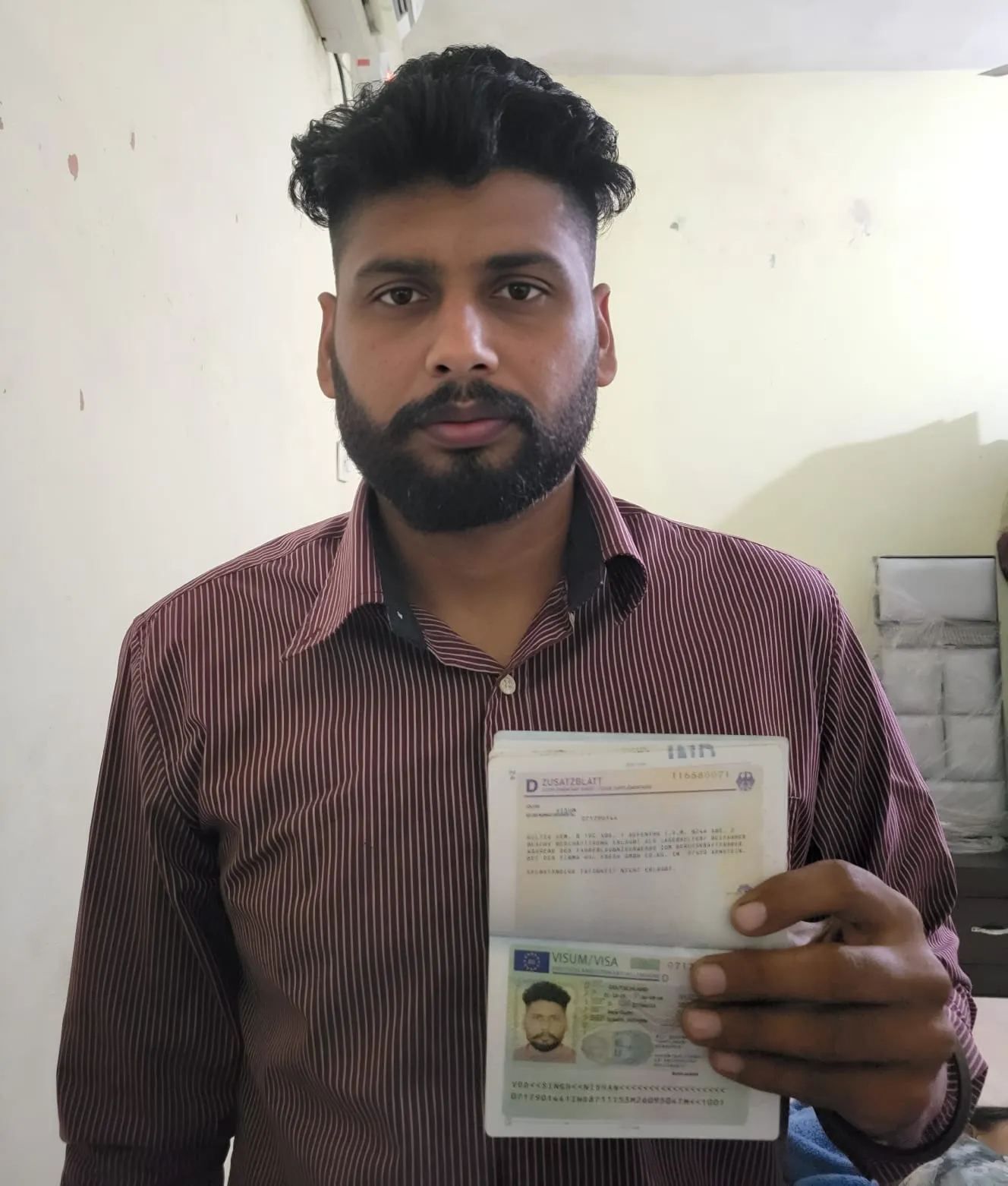
At AtoZ Serwis Plus, we help you become a global citizen with trusted support for jobs abroad, overseas education, and visa processing tailored to your goals.
Read More
Connecting employers, job seekers, students, and agencies across Europe and beyond.
Looking to hire skilled or semi-skilled workers from Asia, Africa, the CIS, or EU countries? AtoZ Serwis Plus supports your recruitment needs for Poland, Germany, Slovakia, Hungary, Lithuania, Estonia, and beyond. We deliver comprehensive legal recruitment services, visa support, and seamless onboarding solutions tailored to your business goals. Partner with us to build a reliable, compliant, and efficient workforce.
EmployerLooking to hire skilled or semi-skilled workers from Asia, Africa, the CIS, or EU countries? AtoZ Serwis Plus supports your recruitment needs for Poland, Germany, Slovakia, Hungary, Lithuania, Estonia, and beyond. We deliver comprehensive legal recruitment services, visa support, and seamless onboarding solutions tailored to your business goals. Partner with us to build a reliable, compliant, and efficient workforce.
Job SeekersAre you a recruiter looking to place workers in Poland, Germany, Slovakia, or other EU destinations? AtoZ Serwis Plus provides you with trusted employer connections, legal recruitment solutions, verified job placements, and full visa assistance. Expand your recruitment business with confidence, supported by clear processes, reliable documentation, and transparent migration services.
RecruiterLooking to work and live in Europe? At AtoZ Serwis Plus, we’re here to guide you every step of the way. Our experts provide support with job search assistance, work visa applications, qualification recognition, and European language learning. To connect with us and get started on your European journey, click one of the contact icons below.
Copyright © 2009-2026 AtoZ Serwis Plus. All Rights Reserved.