Bosnia and Herzegovina's technology, financial services, manufacturing, telecommunications, and public-sector organisations are expanding across Sarajevo, Banja Luka, Mostar, Tuzla, and Zenica, creating growing demand for skilled IT professionals and software specialists. As a Western Balkans country in EU accession negotiations, a nation with a strong engineering and technical education tradition, and an increasingly recognised nearshore software development hub for Western European clients, Bosnia and Herzegovina requires experienced technology professionals capable of supporting software development, digital infrastructure, financial systems, and enterprise IT across a dual-entity structure that presents both challenges and opportunities for employers and technology workers alike.
From software development and IT infrastructure to cybersecurity, data engineering, nearshore development services, and digital transformation, organisations across Bosnia and Herzegovina rely on qualified technology professionals who understand modern development frameworks, the applicable data-protection regulations in each entity, and the pragmatic, technically capable working culture that characterises Bosnia and Herzegovina's growing technology sector. Whether for Sarajevo's expanding IT outsourcing and startup community, the financial institutions operating across both entities, the manufacturing sector's digitalisation programme, or the government digital services that are being modernised as part of EU accession requirements, demand for capable IT talent is growing alongside Bosnia and Herzegovina's broader economic development.
AtoZ Serwis Plus provides specialised IT and software recruitment services in Bosnia and Herzegovina, helping employers hire qualified software developers, IT infrastructure engineers, cybersecurity specialists, data professionals, and digital transformation consultants from trusted international labour markets. Our recruitment solutions support technology companies, financial institutions, nearshore development firms, manufacturing organisations, and public-sector bodies in building reliable and capable technology teams.
Our recruitment strategy aligns with Bosnia and Herzegovina's growing nearshore development industry, its expanding Sarajevo technology ecosystem, the IT infrastructure needs of its financial and manufacturing sectors, and the digital modernisation agenda driven by EU accession requirements. We provide access to skilled international technology professionals while ensuring structured and compliant hiring processes under Bosnia and Herzegovina's complex dual-entity legal framework.
Key strengths
Our services help employers in Bosnia and Herzegovina access the technology talent that the domestic workforce and emigration-reduced labour pool cannot fully supply.
AtoZ Serwis Plus recruits qualified professionals for a wide range of IT and software roles in Bosnia and Herzegovina:
These professionals support nearshore software development, enterprise IT operations, financial systems, and digital transformation programmes across Bosnia and Herzegovina's public and private sectors.
Our IT and software recruitment services support the key sectors of Bosnia and Herzegovina's technology economy:
Each candidate is carefully matched based on employer requirements, technology stack, and language proficiency — Bosnian, Croatian, Serbian, or English as appropriate to the employer's working environment.
AtoZ Serwis Plus sources qualified IT and software professionals from trusted international labour markets to meet Bosnia and Herzegovina's technology workforce demand.
All candidates are screened based on:
Our candidates meet the technical and professional standards required in Bosnia and Herzegovina's growing and internationally connected technology market.
This ensures effective technology delivery across Bosnia and Herzegovina's developing but rapidly growing digital economy.
We follow a structured and transparent recruitment process:
This ensures smooth hiring and compliance with the applicable entity-level labour law — the Zakon o radu (Labour Law) of the FBiH or of the Republika Srpska — and the relevant immigration and work-permit authorities.
Whether organisations require software developers for nearshore project delivery, cybersecurity specialists for financial sector protection, IT infrastructure engineers for enterprise operations, ERP consultants for manufacturing digitalisation, or IT support technicians for enterprise systems, AtoZ Serwis Plus provides skilled professionals ready to contribute from day one across Bosnia and Herzegovina.
We are a trusted recruitment partner for IT and software jobs in Bosnia and Herzegovina, delivering technology workforce solutions aligned with the specific demands of this fast-developing Western Balkans economy.
Employers in Bosnia and Herzegovina can register to hire experienced technology professionals.
Employer benefits
https://www.atozserwisplus.com/employer/registration
Recruitment agencies can collaborate on IT and software workforce projects in Bosnia and Herzegovina.
Recruiter benefits
https://www.atozserwisplus.com/recruiter/registration
Qualified IT and software professionals seeking job opportunities in Bosnia and Herzegovina can register and apply.
Worker benefits
https://www.atozserwisplus.pl/work-in-europe
Registration ensures:
Bosnia and Herzegovina offers growing and increasingly attractive employment opportunities for software developers, IT infrastructure engineers, cybersecurity specialists, and digital transformation consultants. Sarajevo's expanding position as a nearshore development hub for Austrian, German, and Swiss clients, a flat 10% income-tax rate across both entities, a low cost of living, strong English proficiency in the technology sector, and a working culture shaped by a deep engineering and technical education tradition all make Bosnia and Herzegovina a compelling destination for internationally mobile IT professionals seeking a growing Western Balkans economy with genuine European career connections. The country's EU accession trajectory is driving both regulatory modernisation and technology investment, creating a wave of opportunity that will accelerate further over the coming years.
AtoZSerwisPlus is a European workforce and immigration advisory platform specialising in compliant recruitment guidance, structured work authorisation support, and labour market insights across European countries.
Council of Ministers of Bosnia and Herzegovina – https://www.vijeceministara.gov.ba
Service for Foreigners' Affairs (Služba za poslove sa strancima) – https://www.sps.gov.ba
Federal Employment Institute (Federalni zavod za zapošljavanje) – https://www.fzzz.ba
Foreign Investment Promotion Agency (FIPA) – https://www.fipa.gov.ba
This content is independently created and provided for informational purposes only. It does not constitute legal advice, employment guarantees, or immigration approval. All recruitment and work authorisation decisions are subject to the applicable laws of Bosnia and Herzegovina and its entities and to approval by competent authorities.
It involves sourcing and placing qualified technology professionals — software developers, IT infrastructure engineers, cybersecurity specialists, data engineers, DevOps engineers, ERP consultants, and IT support technicians — with employers across Bosnia and Herzegovina's financial services, nearshore development, manufacturing, telecommunications, energy, and public sectors. Bosnia and Herzegovina has a growing technology sector shaped by its strong tradition of technical education, a recognised reputation for nearshore software development serving Western European clients, and an EU accession process driving investment in digital modernisation.
Bosnia and Herzegovina has experienced significant net emigration — particularly to Germany, Austria, Slovenia, and other EU countries — creating a structural deficit in the working-age skilled population. This emigration has disproportionately affected IT and engineering talent, as qualified professionals have been drawn by higher wages and EU career opportunities. At the same time, the nearshore IT sector is growing — Sarajevo and Banja Luka have attracted Austrian, German, and Swiss clients seeking quality software development at competitive costs — and the EU accession process is driving digital infrastructure investment across both entities. The combined demand from nearshore development, financial services, manufacturing digitalisation, and public-sector IT consistently exceeds domestic supply.
Bosnia and Herzegovina is organised into two main entities — the Federacija Bosne i Hercegovine (Federation of Bosnia and Herzegovina, FBiH) and the Republika Srpska (RS) — plus the Brčko District as a self-governing administrative unit. Each entity has its own labour law, social insurance system, tax administration, and immigration procedures. Employers must comply with the labour law applicable to the entity in which they are registered and where the work is performed. In practice, this means that an IT professional employed by a company in Sarajevo (FBiH) is subject to FBiH's Zakon o radu, while one employed in Banja Luka (RS) is subject to the RS Zakon o radu. The Service for Foreigners' Affairs (Služba za poslove sa strancima) at state level coordinates immigration across both entities.
Foreign nationals require a work permit (radna dozvola) and a temporary residence permit (privremeni boravak) to work in Bosnia and Herzegovina. The work permit is issued by the employment authority of the relevant entity — the Federal Employment Institute (Federalni zavod za zapošljavanje) in the FBiH, or the Public Employment Service (Zavod za zapošljavanje RS) in the Republika Srpska — following an assessment of labour-market availability. The temporary residence permit is issued by the Service for Foreigners' Affairs (Služba za poslove sa strancima) at the state level. IT roles are generally supported given the recognised skills gap. Processing takes approximately 30–60 days depending on the entity and the completeness of documentation.
A relevant university degree from the University of Sarajevo, the University of Banja Luka, or an internationally recognised institution is the standard baseline for most professional roles. Nearshore development companies serving Western European clients evaluate candidates primarily on practical technical ability — portfolio quality, GitHub contributions, and performance in technical interviews. Financial institutions and public-sector organisations place greater weight on formal credentials and certifications. Cloud certifications (AWS, Azure, GCP), cybersecurity credentials (CISSP, CEH), and project-management certifications (PMP, PRINCE2) are valued. English proficiency is essential for nearshore development roles, while Bosnian, Croatian, or Serbian is important for locally oriented employers.
JavaScript and TypeScript — particularly with React, Angular, and Node.js — are the most widely used languages in Bosnia and Herzegovina's nearshore development sector. Java and .NET (C#) are critical in financial services, enterprise applications, and public-sector systems. Python is growing in data engineering, automation, and machine learning. PHP is used in web development and smaller e-commerce platforms. For the manufacturing sector's Industry 4.0 digitalisation — particularly at ArcelorMittal Zenica and aluminium production facilities — C++ and industrial automation integration skills are relevant. Mobile development using React Native and Flutter is in demand for banking applications and consumer digital services. Cloud platforms — AWS and Azure most widely — drive DevOps demand.
Bosnia and Herzegovina offers lower gross salaries than EU member states but combines a flat 10% income-tax rate with a very low cost of living — particularly in Banja Luka and smaller cities — making real purchasing power competitive within the regional context. Software developers earn approximately EUR 1,200 to EUR 2,800 gross per month depending on experience, employer type, and entity. Senior engineers and specialists at nearshore companies serving Western European clients earn EUR 2,500 to EUR 4,000 and above. Sarajevo pays higher rates than Banja Luka and other cities. The combination of salary levels, tax rates, and cost of living makes Bosnia and Herzegovina one of the most cost-effective IT talent markets in Europe for employers, while providing IT professionals with a comfortable standard of living.
Income tax in Bosnia and Herzegovina is administered separately by each entity. In the Federacija BiH, the personal income tax (porez na dohodak) is levied at a flat rate of 10% on taxable income. In Republika Srpska, the personal income tax is similarly flat at 10%. Social insurance contributions differ between the entities but generally add approximately 31–33% in total employer and employee contributions combined. The employee portion of social contributions is approximately 17% in the FBiH and 18.5% in the RS. The Poreska uprava FBiH (FBiH Tax Administration) and the Poreska uprava RS (RS Tax Administration) administer the respective systems. The effective combined deduction for most IT professionals is approximately 25–30% of gross salary — competitive by regional standards.
Bosnia and Herzegovina officially recognises three languages — Bosnian (bosanski), Croatian (hrvatski), and Serbian (srpski) — which are mutually intelligible South Slavic languages. In practice, speakers of any one of these three languages can communicate effectively across the country. English is the working language in nearshore development companies serving Western European clients, and strong English proficiency is essential for these roles. For locally oriented employers — financial institutions, public-sector bodies, manufacturing companies — proficiency in Bosnian, Croatian, or Serbian is necessary for effective integration. Most IT professionals in the sector speak both English and a local language, and this combination is the most practical profile for the Bosnian IT market.
Bosnia and Herzegovina has established a growing reputation as a nearshore software development destination for Austrian, German, Swiss, and Western European clients. The combination of strong technical education — the University of Sarajevo and the University of Banja Luka produce capable computer science and engineering graduates — competitive salary levels, geographic proximity and time-zone alignment with Central Europe, and improving English proficiency makes Bosnia and Herzegovina attractive for cost-conscious European clients. Companies including Enefit, Mistral Technologies, IT Labs, and numerous smaller development houses operate from Sarajevo and other cities. This sector creates consistent demand for JavaScript, Java, Python, and full-stack developers with English language skills and agile delivery experience.
At state level: the Service for Foreigners' Affairs (Služba za poslove sa strancima — SPS) issues temporary residence permits; the Ministarstvo vanjske trgovine i ekonomskih odnosa (Ministry of Foreign Trade and Economic Relations) coordinates work-permit policy. At entity level in the FBiH: the Federal Employment Institute (Federalni zavod za zapošljavanje — FZZ) issues work permits; the Poreska uprava FBiH administers tax. At entity level in the RS: the Public Employment Service (Zavod za zapošljavanje RS) issues work permits; the Poreska uprava RS administers tax. The Agencija za zaštitu osobnih podataka u BiH (AZOP — Agency for Personal Data Protection) is the state-level data-protection authority. The Central Bank of Bosnia and Herzegovina (Centralna banka BiH) supervises the financial sector.
Bosnia and Herzegovina's data-protection law — the Zakon o zaštiti osobnih podataka (Law on Protection of Personal Data) at state level — is aligned in principle with EU GDPR standards, reflecting Bosnia and Herzegovina's EU accession commitments. The Agencija za zaštitu osobnih podataka u BiH (AZOP) is the state-level supervisory authority. The framework applies to all processing of personal data by organisations registered in Bosnia and Herzegovina, regardless of which entity they operate in. IT professionals working with personal data must understand the Zakon o zaštiti osobnih podataka requirements and, for organisations serving EU clients, must also ensure compliance with EU GDPR for those data flows. EU adequacy status has not yet been formally granted to Bosnia and Herzegovina, meaning Standard Contractual Clauses or other transfer mechanisms apply for data flows from EU member states.
Standard working time is 40 hours per week under both entity labour laws. Annual leave is a minimum of 20 working days per year in both the FBiH and the RS, with additional leave for certain categories. Overtime is compensated at premium rates under both laws. Bosnia and Herzegovina has 10–12 public holidays per year, some of which differ between entities. The technology sector working culture in Sarajevo and Banja Luka is increasingly modern and internationally influenced — hybrid working, agile delivery, and flat hierarchies are common in nearshore development companies. Public-sector and financial-sector employers tend toward more formal working arrangements.
Local nationals and those with permanent residence change employer freely. Foreign nationals on temporary residence permits with work permits must notify the relevant entity employment authority and the Service for Foreigners' Affairs when changing employer. The work permit is employer-specific, meaning that changing employer requires a new work-permit application linked to the new employer. The process must be initiated before the employment change takes effect. Bosnia and Herzegovina's administrative capacity at both entity and state level is developing progressively as part of EU accession requirements, and processing times and procedures are improving over time.
Legal employment in Bosnia and Herzegovina provides access to entity-level social insurance systems. In the FBiH, contributions to the Federalni zavod za mirovinsko i invalidsko osiguranje (FZMIO — Federal Pension and Disability Insurance Institute) accumulate pension entitlements. Health insurance contributions through the Zavod za zdravstveno osiguranje i reosiguranje FBiH provide access to public healthcare services. Unemployment insurance through the Federalni zavod za zapošljavanje provides benefit for qualifying workers who lose their jobs involuntarily. In the RS, equivalent systems operate through the Fond PIO (Pension and Disability Insurance Fund) and the Fond zdravstvenog osiguranja RS. Sick pay and maternity/paternity leave benefits are available under both entity labour laws.
Background checks are common in Bosnia and Herzegovina's technology sector, particularly for roles serving international clients or in regulated industries. Financial institutions and banks — supervised by the FBiH Banking Agency (Agencija za bankarstvo FBiH) or the RS Banking Agency (Agencija za bankarstvo RS) — conduct criminal record checks (uvjerenje o nekažnjavanju) and employment-history verification for technology roles with access to financial systems. Nearshore companies serving international clients typically apply screening standards required by those clients, which may include reference verification and employment history confirmation. Public-sector IT roles may require security screening appropriate to the systems and data involved.
Yes. Foreign workers who hold valid temporary residence in Bosnia and Herzegovina can apply for family reunification through the Service for Foreigners' Affairs, bringing spouses and dependent children to join them. Bosnia and Herzegovina's low cost of living, improving public services, and genuine cultural warmth make it accessible for families. Sarajevo in particular has developed a more cosmopolitan character in recent years, with improving international connectivity, a growing expatriate community, and a rich cultural and historical environment. International schooling options are limited outside Sarajevo, which is a practical consideration for families with school-age children.
Yes — structural emigration has created a significant skills deficit that is particularly acute in technology roles. The IT Association of Bosnia and Herzegovina (IT Asocijacija BiH) consistently reports unfilled IT vacancies, particularly in software development, cloud engineering, and cybersecurity. The paradox of Bosnia and Herzegovina's IT market is that it simultaneously exports talent — through emigration — and imports technology investment through nearshore outsourcing, creating a persistent tension between supply and demand. Bosnia and Herzegovina's EU accession process is expected to accelerate both technology investment and the regulatory framework improvements that will make it easier to recruit international IT professionals to fill this gap.
AtoZ Serwis Plus sources and screens international IT and software professionals for verified employers across Bosnia and Herzegovina's nearshore development sector, financial services, manufacturing, telecommunications, and public sector. We conduct technical screening aligned with employer requirements, verify qualifications and project experience, confirm English and local language proficiency as appropriate, and support the entity-level work-permit and state-level residence-permit process for non-local candidates. Register at atozserwisplus.com to begin.
Bosnia and Herzegovina has a formal qualification-recognition process for foreign academic credentials, administered separately by each entity. In the FBiH, the Agencija za predškolsko, osnovno i srednje obrazovanje (APOSO) and higher-education recognition bodies manage equivalency assessments for academic qualifications. In the RS, the Ministarstvo prosvjete i kulture (Ministry of Education and Culture) manages the same process. In practice, most private-sector technology employers — particularly nearshore development companies serving Western European clients — assess candidates on demonstrated technical ability, portfolio quality, and interview performance rather than requiring formal credential recognition. Financial institutions and public-sector bodies place greater weight on formal qualifications and may request a recognition decision for hiring purposes. Internationally recognised vendor certifications (AWS, Microsoft, Cisco) and professional credentials (PMP, ISACA, (ISC)²) are accepted across the sector without entity-level recognition procedures.
Global clients share how AtoZ Serwis Plus helped them secure work permits, visas, and career support across Europe. Real stories. Real results.
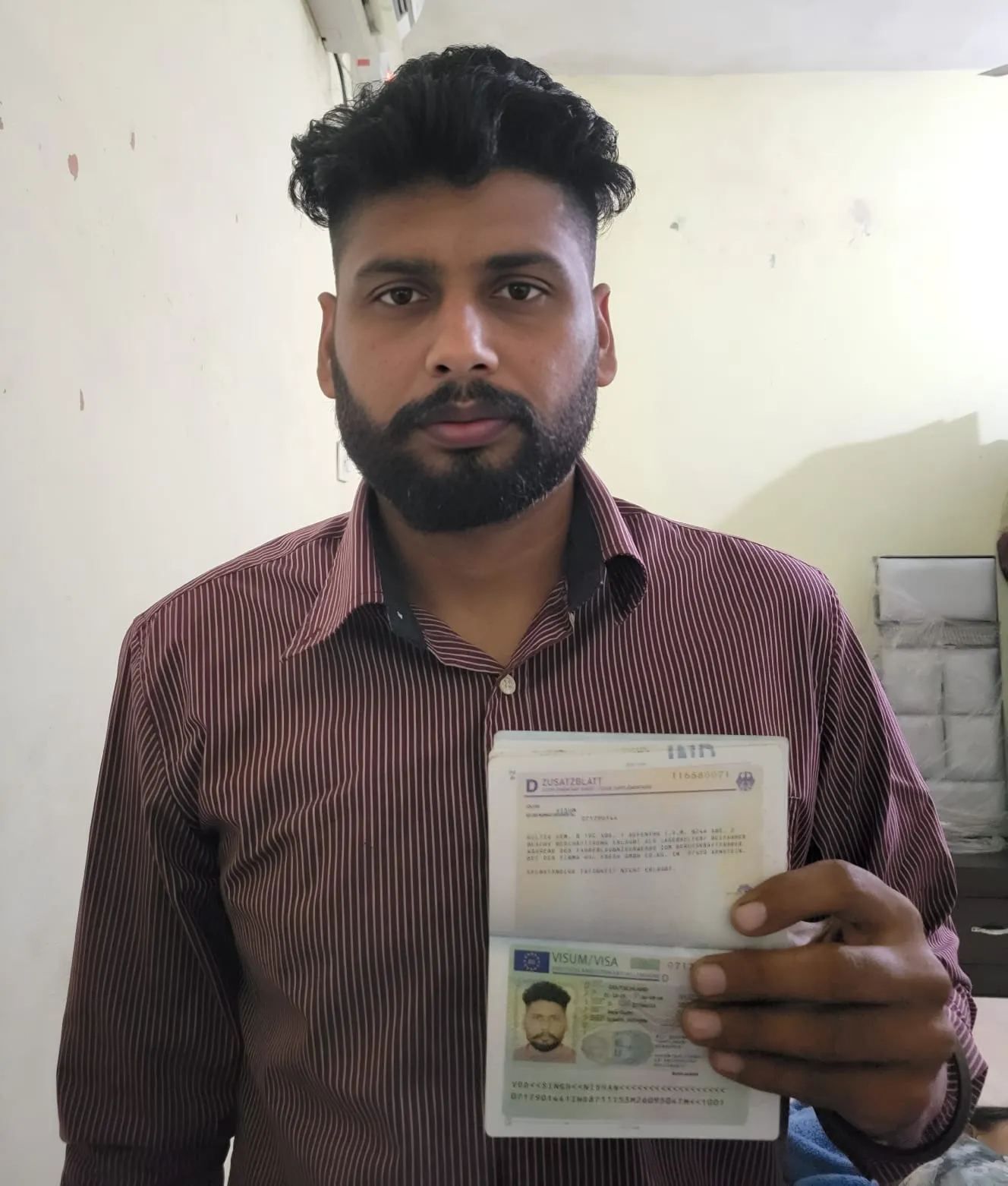
At AtoZ Serwis Plus, we help you become a global citizen with trusted support for jobs abroad, overseas education, and visa processing tailored to your goals.
Read More
Connecting employers, job seekers, students, and agencies across Europe and beyond.
Looking to hire skilled or semi-skilled workers from Asia, Africa, the CIS, or EU countries? AtoZ Serwis Plus supports your recruitment needs for Poland, Germany, Slovakia, Hungary, Lithuania, Estonia, and beyond. We deliver comprehensive legal recruitment services, visa support, and seamless onboarding solutions tailored to your business goals. Partner with us to build a reliable, compliant, and efficient workforce.
EmployerLooking to hire skilled or semi-skilled workers from Asia, Africa, the CIS, or EU countries? AtoZ Serwis Plus supports your recruitment needs for Poland, Germany, Slovakia, Hungary, Lithuania, Estonia, and beyond. We deliver comprehensive legal recruitment services, visa support, and seamless onboarding solutions tailored to your business goals. Partner with us to build a reliable, compliant, and efficient workforce.
Job SeekersAre you a recruiter looking to place workers in Poland, Germany, Slovakia, or other EU destinations? AtoZ Serwis Plus provides you with trusted employer connections, legal recruitment solutions, verified job placements, and full visa assistance. Expand your recruitment business with confidence, supported by clear processes, reliable documentation, and transparent migration services.
RecruiterLooking to work and live in Europe? At AtoZ Serwis Plus, we’re here to guide you every step of the way. Our experts provide support with job search assistance, work visa applications, qualification recognition, and European language learning. To connect with us and get started on your European journey, click one of the contact icons below.
Copyright © 2009-2026 AtoZ Serwis Plus. All Rights Reserved.