Bulgaria's technology, financial services, business process outsourcing, manufacturing, telecommunications, and public-sector organisations are expanding across Sofia, Plovdiv, Varna, Burgas, and Stara Zagora, creating strong and sustained demand for skilled IT professionals and software specialists. As one of the EU's most cost-competitive technology markets - a full EU member state since 2007, a Schengen member since January 2024, a country that has adopted a flat 10% income-tax rate, and an increasingly established nearshore software development hub serving Western European and US clients - Bulgaria requires experienced technology professionals capable of designing, building, securing, and maintaining complex software platforms, digital infrastructure, financial systems, and enterprise technology across a growing and internationally connected economy.
From software development and cloud engineering to cybersecurity, data science, BPO technology support, fintech platform development, DevOps, and digital transformation, organisations across Bulgaria rely on qualified technology professionals who understand modern development frameworks, Bulgarian and EU data-protection requirements (GDPR), and the ambitious, technically capable working culture that characterises Bulgaria's growing technology sector. Whether for Sofia's expanding startup and scale-up ecosystem, the significant BPO and shared-services sector, the financial technology community, the manufacturing sector's Industry 4.0 investment, or Bulgaria's comprehensive digital public services programme aligned with EU Digital Decade targets, demand for capable IT talent consistently outpaces domestic supply.
AtoZ Serwis Plus provides specialised IT and software recruitment services in Bulgaria, helping employers hire qualified software developers, cloud engineers, cybersecurity specialists, data professionals, IT infrastructure technicians, and digital transformation consultants from trusted international labour markets. Our recruitment solutions support technology companies, BPO operators, financial institutions, manufacturing groups, consulting firms, and public-sector bodies in building reliable and capable technology teams.
Our recruitment strategy aligns with Bulgaria's growing nearshore and product-development IT sector, its significant BPO and shared-services industry, the digital transformation investment driven by EU funds and PNRR, and the expanding fintech and startup ecosystem centred in Sofia. We provide access to skilled international technology professionals while ensuring structured and compliant hiring processes.
Key strengths
Our services help Bulgarian employers access technology talent in a market where structural emigration and rapid sector growth have created a persistent skilled-worker gap.
AtoZ Serwis Plus recruits qualified professionals for a wide range of IT and software roles in Bulgaria:
These professionals support software product development, BPO technology operations, digital transformation programmes, and IT infrastructure management across Bulgaria's public and private sectors.
Our IT and software recruitment services support the key sectors of Bulgaria's technology economy:
Each candidate is carefully matched based on employer requirements, technology stack, project type, and English or Bulgarian language proficiency appropriate to the employer's working environment.
AtoZ Serwis Plus sources qualified IT and software professionals from trusted international labour markets to meet Bulgaria's demand for a technology workforce.
All candidates are screened based on:
Our candidates meet the technical and professional standards required in Bulgaria's cost-competitive and internationally connected technology market.
This ensures faster time-to-productivity, reduced onboarding friction, and high-quality technology output for Bulgarian employers.
We follow a structured and transparent recruitment process:
This ensures smooth hiring and compliance with Bulgarian labour regulations, the Кодекс на труда (Labour Code), applicable колективни трудови договори (collective labour agreements), and the Migration Directorate permit process.
Whether organisations require software developers for product engineering, cloud engineers for BPO infrastructure, cybersecurity specialists for financial data protection, data engineers for analytics platforms, ERP consultants for manufacturing digitalisation, or IT support technicians for enterprise operations, AtoZ Serwis Plus provides skilled professionals ready to contribute from day one across Bulgaria.
We are a trusted recruitment partner for IT and software jobs in Bulgaria, delivering technology workforce solutions aligned with real market demand.
Employers in Bulgaria can register to hire experienced technology professionals.
Employer benefits
https://www.atozserwisplus.com/employer/registration
Recruitment agencies can collaborate on IT and software workforce projects in Bulgaria.
Recruiter benefits
https://www.atozserwisplus.com/recruiter/registration
Qualified IT and software professionals seeking job opportunities in Bulgaria can register and apply.
Worker benefits
https://www.atozserwisplus.pl/work-in-europe
Registration ensures:
Bulgaria offers strong and growing employment opportunities for software developers, cloud engineers, cybersecurity specialists, data professionals, and IT infrastructure technicians. Bulgaria's flat 10% income-tax rate - one of the EU's lowest - Schengen membership since January 2024, its position as one of the EU's most cost-competitive markets for technology talent, Telerik's pioneering role in establishing Bulgaria's international technology reputation, the Sofia Tech Park's growing innovation ecosystem, EU PNRR digital investment, and a cost of living that remains substantially below Western Europe while salaries are rising rapidly all combine to make Bulgaria one of the EU's most attractive and cost-effective IT employment destinations. International IT professionals who bring genuine technical depth and English language capability will find both professional opportunity and an increasingly dynamic and rewarding living environment in this growing EU economy.
AtoZSerwisPlus is a European workforce and immigration advisory platform specialising in compliant recruitment guidance, structured work authorisation support, and labour market insights across European countries.
Government of Bulgaria – https://www.government.bg
Migration Directorate (Дирекция Миграция) – https://www.mvr.bg/migration
Employment Agency (Агенция по заетостта) – https://www.az.government.bg
Bulgarian Association of Software Companies (BASSCOM) – https://basscom.org
This content is independently created and provided for informational purposes only. It does not constitute legal advice, employment guarantees, or immigration approval. All recruitment and work authorisation decisions are subject to Bulgarian labour laws and approval by competent authorities.
It involves sourcing and placing qualified technology professionals - software developers, cloud engineers, cybersecurity specialists, data engineers, DevOps engineers, BPO technology specialists, and IT infrastructure technicians - with Bulgarian employers across nearshore development, BPO and shared services, financial services, manufacturing, telecommunications, and the public sector. Bulgaria is a full EU and Schengen member state with a flat 10% income-tax rate, one of the EU's most cost-competitive technology markets, and a growing software development and services industry with an internationally recognised track record.
Bulgaria faces a structural IT skills gap driven by two converging pressures: significant emigration of skilled workers - particularly to Germany, the UK, the Netherlands, and other EU countries - since EU accession in 2007, and rapid growth in domestic and international IT demand. The BPO and shared-services sector in Sofia has expanded to include major operations for HP Enterprise, DXC Technology, Coca-Cola HBC, and others, competing for developers alongside the growing nearshore product-development sector. BASSCOM (Bulgarian Association of Software Companies) and the Employment Agency consistently report IT roles among the most difficult to fill. Bulgaria's EU PNRR digital transformation investment is adding further public-sector demand at a pace domestic graduates cannot match.
Yes. EU and EEA citizens work in Bulgaria without a work permit, registering with the local municipality and obtaining an ЕГН (Единен граждански номер - Unified Civil Number) or ЛНЧ (Личен номер на чужденец - Personal Number of a Foreigner) for payroll, tax registration with the НАП (Национална агенция по приходите - National Revenue Agency), and social-security registration with the НОИ (Национален осигурителен институт - National Social Security Institute).
Non-EU nationals require a единно разрешение (single permit - combining residence and work authorisation) issued by the Migration Directorate (Дирекция Миграция) of the Ministry of Interior. The employer applies on behalf of the worker. The Employment Agency (Агенция по заетостта) confirms labour-market availability - for IT roles, which are on Bulgaria's shortage-occupation list (дефицитни професии), this is generally straightforward. Bulgaria also applies the EU Blue Card (Синя карта на ЕС) for highly qualified non-EU professionals meeting the salary threshold. Processing takes approximately 30–60 days. Bulgaria joined Schengen in January 2024, which has simplified some aspects of cross-border movement but does not change the work-permit requirements for non-EU nationals.
A relevant degree from Sofia University (Faculty of Mathematics and Informatics - ФМИ), the Technical University of Sofia (ТУ-София), Plovdiv University, or an internationally recognised institution is the standard baseline. Bulgarian technology companies and BPO operators evaluate candidates on demonstrated technical ability through portfolio quality, coding assessments, and technical interview performance. SoftUni (Software University) - Bulgaria's largest private IT education institution - has been highly influential in producing practically skilled developers for the Bulgarian market. Cloud certifications (AWS, Azure, GCP), cybersecurity credentials (CISSP, CEH), and Agile/ITIL credentials are well-regarded alongside formal degrees.
Java is the most broadly in-demand backend language across BPO, financial services, and enterprise applications. Python is essential in data science, machine learning, and automation. JavaScript and TypeScript dominate frontend and full-stack development across the product and startup sector. .NET and C# are widely used in Microsoft-aligned enterprise environments - common in the BPO and shared-services sector. For cybersecurity roles - a significant and growing sector given Bulgaria's active cybersecurity community - Python scripting, SIEM platforms, and network security tooling are valued. Cloud platforms - AWS and Azure (most widely used) - drive DevOps demand. React and Angular dominate frontend frameworks.
Software developers earn approximately EUR 1,500 to EUR 3,200 gross per month. Senior engineers, cloud architects, and data scientists earn EUR 2,800 to EUR 5,000 and above. Sofia pays the highest rates nationally. Bulgaria's flat 10% income-tax rate - one of the EU's lowest - combined with a cost of living that is among the lowest in the EU produces very competitive net purchasing power for IT professionals. Technology salaries in Bulgaria have risen substantially over the past five years as competition for talent intensifies, and the gap with Western European salaries continues to narrow for senior roles at international companies.
Bulgaria applies a flat данък върху доходите на физическите лица (ДДФЛ - personal income tax) of 10% on all employment income - the lowest flat rate in the EU alongside Romania. Monthly mandatory social-insurance contributions (осигурителни вноски) add approximately 13.78% for employees on gross salary (covering pension, health insurance, unemployment, and other social funds). The НАП (National Revenue Agency) administers the system. The effective combined deduction from gross salary for most IT professionals is approximately 23–24% - dramatically lower than Western European equivalents and one of the primary financial attractions of Bulgarian employment for both employers and internationally recruited professionals.
English is the dominant working language in virtually all BPO operations, nearshore development firms, and internationally oriented technology companies in Bulgaria. Most Sofia-based technology employers operate primarily in English. Bulgarian proficiency is required for: public-sector IT roles; client-facing positions serving Bulgarian-speaking customers; and locally oriented SMEs. For most technology roles in the internationally connected sector, English alone is fully sufficient - making Bulgaria highly accessible to international IT professionals. Bulgarian uses the Cyrillic alphabet, which presents an initial practical challenge for daily life and some administrative interactions, but most urban professional environments in Sofia are navigable in English.
Bulgaria - particularly Sofia - has established itself as one of Europe's leading BPO (Business Process Outsourcing) and IT shared-services destinations. Major international companies including Hewlett Packard Enterprise, DXC Technology (the largest private employer in Bulgaria), Coca-Cola HBC, KPMG, EY, Experian, and Sutherland operate large service-delivery centres in Sofia, employing tens of thousands of multilingual professionals. IT roles in these centres include helpdesk and level 1–3 IT support, application management, infrastructure management, cybersecurity operations, and development within managed-services frameworks. The BPO sector's scale and international connectivity have been central to Sofia's development as a European technology and services city.
Telerik - a Bulgarian software company founded in Sofia in 2002 - created a globally recognised suite of UI components and developer tools for .NET and JavaScript development. Telerik was acquired by Progress Software in 2014 for approximately USD 262 million - one of the most significant technology acquisitions involving a Bulgarian company. Telerik's success, and the spin-out of SoftUni (Software University) by Telerik's founders, fundamentally shaped Bulgaria's technology reputation and its developer education ecosystem. SoftUni has become the largest private IT education institution in the Western Balkans, training tens of thousands of software developers annually and contributing significantly to Bulgaria's technology talent pipeline. Telerik Academy (now part of the Progress/Telerik ecosystem) further reinforced this educational legacy.
The Migration Directorate (Дирекция Миграция, part of the Ministry of Interior - МВР) issues single permits for non-EU nationals. The Employment Agency (Агенция по заетостта - АЗ) confirms labour-market availability. НАП (Национална агенция по приходите - National Revenue Agency) administers income tax. НОИ (Национален осигурителен институт - National Social Security Institute) manages social insurance. КЗЛД (Комисия за защита на личните данни - Commission for Personal Data Protection) is Bulgaria's GDPR supervisory authority. БНБ (Българска народна банка - Bulgarian National Bank) supervises the financial sector. BASSCOM (Bulgarian Association of Software Companies) represents the technology industry.
Bulgaria implements the EU GDPR through the Закон за защита на личните данни (ЗЗЛД - Personal Data Protection Act). The КЗЛД (Commission for Personal Data Protection) is the national supervisory authority. Bulgaria applies EU GDPR fully as an EU member state, and IT professionals working with personal data must understand all applicable GDPR obligations. For financial sector IT, БНБ's regulations on IT risk management align with EBA guidelines. КЗЛД has been active in issuing guidance and fines - particularly regarding employee monitoring, health data, and online tracking. IT professionals in Bulgaria working with EU-resident personal data must apply full GDPR compliance.
Standard working time is 8 hours per day and 40 hours per week under the Кодекс на труда (Labour Code). Annual leave is a minimum of 20 working days per year, with most technology employers providing 20–25 days. Bulgaria has 15 official public holidays per year - among the highest in the EU. Overtime is compensated at premium rates under the Labour Code. Hybrid working is standard across Bulgaria's technology sector. Bulgarian technology employers typically provide a monthly food voucher (ваучери за храна, up to BGN 200 per month, tax-advantaged), additional health insurance (допълнително здравно осигуряване), and professional development budgets. The working culture in Bulgarian technology companies is practical, results-oriented, and increasingly international in character.
EU citizens change employer freely at any time. Non-EU single permit holders must apply to the Migration Directorate for an updated single permit when changing employer. The permit is employer-specific, and a new application must be submitted - with renewed Employment Agency confirmation - before the change takes effect. For IT professionals in shortage-occupation roles, the process is generally supported. After five years of continuous legal residence, non-EU nationals become eligible for дългосрочно пребиваване (long-term EU residence), which grants unrestricted labour-market access.
Legal employment in Bulgaria provides access to the social insurance system administered by НОИ. Health insurance contributions through НЗОК (Национална здравноосигурителна каса - National Health Insurance Fund) provide access to public healthcare services. Pension contributions accumulate through the state pension (ДОО - Държавно обществено осигуряване - State Social Insurance) and are complemented by mandatory second-pillar (универсален пенсионен фонд - Universal Pension Fund) contributions for those born after 1959. Обезщетение при безработица (unemployment benefit) is available for qualifying contributors. Sick pay (обезщетение за временна неработоспособност) is paid by the employer for the first three working days and by НОИ from day four. Maternity and paternity leave benefits are among the more generous in the EU.
Background checks are standard in regulated sectors. Financial institutions - supervised by БНБ - conduct criminal record checks (свидетелство за съдимост) and employment-history verification for technology roles with access to financial systems. BPO operators serving international clients apply screening standards required by those clients, which often include international background checks. For public-sector IT roles involving classified information, security clearance from the ДКСИ (Държавна комисия по сигурността на информацията - State Commission for Information Security) may be required. Most international employers in Bulgaria apply corporate background-screening standards. Bulgaria's 2024 Schengen membership has facilitated more integrated cross-border information sharing relevant to background checks.
Yes. EU citizens bring family members under EU free-movement rules. Non-EU single permit holders apply for family reunification through the Migration Directorate, demonstrating adequate income and housing. Bulgaria's cost of living - among the EU's lowest - makes it genuinely accessible for families. Sofia has growing international communities, improving international school options, and improving public services. Bulgaria's natural beauty - the Vitosha mountain directly adjacent to Sofia, the Black Sea coast, the Rhodope mountains - and its warm social culture make it attractive for families who appreciate combining professional opportunity with a high quality of life at modest cost.
Yes. BASSCOM and the Employment Agency consistently report IT and technology roles among the most difficult to fill in Bulgaria. Structural emigration since 2007, the rapid expansion of the BPO sector, the growth of nearshore development demand, and the EU PNRR digital transformation investment all sustain demand well beyond domestic STEM graduate output. Bulgaria's government has progressively simplified the single-permit process for shortage-occupation IT roles, and BASSCOM has been active in advocating for immigration and education policy improvements to address the structural gap.
AtoZ Serwis Plus sources and screens international IT and software professionals for verified Bulgarian employers across nearshore development, BPO and shared services, financial services, manufacturing, telecommunications, and the public sector. We conduct technical screening aligned with employer requirements, verify qualifications and project experience, confirm English and Bulgarian language proficiency as appropriate, and manage the Migration Directorate single-permit process for non-EU candidates. Register at atozserwisplus.com to begin.
Global clients share how AtoZ Serwis Plus helped them secure work permits, visas, and career support across Europe. Real stories. Real results.
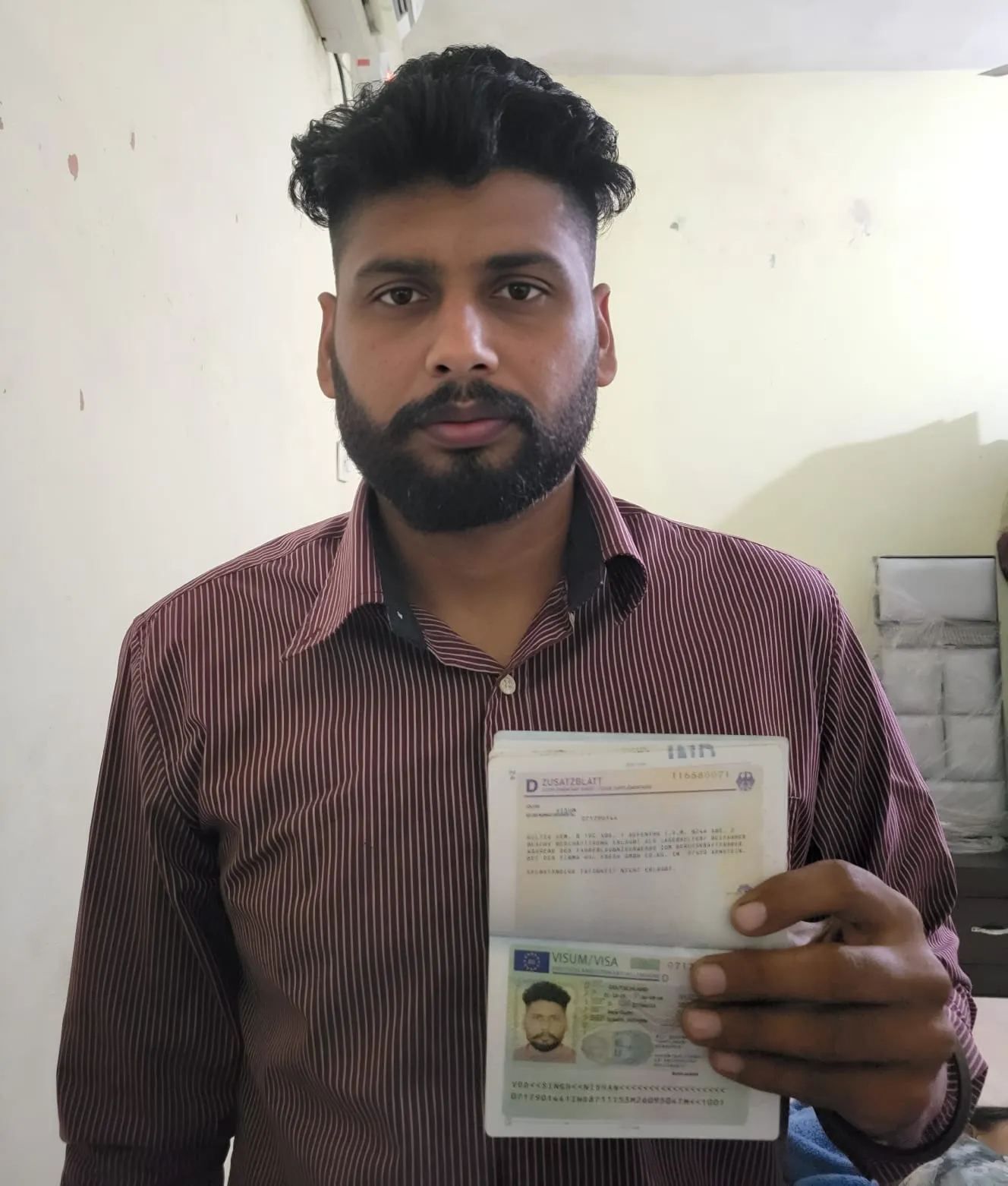
At AtoZ Serwis Plus, we help you become a global citizen with trusted support for jobs abroad, overseas education, and visa processing tailored to your goals.
Read More
Connecting employers, job seekers, students, and agencies across Europe and beyond.
Looking to hire skilled or semi-skilled workers from Asia, Africa, the CIS, or EU countries? AtoZ Serwis Plus supports your recruitment needs for Poland, Germany, Slovakia, Hungary, Lithuania, Estonia, and beyond. We deliver comprehensive legal recruitment services, visa support, and seamless onboarding solutions tailored to your business goals. Partner with us to build a reliable, compliant, and efficient workforce.
EmployerLooking to hire skilled or semi-skilled workers from Asia, Africa, the CIS, or EU countries? AtoZ Serwis Plus supports your recruitment needs for Poland, Germany, Slovakia, Hungary, Lithuania, Estonia, and beyond. We deliver comprehensive legal recruitment services, visa support, and seamless onboarding solutions tailored to your business goals. Partner with us to build a reliable, compliant, and efficient workforce.
Job SeekersAre you a recruiter looking to place workers in Poland, Germany, Slovakia, or other EU destinations? AtoZ Serwis Plus provides you with trusted employer connections, legal recruitment solutions, verified job placements, and full visa assistance. Expand your recruitment business with confidence, supported by clear processes, reliable documentation, and transparent migration services.
RecruiterLooking to work and live in Europe? At AtoZ Serwis Plus, we’re here to guide you every step of the way. Our experts provide support with job search assistance, work visa applications, qualification recognition, and European language learning. To connect with us and get started on your European journey, click one of the contact icons below.
Copyright © 2009-2026 AtoZ Serwis Plus. All Rights Reserved.