Croatia's technology, financial services, tourism, manufacturing, logistics, and public-sector organisations are expanding across Zagreb, Split, Rijeka, Osijek, and Dubrovnik, creating strong and growing demand for skilled IT professionals and software specialists. As the most recent EU member state to adopt the euro — joining the eurozone and the Schengen Area in January 2023 — Croatia is a fully integrated EU economy with a growing technology sector, an established reputation for nearshore software development, and a government investing in digital public services aligned with EU Digital Decade targets. The country combines a strong engineering and technical education tradition with a coastal quality of life that is increasingly attracting internationally mobile technology professionals.
From software development and cloud engineering to cybersecurity, data engineering, fintech platform development, IT infrastructure management, and digital transformation, organisations across Croatia rely on qualified technology professionals who understand modern development frameworks, Croatian and EU data-protection requirements (GDPR), and the pragmatic, results-oriented working culture that characterises Croatia's technology sector. Whether for Zagreb's growing IT outsourcing and startup community, the financial technology sector, the tourism and hospitality technology platforms serving one of Europe's most visited destinations, or Croatia's e-government modernisation programme, demand for capable IT talent consistently outpaces domestic supply.
AtoZ Serwis Plus provides specialised IT and software recruitment services in Croatia, helping employers hire qualified software developers, cloud engineers, cybersecurity specialists, data professionals, IT infrastructure technicians, and digital transformation consultants from trusted international labour markets. Our recruitment solutions support technology companies, financial institutions, tourism platform operators, manufacturing firms, and public-sector bodies in building reliable and capable technology teams.
Our recruitment strategy aligns with Croatia's growing nearshore and product-development technology sector, its EU Digital Decade commitments, the expanding Zagreb startup and fintech ecosystem, and the technology demands of its tourism, financial services, and manufacturing industries. We provide access to skilled international technology professionals while ensuring structured and compliant hiring processes under Croatian and EU law.
Key strengths
Our services help Croatian employers reduce hiring timelines, access specialised skills not available domestically, and build stable long-term technology teams.
AtoZ Serwis Plus recruits qualified professionals for a wide range of IT and software roles in Croatia:
These professionals support software product development, nearshore delivery projects, digital transformation programmes, and IT infrastructure management across Croatia's public and private sectors.
Our IT and software recruitment services support the key sectors of Croatia's technology economy:
Each candidate is carefully matched based on employer requirements, technology stack, project type, and English or Croatian language proficiency appropriate to the employer's working environment.
AtoZ Serwis Plus sources qualified IT and software professionals from trusted international labour markets to meet Croatia's technology workforce demand.
All candidates are screened based on:
Our candidates meet the technical and professional standards required in Croatia's growing and internationally connected technology market.
This ensures faster time-to-productivity, reduced onboarding friction, and high-quality technology output for Croatian employers.
We follow a structured and transparent recruitment process:
This ensures smooth hiring and compliance with Croatian labour regulations, the Zakon o radu (Labour Act), applicable kolektivni ugovori (collective agreements), and the Ministry of the Interior permit process.
Whether organisations require software developers for product engineering, cloud engineers for nearshore client infrastructure, cybersecurity specialists for financial data protection, data engineers for tourism analytics platforms, or IT infrastructure technicians for enterprise operations, AtoZ Serwis Plus provides skilled professionals ready to contribute from day one across Croatia.
We are a trusted recruitment partner for IT and software jobs in Croatia, delivering technology workforce solutions aligned with real market demand.
Employers in Croatia can register to hire experienced technology professionals.
Employer benefits
https://www.atozserwisplus.com/employer/registration
Recruitment agencies can collaborate on IT and software workforce projects in Croatia.
Recruiter benefits
https://www.atozserwisplus.com/recruiter/registration
Qualified IT and software professionals seeking job opportunities in Croatia can register and apply.
Worker benefits
https://www.atozserwisplus.pl/work-in-europe
Registration ensures:
Croatia offers strong and growing employment opportunities for software developers, cloud engineers, cybersecurity specialists, data professionals, and IT infrastructure technicians. Infobip's global communications platform, Rimac's electric hypercar and technology division, Photomath's AI-powered mathematics platform, Croatia's eurozone and Schengen membership since January 2023, the EU Digital Decade investment programme, an extraordinary Adriatic coastal quality of life, strong English proficiency across the technology sector, and salaries that — while below Western European levels — are rising rapidly and combine with a low cost of living to offer competitive real purchasing power all make Croatia one of the EU's most attractive and accessible emerging IT employment destinations. International IT professionals who seek a growing European market with genuine quality-of-life advantages will find Croatia both professionally rewarding and personally exceptional.
AtoZSerwisPlus is a European workforce and immigration advisory platform specialising in compliant recruitment guidance, structured work authorisation support, and labour market insights across European countries.
Government of Croatia – https://gov.hr
Ministry of the Interior (Ministarstvo unutarnjih poslova) – https://mup.gov.hr
Croatian Employment Service (HZZ) – https://www.hzz.hr
Ministry of Digital Transition (Ministarstvo digitalne tranzicije) – https://mdt.gov.hr
This content is independently created and provided for informational purposes only. It does not constitute legal advice, employment guarantees, or immigration approval. All recruitment and work authorisation decisions are subject to Croatian labour laws and approval by competent authorities.
It involves sourcing and placing qualified technology professionals — software developers, cloud engineers, cybersecurity specialists, data engineers, DevOps engineers, and IT infrastructure technicians — with Croatian employers across technology product companies, nearshore development, financial services, tourism technology, automotive, and the public sector. Croatia has been a fully integrated EU and eurozone member state since January 2023, with a growing technology sector anchored by global companies such as Infobip and Rimac Technology. It is an increasingly attractive destination for internationally mobile IT professionals.
Croatia has experienced significant net emigration since EU accession in 2013 — particularly to Germany, Austria, Ireland, and other EU member states — creating a structural deficit in the working-age skilled population. The departure of IT professionals has been particularly pronounced. At the same time, Croatia's technology sector has grown substantially: Infobip has become one of Europe's most significant communications technology companies, Rimac Automobili and Bugatti Rimac have built a world-class electric vehicle and technology programme, and a cluster of smaller product and nearshore companies has emerged in Zagreb and Split. The Croatian Employment Service (HZZ) and the IT industry association HUP-ICT consistently report IT roles among the most difficult vacancies to fill.
Yes. EU and EEA citizens work in Croatia without a work permit, registering with the Ministry of the Interior (Ministarstvo unutarnjih poslova) for stays beyond three months and obtaining an OIB (Osobni identifikacijski broj — personal identification number) through the Tax Administration (Porezna uprava) for payroll, tax registration, and access to public services.
Non-EU nationals require a dozvola za boravak i rad (combined temporary residence and work permit) issued by the Ministry of the Interior (MUP — Ministarstvo unutarnjih poslova). The employer applies on behalf of the worker, and the Croatian Employment Service (HZZ — Hrvatski zavod za zapošljavanje) confirms labour-market availability. IT and software development roles are on Croatia's shortage-occupation list (deficitarna zanimanja), which simplifies the process. Croatia also participates in the EU Blue Card scheme for highly qualified non-EU professionals. Processing takes approximately 30–60 days. The permit is issued initially for one year and is renewable. Croatia joined the Schengen Area in January 2023, which has aligned its border and residence documentation with the broader Schengen framework.
The EU Blue Card (Europska plava karta) is available in Croatia for non-EU professionals with a relevant university degree and a job offer with a gross annual salary of at least 1.5 times the average Croatian gross salary — approximately EUR 19,000–22,000 per year at current average wages, a threshold comfortably exceeded by most professional IT roles. The Blue Card is valid for two years, renewable, and provides a faster path to long-term residence rights. It also offers portability within the EU after 18 months of Blue Card employment. Given Croatia's relatively low salary thresholds compared to Western European countries, the Blue Card is one of the most accessible EU Blue Card routes in the union.
A relevant degree (prvostupnik or magistar) in computer science, software engineering, or a related discipline from the University of Zagreb (FER — Faculty of Electrical Engineering and Computing), the University of Split, or an internationally recognised institution is the standard baseline. Croatian technology product companies — Infobip, Rimac Technology, Photomath — evaluate candidates on demonstrated technical ability through portfolio quality, coding assessments, and system design interviews. For nearshore companies serving Western European clients, English proficiency and agile delivery experience are particularly important. Cloud certifications (AWS, Azure, GCP) and cybersecurity credentials are well-regarded.
JavaScript and TypeScript are the most broadly used languages in Croatia's product and nearshore development sector. Java is critical in financial services, enterprise applications, and backend systems at larger companies. Python is growing in data engineering, machine learning, and automation. For Infobip — Croatia's most prominent technology company — Java, Kotlin, and Go are core backend languages, with significant demand for distributed systems and messaging platform engineers. C++ is used in Rimac's vehicle software and control systems. React and Angular dominate frontend frameworks. Cloud platforms — AWS and Azure most widely — drive DevOps and infrastructure demand. Specifically, Infobip's communications platform creates demand for telecommunications protocol engineers (SIP, SS7, SMPP) that is distinctive to Croatia's market.
Software developers earn approximately EUR 1,800 to EUR 3,800 gross per month. Senior engineers, architects, and specialists earn EUR 3,200 to EUR 5,500 and above. Zagreb pays the highest rates nationally, followed by Split. Croatia's salary levels have risen significantly since eurozone accession in 2023, and are continuing to grow as the technology sector expands and competition for talent intensifies. Croatia's income-tax system is progressive but with relatively modest rates, and the cost of living — while rising in Zagreb and coastal cities — remains substantially below Western European capitals. Infobip and Rimac pay at or approaching Western European rates for senior technical roles.
Croatia's porez na dohodak (income tax) applies at two rates: 20% on income up to EUR 50,400 per year, and 30% above that threshold. A personal deduction (osobni odbitak) of EUR 560 per month (EUR 6,720 per year) reduces the taxable base. Municipal surtax (prirez) varies by municipality — Zagreb levies 10%, which is among the highest; other municipalities levy lower rates. Employee social-insurance contributions add approximately 20% of gross salary. The Porezna uprava (Tax Administration) administers the system. The effective combined rate for a developer earning EUR 36,000 gross per year in Zagreb is approximately 28–34% including surtax and social contributions.
English is the dominant working language in Croatia's technology product companies, nearshore development firms, and internationally oriented businesses. Infobip, Rimac Technology, Photomath, and most Zagreb-based technology companies operate primarily in English. Croatian proficiency is not required for most private-sector technology roles in this environment. However, Croatian proficiency becomes important for: public-sector IT roles; client-facing positions serving Croatian-speaking customers; smaller locally oriented companies; and for social integration and daily life. Most Croatian employers actively support Croatian language courses for international employees. For professionals planning to remain in Croatia long-term, functional Croatian significantly improves quality of life and career mobility.
Croatia has produced several internationally significant technology companies from a relatively small base of 3.9 million people. Infobip, headquartered in Vodnjan (Istria) and Zagreb, is a global cloud communications platform valued at over USD 1 billion — one of the most significant European technology companies in the communications infrastructure space. Rimac Automobili, founded in Zagreb by Mate Rimac, built the world's fastest electric hypercar and subsequently acquired Bugatti from Volkswagen Group, forming Bugatti Rimac. Photomath — an AI-powered mathematics problem-solving application — was acquired by Google in 2023. Memgraph (real-time graph analytics), Gideon Brothers (warehouse robotics), and a growing cluster of B2B SaaS companies round out the ecosystem. The Zagreb Entrepreneurship Incubator (ZIP) and several EU-funded accelerator programmes support early-stage technology companies.
The Ministry of the Interior (MUP — Ministarstvo unutarnjih poslova) issues combined residence and work permits for non-EU nationals. The Croatian Employment Service (HZZ — Hrvatski zavod za zapošljavanje) confirms labour-market availability and maintains the shortage-occupation list. The Tax Administration (Porezna uprava) manages income tax and social contributions. The Croatian Personal Data Protection Agency (AZOP — Agencija za zaštitu osobnih podataka) is the GDPR supervisory authority. The Croatian National Bank (HNB — Hrvatska narodna banka) supervises the financial sector. HUP-ICT (the ICT branch of the Croatian Employers' Association) represents the technology industry.
Croatia implements the EU GDPR through the Zakon o provedbi Opće uredbe o zaštiti podataka (Law on the Implementation of the General Data Protection Regulation). The Agencija za zaštitu osobnih podataka (AZOP — Croatian Personal Data Protection Agency) is the national supervisory authority. Croatia fully applies EU GDPR as an EU member state, and IT professionals working with personal data must understand all applicable GDPR obligations — data minimisation, purpose limitation, data-subject rights, and cross-border transfer requirements. For financial sector IT, HNB's regulatory technology requirements align with EBA guidelines on ICT risk management.
Standard working time is 40 hours per week under the Zakon o radu (Labour Act). Annual leave is a minimum of 20 working days per year, with most technology employers providing 25 days. Croatia has 13 public holidays per year, including several Catholic feast days. Overtime is compensated at a minimum 50% premium under the Labour Act. Flexible and hybrid working are standard across Croatia's technology sector. Technology employers typically provide a private health supplement, a meal allowance (naknada za prehranu), a transport allowance (naknada za prijevoz), and a professional development budget. Croatia's extraordinary Adriatic coastline and national parks — accessible within a short drive from Zagreb or Split — are a significant quality-of-life differentiator for internationally mobile IT professionals.
EU citizens change employer freely at any time. Non-EU permit holders must apply to MUP for an updated combined permit when changing employer. The permit is employer-specific, meaning a new application is required for each employer change. The process involves both MUP and HZZ confirmation. For IT professionals in shortage-occupation roles, the process is generally supported and does not invalidate overall residence status during the application period. After five years of continuous legal residence in Croatia, non-EU nationals become eligible for long-term EU residence (dugotrajni boravak), which provides greater labour-market flexibility.
Legal employment in Croatia provides access to the social insurance system (obvezno socijalno osiguranje). Health insurance contributions through the Croatian Health Insurance Fund (HZZO — Hrvatski zavod za zdravstveno osiguranje) provide access to the public healthcare system. Pension contributions accumulate in both the first-pillar (I. stup — HZMO, Croatian Pension Insurance Institute) and second-pillar funded pension (II. stup) systems. Unemployment benefit (novčana naknada za nezaposlenost) is administered by HZZ and provides benefit at approximately 70% of the average insured salary for up to 450 days depending on contribution history. Sick pay (naknada za bolovanje) is paid from the first day of certified illness. Maternity and paternity leave (rodiljni i roditeljski dopust) provides paid leave for qualifying parents.
Background checks are standard in regulated sectors. Financial institutions — Zagrebačka banka, PBZ, and Erste — conduct criminal record checks (uvjerenje iz kaznene evidencije) and employment-history verification for technology roles with access to financial systems, aligned with HNB's fit-and-proper requirements. For public-sector IT roles involving access to sensitive government systems, a security check (sigurnosna provjera) through the Security and Intelligence Agency (SOA — Sigurnosno-obavještajna agencija) may be required. Most private-sector technology employers conduct reference and employment-history verification as standard. Nearshore companies serving international clients apply background screening standards required by those clients.
Yes. EU citizens bring family members under EU free-movement rules. Non-EU permit holders apply for family reunification through MUP, demonstrating adequate income and housing. Croatia's EU membership, high quality of life — particularly along the Adriatic coast and in Zagreb — improving public services, good schooling, universal healthcare, and English-friendly professional environment make it attractive for families. International schooling options are available in Zagreb. Croatia's natural environment and Mediterranean lifestyle are significant advantages for families evaluating European relocation options.
Yes. HUP-ICT and HZZ consistently report IT roles among the most difficult vacancies to fill in Croatia. The combination of structural emigration, rapid growth in the technology sector led by Infobip and Rimac, and the EU Digital Decade digital transformation investment all sustain demand well beyond domestic STEM graduate output. Croatia's government has taken active steps to facilitate international IT recruitment — the shortage-occupation designation for IT roles, the relatively accessible EU Blue Card salary threshold, and the Ministry of Digital Transition's active promotion of Croatia as a technology destination all reflect this policy priority.
AtoZ Serwis Plus sources and screens international IT and software professionals for verified Croatian employers across technology product companies, nearshore development, financial services, tourism technology, automotive, and the public sector. We conduct technical screening aligned with employer requirements, verify qualifications and project experience, confirm English and Croatian language proficiency as appropriate, and manage the MUP combined permit and EU Blue Card process for non-EU candidates. Register at atozserwisplus.com to begin.
Global clients share how AtoZ Serwis Plus helped them secure work permits, visas, and career support across Europe. Real stories. Real results.
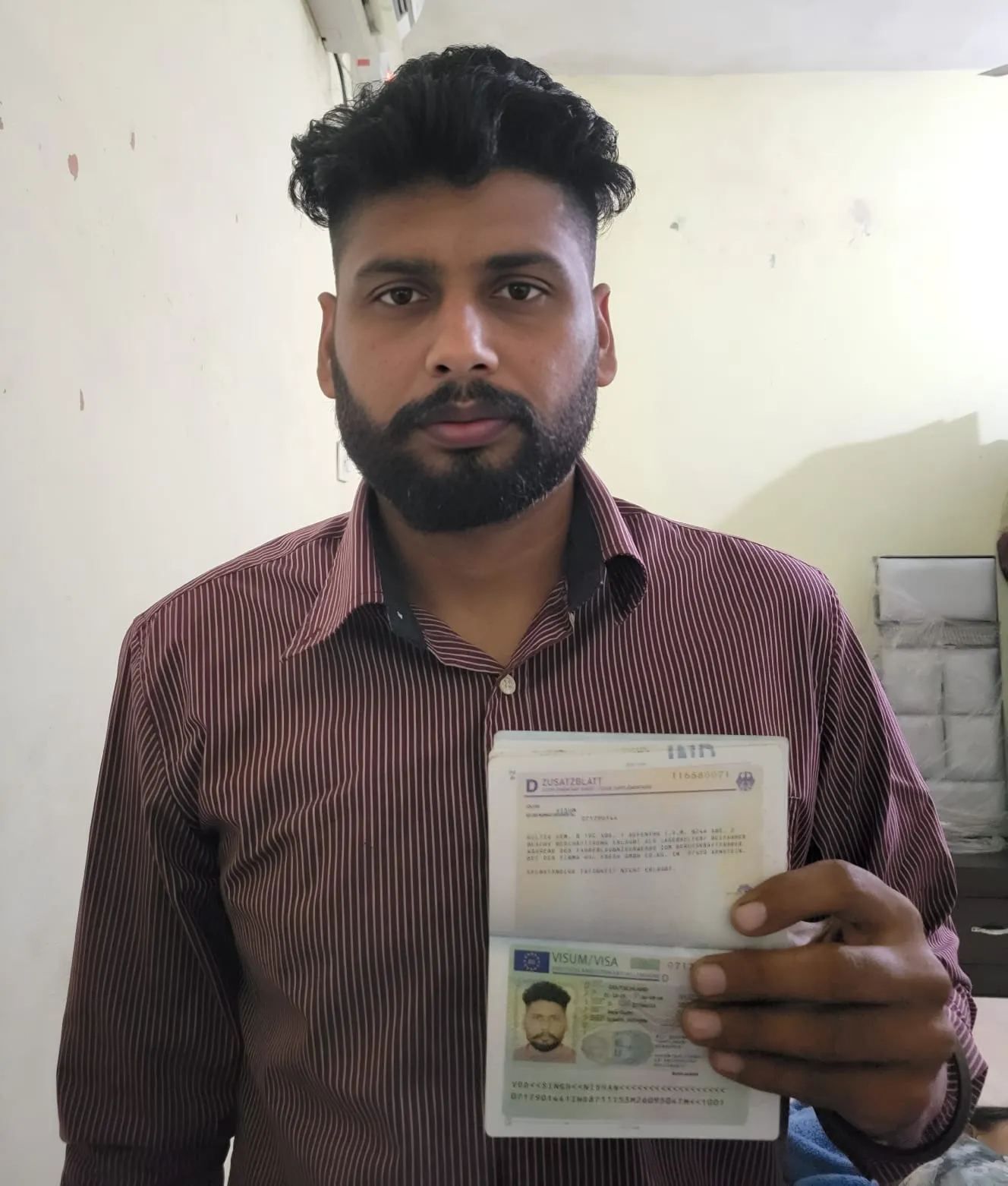
At AtoZ Serwis Plus, we help you become a global citizen with trusted support for jobs abroad, overseas education, and visa processing tailored to your goals.
Read More
Connecting employers, job seekers, students, and agencies across Europe and beyond.
Looking to hire skilled or semi-skilled workers from Asia, Africa, the CIS, or EU countries? AtoZ Serwis Plus supports your recruitment needs for Poland, Germany, Slovakia, Hungary, Lithuania, Estonia, and beyond. We deliver comprehensive legal recruitment services, visa support, and seamless onboarding solutions tailored to your business goals. Partner with us to build a reliable, compliant, and efficient workforce.
EmployerLooking to hire skilled or semi-skilled workers from Asia, Africa, the CIS, or EU countries? AtoZ Serwis Plus supports your recruitment needs for Poland, Germany, Slovakia, Hungary, Lithuania, Estonia, and beyond. We deliver comprehensive legal recruitment services, visa support, and seamless onboarding solutions tailored to your business goals. Partner with us to build a reliable, compliant, and efficient workforce.
Job SeekersAre you a recruiter looking to place workers in Poland, Germany, Slovakia, or other EU destinations? AtoZ Serwis Plus provides you with trusted employer connections, legal recruitment solutions, verified job placements, and full visa assistance. Expand your recruitment business with confidence, supported by clear processes, reliable documentation, and transparent migration services.
RecruiterLooking to work and live in Europe? At AtoZ Serwis Plus, we’re here to guide you every step of the way. Our experts provide support with job search assistance, work visa applications, qualification recognition, and European language learning. To connect with us and get started on your European journey, click one of the contact icons below.
Copyright © 2009-2026 AtoZ Serwis Plus. All Rights Reserved.