Hungary's technology, automotive, manufacturing, financial services, shared services, and public-sector organisations are expanding across Budapest, Debrecen, Miskolc, Győr, and Pécs, creating strong and sustained demand for skilled IT professionals and software specialists. As one of Central Europe's most significant industrial economies - a EU member state, a Schengen member, a country with the largest automotive manufacturing investment pipeline in the EU, and an established IT shared-services and software development hub serving Western European and US clients - Hungary requires experienced technology professionals capable of designing, building, securing, and maintaining complex software platforms, automotive systems, digital infrastructure, and enterprise technology across a highly internationally connected economy.
From software development and cloud engineering to cybersecurity, data science, automotive software engineering, ERP implementation, DevOps, and digital transformation, organisations across Hungary rely on qualified technology professionals who understand modern development frameworks, Hungarian and EU data-protection requirements (GDPR), and the technically capable, ambitious working culture that characterises Hungary's growing technology sector. Whether for Budapest's significant startup, fintech, and shared-services ecosystem, the rapidly expanding automotive technology clusters in Gyor, Debrecen, and Kecskemet, the major battery and EV technology investments that are making Hungary a global EV supply-chain hub, or Hungary's e-government modernisation programme, demand for capable IT talent consistently outpaces domestic supply.
AtoZ Serwis Plus provides specialised IT and software recruitment services in Hungary, helping employers hire qualified software developers, cloud engineers, cybersecurity specialists, data professionals, IT infrastructure technicians, automotive software engineers, and digital transformation consultants from trusted international labour markets. Our recruitment solutions support technology companies, automotive manufacturers, battery and EV technology companies, shared-services centres, financial institutions, and public-sector bodies in building reliable and capable technology teams.
Our recruitment strategy aligns with Hungary's rapidly expanding automotive and EV technology sector, the significant Budapest IT shared-services industry, the growing fintech and startup ecosystem, and the digital transformation investment being made across Hungary's industrial and public-sector organisations. We provide access to skilled international technology professionals while ensuring structured and compliant hiring processes.
Key strengths
Our services help Hungarian employers reduce hiring timelines, access specialised skills not available domestically, and build stable long-term technology teams.
AtoZ Serwis Plus recruits qualified professionals for a wide range of IT and software roles in Hungary:
These professionals support automotive software engineering, EV battery technology, shared-services IT operations, digital transformation programmes, and IT infrastructure management across Hungary's public and private sectors.
Our IT and software recruitment services support the key sectors of Hungary's technology economy:
Each candidate is carefully matched based on employer requirements, technology stack, project type, and English or Hungarian language proficiency appropriate to the employer's working environment.
AtoZ Serwis Plus sources qualified IT and software professionals from trusted international labour markets to meet Hungary's technology workforce demand.
All candidates are screened based on:
Our candidates meet the technical and professional standards required in Hungary's internationally connected and industrially sophisticated technology market.
This ensures faster time-to-productivity, reduced onboarding friction, and high-quality technology output for Hungarian employers.
We follow a structured and transparent recruitment process:
This ensures smooth hiring and compliance with Hungarian labour regulations, the Munka Torvenykönyve (Labour Code), applicable kolleктív szerzodesek (collective agreements), and the applicable immigration-authority permit process.
Whether organisations require software developers for product engineering, automotive embedded engineers for Audi or Mercedes-Benz programmes, battery management systems engineers for CATL or Samsung SDI, cloud engineers for shared-services infrastructure, cybersecurity specialists for financial data protection, or IT infrastructure technicians for enterprise operations, AtoZ Serwis Plus provides skilled professionals ready to contribute from day one across Hungary.
We are a trusted recruitment partner for IT and software jobs in Hungary, delivering technology workforce solutions aligned with real market demand.
Employers in Hungary can register to hire experienced technology professionals.
Employer benefits
https://www.atozserwisplus.com/employer/registration
Recruitment agencies can collaborate on IT and software workforce projects in Hungary.
Recruiter benefits
https://www.atozserwisplus.com/recruiter/registration
Qualified IT and software professionals seeking job opportunities in Hungary can register and apply.
Worker benefits
https://www.atozserwisplus.pl/work-in-europe
Registration ensures:
Hungary offers strong and growing employment opportunities for software developers, cloud engineers, automotive software engineers, battery technology specialists, cybersecurity professionals, data scientists, and IT infrastructure technicians. Hungary's extraordinary automotive and EV investment pipeline - including CATL's Debrecen gigafactory, Samsung SDI's expansion, Audi Hungary's R&D centre in Gyor, and Mercedes-Benz's Kecskemet manufacturing and technology complex - the Morgan Stanley and IBM Budapest shared-services operations, Prezi's pioneering Budapest technology legacy, a flat 15% personal income-tax rate, a competitive cost of living relative to Western Europe, and Budapest's genuinely world-class cultural environment all combine to make Hungary one of Central Europe's most dynamic and rewarding IT employment destinations. International IT professionals who bring genuine technical depth will find both exceptional professional opportunity and an extraordinary city in which to build their careers.
AtoZSerwisPlus is a European workforce and immigration advisory platform specialising in compliant recruitment guidance, structured work authorisation support, and labour market insights across European countries.
Government of Hungary – https://www.kormany.hu
National Directorate-General for Aliens Policing (OIF) – https://www.bmbah.hu
National Employment Service (NFSZ) – https://nfsz.munka.hu
Hungarian Investment Promotion Agency (HIPA) – https://hipa.hu
This content is independently created and provided for informational purposes only. It does not constitute legal advice, employment guarantees, or immigration approval. All recruitment and work authorisation decisions are subject to Hungarian labour laws and approval by competent authorities.
It involves sourcing and placing qualified technology professionals - software developers, cloud engineers, automotive software engineers, battery management systems engineers, cybersecurity specialists, data scientists, DevOps engineers, and IT infrastructure technicians - with Hungarian employers across automotive manufacturing, EV battery technology, IT shared services, financial services, technology startups, and the public sector. Hungary is one of Central Europe's most significant industrial economies, combining world-class automotive manufacturing with a major IT shared-services industry, a growing startup ecosystem, and the EU's most ambitious EV battery manufacturing investment pipeline.
Hungary faces a structural IT skills gap driven by a combination of emigration of skilled workers to Germany, Austria, the UK, and other EU countries since accession in 2004, a growing population of only approximately 9.7 million, and simultaneously accelerating technology demand across automotive, EV battery, shared-services, and fintech sectors. The automotive cluster - Audi in Gyor, Mercedes-Benz in Kecskemet, Stellantis, and their supply chains - is investing heavily in software-defined vehicle and connected-car technology. CATL's EUR 7.3 billion Debrecen gigafactory and Samsung SDI's expansions are creating unprecedented bathnology IT demand. Morgan Stanley Budapest, IBM Hur shared-services operators compete fothe r developers alongside the startup community. IVSZ (ICT Association of Hungary) consistently reports tens of thousands of unfilled IT vacancies.
Yes. EU and EEA citizens work in Hungary without a work permit, registering with the local Jarasi Hivatal (District Office) or Kormanyablak (Government Counter) and obtaining an adoazonosito jel (tax identification number) from the NAV (Nemzeti Ado- es Vamhivatal - National Tax and Customs Administration) and a TAJ szam (social security number) from the NEAK (Nemzeti Egeszsegbiztositasi Alapkezelo - National Health Insurance Fund) for payroll and public-services access.
Non-EU nationals require a munkavallalasi engedely (work permit) and tartózkodasi engedely (residence permit), or can apply for an egységes kérelem (single application combining both) through the OIF (Orszagos Idegenrendeszeti Foigazgatosag - National Directorate-General for Aliens Policing). The employer applies on behalf of the worker, demonstrating labour-market need through the NFSZ (National Employment Service). IT roles are on Hungary's shortage-occupation list (hianyossza). Hungary also applies the EU Blue Card (EU Kek Kartya) for highly qualified non-EU professionals with a relevant degree and a salary at least 1.5 times the Hungarian average gross wage - approximately HUF 650,000-700,000 per month. Processing takes approximately 30-60 days. Hungary uses the Hungarian forint (HUF), not the euro.
A relevant degree from the Budapest University of Technology and Economics (BME - Budapesti Muszaki es Gazdasagtudomanyi Egyetem), Eotvos Lorand University (ELTE), or an internationally recognised institution is the standard baseline. Automotive and EV technology companies require C++ and embedded systems experience alongside formal engineering credentials, particularly for battery management systems (BMS), AUTOSAR, and ISO 26262 functional safety roles. Shared-services operators and startups evaluate candidates primarily on demonstrated technical ability. Cloud certifications (AWS, Azure, GCP), SAP expertise, and cybersecurity credentials are well-regarded. English proficiency is essential for virtually all international-client-facing roles.
Java is the most broadly in-demand backend language across shared-services, financial services, and enterprise applications. Python is essential in data science, machine learning, and automotive analytics. JavaScript and TypeScript dominate frontend and full-stack development across the startup and product ecosystem. C++ and C are critical in embedded systems and automotive software at Audi Hungary, Mercedes-Benz, Continental, and Bosch Hungary - reflecting Hungary's deep automotive engineering heritage. For battery technology - Hungary's fastest-growing IT specialisation - Python for BMS analytics, C++ for real-time embedded control systems, and MATLAB/Simulink for battery modelling are specifically valued. Cloud platforms - AWS and Azure - drive DevOps demand in shared-services and startup environments.
Software developers earn approximately HUF 600,000 to HUF 1,300,000 gross per month (approximately EUR 1,500-3,300). Senior engineers, cloud architects, and data scientists earn HUF 1,200,000 to HUF 2,200,000 and above. Budapest pays the highest rates nationally. Hungary uses the forint (HUF), not the euro, so salaries at international companies are often benchmarked in euros internally. Hungary's flat 15% personal income-tax rate (szja - szemelyi jovedelemado) is among the EU's lowest, producing competitive net purchasing power. The cost of living in Budapest, while rising, remains substantially below Vienna, Munich, or Prague.
Hungary applies a flat szemelyi jovedelemado (szja - personal income tax) rate of 15% on all employment income - one of the EU's lowest flat rates. Social-insurance contributions add approximately 18.5% for employees (13% pension + 4% health + 1.5% labour market contribution). Employer contributions add a further 13% social contribution tax (szochó). The effective combined employee deduction from gross salary is approximately 33.5% - competitive within the EU given the flat rate structure. The NAV (Nemzeti Ado- es Vamhivatal - National Tax and Customs Administration) administers the system. There is no progressive banding - the same 15% applies regardless of income level, which particularly benefits higher-earning IT professionals.
English is the dominant working language in most IT shared-services operations, international product companies, and technology companies serving international clients. Most Budapest-based technology companies operate primarily in English - Morgan Stanley Budapest, IBM Hungary, Prezi, and EPAM Hungary all function in English. Hungarian proficiency becomes important for: public-sector IT roles; client-facing positions for Hungarian-speaking customers; automotive companies where team communication is in Hungarian; and for social integration and daily life. Hungarian is a uniquely difficult language for most Europeans and non-Europeans alike, but most urban professional environments in Budapest are highly navigable in English.
Hungary has secured the EU's largest per-capita automotive and EV technology investment pipeline. Audi Hungary in Gyor - Audi's largest engine and vehicle manufacturing facility globally - has been expanding its R&D and software engineering capacity for electric and connected vehicles. Mercedes-Benz operates a major manufacturing and technology centre in Kecskemet. Stellantis (formerly Opel) has a significant Hungarian presence. CATL - the world's largest battery manufacturer - is constructing a EUR 7.3 billion gigafactory in Debrecen, one of the largest single industrial investments in EU history. Samsung SDI and SK On have major battery manufacturing and technology operations in Hungary. This EV supply-chain cluster creates distinctive demand for battery management system (BMS) software engineers, C++ embedded control engineers, MATLAB/Simulink modelling specialists, and data engineers for battery analytics that is unlike the technology demand profile of any other EU country at this scale.
Budapest has established itself as one of Europe's leading IT shared-services and financial services technology cities. Morgan Stanley operates one of its largest global technology and operations centres in Budapest, employing several thousand professionals. IBM Hungary, Vodafone Shared Services, Aegon Hungary, and dozens of other multinationals operate delivery and technology centres. Prezi - the presentation software company - was founded in Budapest and remains one of the most significant Hungarian technology brands globally. LogMeIn (acquired by Francisco Partners) had major Budapest operations. EPAM Systems has a substantial Budapest delivery centre. The shared-services ecosystem creates consistent demand for Java, .NET, Python, and SAP developers, IT infrastructure engineers, cybersecurity analysts, and technology project managers in English-language environments.
The OIF (Orszagos Idegenrendeszeti Foigazgatosag - National Directorate-General for Aliens Policing, now part of the Ministry of Interior system) issues residence permits for non-EU nationals. The NFSZ (Nemzeti Foglalkoztatasi Szolgalat - National Employment Service) confirms labour-market availability for work permits. The NAV (Nemzeti Ado- es Vamhivatal - National Tax and Customs Administration) administers income tax. The NEAK (Nemzeti Egeszsegbiztositasi Alapkezelo) manages health insurance. The NAIH (Nemzeti Adatvedelmi es Informaciószabadsag Hatosag - National Authority for Data Protection and Freedom of Information) is Hungary's GDPR supervisory authority. The MNB (Magyar Nemzeti Bank - Central Bank of Hungary) supervises financial institutions.
Hungary implements the EU GDPR through the Informacios onrendelkezesi jogrol es az informaciószabadsagrol szolo 2011. evi CXII. torveny (Act CXII of 2011 on the Right of Informational Self-Determination and on Freedom of Information), as amended to align with GDPR. The NAIH (Nemzeti Adatvedelmi es Informaciószabadsag Hatosag - National Authority for Data Protection and Freedom of Information) is the national supervisory authority. NAIH has been an active GDPR enforcer, issuing fines and guidance particularly on employee monitoring, direct marketing, and data transfers. For financial sector IT, MNB's IT security regulations align with EBA guidelines. IT professionals working with personal data must understand both GDPR and Hungary's national data-protection provisions.
Standard working time is 40 hours per week under the Munka Torvenykönyve (Labour Code). Annual leave is a minimum of 20 working days per year, with additional days for age and other criteria - most technology employers provide 25 days. Hungary has 13 official public holidays per year. Overtime is compensated under Labour Code provisions. Hybrid working is standard across Budapest's technology sector. Hungarian technology employers typically provide a SZEP kartya (Szechenyi Recreation Card - a government-supported benefit card providing tax-advantaged allowances for accommodation, dining, and leisure up to HUF 450,000 per year), Erzsebet utalvany (food vouchers), cafeteria benefits, supplementary health insurance (magán-egeszsegugyi biztositas), and professional development budgets.
EU citizens change employer freely at any time. Non-EU work and residence permit holders must apply to the OIF for an updated permit when changing employer, and the process should be initiated before the employment change takes effect. The NFSZ confirmation of labour-market availability is required for the new employment. For IT professionals in shortage-occupation roles, this process is generally supported. EU Blue Card holders can change employer after the first two years without prior OIF approval. After three years of continuous legal residence in Hungary, non-EU nationals can apply for letelepedesi engedely (permanent residence), which grants unrestricted labour-market access.
Legal employment in Hungary provides access to the social insurance system. Healthcare through the NEAK (Nemzeti Egeszsegbiztositasi Alapkezelo) provides access to public healthcare services through the OEP egeszségbiztositasi rendszer. Pension contributions accumulate through the tarsadalombiztositasi nyugdijrendszer (state pension system). Allaskeresési segely (unemployment benefit) through the NFSZ provides benefit for qualifying contributors at 60% of previous average daily earnings for up to 90 days. Tappenz (sick pay) is paid by the employer for the first 15 days of illness and by the NEAK from day 16 at 60% (hospitalisation) or 50% (home sick leave) of the assessment basis. Gyermekek utan jaro tamogatasok (family and child support benefits) are generous under Hungary's pro-natalist policy framework.
Yes. Financial institutions supervised by the MNB (Magyar Nemzeti Bank) conduct hatosagi erkölcsi bizonyitvany (official criminal record certificate) checks and employment-history verification for technology roles with access to financial systems. For defence and national security-adjacent IT roles, a biztonsagi ellenorzes (security clearance) through the Alkotmanyvedelmi Hivatal (Constitutional Protection Office - the domestic intelligence service) is required at the appropriate classification level. Morgan Stanley Budapest and other financial shared-services operators apply global corporate background-screening standards. Automotive companies including Audi Hungary apply international corporate screening policies. Most shared-services and international technology employers conduct employment-history verification and reference checks aligned with global client requirements.
Yes. EU citizens bring family members under EU free-movement rules. Non-EU permit holders apply for csalad-egyesítes (family reunification) through the OIF, demonstrating adequate income and housing. Budapest is one of Central Europe's most cosmopolitan and culturally rich cities, with a large international community, international schools, improving public services, and an extraordinary architectural heritage. Hungary's family-oriented culture, affordable cost of living relative to Western European capitals, and Budapest's high quality of life make it genuinely attractive for families. The SZEP kartya benefit system and Hungary's pro-natalist family support policies provide additional financial benefits for families with children.
Yes - and it is among the most acute structural challenges in Hungary's economy. IVSZ (ICT Association of Hungary) consistently reports tens of thousands of unfilled IT vacancies. The combination of EU-accession emigration, rapid automotive and EV investment growth, shared-services expansion, and fintech development all sustain demand well beyond domestic STEM graduate output. Hungary's government has invested in IT education through programmes like the Digital Education Strategy and IVSZ-supported coding bootcamps, but supply growth lags far behind demand acceleration, particularly in automotive embedded software, battery technology, cloud engineering, and cybersecurity.
AtoZ Serwis Plus sources and screens international IT and software professionals for verified Hungarian employers across automotive software, EV battery technology, IT shared services, financial services, startups, and the public sector. We conduct technical screening aligned with employer requirements - including automotive C++ embedded systems, battery management system engineering, SAP enterprise platforms, and shared-services delivery specialisms - verify qualifications and project experience, confirm English and Hungarian language proficiency as appropriate, and manage the OIF work and residence permit or EU Blue Card process for non-EU candidates. Register at atozserwisplus.com to begin.
Global clients share how AtoZ Serwis Plus helped them secure work permits, visas, and career support across Europe. Real stories. Real results.
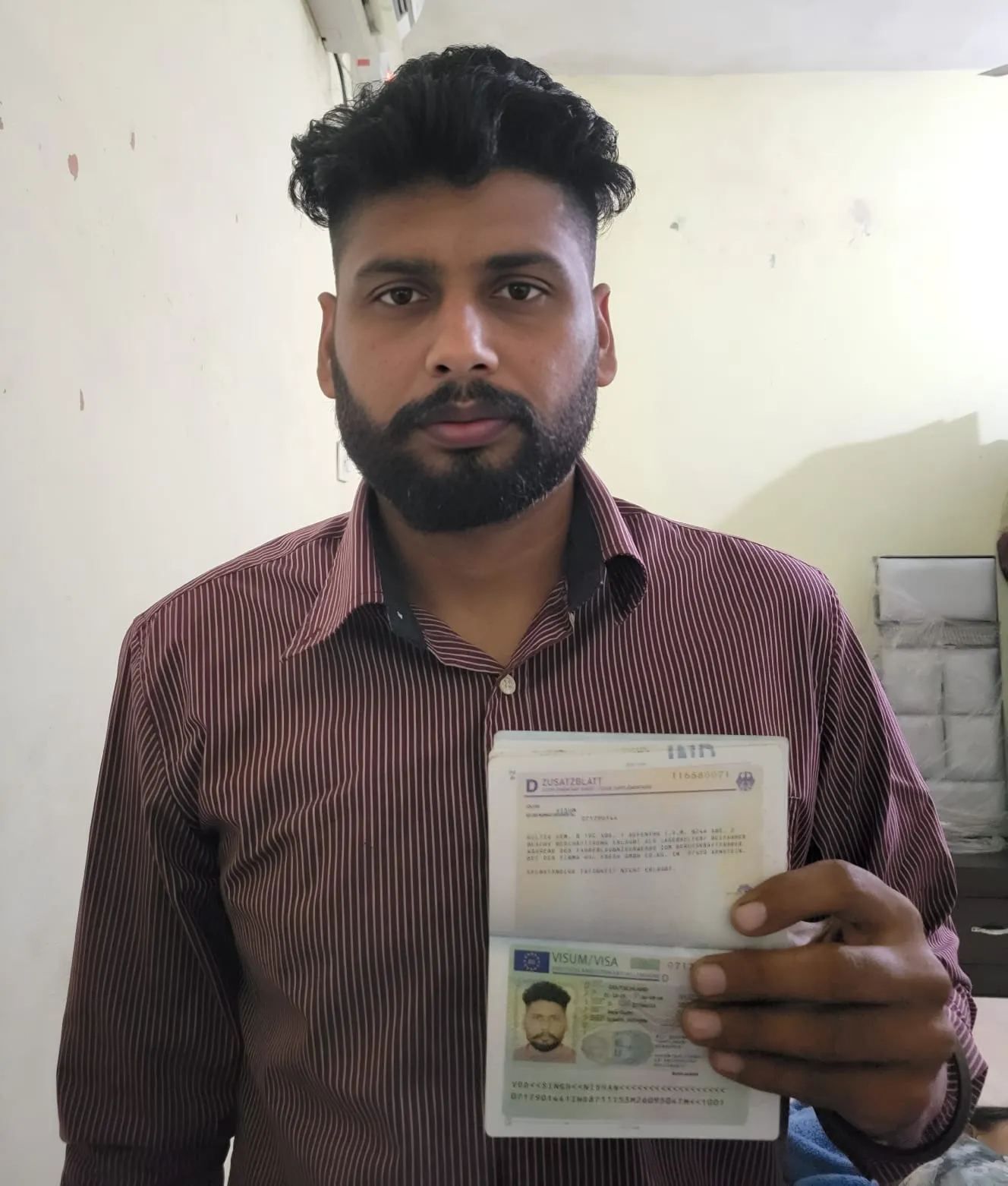
At AtoZ Serwis Plus, we help you become a global citizen with trusted support for jobs abroad, overseas education, and visa processing tailored to your goals.
Read More
Connecting employers, job seekers, students, and agencies across Europe and beyond.
Looking to hire skilled or semi-skilled workers from Asia, Africa, the CIS, or EU countries? AtoZ Serwis Plus supports your recruitment needs for Poland, Germany, Slovakia, Hungary, Lithuania, Estonia, and beyond. We deliver comprehensive legal recruitment services, visa support, and seamless onboarding solutions tailored to your business goals. Partner with us to build a reliable, compliant, and efficient workforce.
EmployerLooking to hire skilled or semi-skilled workers from Asia, Africa, the CIS, or EU countries? AtoZ Serwis Plus supports your recruitment needs for Poland, Germany, Slovakia, Hungary, Lithuania, Estonia, and beyond. We deliver comprehensive legal recruitment services, visa support, and seamless onboarding solutions tailored to your business goals. Partner with us to build a reliable, compliant, and efficient workforce.
Job SeekersAre you a recruiter looking to place workers in Poland, Germany, Slovakia, or other EU destinations? AtoZ Serwis Plus provides you with trusted employer connections, legal recruitment solutions, verified job placements, and full visa assistance. Expand your recruitment business with confidence, supported by clear processes, reliable documentation, and transparent migration services.
RecruiterLooking to work and live in Europe? At AtoZ Serwis Plus, we’re here to guide you every step of the way. Our experts provide support with job search assistance, work visa applications, qualification recognition, and European language learning. To connect with us and get started on your European journey, click one of the contact icons below.
Copyright © 2009-2026 AtoZ Serwis Plus. All Rights Reserved.