Montenegro's technology, financial services, tourism, energy, telecommunications, and public-sector organisations are expanding across Podgorica, Nikšić, Bar, Budva, and Herceg Novi, creating growing demand for skilled IT professionals and software specialists. As a small Western Balkans nation that is the most advanced EU accession candidate among the non-EU Western Balkans countries — having opened EU accession negotiations in 2012 — and a country that has adopted the euro unilaterally and maintains an open, business-friendly environment, Montenegro is investing in digital modernisation aligned with EU standards. The country combines a growing nearshore IT and startup ecosystem with the technology demands of a rapidly growing tourism economy and a government committed to digital transformation.
From software development and IT infrastructure to cybersecurity, digital transformation, fintech platform support, and e-government services, organisations across Montenegro rely on qualified technology professionals who understand modern development frameworks, Montenegro's data protection regulations, and the pragmatic, fast-evolving work culture of one of the Western Balkans' most internationally oriented small economies. Whether for Podgorica's growing IT outsourcing community, the financial technology sector, the tourism and hospitality technology platforms serving one of Europe's fastest-growing destinations, or Montenegro's EU-aligned e-government modernisation programme, demand for capable IT talent is growing steadily.
AtoZ Serwis Plus provides specialised IT and software recruitment services in Montenegro, helping employers hire qualified software developers, IT infrastructure engineers, cybersecurity specialists, data professionals, and digital transformation consultants from trusted international labour markets. Our recruitment solutions support technology companies, financial institutions, tourism platform operators, energy companies, and public-sector bodies in building reliable and capable technology teams.
Our recruitment strategy aligns with Montenegro's EU accession digital modernisation agenda, its growing Podgorica technology and startup ecosystem, the IT infrastructure needs of its financial and tourism sectors, and the increasing demand for nearshore development services from Western European clients. We provide access to skilled international technology professionals while ensuring structured, compliant hiring processes in accordance with Montenegrin labour law.
Key strengths
Our services help Montenegrin employers access the technology talent that the domestic workforce cannot fully supply, and build stable long-term technology teams.
AtoZ Serwis Plus recruits qualified professionals for a wide range of IT and software roles in Montenegro:
These professionals support enterprise software operations, nearshore development projects, digital public services, and IT infrastructure management across Montenegro's public and private sectors.
Our IT and software recruitment services support the key sectors of Montenegro's technology economy:
Each candidate is carefully matched based on employer requirements, technology stack, and English or Montenegrin/Serbian language proficiency appropriate to the employer's working environment.
AtoZ Serwis Plus sources qualified IT and software professionals from trusted international labour markets to meet Montenegro's technology workforce demand.
All candidates are screened based on:
Our candidates meet the technical and professional standards required in Montenegro's growing and internationally connected technology market.
This ensures effective technology delivery in Montenegro's developing but rapidly advancing digital economy.
We follow a structured and transparent recruitment process:
This ensures smooth hiring and compliance with Montenegrin labour regulations under the Zakon o radu (Labour Law) and the applicable work-authorisation framework.
Whether organisations require software developers for nearshore project delivery, cybersecurity specialists for financial sector protection, IT infrastructure engineers for telecommunications networks, data engineers for tourism analytics platforms, or IT support technicians for enterprise operations, AtoZ Serwis Plus provides skilled professionals ready to contribute from day one across Montenegro.
We are a trusted recruitment partner for IT and software jobs in Montenegro, delivering technology workforce solutions aligned with the specific demands of this fast-developing Adriatic economy.
Employers in Montenegro can register to hire experienced technology professionals.
Employer benefits
https://www.atozserwisplus.com/employer/registration
Recruitment agencies can collaborate on IT and software workforce projects in Montenegro.
Recruiter benefits
https://www.atozserwisplus.com/recruiter/registration
Qualified IT and software professionals seeking job opportunities in Montenegro can register and apply.
Worker benefits
https://www.atozserwisplus.pl/work-in-europe
Registration ensures:
Montenegro offers growing and increasingly attractive employment opportunities for software developers, IT infrastructure engineers, cybersecurity specialists, and digital transformation consultants. The country's flat 9–15% income-tax structure, its euro-denominated economy without exchange-rate risk, its extraordinary Adriatic and mountain landscape, its EU accession trajectory driving regulatory alignment and investment, and a low cost of living that makes it one of Europe's most affordable IT employment destinations all combine to make Montenegro a compelling choice for internationally mobile IT professionals seeking a growing Western Balkans economy with genuine European prospects. Podgorica's technology community is expanding rapidly, and the professionals who establish themselves during this growth phase will be well-positioned as Montenegro's EU integration deepens.
AtoZSerwisPlus is a European workforce and immigration advisory platform specialising in compliant recruitment guidance, structured work authorisation support, and labour market insights across European countries.
Government of Montenegro – https://www.gov.me
Employment Agency of Montenegro (Zavod za zapošljavanje) – https://www.zzzcg.me
Ministry of Public Administration – https://www.mju.gov.me
Investment and Development Fund of Montenegro – https://www.irfcg.me
This content is independently created and provided for informational purposes only. It does not constitute legal advice, employment guarantees, or immigration approval. All recruitment and work authorisation decisions are subject to Montenegrin labour laws and approval by competent authorities.
It involves sourcing and placing qualified technology professionals — software developers, IT infrastructure engineers, cybersecurity specialists, data engineers, DevOps engineers, and IT support technicians — with Montenegrin employers across the nearshore development, financial services, tourism technology, energy, telecommunications, and public sectors. Montenegro is a small, euro-using Western Balkans economy in advanced EU accession negotiations, with a growing technology sector driven by nearshore development and the digital modernisation demands of its tourism and financial sectors.
Montenegro has a small population of approximately 620,000, a high rate of emigration among skilled workers — particularly to EU member states — and a technology sector that is growing faster than the domestic education system can supply. The nearshore development industry, which serves European clients from Montenegro's cost-competitive base, has expanded consistently. The financial sector's digital investment, the tourism industry's technology demands, and the EU accession-driven e-government programme all create technology demand that the domestic workforce cannot fully meet. The Employment Agency of Montenegro (Zavod za zapošljavanje) consistently identifies IT roles among the most difficult vacancies to fill.
No. Montenegro is not yet an EU member state, though it is the most advanced EU accession candidate among the non-EU Western Balkans countries, having opened accession negotiations in 2012. Montenegro has unilaterally adopted the euro as its official currency — without being part of the eurozone — which eliminates exchange-rate risk for businesses and employees and simplifies financial planning. Montenegro is a NATO member since 2017. EU accession is a central government policy objective, and alignment with EU regulations — including data-protection and labour standards — is progressing across most sectors.
Foreign nationals require a work permit (radna dozvola) and a temporary residence permit (privremeni boravak) to work in Montenegro. The employer applies for the work permit through the Employment Agency of Montenegro (Zavod za zapošljavanje Crne Gore), which assesses labour-market availability. The Ministry of Interior (Ministarstvo unutrašnjih poslova) issues the temporary residence permit. For IT roles — which are recognised as shortage occupations — the process is generally supported. Processing takes approximately 30–60 days. The permit is issued for one year initially and is renewable. Montenegro's relatively streamlined administrative system for foreign workers reflects its open economic stance and EU accession commitments.
A relevant university degree from the University of Montenegro (Elektrotehnički fakultet — Faculty of Electrical Engineering) or an internationally recognised institution is the standard baseline for professional roles. Nearshore development companies serving European clients evaluate candidates primarily on practical technical ability — portfolio quality, GitHub contributions, and technical interview performance. English language proficiency is important for nearly all technology roles given the international client base. Cloud certifications (AWS, Azure), cybersecurity credentials, and project management certifications add value. For financial sector IT, experience with core banking systems and regulatory compliance technology is important.
JavaScript and TypeScript — with React, Node.js, and Angular — are the most widely used languages in Montenegro's nearshore development and product sector. Java and .NET (C#) are used in financial services and enterprise applications. Python is growing in data analytics and automation. PHP remains present in legacy web development. Mobile development using React Native and Flutter is in demand for banking applications and tourism platforms. Cloud platforms — AWS and Azure most widely — drive DevOps demand in companies serving European clients. For the financial sector, core banking system experience and payment protocol knowledge are valued alongside general software skills.
Montenegro offers lower gross salaries than EU member states but combines a flat income-tax rate with a very low cost of living — particularly outside the premium coastal resort areas. Software developers earn approximately EUR 1,000 to EUR 2,500 gross per month depending on experience and employer type. Senior engineers and specialists at nearshore companies serving Western European clients earn EUR 2,000 to EUR 3,500 and above. Podgorica pays higher rates than other cities. Montenegro's use of the euro eliminates exchange-rate uncertainty. The combination of low living costs and a growing economy makes Montenegro attractive for IT professionals who value quality of life alongside professional development.
Montenegro applies a progressive personal income tax (porez na dohodak fizičkih lica): 9% on income up to EUR 12,000 per year, and 15% on income above EUR 12,000 per year. Mandatory social-insurance contributions (doprinosi za obavezno socijalno osiguranje) add approximately 23.5% combined employer and employee contributions — the employee portion is approximately 15% of gross salary. The Poreska uprava (Tax Administration of Montenegro) administers the system. The effective combined rate for most IT professionals is approximately 22–28% of gross salary — one of the lower tax burdens in Europe, particularly for those earning below the 15% threshold.
Montenegrin — closely related to Serbian, Croatian, and Bosnian — is the official language and is used in public administration, legal contexts, and most local business communication. Serbian is mutually intelligible and widely spoken. English is the working language in most nearshore development companies, IT outsourcing firms, and internationally oriented businesses. For financial institutions, public-sector bodies, and locally oriented employers, Montenegrin or Serbian proficiency is important for effective integration. Most technology roles in the nearshore sector are accessible to English-speaking professionals, and Montenegro's relatively small size means that language barriers are less significant than in larger non-English-speaking markets.
Montenegro has established a modest but growing reputation as a nearshore software development base, primarily serving Austrian, German, and Italian clients who value its geographic proximity, time-zone alignment with Western Europe, euro-denominated economy, low operating costs, and improving technical education output. Companies serving European clients operate primarily in English with internationally recognised development practices. The sector is smaller than those in Bosnia and Herzegovina, Serbia, or North Macedonia, but is growing alongside Montenegro's overall economic development and EU accession progress. Tourism-technology companies building digital platforms for Montenegro's rapidly expanding visitor economy add further IT employment demand.
The Ministry of Interior (Ministarstvo unutrašnjih poslova) issues temporary residence permits for foreign nationals. The Employment Agency of Montenegro (Zavod za zapošljavanje Crne Gore) issues work permits and manages employment services. The Tax Administration of Montenegro (Poreska uprava) administers income tax. The Pension and Disability Insurance Fund (Fond PIO) and the Health Insurance Fund (Fond za zdravstveno osiguranje) manage social insurance. The Agency for Personal Data Protection and Free Access to Information (Agencija za zaštitu ličnih podataka i slobodan pristup informacijama — AZLP) is Montenegro's data-protection supervisory authority. The Central Bank of Montenegro (Centralna banka Crne Gore) supervises the financial sector.
Montenegro's data-protection law — the Zakon o zaštiti podataka o ličnosti — is modelled on the EU GDPR and was updated as part of Montenegro's EU accession Chapter 23 (Judiciary and Fundamental Rights) alignment process. The Agencija za zaštitu ličnih podataka i slobodan pristup informacijama (AZLP) is the national supervisory authority. Montenegro's framework is substantially aligned with GDPR principles and is expected to achieve full formal alignment as a condition of EU accession. IT professionals working with personal data — particularly in financial services and tourism technology, which handle sensitive customer data at scale — must understand both the Montenegrin data-protection law and, for EU-client data flows, GDPR requirements. EU adequacy status has not yet been granted to Montenegro.
Standard working time is 40 hours per week under the Zakon o radu (Labour Law). Annual leave is a minimum of 20 working days per year. Montenegro has 10–12 official public holidays per year. Overtime is compensated at premium rates under the Labour Law. The technology sector working culture in Podgorica is entrepreneurial and increasingly influenced by international working practices, with hybrid and remote-working models common in nearshore and startup environments. Montenegro's compact geography means that commuting within Podgorica is straightforward, and access to the Adriatic coast and mountain areas for recreation is exceptionally easy — a quality-of-life advantage that many IT professionals find significant.
Montenegrin nationals and those with permanent residence change employer freely. Foreign nationals on temporary residence permits with work permits must notify the Employment Agency and apply for an updated work permit linked to the new employer before the employment change takes effect. Montenegro's administrative processes for employment changes are continuing to improve as part of EU accession alignment. For IT professionals in recognised shortage occupations, the process is generally supported. Montenegro's small professional community means that changing roles typically involves well-connected networks where reputation and references carry significant weight.
Legal employment in Montenegro provides access to the social insurance system. Health insurance contributions through the Health Insurance Fund (Fond za zdravstveno osiguranje) provide access to public healthcare services — the Clinical Centre of Montenegro (Klinički centar Crne Gore) is the primary public hospital. Pension contributions accumulate through the Pension and Disability Insurance Fund (Fond PIO). Unemployment benefit (naknada za nezaposlenost) is available for qualifying contributors who lose their jobs involuntarily. Sick pay (naknada zarade za vrijeme privremene spriječenosti za rad) provides income during certified illness periods. Maternity and parental leave provisions are available under the Labour Law and specific parental support legislation.
Background checks are standard in regulated sectors. Financial institutions — supervised by the Central Bank of Montenegro — conduct criminal record checks (uvjerenje o nekažnjavnosti) and employment-history verification for technology roles with access to financial systems. Public-sector IT roles may require security screening appropriate to the sensitivity of the systems involved. Nearshore companies serving international clients apply screening standards required by those clients. Montenegro's small professional community means that reference checking is particularly important — the network is compact enough that professional reputations are readily verifiable through direct contacts.
Yes. Foreign workers who hold valid temporary residence in Montenegro can apply for family reunification through the Ministry of Interior, bringing spouses and dependent children to join them. Montenegro's low cost of living, mild Mediterranean climate along the coast, extraordinary natural environment — from the Adriatic coast to the Durmitor mountain national park — and improving public services make it genuinely attractive for families. Podgorica has improving international connectivity, a compact and safe urban environment, and access to both coastal and mountain recreation within a short drive. International schooling options are limited but improving, and the University of Montenegro provides higher education in Montenegrin and increasingly in English.
Yes. The Employment Agency of Montenegro consistently identifies IT and technology roles among the hardest vacancies to fill nationally. Montenegro's combination of a small educated population, emigration of skilled workers, and a growing technology sector creates a structural gap that international recruitment partially addresses. The government's EU accession-linked digital modernisation investment and the growth of nearshore development are expected to increase technology demand further over the coming years. Montenegro's proactive approach to foreign worker recruitment — reflected in its relatively streamlined work-permit process — reflects an awareness of this structural challenge.
AtoZ Serwis Plus sources and screens international IT and software professionals for verified Montenegrin employers across nearshore development, financial services, tourism technology, energy, and the public sector. We conduct technical screening aligned with employer requirements, verify qualifications and project experience, confirm English and local language proficiency as appropriate, and manage the Employment Agency work-permit and Ministry of Interior residence-permit process for non-Montenegrin candidates. Register at atozserwisplus.com to begin.
Montenegro has a formal qualification-recognition process for foreign academic credentials, managed by the Ministry of Education, Science and Innovation (Ministarstvo prosvjete, nauke i inovacija) through the National Qualifications Framework. In practice, most private-sector technology employers — particularly nearshore development companies serving Western European clients — assess candidates on demonstrated technical ability, portfolio quality, and interview performance rather than requiring formal credential recognition. Financial institutions and public-sector bodies place greater weight on formal qualifications and may request a recognition decision for specific roles. Montenegro's EU accession process is progressively aligning its qualification-recognition framework with EU standards under the European Qualifications Framework (EQF). Internationally recognised vendor certifications (AWS, Microsoft, Cisco, ISACA) are accepted across the technology sector without formal recognition procedures, and these practical credentials typically carry more weight than academic credential equivalency in Montenegro's growing IT market.
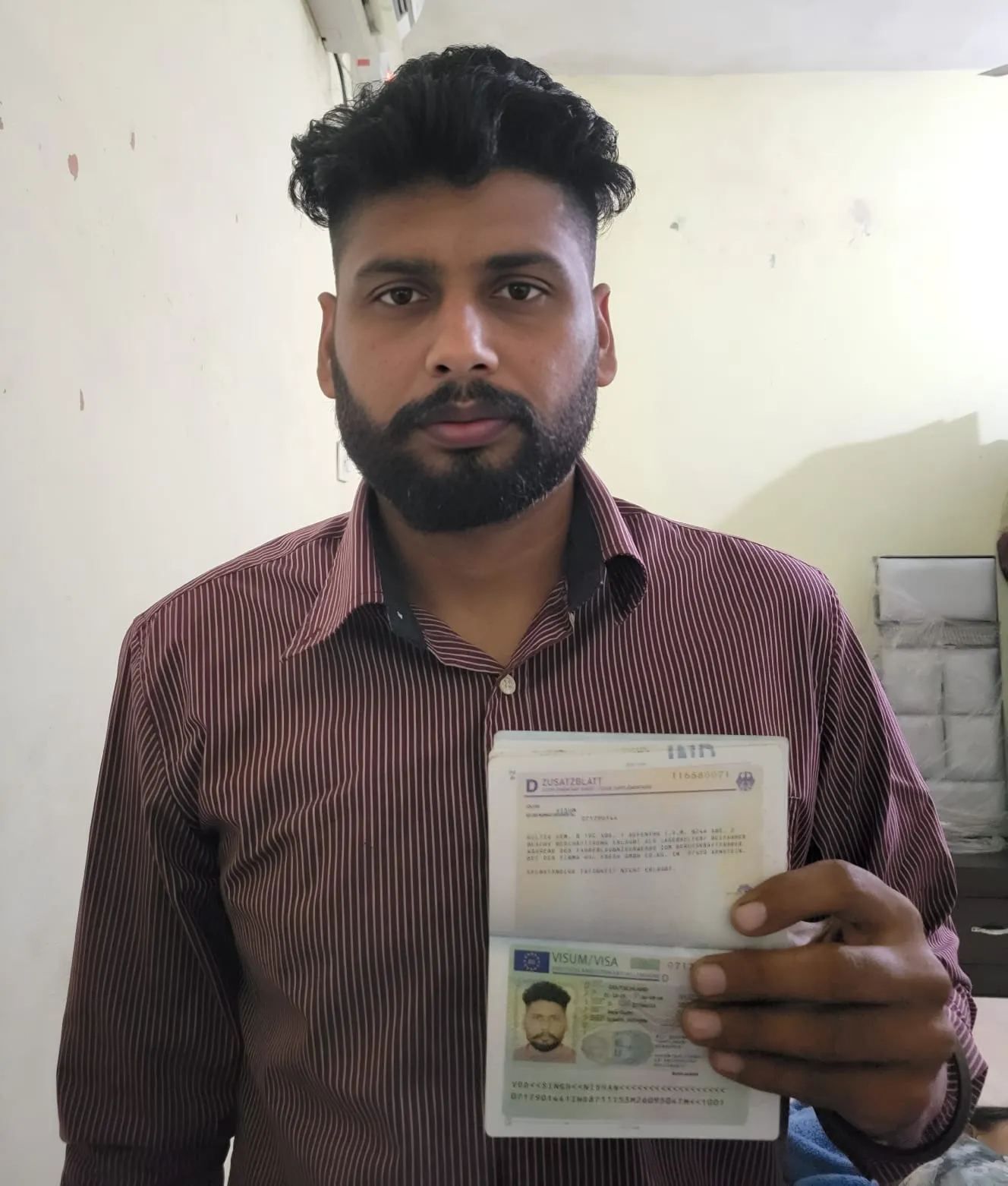
Global clients share how AtoZ Serwis Plus helped them secure work permits, visas, and career support across Europe. Real stories. Real results.
At AtoZ Serwis Plus, we help you become a global citizen with trusted support for jobs abroad, overseas education, and visa processing tailored to your goals.
Read More
Connecting employers, job seekers, students, and agencies across Europe and beyond.
Looking to hire skilled or semi-skilled workers from Asia, Africa, the CIS, or EU countries? AtoZ Serwis Plus supports your recruitment needs for Poland, Germany, Slovakia, Hungary, Lithuania, Estonia, and beyond. We deliver comprehensive legal recruitment services, visa support, and seamless onboarding solutions tailored to your business goals. Partner with us to build a reliable, compliant, and efficient workforce.
EmployerLooking to hire skilled or semi-skilled workers from Asia, Africa, the CIS, or EU countries? AtoZ Serwis Plus supports your recruitment needs for Poland, Germany, Slovakia, Hungary, Lithuania, Estonia, and beyond. We deliver comprehensive legal recruitment services, visa support, and seamless onboarding solutions tailored to your business goals. Partner with us to build a reliable, compliant, and efficient workforce.
Job SeekersAre you a recruiter looking to place workers in Poland, Germany, Slovakia, or other EU destinations? AtoZ Serwis Plus provides you with trusted employer connections, legal recruitment solutions, verified job placements, and full visa assistance. Expand your recruitment business with confidence, supported by clear processes, reliable documentation, and transparent migration services.
RecruiterLooking to work and live in Europe? At AtoZ Serwis Plus, we’re here to guide you every step of the way. Our experts provide support with job search assistance, work visa applications, qualification recognition, and European language learning. To connect with us and get started on your European journey, click one of the contact icons below.
Copyright © 2009-2026 AtoZ Serwis Plus. All Rights Reserved.