Norway's technology, energy, maritime, financial services, and public-sector organisations are expanding across Oslo, Bergen, Trondheim, Stavanger, and Tromsø, creating strong and sustained demand for skilled IT professionals and software specialists, as one of Europe's wealthiest nations — backed by the world's largest sovereign wealth fund and a diversified economy increasingly driven by digital innovation — Norway requires experienced technology professionals capable of designing, building, securing, and maintaining complex digital infrastructure, energy management systems, maritime technology platforms, and innovative software products across a uniquely prosperous and forward-looking environment.
From software development and cloud engineering to cybersecurity, data science, offshore energy software, maritime technology platforms, DevOps, and digital transformation consulting, organisations across Norway rely on qualified technology professionals who understand modern development frameworks, Norwegian and EEA data-protection requirements (GDPR), and the flat, trust-based working culture that characterises Norwegian professional life. Whether for the offshore energy technology companies in Stavanger, the Oslo fintech and startup ecosystem, the maritime technology cluster in Bergen, the Norwegian government's ambitious digital services programme, or global technology companies that have established operations in Norway, demand for capable IT talent consistently outpaces domestic supply.
AtoZ Serwis Plus provides specialised IT and software recruitment services in Norway, helping employers hire qualified software developers, cloud engineers, cybersecurity specialists, data professionals, IT infrastructure technicians, energy-sector software engineers, and digital transformation consultants from trusted international labour markets. Our recruitment solutions support energy technology companies, maritime technology groups, financial institutions, technology companies, consulting firms, and public-sector bodies in building reliable and capable technology teams.
Our recruitment strategy aligns with Norway's world-leading offshore energy and maritime technology sectors, its growing Oslo fintech and startup ecosystem, the digital transformation ambitions of its public services and financial institutions, and the technology demands of an economy managing the world's largest sovereign wealth fund. We provide access to skilled international technology professionals while ensuring structured and compliant hiring processes under Norway's EEA framework.
Key strengths
Our services help Norwegian employers reduce hiring timelines, access specialised skills not available domestically, and build stable long-term technology teams.
AtoZ Serwis Plus recruits qualified professionals for a wide range of IT and software roles in Norway:
These professionals support energy platform engineering, maritime systems development, digital transformation programmes, and technology infrastructure management across Norway's public and private sectors.
Our IT and software recruitment services support multiple high-demand sectors in Norway:
Each candidate is carefully matched based on employer requirements, technology stack, project type, and English or Norwegian language proficiency appropriate to the employer's working environment.
AtoZ Serwis Plus sources qualified IT and software professionals from trusted international labour markets to meet Norway's technology workforce demand.
All candidates are screened based on:
Our candidates meet the technical and professional standards required in Norway's prosperous, trust-based, and internationally oriented technology market.
This ensures faster time-to-productivity, reduced onboarding friction, and high-quality technology output for Norwegian employers.
We follow a structured and transparent recruitment process:
This ensures smooth hiring and compliance with Norwegian labour regulations, the Arbeidsmiljøloven (Working Environment Act), applicable tariffavtaler (collective agreements), and the UDI permit process.
Whether organisations require software developers for offshore energy platform engineering, cloud engineers for sovereign wealth fund data infrastructure, cybersecurity specialists for NSM-aligned programmes, maritime systems software engineers, data scientists for aquaculture analytics, or IT infrastructure technicians for enterprise operations, AtoZ Serwis Plus provides skilled professionals ready to contribute from day one across Norway.
We are a trusted recruitment partner for IT and software jobs in Norway, delivering technology workforce solutions aligned with real market demand.
Employers in Norway can register to hire experienced technology professionals.
Employer benefits
https://www.atozserwisplus.com/employer/registration
Recruitment agencies can collaborate on IT and software workforce projects in Norway.
Recruiter benefits
https://www.atozserwisplus.com/recruiter/registration
Qualified IT and software professionals seeking job opportunities in Norway can register and apply.
Worker benefits
https://www.atozserwisplus.pl/work-in-europe
Registration ensures:
Norway offers outstanding employment opportunities for software developers, cloud engineers, offshore energy software specialists, maritime technology engineers, cybersecurity professionals, data scientists, and IT infrastructure technicians. The combination of some of Europe's highest IT salaries, a highly progressive but comprehensive public-services model, world-class offshore energy and maritime technology employers, the Kongsberg and Equinor digital transformation programmes, a genuinely collaborative and trust-based working culture, Norway's extraordinary natural environment, and a quality of life that is consistently ranked among the world's highest all combine to make Norway one of the most rewarding IT employment destinations in Europe. International IT professionals who bring genuine technical depth, an appreciation of Norway's egalitarian values, and ideally some willingness to acquire Norwegian language skills will find both professional and personal fulfilment in this exceptional Nordic economy.
AtoZSerwisPlus is a European workforce and immigration advisory platform specialising in compliant recruitment guidance, structured work authorisation support, and labour market insights across European countries.
Government of Norway – https://www.regjeringen.no
Directorate of Immigration (UDI) – https://www.udi.no
Norwegian Labour and Welfare Administration (Nav) – https://www.nav.no
Innovation Norway – https://www.innovasjonnorge.no
This content is independently created and provided for informational purposes only. It does not constitute legal advice, employment guarantees, or immigration approval. All recruitment and work authorisation decisions are subject to Norwegian labour laws and approval by competent authorities.
It involves sourcing and placing qualified technology professionals — software developers, cloud engineers, cybersecurity specialists, offshore energy software engineers, maritime technology specialists, data scientists, DevOps engineers, and IT infrastructure technicians — with Norwegian employers across offshore energy, maritime technology, financial services, fintech, aquaculture technology, and the public sector. Norway's IT market is shaped by its extraordinary wealth, its world-leading offshore energy and maritime industries, and a working culture built on flat hierarchies and high individual autonomy.
Norway's technology sector faces a structural skills gap driven by several converging forces. The offshore energy industry — Equinor, Aker Solutions, and the broader Stavanger cluster — is digitalising at pace, building predictive-maintenance platforms, subsea digital twins, and reservoir-simulation software that require specialist technology and teams. The maritime sector's transition to autonomous vessels and shore-based control systems creates new categories of IT demand. The Norwegian government's digital services programme is ambitious and well-funded. Oslo's fintech and startup ecosystem is growing rapidly. Norway's population of approximately 5.4 million cannot supply all of these demands simultaneously, and the high cost of living limits the pool of internationally mobile talent willing to relocate compared to lower-cost European markets.
No. Norway is not an EU member state, but it is a member of the European Economic Area (EEA) and the Schengen Area. As an EEA member, Norway participates in the EU single market and applies EU legislation — including the GDPR — in most relevant areas. EU/EEA citizens have the right to live and work in Norway on terms broadly equivalent to Norwegian nationals, without a separate work permit, though registration with the authorities is required for stays beyond three months.
Yes. EU and EEA citizens work in Norway without a work permit, registering with the Skatteetaten (Norwegian Tax Administration) to obtain a D-number or personnummer (personal identity number) and registering their residence with the police (politiet) for stays beyond three months. The personnummer is essential for payroll, tax registration, and access to public services including the Norwegian healthcare system.
Non-EEA IT professionals apply for a skilled worker residence permit (oppholds- og arbeidstillatelse for fagarbeider) through UDI (Utlendingsdirektoratet — the Directorate of Immigration). The employer and applicant together submit documentation confirming the job offer, relevant qualifications, and salary meeting the minimum threshold. IT roles are on Norway's shortage-occupation list maintained by Nav (Norwegian Labour and Welfare Administration). Processing typically takes 1–3 months, though UDI's processing times vary. The skilled worker permit is initially valid for up to three years and is renewable; after three years of continuous residence, a permanent residence permit (permanent oppholdstillatelse) becomes available.
A relevant university degree (bachelor's or master's) in computer science, software engineering, or a related discipline is the standard baseline. Norwegian technology companies — both in the energy sector and in product and startup environments — evaluate candidates primarily on practical technical capability: portfolio quality, system design ability, and performance in technical interviews. For offshore energy and maritime software roles, domain knowledge of SCADA systems, IEC 61508 functional safety, or vessel automation platforms is a significant differentiator alongside programming skills. Cloud certifications (AWS, Azure, GCP) and cybersecurity credentials (CISSP, CEH) are well-regarded. Norwegian language proficiency — while not required for most private-sector roles — accelerates integration and career development.
Python is the most broadly in-demand language, used across data science, energy analytics, machine learning, and backend development. Java and Kotlin are critical in financial services and enterprise applications. JavaScript and TypeScript dominate frontend and full-stack development across startups, fintech, and product companies. C++ is used in embedded and real-time systems for maritime and offshore automation — a distinctive Norwegian demand driven by Kongsberg Maritime and the Aker Solutions digital platform. Rust is growing in systems programming and safety-critical contexts. Cloud platforms — AWS and Azure (most widely used), with GCP growing — drive DevOps and data engineering demand. For energy data — a distinctive Norwegian specialisation — Python with time-series platforms, OSIsoft PI System experience, and digital-twin frameworks are highly valued.
Norway offers some of Europe's highest IT salaries. Software developers earn approximately NOK 650,000 to NOK 950,000 per year gross (approximately EUR 56,000–82,000). Senior engineers, cloud architects, offshore energy software specialists, and data scientists earn NOK 900,000 to NOK 1,300,000 and above. Oslo pays the highest rates, followed by Stavanger and Bergen. Norway's income-tax system is progressive and includes significant social-insurance contributions — the effective combined deduction for most IT professionals is approximately 30–40% of gross salary. However, Norway's comprehensive public services — universal healthcare, heavily subsidised childcare, free university education, and a world-class social safety net — represent a substantial real-terms benefit that partially offsets the tax burden.
Norwegian income tax (inntektsskatt) operates through a combined system. A flat rate of 22% applies to general income (alminnelig inntekt — broadly, taxable income after deductions). On top of this, a trinnskatt (step tax) applies progressively on personal income: 1.7% from NOK 208,050; 4.0% from NOK 292,850; 13.6% from NOK 670,000; 16.6% from NOK 937,900; and 17.6% above NOK 1,350,000. Employee social-insurance contributions (trygdeavgift) add 7.8% on most employment income. The combined effective rate for a developer earning NOK 800,000 is approximately 34–38%. Skatteetaten administers the system, and the skattemelding (tax return) is largely pre-populated digitally.
English is very widely spoken in Norway — particularly in Oslo, technology companies, international businesses, and the offshore energy sector — and is the working language in most multinational and internationally oriented technology environments. Norwegian language skills are not required for most private-sector technology roles in Oslo's startup and technology sector. However, Norwegian proficiency becomes progressively more important for: public-sector IT roles; client-facing positions serving Norwegian-speaking customers; roles in Norwegian-owned SMEs; and for career advancement into management and leadership positions. Many Norwegian employers actively support Norwegian language courses for international employees, and acquiring working Norwegian — even at a moderate level — significantly improves daily life and long-term career mobility within Norway.
Norway's offshore energy sector — dominated by Equinor and a cluster of service companies including Aker Solutions, TechnipFMC, and Subsea 7 — is one of the most technically sophisticated in the world. Digital transformation in this sector encompasses subsea digital twins, AI-driven predictive maintenance for offshore platforms, reservoir simulation software, and integrated operations centres. Kongsberg Maritime — headquartered in Kongsberg, near Oslo — is one of the world's leading maritime technology companies, developing vessel automation, dynamic positioning, sonar, and autonomous vessel systems. DNV (formerly Det Norske Veritas) provides classification, risk management, and digital assurance services globally from its Oslo and Høvik headquarters. These companies create a distinctive demand for C++ embedded engineers, safety-critical systems developers, SCADA platform specialists, and digital-twin architects that is unique to Norway's industrial profile.
Vipps — Norway's dominant mobile payment platform, originally developed by DNB and now operated independently — is used by approximately 4.5 million Norwegians and has become a platform for a growing range of financial services beyond basic payments. DNB, Norway's largest bank, operates significant technology teams in Oslo. SpareBank 1 and a network of regional savings banks are investing heavily in digital banking. A growing cluster of Oslo-based fintech startups — in payments, insurance technology, and lending — is emerging alongside the established banks. These companies create demand for payments platform engineers, open-banking API developers, data scientists for credit risk modelling, and cybersecurity specialists for financial data protection.
UDI (Utlendingsdirektoratet — Directorate of Immigration) handles residence permits for non-EEA nationals. Skatteetaten (Norwegian Tax Administration) manages income tax, personnummer, and D-number registration. Nav (Norwegian Labour and Welfare Administration) oversees employment services, social benefits, and the shortage-occupation list. Datatilsynet (Norwegian Data Protection Authority) is the GDPR supervisory authority. NSM (Nasjonal sikkerhetsmyndighet — National Security Authority) oversees cybersecurity for critical infrastructure. The main trade union federation relevant to IT workers is LO (Landsorganisasjonen i Norge), with Tekna (the Norwegian Society of Engineers and Technologists) representing many IT professionals.
Norway implements the EU GDPR through the personopplysningsloven (Personal Data Act), which incorporates the GDPR as EEA-applicable law. Datatilsynet (the Norwegian Data Protection Authority) is the national supervisory authority and has been an active regulator — issuing significant fines to companies including Grindr and Telenor for GDPR violations. For offshore energy and critical infrastructure IT, NSM (National Security Authority) applies additional security guidelines — particularly for operational technology (OT) and industrial control systems — through its security frameworks for critical national infrastructure. IT professionals working with Norwegian public data must also be aware of the offentlighetsloven (Freedom of Information Act) implications for government data management.
Norway's working culture is defined by high trust, genuine work-life balance, flat hierarchies, and a strong social contract between employers and employees. Standard working time is 37.5 hours per week under the Arbeidsmiljøloven (Working Environment Act) — one of the lowest statutory working weeks in Europe. Annual leave is a minimum of 25 working days per year under the ferieloven (Holidays Act), plus 10–12 public holidays. Most IT employers in Norway offer hybrid working arrangements as standard. Norwegian employers typically provide a comprehensive benefit package including a pension contribution above the statutory minimum (OTP — obligatorisk tjenestepensjon), a phone and broadband allowance, and professional development budget. The IA agreement (inkluderende arbeidsliv — inclusive working life) framework reflects Norway's commitment to employee wellbeing.
EU/EEA citizens change employer freely at any time — their right to work in Norway is based on EEA status and is not employer-tied. Non-EEA skilled worker permit holders can change employer during the permit period, but must notify UDI of the change. The permit is tied to the skilled worker category rather than a specific employer, meaning that changing to a new employer in an equivalent or qualifying role does not require a new permit application — only a notification. This is more flexible than many EU country permit systems and reflects Norway's practical approach to retaining skilled workers.
Legal employment in Norway provides access to one of the world's most comprehensive social-insurance systems through the Folketrygden (National Insurance Scheme), administered by Nav. Universal healthcare through the public hospital system is available to all registered residents. Sykepenger (sickness benefit) is paid at 100% of salary for up to 52 weeks — one of the most generous sick-pay provisions in the world. Dagpenger (unemployment benefit) provides approximately 62.4% of previous salary for up to two years in cases of job loss. Foreldrepenger (parental benefit) provides 49 weeks at 100% salary or 59 weeks at 80% salary, shared between both parents. The obligatorisk tjenestepensjon (OTP — mandatory occupational pension) provides employer-funded retirement savings on top of the state pension.
Yes, though the extent varies by sector. Most Norwegian IT employers verify qualifications, employment history, and professional references as standard. For roles involving access to sensitive government systems or classified information, a sikkerhetsklarering (security clearance) from NSM is required — applicable for defence, intelligence-adjacent, and critical-infrastructure IT roles. Financial sector employers conduct background checks aligned with Finanstilsynet (Financial Supervisory Authority) fitness-and-proper requirements. For public-sector IT roles involving access to sensitive citizen data, a politiattest (police certificate) may be required. Norway's small professional community means that professional reputation and references carry significant weight.
Yes. EU/EEA citizens bring family members under EEA free-movement rights. Non-EEA skilled worker permit holders can apply for family reunification through UDI — spouses and registered partners receive their own residence permit with the right to work without requiring a separate work permit. Norway's universal healthcare, heavily subsidised childcare (barnehage), free public schooling through university level, extraordinary natural environment, and consistent top-ranking in global quality-of-life indices make it highly attractive for families. International schools are available in Oslo and Bergen for families who prefer English-medium education.
Yes. Abelia (the Norwegian technology and knowledge industry association) and Nav consistently report significant unfilled IT vacancies across software development, cloud engineering, cybersecurity, and data science. The digitalisation of Norway's offshore energy sector, the maritime technology transition, the growth of Oslo's startup ecosystem, and the public sector's digital ambitions all sustain demand well beyond what Norway's 5.4 million residents can supply. Norway's skilled worker permit process for non-EEA nationals and the EEA free-movement framework for EU nationals both reflect an explicit policy of facilitating the international IT recruitment that Norway's economy requires.
AtoZ Serwis Plus sources and screens international IT and software professionals for verified Norwegian employers across offshore energy, maritime technology, financial services, fintech, aquaculture technology, and the public sector. We conduct technical screening aligned with employer requirements — including offshore energy software, maritime systems, and safety-critical platform specialisms where relevant — verify qualifications and project experience, confirm English and Norwegian language proficiency as appropriate, and manage the UDI skilled worker residence permit process for non-EEA candidates. Register at atozserwisplus.com to begin.
Global clients share how AtoZ Serwis Plus helped them secure work permits, visas, and career support across Europe. Real stories. Real results.
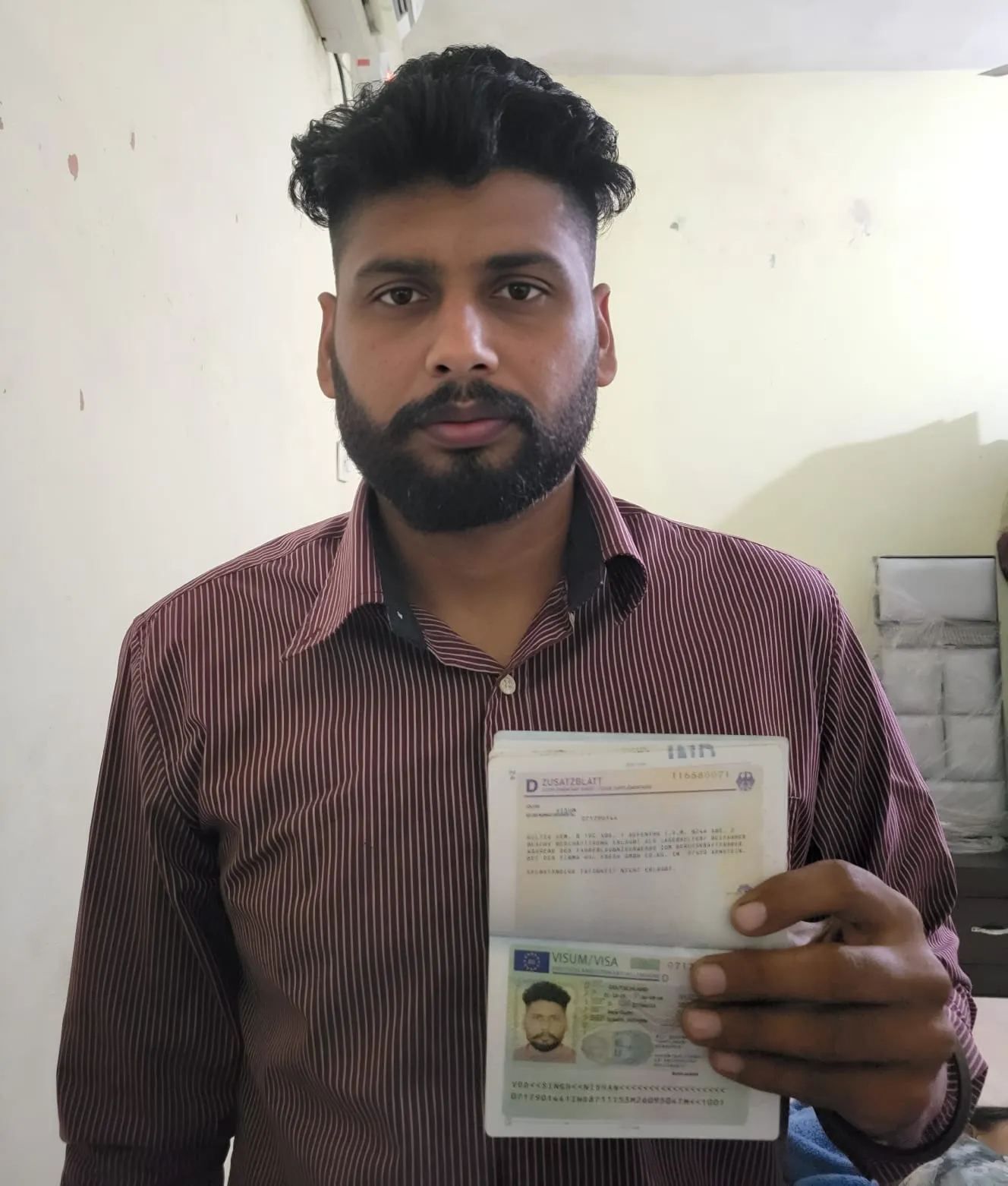
At AtoZ Serwis Plus, we help you become a global citizen with trusted support for jobs abroad, overseas education, and visa processing tailored to your goals.
Read More
Connecting employers, job seekers, students, and agencies across Europe and beyond.
Looking to hire skilled or semi-skilled workers from Asia, Africa, the CIS, or EU countries? AtoZ Serwis Plus supports your recruitment needs for Poland, Germany, Slovakia, Hungary, Lithuania, Estonia, and beyond. We deliver comprehensive legal recruitment services, visa support, and seamless onboarding solutions tailored to your business goals. Partner with us to build a reliable, compliant, and efficient workforce.
EmployerLooking to hire skilled or semi-skilled workers from Asia, Africa, the CIS, or EU countries? AtoZ Serwis Plus supports your recruitment needs for Poland, Germany, Slovakia, Hungary, Lithuania, Estonia, and beyond. We deliver comprehensive legal recruitment services, visa support, and seamless onboarding solutions tailored to your business goals. Partner with us to build a reliable, compliant, and efficient workforce.
Job SeekersAre you a recruiter looking to place workers in Poland, Germany, Slovakia, or other EU destinations? AtoZ Serwis Plus provides you with trusted employer connections, legal recruitment solutions, verified job placements, and full visa assistance. Expand your recruitment business with confidence, supported by clear processes, reliable documentation, and transparent migration services.
RecruiterLooking to work and live in Europe? At AtoZ Serwis Plus, we’re here to guide you every step of the way. Our experts provide support with job search assistance, work visa applications, qualification recognition, and European language learning. To connect with us and get started on your European journey, click one of the contact icons below.
Copyright © 2009-2026 AtoZ Serwis Plus. All Rights Reserved.