Italy is the third-largest economy in the Eurozone and one of the most culturally rich and economically significant countries in Europe. With a diverse economy driven by manufacturing, fashion, automotive, food and beverage, tourism, and a growing technology sector, Italy offers a wide range of employment opportunities for both local workers and foreign nationals across multiple industries and regions.
Whether you are from Asia, Africa, Latin America, or beyond, Italy offers genuine employment opportunities — especially in agriculture, construction, healthcare, hospitality, and manufacturing. The Italian government manages foreign worker immigration through an annual quota system known as the Decreto Flussi which regulates the entry of non-EU workers into the Italian labor market.
This guide covers everything you need to know — from in-demand jobs and salaries to the full step-by-step process of getting a work permit and visa in Italy. For verified job listings and recruitment support, visit AtoZSerwisPlus.com.
Italy has a highly diversified job market with significant regional variation. The industrial north — particularly Lombardy, Piedmont, Veneto, and Emilia-Romagna — is home to major manufacturing, fashion, and automotive companies including Ferrari, Fiat, Luxottica, and Benetton. The south and islands have a stronger agricultural and tourism base creating seasonal and year-round opportunities for foreign workers.
Foreign workers are particularly sought after in sectors where Italy faces persistent local labor shortages. Agriculture across southern regions requires seasonal harvest workers throughout the year. Construction is booming due to major infrastructure projects and the Superbonus renovation scheme. Healthcare faces critical shortages of nurses and care workers driven by an aging population.
Italy also benefits from a thriving tourism industry attracting approximately 65 million visitors annually, creating consistent demand for hospitality, food service, and customer-facing roles especially in major cities and coastal resort areas. Key sectors driving employment include:
| Job Title | Average Monthly Salary |
|---|---|
| Welder | 1,800 to 2,800 euros |
| Truck Driver (HGV/Long-Haul) | 2,000 to 3,000 euros |
| Construction Worker | 1,700 to 2,600 euros |
| Electrician | 1,800 to 2,800 euros |
| Plumber | 1,700 to 2,700 euros |
| Mason / Bricklayer | 1,700 to 2,600 euros |
| Painter and Decorator | 1,600 to 2,500 euros |
| Scaffolder | 1,700 to 2,600 euros |
| Mechanic (Automotive) | 1,700 to 2,600 euros |
| HVAC Technician | 1,800 to 2,800 euros |
| Carpenter | 1,700 to 2,600 euros |
| Machine Operator | 1,600 to 2,500 euros |
| Forklift Operator | 1,600 to 2,400 euros |
| Security Guard | 1,500 to 2,200 euros |
| Cleaner / Housekeeper | 1,400 to 2,100 euros |
| Cook / Kitchen Staff | 1,600 to 2,500 euros |
| Warehouse Worker | 1,600 to 2,400 euros |
| Agricultural Worker | 1,200 to 1,900 euros |
| Delivery Driver | 1,600 to 2,400 euros |
| Domestic Worker / Caregiver | 1,300 to 2,000 euros |
| Job Title | Average Monthly Salary |
|---|---|
| Software Developer / IT Engineer | 2,500 to 5,000 euros |
| Civil Engineer | 2,200 to 3,800 euros |
| Nurse / Registered Nurse | 1,800 to 2,800 euros |
| Doctor / General Practitioner | 3,000 to 6,000 euros |
| Accountant | 2,000 to 3,500 euros |
| Project Manager | 2,500 to 4,500 euros |
| HR Manager | 2,200 to 3,800 euros |
| Marketing Specialist | 2,000 to 3,500 euros |
| English / Language Teacher | 1,600 to 2,500 euros |
| Tourism and Hotel Manager | 1,800 to 3,000 euros |
| Financial Analyst | 2,500 to 4,200 euros |
| Legal Advisor / Lawyer | 2,500 to 4,500 euros |
| Architect | 2,200 to 3,800 euros |
| Business Development Manager | 2,500 to 4,500 euros |
| Sales Manager | 2,200 to 3,800 euros |
| Logistics and Supply Chain Manager | 2,200 to 3,800 euros |
| Pharmacist | 2,200 to 3,500 euros |
| Dentist | 3,000 to 5,500 euros |
| Data Analyst | 2,500 to 4,200 euros |
| Customer Service Team Lead | 1,800 to 2,800 euros |
Italy does not have a single statutory national minimum wage set by law. Instead wages are determined through collective bargaining agreements (Contratti Collettivi Nazionali di Lavoro — CCNL) negotiated between trade unions and employer associations for each sector. The effective minimum wage across most sectors ranges from approximately 1,200 to 1,600 euros per month gross depending on the applicable collective agreement.
The Italian government has been debating the introduction of a statutory minimum wage and this may change in the near future. In the meantime all employers are legally required to comply with the applicable CCNL for their sector and provide every worker with a written employment contract. Workers can verify their rights under the applicable collective agreement through the National Labour Inspectorate (Ispettorato Nazionale del Lavoro).
The average monthly salary in Italy ranges between 1,800 and 2,800 euros gross across all industries. Salaries in Milan and the northern industrial regions tend to be significantly higher than in the south due to the concentration of manufacturing, fashion, finance, and technology companies.
| Industry | Average Monthly Salary |
|---|---|
| IT and Technology | 2,500 to 5,000 euros |
| Healthcare and Medical | 1,800 to 6,000 euros |
| Manufacturing and Industrial | 1,700 to 3,000 euros |
| Construction and Trades | 1,700 to 2,800 euros |
| Tourism and Hospitality | 1,400 to 2,500 euros |
| Agriculture and Food Processing | 1,200 to 2,000 euros |
Finding a legitimate job in Italy starts with using trusted and official sources. Always verify your employer through official channels before accepting any offer or signing any documents.
National Employment Agency (ANPAL — Agenzia Nazionale Politiche Attive del Lavoro): The main government body coordinating employment services across Italy. ANPAL oversees the network of regional employment centres (Centri per l'Impiego) where job seekers can register and access vacancy listings and career support services.
Centri per l'Impiego: The regional public employment offices operating across all Italian provinces. They maintain local vacancy databases and provide free job matching, career guidance, and support for both Italian and foreign job seekers.
National Labour Inspectorate (Ispettorato Nazionale del Lavoro): The official body that verifies legal employer registrations, enforces labor standards, and investigates violations of employment law and collective agreements across Italy.
Ministry of Labour and Social Policies (Ministero del Lavoro e delle Politiche Sociali): The official ministry that oversees the Decreto Flussi annual quota system, work permit regulations, and employment rights for foreign nationals seeking work in Italy.
AtoZSerwisPlus.com: A professional international recruitment platform connecting verified employers with pre-screened job seekers across borders. They assist with documentation, work permit guidance, and the full hiring process including Italy placements.
Getting a job in Italy as a foreigner follows a clear and structured process. Follow each step carefully to avoid delays or rejections.
1. Job Search: Search for verified vacancies through the Centri per l'Impiego in your target region or through trusted international recruitment platforms. Monitor the annual Decreto Flussi announcements which open application windows for non-EU workers in specific sectors.
2. Apply: Submit your CV, cover letter, and all relevant documents. Your CV should be written in Italian or English. Italian employers generally prefer a formal application with a detailed professional profile including all qualifications and work experience relevant to the role.
3. Interview: If shortlisted you will be invited for an interview either in person or via video call. Italian employers value personal presentation and cultural awareness. Be prepared to discuss your qualifications, work history, and Italian language ability where relevant.
4. Receive a Job Offer Letter: If selected the employer will issue a job offer letter and employment contract governed by the applicable Italian collective agreement (CCNL) for your sector. Read the contract carefully — pay attention to salary, working hours, leave entitlement, and the applicable CCNL reference.
5. Work Permit Application: The Italian work permit process is unique. Under the Decreto Flussi system the employer applies for a work authorization (nulla osta al lavoro) on your behalf to the relevant Provincial Labour Office (Sportello Unico per l'Immigrazione). This must be done within the annual quota window announced by the Italian government.
6. Work Visa Application: Once the nulla osta is approved you apply for an Italian Work Visa (Visto per Lavoro Subordinato) at the Italian Embassy or Consulate in your home country. Submit the nulla osta approval, passport, employment contract, and all supporting documents.
7. Travel to Italy: After your visa is approved travel to Italy. Keep all documents — nulla osta, visa, employment contract, and job offer letter — readily available when passing through Italian border control.
8. Start Your Job: Report to the Sportello Unico per l'Immigrazione within eight days of arrival to complete the signing of the Residence Contract (Contratto di Soggiorno) and apply for your Residence Permit (Permesso di Soggiorno). Your employer must register you with the Italian National Social Security Institute (INPS) before your first working day.
Rejection is not the end of the process. If your nulla osta or visa is refused, take these steps:
Act quickly and professionally. The Decreto Flussi quota fills rapidly and early preparation significantly improves your chances of success.
All non-EU and non-EEA citizens who intend to work in Italy require a valid work authorization. EU and EEA citizens have the right to work freely in Italy without a permit under EU freedom of movement rules. Non-EU nationals must go through the Decreto Flussi quota system. Working without a valid permit is a serious legal violation in Italy.
The employer — not the worker — is responsible for applying for the nulla osta al lavoro through the Sportello Unico per l'Immigrazione. The application must be submitted within the annual Decreto Flussi quota window. Once the nulla osta is issued the worker applies for the work visa at the Italian Embassy in their home country.
| Document | Details |
|---|---|
| Employer nulla osta application | Submitted to Sportello Unico per l'Immigrazione within quota window |
| Worker passport copy | Minimum 6 months validity remaining |
| Employment contract | Signed by both employer and worker under applicable CCNL |
| Business registration certificate | Employer's official Italian business registration (visura camerale) |
| Proof of accommodation | Rental agreement or employer-provided housing confirmation |
| Qualifications and certificates | Trade certificates or professional licenses relevant to role |
| Passport photographs | Recent passport-size photos of the worker |
The nulla osta application processing time in Italy typically takes 60 to 90 working days from the date of submission within the Decreto Flussi window. Processing times vary significantly depending on the province, the volume of applications, and the completeness of the documentation submitted.
Once the nulla osta is issued it is valid for six months within which the worker must obtain the work visa and travel to Italy. After arrival the worker applies for the Permesso di Soggiorno which is typically issued for one to two years and is renewable.
Once the nulla osta al lavoro is issued the foreign worker must apply for an Italian Work Visa (Visto Nazionale per Lavoro Subordinato) at the Italian Embassy or Consulate in their home country. This visa is the entry authorization and must be obtained before traveling to Italy for work purposes.
The embassy process involves visiting the Italian Embassy or Consulate, submitting a completed visa application form, providing all required supporting documents, paying the official visa fee, and attending a biometric appointment if required by the consulate.
| Document | Details |
|---|---|
| Valid passport | Minimum 6 months remaining validity |
| Nulla osta al lavoro | Original approval issued by Sportello Unico per l'Immigrazione |
| Signed employment contract | Full contract under applicable CCNL with all agreed terms |
| Biometric photographs | Recent passport-size photos meeting Italian specifications |
| Proof of accommodation in Italy | Rental agreement or employer housing confirmation |
| Bank statement or financial guarantee | Proof of sufficient means for initial period in Italy |
| Health insurance | Valid for use in Italy until registration with Italian NHS (SSN) |
If your visa application is rejected you will receive a formal notice from the Italian Embassy stating the specific reason for refusal. Address the exact issue, correct your documentation, and resubmit a complete and accurate application with all required supporting evidence.
Never attempt to enter Italy on a tourist or Schengen visa for work purposes. This is a direct violation of Italian immigration law and can result in deportation, fines, a Schengen-wide entry ban, and blacklisting on future Italian visa applications. Italy shares immigration data with all Schengen Area member states.
Italian employers looking to hire verified foreign workers from outside the EU can use a streamlined and legally compliant solution to manage the entire process from vacancy to onboarding.
Foreign nationals and local job seekers looking for work in Italy can follow a simple and guided application process to connect with verified employers.
Recruitment agents, staffing firms, and HR consultants looking to place workers in Italy can join a dedicated B2B partner program built for professional international recruitment.
Register as a Recruitment Agent
Italy has a consistent and strong demand for workers in these three sectors driven by its active construction and manufacturing industries, a major national logistics network, and one of the oldest populations in Europe placing enormous pressure on the healthcare and care system.
Italy's manufacturing, automotive, and construction sectors — particularly in Lombardy, Piedmont, and Emilia-Romagna — need certified welders with MIG, TIG, and electrode welding experience. Salaries range from 1,800 to 2,800 euros per month and accommodation is sometimes provided by employers in industrial zones.
HGV and long-haul truck drivers are in constant demand across Italy's major logistics corridors connecting Milan, Bologna, Rome, and Naples as well as cross-border routes through the Alps. A valid Category CE driving license is required and salaries range from 2,000 to 3,000 euros per month.
Italy faces one of the most severe healthcare worker shortages in Europe with public hospitals and private care facilities across Rome, Milan, Turin, and Naples urgently recruiting nurses, doctors, and professional caregivers. Salaries range from 1,800 to 6,000 euros per month depending on role and specialization.
Yes. Italy allows non-EU foreign nationals to work legally through the annual Decreto Flussi quota system managed by the Ministry of Labour and Social Policies. EU citizens can work freely without a permit. Contact AtoZSerwisPlus.com for guided support through the full Italy application process.
Italy does not have a single statutory minimum wage. Wages are set through sector-specific collective agreements (CCNL) and range from approximately 1,200 to 1,600 euros per month gross, depending on the sector and role. All employers must comply with the applicable CCNL for their industry.
The nulla osta al lavoro processing time in Italy typically takes 60 to 90 working days from the date of submission within the Decreto Flussi window. Total processing including visa can take 4 to 6 months so advance planning is essential.
The employer applies for the nulla osta al lavoro through the Sportello Unico per l'Immigrazione within the annual Decreto Flussi quota window. The worker cannot apply independently. Once issued the worker applies for the work visa at the Italian Embassy in their home country.
No. EU and EEA citizens have the right to work freely in Italy without any work permit under EU freedom of movement rules. They need to register with the local municipality and obtain their Codice Fiscale after arrival.
The key documents include a valid passport, nulla osta al lavoro approval, signed employment contract under the applicable CCNL, proof of accommodation in Italy, health insurance, bank statement, and an Italian Work Visa (Visto Nazionale per Lavoro Subordinato).
Yes. Italy operates a strict annual Decreto Flussi quota system for non-EU workers. The government announces the available quota once or twice a year specifying the number of permits available by sector and nationality. The quota fills very quickly after the announcement.
No. You cannot legally work in Italy on a tourist or Schengen visa. You must obtain a nulla osta approval and apply for an Italian Work Visa before traveling. Working without proper authorization is a serious violation of Italian immigration law.
Agricultural workers, construction trades, caregivers, nurses, truck drivers, welders, and hospitality workers are among the most actively recruited foreign worker profiles in Italy. Healthcare and agriculture have the most consistent and urgent demand throughout the year.
The average monthly salary in Italy is between 1,800 and 2,800 euros gross across all sectors. Milan and the northern regions pay significantly above the national average. IT professionals, doctors, and legal specialists are among the highest earners in Italy.
Check the employer's registration through the Italian Business Register (Registro delle Imprese) at registroimprese.it. Always request a signed employment contract referencing the applicable CCNL and verify the employer's INPS registration before accepting any offer.
Yes. Once you hold a valid Permesso di Soggiorno per Lavoro in Italy you may apply for family reunification under Italian immigration regulations. Your spouse and dependent children can apply for a family reunification visa at the Italian Embassy in your home country.
Italy is generally safe and welcoming toward foreign workers. Milan, Rome, Turin, Bologna, and other major cities have large and well-established international communities. Foreign workers are well represented across manufacturing, agriculture, hospitality, and healthcare sectors throughout the country.
Request the rejection reason in writing from the Sportello Unico per l'Immigrazione or the Italian Embassy. The most common issues are exhausted quota, missing documents, or employer registration problems. Prepare a complete application well in advance of the next Decreto Flussi window and resubmit promptly when it opens.
AtoZSerwisPlus.com connects verified Italian employers with pre-screened international job seekers and registered recruitment agents. The platform provides vacancy matching, documentation guidance, Decreto Flussi preparation support, and work permit assistance — making the entire process of working in Italy faster, safer, and more reliable.
Global clients share how AtoZ Serwis Plus helped them secure work permits, visas, and career support across Europe. Real stories. Real results.
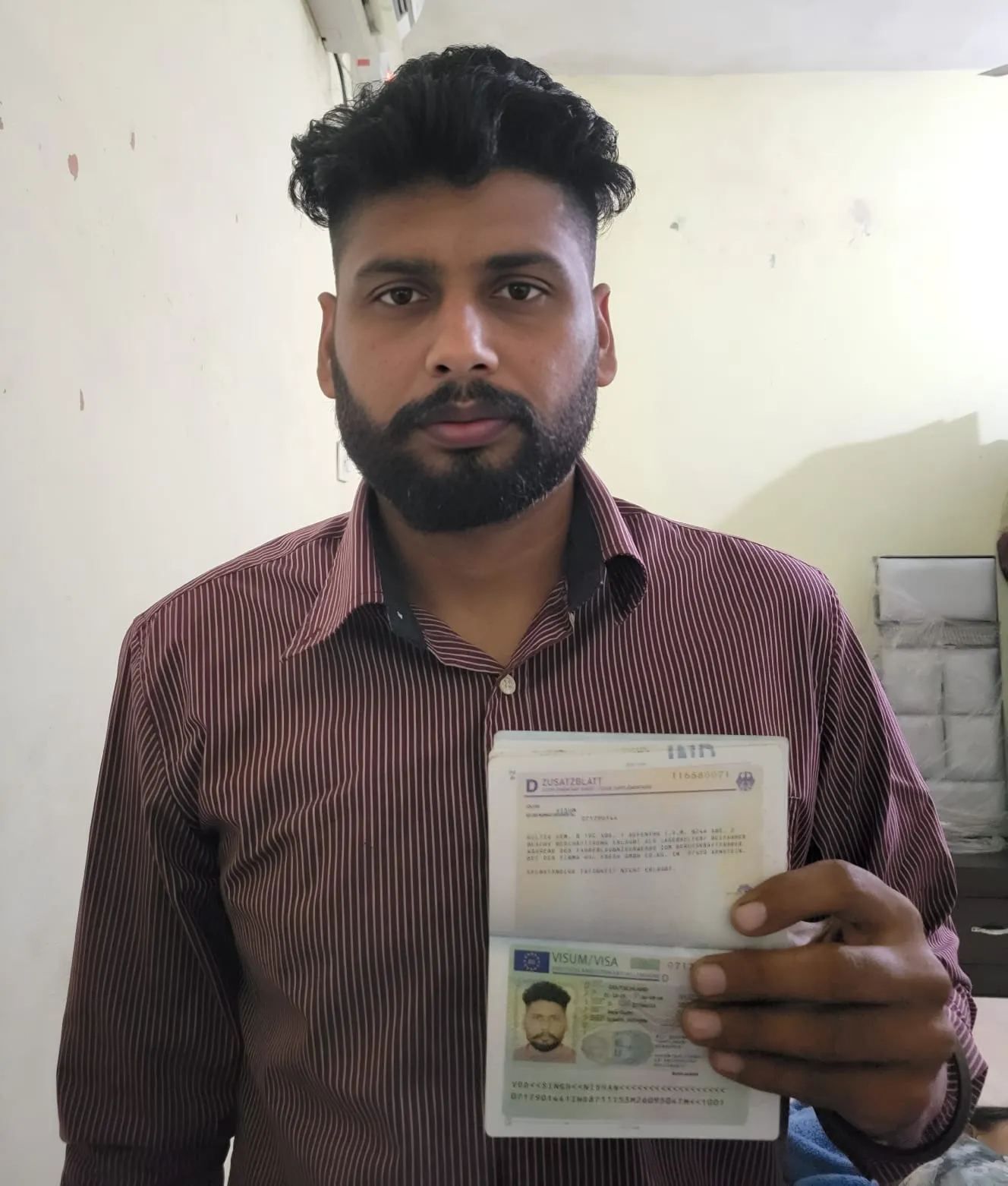
At AtoZ Serwis Plus, we help you become a global citizen with trusted support for jobs abroad, overseas education, and visa processing tailored to your goals.
Read More
Connecting employers, job seekers, students, and agencies across Europe and beyond.
Looking to hire skilled or semi-skilled workers from Asia, Africa, the CIS, or EU countries? AtoZ Serwis Plus supports your recruitment needs for Poland, Germany, Slovakia, Hungary, Lithuania, Estonia, and beyond. We deliver comprehensive legal recruitment services, visa support, and seamless onboarding solutions tailored to your business goals. Partner with us to build a reliable, compliant, and efficient workforce.
EmployerLooking to hire skilled or semi-skilled workers from Asia, Africa, the CIS, or EU countries? AtoZ Serwis Plus supports your recruitment needs for Poland, Germany, Slovakia, Hungary, Lithuania, Estonia, and beyond. We deliver comprehensive legal recruitment services, visa support, and seamless onboarding solutions tailored to your business goals. Partner with us to build a reliable, compliant, and efficient workforce.
Job SeekersAre you a recruiter looking to place workers in Poland, Germany, Slovakia, or other EU destinations? AtoZ Serwis Plus provides you with trusted employer connections, legal recruitment solutions, verified job placements, and full visa assistance. Expand your recruitment business with confidence, supported by clear processes, reliable documentation, and transparent migration services.
RecruiterLooking to work and live in Europe? At AtoZ Serwis Plus, we’re here to guide you every step of the way. Our experts provide support with job search assistance, work visa applications, qualification recognition, and European language learning. To connect with us and get started on your European journey, click one of the contact icons below.
Copyright © 2009-2026 AtoZ Serwis Plus. All Rights Reserved.