Portugal is one of the most welcoming and affordable countries in Western Europe for foreign workers. As a member of the European Union and the Schengen Area, Portugal combines a stable economy, a mild climate, and an increasingly international workforce. The country has become a major destination for skilled migrants, digital professionals, and tradespeople, supported by strong sectors in tourism, construction, agriculture, technology, and healthcare.
Whether you are from Asia, Africa, South America, or beyond, Portugal offers genuine and accessible employment opportunities — particularly in tourism, construction, agriculture, healthcare, and IT. The Portuguese government operates a structured work permit and residence visa system for non-EU nationals and actively recruits foreign workers to address ongoing labour shortages across multiple sectors.
This guide covers everything you need to know — from in-demand jobs and salaries to the full step-by-step process of getting a work permit and visa in Portugal. For verified job listings and recruitment support, visit AtoZSerwisPlus.com.
Portugal has one of the most open and foreigner-friendly job markets in Southern Europe. The country's economy is driven by services, with strong contributions from tourism, construction, agriculture, and a rapidly growing technology sector. Portugal's position along the Atlantic coast and its strong trade links with Europe, Africa, and Brazil make it a natural destination for international workers.
Foreign workers are particularly sought after in areas where local talent is insufficient. Tourism, construction, agriculture, healthcare, and IT face persistent shortages that employers are actively addressing through international recruitment from both EU and non-EU countries. Portugal has introduced simplified work visa processes for skilled workers, job seekers, and professionals in shortage occupations.
Portugal's role as a major European tourism destination and growing tech hub has created strong and consistent demand for both blue collar and white collar professionals. Key sectors driving employment include:
| Job Title | Average Monthly Salary |
|---|---|
| Welder | 1,100 to 1,600 euros |
| Truck Driver (HGV/Long-Haul) | 1,200 to 1,700 euros |
| Construction Worker | 950 to 1,400 euros |
| Electrician | 1,100 to 1,600 euros |
| Plumber | 1,000 to 1,500 euros |
| Mason / Bricklayer | 1,000 to 1,400 euros |
| Painter and Decorator | 900 to 1,300 euros |
| Scaffolder | 1,000 to 1,500 euros |
| Mechanic (Automotive) | 1,000 to 1,500 euros |
| HVAC Technician | 1,100 to 1,600 euros |
| Carpenter | 1,000 to 1,500 euros |
| Machine Operator | 950 to 1,400 euros |
| Forklift Operator | 950 to 1,350 euros |
| Security Guard | 900 to 1,300 euros |
| Cleaner / Housekeeper | 850 to 1,200 euros |
| Cook / Kitchen Staff | 950 to 1,500 euros |
| Warehouse Worker | 900 to 1,300 euros |
| Agricultural Worker | 850 to 1,200 euros |
| Delivery Driver | 950 to 1,400 euros |
| Crane Operator | 1,200 to 1,700 euros |
| Job Title | Average Monthly Salary |
|---|---|
| Software Developer / IT Engineer | 2,000 to 4,000 euros |
| Civil Engineer | 1,800 to 3,500 euros |
| Nurse / Registered Nurse | 1,300 to 2,200 euros |
| Doctor / General Practitioner | 2,500 to 5,000 euros |
| Accountant | 1,500 to 2,800 euros |
| Project Manager | 2,000 to 4,000 euros |
| HR Manager | 1,800 to 3,500 euros |
| Marketing Specialist | 1,500 to 2,800 euros |
| English / Language Teacher | 1,200 to 2,200 euros |
| Hotel Manager | 1,600 to 3,000 euros |
| Financial Analyst | 1,800 to 3,500 euros |
| Legal Advisor / Lawyer | 2,000 to 4,500 euros |
| Architect | 1,700 to 3,200 euros |
| Business Development Manager | 2,000 to 4,000 euros |
| Sales Manager | 1,800 to 3,500 euros |
| Logistics and Supply Chain Manager | 1,800 to 3,200 euros |
| Pharmacist | 1,500 to 2,800 euros |
| Dentist | 2,200 to 4,500 euros |
| Data Analyst | 1,800 to 3,500 euros |
| Customer Service Team Lead | 1,300 to 2,200 euros |
Portugal has a statutory national minimum wage set by the government and reviewed annually. The national minimum wage is approximately 870 euros per month gross, paid across 14 monthly instalments as is standard in Portugal. This rate applies to all workers regardless of nationality or country of origin.
Employers are legally required to pay at or above the applicable minimum wage and provide every worker with a written employment contract. Workers earning below this rate have the right to report the employer to the Authority for Working Conditions (Autoridade para as Condições do Trabalho – ACT).
The average monthly salary in Portugal ranges between 1,400 and 2,200 euros gross across all industries. Salaries are lower than in Northern Europe but the cost of living is also significantly more affordable, and all workers benefit from strong EU-aligned labor protections and social security entitlements.
| Industry | Average Monthly Salary |
|---|---|
| Information Technology | 2,000 to 4,000 euros |
| Financial Services and Banking | 1,800 to 3,500 euros |
| Healthcare and Medical | 1,300 to 5,000 euros |
| Construction and Trades | 950 to 1,600 euros |
| Tourism and Hospitality | 900 to 1,600 euros |
| Retail and Services | 850 to 1,300 euros |
Finding a legitimate job in Portugal starts with using trusted and official sources. Always verify your employer through official channels before accepting any offer or signing any documents.
Instituto do Emprego e Formação Profissional (IEFP): The main government body for employment and vocational training in Portugal. IEFP operates job centres across the country, maintains an official vacancy database at iefp.pt, and provides career support and registration services free of charge.
Serviço de Estrangeiros e Fronteiras / AIMA: The Agency for Integration, Migrations and Asylum (AIMA) is the official Portuguese authority responsible for issuing residence permits, work authorizations, and handling immigration matters for foreign nationals working in Portugal.
Authority for Working Conditions (ACT): The official Portuguese body that enforces labor standards, investigates complaints, and ensures compliance with employment law, minimum wage regulations, and working conditions across all sectors in Portugal.
Official Embassy Job Listings: Portuguese embassies and consulates sometimes advertise vacancies in specific sectors, particularly for skilled and professional roles that require international recruitment from outside the EU.
AtoZSerwisPlus.com: A professional international recruitment platform connecting verified employers with pre-screened job seekers across borders. They assist with documentation, work permit guidance, and the full hiring process including Portugal placements.
Getting a job in Portugal as a foreigner follows a clear and structured process. Follow each step carefully to avoid delays or rejections.
1. Job Search: Search for verified vacancies on official government sources or trusted international recruitment platforms. Filter by sector, location, and job type to find roles that match your skills and experience.
2. Apply: Submit your CV, cover letter, and all relevant documents. Your CV should be written in Portuguese or English depending on the employer. Clearly list your skills, qualifications, certifications, and availability to start.
3. Interview: If shortlisted you will be invited for an interview either in person or via video call. Employers will ask about your technical skills, work experience, language abilities, availability, and willingness to relocate to Portugal.
4. Receive a Job Offer Letter: If selected the employer will issue an official job offer letter and employment contract. This document is essential for your work permit and residence visa application. Read everything carefully before signing.
5. Work Permit Application: In Portugal, the employer registers the contract with the authorities and the worker typically applies for a residence visa for work purposes that serves as both work authorization and entry clearance. The employer provides all supporting documents including proof of the job offer and contract registration.
6. Work Visa Application: Non-EU nationals apply for a Residence Visa for Work (D1 or D3 depending on qualification level) at the Portuguese Embassy or Consulate in their home country. Submit your employment contract, passport, and all supporting documents along with the visa fee.
7. Travel to Portugal: After your residence visa is approved and stamped arrange your travel. Keep all documents — offer letter, contract, residence visa, and supporting documents — readily available when passing through immigration.
8. Start Your Job: Apply for your Residence Permit at AIMA within the validity of your entry visa and register with Portuguese Social Security (Segurança Social) and the tax authority to obtain your NIF (tax number). Begin work as per your contract once all registrations are complete.
Rejection is not the end of the process. If your work permit or visa is refused, take these steps:
Act quickly and professionally. Most rejections are fully resolvable with the right documentation in place.
All non-EU and non-EEA citizens who intend to work in Portugal require a valid work authorization, typically in the form of a Residence Visa for Work followed by a Residence Permit. EU, EEA, and Swiss citizens have the right to work freely in Portugal without a permit under EU freedom of movement rules, though they must register with the local municipality if staying longer than three months. Non-EU nationals must go through the full formal application process. Working without valid authorization is a serious legal violation in Portugal.
The employer plays a central role in the process by providing a registered employment contract and all required supporting documents. The worker must submit the residence visa application personally at the Portuguese Embassy or Consulate in their country of legal residence. Some categories, such as the Tech Visa and Job Seeker Visa, follow their own specific procedures.
| Document | Details |
|---|---|
| Residence visa application form | Official form for Portuguese Embassy or Consulate |
| Worker passport copy | Minimum 6 months validity remaining |
| Employment contract | Signed by both employer and worker |
| Employer registration certificate | Official Portuguese company registration document |
| Proof of accommodation | Address confirmation in Portugal |
| Qualifications and certificates | Diplomas, trade certificates, or professional licenses |
| Passport photographs | Recent passport-size photos of the worker |
The residence visa application typically takes 60 to 90 days to process from the date of submission at the Portuguese Embassy or Consulate. Processing times may vary depending on the sector, the completeness of the application, and the current volume of applications being handled by the consular section and AIMA.
Once approved the residence permit is issued for one to two years initially. It is renewable before expiry provided the employment relationship continues and all legal requirements are met, and can eventually lead to permanent residence.
Non-EU nationals must apply for a Residence Visa for Work at the Portuguese Embassy or Consulate in their home country before traveling. This residence visa acts as the entry authorization and allows the worker to apply for the full residence permit at AIMA after arrival in Portugal. It is the worker's direct responsibility to obtain this visa.
The embassy process involves visiting the Portuguese Embassy or Consulate, submitting a completed visa application form, paying the official visa fee, and attending a biometric appointment or interview if required by the embassy.
| Document | Details |
|---|---|
| Valid passport | Minimum 6 months remaining validity |
| Signed employment contract | Full contract with all agreed terms |
| Proof of contract registration | Employer declaration or IEFP registration proof |
| Biometric photographs | Recent passport-size photos |
| Proof of accommodation | Address confirmation in Portugal |
| Bank statement or guarantee letter | Proof of financial means |
| Health insurance | Valid for use in Portugal |
If your visa application is rejected you will receive a formal notice stating the reason. Read it carefully, address the specific issue identified, correct your documentation, and resubmit a complete and accurate application.
Never attempt to enter Portugal on a tourist visa for work purposes. This is a direct violation of Portuguese immigration law and can result in deportation, fines, and a future entry ban that affects all future visa applications to Portugal and the entire Schengen Area.
Portuguese employers looking to hire verified foreign workers can use a streamlined and legally compliant solution to manage the entire process from vacancy to onboarding.
Foreign nationals and local job seekers looking for work in Portugal can follow a simple and guided application process to connect with verified employers.
Recruitment agents, staffing firms, and HR consultants looking to place workers in Portugal can join a dedicated B2B partner program built for professional international recruitment.
Register as a Recruitment Agent
Portugal has a consistent and strong demand for workers in these three sectors throughout the year.
Portugal's construction, shipbuilding, and manufacturing sectors need certified welders with MIG, TIG, or stick welding experience. Salaries range from 1,100 to 1,600 euros per month and accommodation support is sometimes provided by the employer.
HGV and long-haul truck drivers are in constant demand across Portugal's logistics and distribution networks, including Lisbon and Porto port regions. A valid Category CE driving license and CAM certification are required and salaries range from 1,200 to 1,700 euros per month.
Portugal faces a genuine shortage of nurses, doctors, and care workers in both public and private healthcare facilities. Salaries range from 1,300 to 5,000 euros per month depending on role and specialization.
Yes. Portugal allows foreign nationals to work legally with a valid residence visa and residence permit. EU citizens can work freely without a permit, while non-EU nationals must go through the full formal process. Contact AtoZSerwisPlus.com for guided support through the full process.
The national minimum wage in Portugal is approximately 870 euros per month gross, paid across 14 monthly instalments as is standard in Portugal. This rate is reviewed annually by the Portuguese government and applies to all workers regardless of nationality.
The residence visa process typically takes 60 to 90 days once a complete application is submitted to the Portuguese Embassy or Consulate. Processing times can vary depending on the sector, the consulate's workload, and the applicant's country of residence.
In Portugal the employer provides the registered contract and supporting documents, while the worker personally submits the residence visa application at the Portuguese Embassy or Consulate in their country of residence. After arriving in Portugal, the worker then applies for the residence permit at AIMA.
No. EU, EEA, and Swiss citizens have the right to work freely in Portugal without a work permit under EU freedom of movement rules. They only need to register with the local municipality if staying longer than three months and obtain a NIF tax number.
The key documents include a valid passport, signed employment contract, proof of accommodation, educational or trade certificates, health insurance, and a Residence Visa for Work. Additional documents may be required depending on the sector and nationality.
Portugal sets annual contingent quotas for certain work visa categories based on labor market needs assessed by IEFP. Permits in shortage occupations are generally easier to obtain, while other categories may be subject to specific numerical limits reviewed each year.
In general you should apply for the correct Residence Visa for Work from your country of residence before traveling. Attempting to work in Portugal on a tourist visa is a violation of Portuguese immigration law and can result in deportation and future entry bans.
IT professionals, construction workers, hospitality staff, nurses, truck drivers, and agricultural workers are among the most actively recruited foreign worker profiles in Portugal. These sectors have consistent demand throughout the year.
The average monthly salary in Portugal is between 1,400 and 2,200 euros gross across all sectors. Salaries are higher in IT, finance, and healthcare, and the cost of living in Portugal is generally more affordable than in most Western European countries.
Check the employer's registration through the Portuguese Business Register at portaldasfinancas.gov.pt and verify their social security registration. Always request a signed employment contract and confirm the contract is registered with the authorities before making any travel arrangements.
Yes. Once you hold a valid residence permit in Portugal you may apply for family reunification under Portuguese immigration regulations after meeting the required income and housing conditions. Your family members will need to apply through the appropriate visa channels.
Portugal is consistently ranked among the safest countries in the world with very low crime rates and a welcoming, multicultural society. The climate is pleasant year-round, healthcare is high quality, and the country is widely regarded as one of the most foreigner-friendly nations in Europe.
Request the rejection reason in writing, correct the specific issue, and resubmit a complete application. Most rejections are due to missing documents or employer-side registration problems — both of which are fully resolvable with the right guidance.
AtoZSerwisPlus.com connects verified employers, pre-screened job seekers, and registered agents. The platform provides vacancy matching, documentation guidance, and work permit support — making the entire process faster, safer, and more reliable for everyone involved.
Global clients share how AtoZ Serwis Plus helped them secure work permits, visas, and career support across Europe. Real stories. Real results.
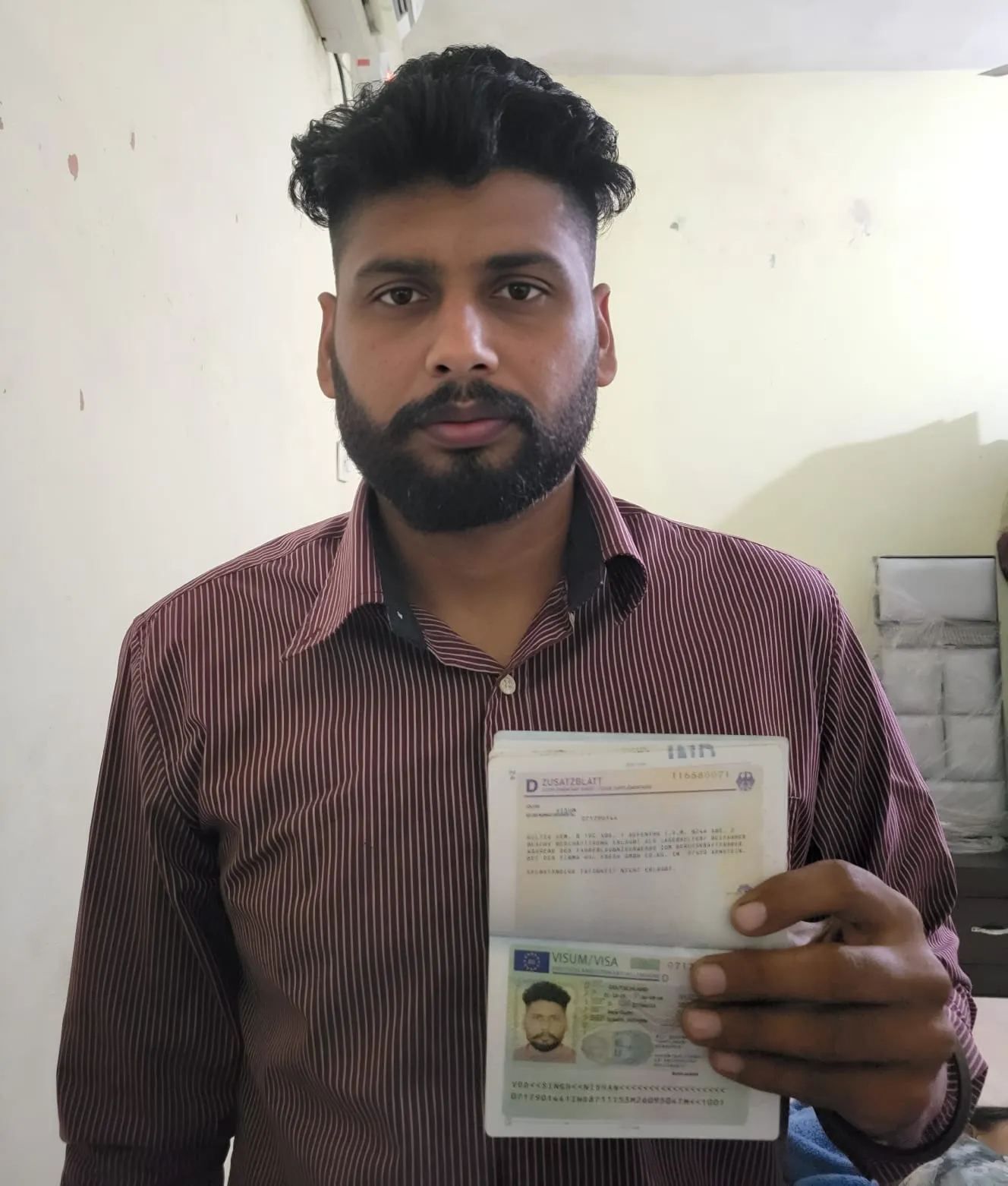
At AtoZ Serwis Plus, we help you become a global citizen with trusted support for jobs abroad, overseas education, and visa processing tailored to your goals.
Read More
Connecting employers, job seekers, students, and agencies across Europe and beyond.
Looking to hire skilled or semi-skilled workers from Asia, Africa, the CIS, or EU countries? AtoZ Serwis Plus supports your recruitment needs for Poland, Germany, Slovakia, Hungary, Lithuania, Estonia, and beyond. We deliver comprehensive legal recruitment services, visa support, and seamless onboarding solutions tailored to your business goals. Partner with us to build a reliable, compliant, and efficient workforce.
EmployerLooking to hire skilled or semi-skilled workers from Asia, Africa, the CIS, or EU countries? AtoZ Serwis Plus supports your recruitment needs for Poland, Germany, Slovakia, Hungary, Lithuania, Estonia, and beyond. We deliver comprehensive legal recruitment services, visa support, and seamless onboarding solutions tailored to your business goals. Partner with us to build a reliable, compliant, and efficient workforce.
Job SeekersAre you a recruiter looking to place workers in Poland, Germany, Slovakia, or other EU destinations? AtoZ Serwis Plus provides you with trusted employer connections, legal recruitment solutions, verified job placements, and full visa assistance. Expand your recruitment business with confidence, supported by clear processes, reliable documentation, and transparent migration services.
RecruiterLooking to work and live in Europe? At AtoZ Serwis Plus, we’re here to guide you every step of the way. Our experts provide support with job search assistance, work visa applications, qualification recognition, and European language learning. To connect with us and get started on your European journey, click one of the contact icons below.
Copyright © 2009-2026 AtoZ Serwis Plus. All Rights Reserved.