Albania is one of the Western Balkans' most dynamically growing construction markets — a country undergoing an extraordinary simultaneous transformation through urban renewal in Tirana (the Tirana 2030 initiative), an unprecedented national road and tunnel construction programme, a rapidly expanding tourism economy driving hotel and coastal resort development, EU accession-driven infrastructure alignment, and a vibrant earthquake reconstruction programme following the devastating November 2019 earthquake. Construction is one of Albania's largest economic sectors, accounting for approximately 8% of the workforce and historically contributing around 9% of GDP. Albania's real GDP grew by an estimated 4% in 2024, driven by robust growth in the tourism, real estate, and construction sectors (World Bank and IMF estimates). For 2025–2026, GDP growth is forecast at approximately 3.5% annually, with construction remaining a primary driver alongside tourism and domestic consumption. The country is a NATO member (since 2009), a WTO member (since 2000), has been formally in EU accession negotiations since July 2022, completed the EU screening process in 2023, opened four negotiation clusters including Cluster 3 (Competitiveness and Inclusive Growth, May 2025), and aims to complete the EU accession process by the end of the decade — with every negotiation chapter requiring infrastructure alignment that translates directly into construction investment and employment. Tirana grows by an estimated 30,000 people annually, creating perpetual demand for residential construction, and Albania hosted over 10 million visitors in 2024 — making it the fourth fastest-growing international tourist destination in the world, with arrivals up 56% compared to 2019 — driving sustained hotel, resort, marina, and coastal infrastructure construction.
Albania's construction labour market is governed by the Labour Code of the Republic of Albania (Law No. 7961, dated 12 July 1995, as repeatedly amended — most recently by Law No. 91/2024, effective 5 August 2024). The national minimum wage is ALL 40,000 per month (approximately €408; unchanged since April 2023). However, from 1 January 2026, the minimum and maximum salary thresholds for social and health insurance contribution purposes have been raised: the new minimum threshold is ALL 50,000 per month (up from ALL 40,000), and the new maximum threshold is ALL 186,416 per month (up from ALL 176,416 — Council of Ministers Decision, 19 December 2025). The average gross monthly wage in Albania was ALL 83,906 (approximately €850/month) in Q2 2025 (INSTAT — National Institute of Statistics). Albania operates a progressive personal income tax (PIT) system for employment income from 1 January 2025: 0% on annual income up to ALL 600,000 (approximately €5,000); 13% on annual income between ALL 600,001 and ALL 3,000,000 (approximately €5,001–€24,900); and 23% on annual income above ALL 3,000,000 (approximately €24,901+). Social and health insurance contributions: employees contribute 9.5% (social insurance) + 1.7% (health insurance) = 11.2% of gross salary; employers contribute 15% (social insurance) + 1.7% (health insurance) = 16.7% of gross salary — calculated on monthly salary between the minimum (ALL 50,000 from January 2026) and maximum (ALL 186,416) thresholds.
AtoZ Serwis Plus provides specialised construction recruitment services in Albania, connecting employers across residential building, commercial construction, civil and road infrastructure engineering, tourism and hospitality facility construction, earthquake reconstruction, coastal and marina development, tunnel construction, and finishing trades with qualified international construction workers from trusted global labour markets. Our recruitment services support Albania's most active construction market — comprising Tirana-based residential developers and general contractors; road and tunnel contractors active on national infrastructure programmes; international construction firms including Bechtel (which built Albania's $535M Rrëshen–Kalimash motorway and twin-bore tunnel with joint venture partner Enka) and Hill International (infrastructure and tourism enabling project management); large hotel and resort developers including Emaar Group (transforming Durrës port), international hospitality brands including Meliá Hotels International (currently Albania's leading international hotel company), InterContinental (Tirana, scheduled spring 2026), IHG, and Marriott; Green Coast resort developer (EAA-Emre Arolat architecture, 2,200 luxury villas + 7 five-star hotels, 500 villas completed, Albanian Riviera); TEDA Kashar industrial park developer (Tirana, anticipated completion March 2026); Vlora Airport construction works (operator: Munich Airport); and dozens of domestic Albanian construction companies active across Tirana, Durrës, Vlorë, Shkodër, Elbasan, Korçë, and all Albanian regions — in building reliable, skilled, and fully compliant international construction workforces in accordance with the Albanian Labour Code, social insurance obligations (ISSH — Instituti i Sigurimeve Shoqërore), and the work and residence permit framework administered by the Directorate for Foreigners at the Albanian Ministry of Interior.
Our recruitment strategy is directly aligned with Albania's construction profile — one of the Western Balkans' fastest-growing economies, where construction is a primary GDP driver, where a structural brain drain and high emigration rate (nearly one in four Western Balkan residents currently lives abroad) create persistent skilled labour shortages in the domestic construction workforce, and where the combination of EU accession infrastructure requirements, a tourism construction boom, urban renewal in Tirana, active road and tunnel construction programmes, and earthquake reconstruction creates a sustained multi-year demand for skilled construction workers across all trades. We provide employers with structured access to skilled international construction workers while ensuring fully compliant hiring processes in accordance with the Albanian Labour Code, ISSH social insurance obligations, and Albanian work permit requirements for non-Albanian nationals.
Key strengths
Our services help Albanian construction employers address skilled labour shortages — exacerbated by high emigration — while meeting the Labour Code's minimum wage, overtime, and social insurance obligations for all employed construction workers.
AtoZ Serwis Plus recruits qualified professionals for a wide range of construction and civil engineering roles in Albania, including:
These professionals support residential developers, civil engineering firms, road and tunnel contractors, tourism and hotel facility builders, marina and coastal infrastructure companies, and finishing trades subcontractors across Albania's main construction regions.
Our construction recruitment services in Albania support companies across several key sectors:
Each construction candidate is matched to employer requirements, project type, Labour Code minimum wage provisions, and the safety standards required on Albanian construction sites.
Our global recruitment reach includes:
This diversified talent pool enables fast response to labour shortages while supporting long-term workforce planning.
All candidates are thoroughly screened based on:
Our candidates meet the practical and technical standards required across Albania's residential, civil engineering, road and tunnel infrastructure, tourism and hotel, earthquake reconstruction, and finishing trades construction sectors.
This delivery.ers reliable construction output, consistent quality, and strong site performance for employers operating across Albania's residential, tourism, road infrastructure, earthquake reconstruction, and coastal construction pipeline.
AtoZ Serwis Plus follows a structured, transparent, and fully compliant recruitment process designed for Albania's Labour Code framework and the Ministry of the Interior work permit system:
Whether companies need construction workers for Tirana residential development, road and tunnel infrastructure, tourist hotels and coastal resorts, earthquake reconstruction, marina development, or finishing trades, AtoZ Serwis Plus delivers verified, skilled professionals ready to contribute to Albania's remarkable construction boom through 2030 and the EU into accession decade beyonde a trusted international recruitment partner for construction jobs and skilled trades workforce hiring in Albania, supporting employers and professionals through structured, legally compliant, and operationally effective recruitment solutions.
Albanian construction companies, residential developers, road and tunnel contractors, tourism and hotel facility builders, coastal infrastructure companies, and finishing trades subcontractors can register on our platform to access pre-screened international candidates and receive full Labour Code support, ISSH compliance, and Ministry of Interior work permit documentation support.
Ebenefits
https://www.atozserwisplus.com/employer/registration
Recruitment agencies, staffing companies, HR consultancies, and talent sourcers with knowledge of the Albanian construction sector or the wider Western Balkans, EEA, and global construction labour market are welcome to join our partner network for Albania.
Recruiter benefits
https://www.atozserwisplus.com/recruiter/registration
Skilled bricklayers, concreters, formwork carpenters, scaffolders, roofers, plasterers, tile setters, carpenters, plumbers, electricians, civil engineering operatives, road and tunnel workers, and construction site supervisors seeking employment in a rapidly growing Western Balkans economy with a vibrant tourist construction sector, major road infrastructure programme, and EU accession-driven investment pipeline can register and apply for available verified construction positions in Albania.
Worker benefits
https://www.atozserwisplus.pl/work-in-europe
Registration ensures:
1. What is construction recruitment in Albania?
Construction recruitment in Albania involves skilled bricklayers, concreters, formwork carpenters, scaffolders, roofers, plasterers, tile setters, carpenters, plumbers, electricians, civil engineering operatives, road and tunnel workers, and site supervisors for the Albanian building and construction engineering sector. Construction accounts for approximately 8% of Albania's workforce and historically around 9% of GDP. The sector is driven by Tirana's annual population growth (~30,000 people/year), Albania's booming tourism (10+ million visitors in 2024, fourth fastest-growing tourist destination globally), EU accession infrastructure requirements, a major national road and tunnel programme, and earthquake reconstruction following the 2019 earthquake. Albania's GDP grew by 4% in 2024 (World Bank), with construction and tourism as primary drivers. The private-sector average wage grew by 12.7% in 2024, reflecting the premium placed on skilled labour in a tight domestic market due to high emigration.
2. Why are construction workers in demand in Albania?
Construction workers are in demand in Albania due to domestic construction demand and a chronically tight skills labour market, with one of the highest emigration rates in the Western Balkans — nearly one in four Western Balkan residents lives abroad. A large portion of Albania's most skilled construction workers have emigrated to Germany, Italy, Greece, and other EU countries in search of higher wages. This creates persistent skilled trades shortages in the domestic construction market precisely as demand accelerates from: Tirana 2030 urban renewal and residential construction; Albania's tourism explosion driving hotel and resort development across the Adriatic and Ionian coasts; the national road and tunnel construction programme; earthquake reconstruction (€1B+ committed post-2019); EU accession infrastructure alignment requirements; and major international investment from Emaar Group, luxury hospitality brands, and resort developers.
3. Are construction jobs in Albania open to foreign workers?
Yes. The Albanian government approves an annual quota of foreign workers following a needs assessment by sector and profession (annual Council of Ministers decision). Non-Albanian nationals require a combined work and residence permit from the Ministry of Interior Directorate for Foreigners. The employer must first demonstrate that no suitable Albanian candidates are available through the National Agency for Employment and Skills (AKPA). Staff in key positions, and workers in certain shortage categories, may benefit from simplified procedures and exemptions from the standard labour market test. EU citizens benefit from preferential treatment under Albania's visa treaties. Albania's EU accession trajectory is expected to progressively simplify free movement arrangements with EU member states over the coming decade. All foreign workers must be registered with the ISSH and DPT within 30 days of hiring.
4. What is the minimum wage in Albania for construction workers?
Albania's national minimum wage is ALL 40,000 per month (approximately €408), applicable uniformly across all sectors — there is no age distinction or sector-specific minimum wage variation. This rate was set from April 2023 and remained unchanged through 2025. From 1 January 2026, the minimum salary threshold for social and health insurance contribution purposes was raised to ALL 50,000 per month (approximately €517 at current exchange rates) — a 25% increase — per the Council of Ministers Decision of 19 December 2025. This means that even if an employer pays less than ALL 50,000 (which is below the social insurance threshold), ISSH contributions must be calculated on at least ALL 50,000. The maximum contribution base was simultaneously raised to ALL 186,416 per month. The average gross monthly wage in Albania was ALL 83,906 (~€850) in Q2 2025 (INSTAT), reflecting wages significantly above the statutory minimum for skilled workers.
5. What are Albania's income tax rates for construction workers?
Albania reformed its personal income tax (PIT) system under Law No. 29/2023 (On Income Tax), which entered into force on 1 January 2024 and introduced a progressive three-tier structure for employment income effective from 1 January 2025. The progressive rates are: 0% on annual employment income up to ALL 600,000 (approximately €5,000 — equivalent to approximately ALL 50,000/month); 13% on annual employment income between ALL 600,001 and ALL 3,000,000 (approximately €5,001–€24,900 — equivalent to approximately ALL 50,001–250,000/month); and 23% on annual employment income above ALL 3,000,000 (approximately €24,901+ annually — equivalent to approximately ALL 250,001+/month). For a construction worker earning ALL 83,906/month gross (the Q2 2025 national average), after deducting employee social and health contributions (11.2%), the taxable income falls in the 13% band. Employers withhold PIT monthly and file declarations with the General Tax Directorate (DPT) by the 20th of the following month.
6. What are Albania's social insurance contribution rates?
Albania's social and health insurance contribution system requires mandatory contributions from both employers and employees. Employee contributions total 11.2% of gross salary — comprising 9.5% social insurance (pension, disability, unemployment) and 1.7% health insurance. Employer contributions total 16.7% of gross salary — comprising 15% social insurance and 1.7% health insurance. Both contributions are calculated based on the monthly gross salary, with a minimum threshold of ALL 50,000 (from January 2026) and a maximum threshold of ALL 186,416 (from January 2026). Contributions are administered by ISSH (Instituti i Sigurimeve Shoqërore — State Social Insurance Institute). Employers must register workers with ISSH before they commence employment and file monthly declarations by the 20th of the following month. Non-compliance carries substantial fines — up to 30× the monthly minimum wage (~€12,000) per violation. The contributions fund old-age pensions, disability pensions, social pensions, unemployment benefits, and benefits for Albania's public healthcare system.
7. What is the Tirana 2030 initiative, and does it drive construction employment?
Tirana 2030 is the Albanian capital's strategic urban renewal master plan — a comprehensive initiative to transform Tirana from a sprawling, informally developed post-communist city into a European capital of architectural excellence. Tirana currently grows by an estimated 30,000 people annually, creating relentless demand for housing and infrastructure while also contributing to urban sprawl, which the Tirana 2030 plan aims to redirect by reconcentrating construction in the city core. Key elements include: high-density mixed-use residential and commercial tower development on Skanderbeg Square and surrounding areas; new civic and cultural infrastructure projects; green corridors and public space transformation; demolition and replacement of communist-era apartment blocks; and a series of internationally acclaimed architectural projects (described by Prime Minister Rama as making Tirana "a global hub for modern architecture"). The Tirana Dajti Tunnel (Arbër Road), new city ring roads, new public transport corridors, and major commercial developments like TEDA, , suchSuch as the industrial park and Durana Tech Park (Durrës),, are all part of this broader urban transformation, generating sustained construction employment in the Tirana metropolitan region.
8. What is Albania's Llogara Tunnel,l and what does it represent for infrastructure construction?
The Llogara Tunnel is a major road infrastructure project completed in 2025 — a tunnel through the Llogara Pass in southern Albania (Vlorë County) that dramatically reduces travel time between the coastal towns of the Albanian Riviera and northern Albania. Construction began in November 2021. Previously, the Llogara Pass road was frequently closed due to weather conditions and the difficult mountainous terrain, cutting off southern Albanian Riviera towns from the rest of the country. The tunnel is part of Albania's broader coastal connectivity strategy — which also includes the Orikum–Dukat axis and the Palasë–Dhërmi road — to open the Ionian coastal resorts to year-round domestic and international access, supporting the tourism explosion that brought over 10 million visitors to Albania in 2024. For construction workers, the Llogara Tunnel represents Albania's most demanding recent tunnelling project — requiring specialists in rock blasting, tunnel lining, MEP (mechanical, electrical, and plumbing) installation, and civil engineering in mountainous conditions.
9. What is Emaar Group's Durrës port project, and what does it mean for Albanian construction?
Emaar Properties Group — the Dubai-based developer behind the Burj Khalifa and Dubai Marina — has announced a major transformation of the port area of Durrës, Albania's second-largest city and main Adriatic port, into a landmark tourism and commercial hub. This project represents one of the most significant single private real estate investments in Albanian history — transforming a working port into a mixed-use destination combining luxury hospitality, retail, residential, marina, and public waterfront space. The Durrës waterfront transformation is part of a broader strategy by the Albanian government to position Durrës as a major Adriatic tourism destination alongside Vlorë and Sarandë. The project will require a diverse multi-trade construction workforce over several years — civil engineers, concreters, structural steelwork installers, MEP specialists, façade and glazing workers, landscaping and civil trades, and high-specification hospitality finishing tradespeople. Durrës is also the anchor of Albania's Blue Corridor highway network and the Thumanë–Kashar axis connecting to Tirana, making it the country's most strategically important construction hub outside the capital.
10. What is the Green Coast project,t and what does it represent for Albanian tourism construction?
Green Coast is Albania's most ambitious luxury resort development — a €3 billion private investment project along the untouched Albanian Riviera (near Palasa, Himara municipality, Vlorë County), conceived in 2017 by internationally renowned Turkish-British architecture firm EAA-Emre Arolat Architecture. The project envisions 2,200 luxury villas and seven five-star hotels — including a Grand Hyatt, a Grand Hyatt, and an MGallery (Accor) — on the pristine Ionian coastline. As of early 2026, approximately 500 villas have been completed, with Swiss buyers accounting for 20% of international clients. The first ten years of new construction in Green Coast enjoy substantial tax breaks under the Albanian investment incentive law. The project employs a large multi-trade construction workforce simultaneously — civil engineering and infrastructure (access roads, utilities), residential villa construction (concrete structure, masonry, roofing, plastering, tiling, plumbing, electrical), hotel construction (structural and fit-out), and site infrastructure (swimming pools, landscaping, marina facilities). Green Coast is the flagship example of Albania's emergence as a high-end construction destination on the Ionian Sea.
11. What was the 2019 Albania earthquake, and what construction did it require?
The Albania earthquake of 26 November 2019 was a 6.4 magnitude earthquake — the deadliest seismic event in the Balkans in decades — that struck near Durrës, killing 51 people and injuring over 3,000, and leaving approximately 17,000 homeless. The earthquake destroyed or severely damaged over 11,000 buildings across the Durrës and Lezhë prefectures and parts of Tirana. Albania committed over €1 billion from the state budget between 2020 and 2022 to a comprehensive reconstruction programme — one of the largest surges in public construction investment in the country's history. Reconstruction involved: new residential buildings replacing demolished structures; seismic retrofitting and reinforcement of surviving buildings; public infrastructure repair, including schools, hospitals, cultural buildings; and civil engineering to restore road and utility networks. The reconstruction programme created a massive surge in demand for concreters, reinforcement steel fixers, formwork carpenters, bricklayers, plasterers, and all building trades — while the longer-term legacy is Albania's adoption of significantly more rigorous seismic construction standards that now apply to all new construction.
12 is Albania's railway rehabilitation programme?
Albania's railway network was largely decommissioned and neglected during the communist era and the post-1991 transition, with most rail services ceasing operation by the 2000s. The rehabilitation of the Tirana–Durrës railway line (34 km) is a flagship infrastructure project supported by the EBRD and the EU, including a new rail link to Tirana International Airport (Nënë Tereza) — transforming the country's most important transportation corridor into a modern multimodal transport system. Additionally, the reconstruction of the Vorë–Hani i Hotit railway line (connecting Shkodër to the Albanian-Montenegrin border) is scheduled for completion in 2027, supporting EU accession transport corridor requirements and providing a direct rail link to the wider European rail network via Montenegro. The EIB has signed a Host Country Agreement with Albania for further cooperation on infrastructure, including railway modernisation. Railway rehabilitation requires earthworks specialists, concrete workers, bridge builders, trackbed preparation workers, overhead electrification installers, signal and communications engineers, and station construction workers.
13. What annual leave are construction workers entitled to in Albania?
Under the Albanian Labour Code as amended by Law No. 91/2024 (effective 25 August 2024), all employees in Albania are entitled to a minimum of 22 business days of paid annual leave per year — increased from the previous entitlement of four calendar weeks. This change was adopted in alignment with EU employment developments in practice; developments must be taken during the working year or within the first three months of the following year. Any employee with less than one year's service receives pro-rata leave. Leave requests must be provided to the employee at least 30 days before the leave starts. The 2024 amendment also removed the previous requirement that annual leave must be taken in a minimum continuous block of one week. Employees may now take annual leave in increments of fewer than a calendar week, providing significantly greater flexibility. Albania observes 12 official public holidays. Sick leave counts as working time for annual leave calculation purposes under the Labour Code.
14. What working time rules apply to construction workers in Albania?
The Albanian Labour Code establishes clear working time standards for all employees. Standard working time is 8 hours per day and 40 hours per week (5-day working week). The employer may not require overtime work if the employee has already worked 48 hours in any one week, except in exceptional circumstances — and even under exceptional circumstances, these cannot exceed four months in duration, and the average working time cannot exceed 48 hours. Maximum annual overtime is 200 hours. Overtime compensation must be at least 25% above the standard pay rate, or equivalent time-off in lieu plus 25%. Work performed during a weekend rest day must be compensated with at least a 25% wage supplement or equivalent time-off plus 25%. Work on public holidays that fall on a regular working day is subject to a 25% supplement plus equivalent paid time off. Night work (10 p.m. to 6 a.m.) is only permitted for adults over 18 and must not exceed 8 hours without interruption. These working time protections apply equally to all workers, including posted foreign workers.
15. What sick pay provisions apply to Albanian construction workers?
Under the Albanian Labour Code and social insurance law, an employee can take sick leave for the entire duration of their illness, until a doctor confirms the ability to return to work. For the first 14 days of sick leave, the employer is obligated to pay the employee at least 80% of their regular salary. From day 15 onwards, the State Social Insurance Institute (ISSH) provides sickness benefits funded through the mandatory social insurance contributions (9.5% employee + 15% employer). Workers who suffer work-related injuries can receive compensation through the national social security system regardless of the 14-day qualifying period. Women are entitled to a total of 365 calendar days of maternity leave (at least 35 days before and 42 days after childbirth), with compensation at 80% of normal wages for the pre-birth period and the first 5 months (180 days) post-birth, followed by 50% of normal wages for the remainder. Employers in Albania are prohibited from dismissing employees who are on leave or may leave.
16. What are Albania's work permit requirements for non-Albanian construction workers?
Non-Albanian nationals wishing to work in Albanian construction in Albania can obtain a combined work and residence permit from the Directorate for Foreigners at the Albanian Ministry of Interior. The process requires: a confirmed employment offer from a legally registered Albanian employer; the employer must first obtain a confirmation from the National Agency for Employment and Skills (AKPA) demonstrating that no suitable Albanian national candidate is available for the position; the work permit is typically issued for 1 year initially, renewable for up to 5 years; the annual quota for foreign workers is set by Council of Ministers decision following a sectoral needs assessment; workers in "key positions" (senior management, technical specialists) may apply under a simplified procedure not subject to the labour market test; EU nationals benefit from preferential treatment. Employers must register foreign workers with the tax authority (DPT) and ISSH within 30 days of commencement of employment. The combined permit covers both the right to reside and the right to work for the specified employer.
17. What is Albania's EU accession process? How does it drive construction investment?
Albania opened formal EU accession negotiations in July 2022 — a process that will require years of regulatory alignment across 33 negotiation chapters covering areas ranging from rule of law and democracy to the economy, environment, transport, and energy. Albania completed the EU screening process in 2023 and has 2 negotiations, including Cluster Clusterveness Inclusi with a vision to advance on all chapters by 2025025 to complete by the end of the decade. Every accession chapter with physical infrastructure implications — transport networks (TEN-T corridors), environment (water treatment, waste management), energy (grid and renewable), and regional development — translates directly into construction investment. Since 2010, EIB Global has provided €420 million in financing for transportation, water, energy, and private-sector projects in Albania. EU pre-accession funds (IPA — Instrument for Pre-Accession Assistance), World Bank financing, EBRD loans, and bilateral donor funding collectively create a multi-billion-euro infrastructure investment pipeline tied to accession requirements through 2030 and beyond.
18. What are the main challenges facing Albania's construction sector in 2025–2026?
Albania's construction sector faces several challenges alongside its growth momentum. Skills and labour shortage: high emigration to EU countries has left many trained Albanian construction workers, creating domestic shortages of skilled bricklayers, concreters, electricians, plumbers, and civil engineers. Informality: the construction sector has significant levels of informal employment — an estimated proportion of workers are unregistered, creating compliance risks for formal employers and a competitive disadvantage. Quality standards: the transition from informal and self-taught construction practices to EU-standard building regulations is ongoing; the 2019 earthquake revealed vulnerabilities in the existing building stock. Legal and permitting complexity: construction permitting can be slow and complex; land rights and expropriation processes can delay projects. Cost inflation: construction material and labour costs are rising as Albania's economy grows; wages have risen 12.7% on average in 2024, and EU accession-driven standard improvements are increasing specification requirements. Credit risk: Albanian construction companies typically operate on thin margins, have high debt leverage, and are vulnerable to delays in the public procurement sector.
19. What is Albania's Vlora Airport, and what does it mean for southern Albania's construction?
Vlora Airport is Albania's second international airport, completed in 2025 in the Vlorë region — operated by Munich Airport International, the operational arm of Munich Airport. This is a critical infrastructure project for southern Albania's tourism economy — opening the Albanian Riviera (Ionian coastline from Vlorë to Sarandë) to direct international air access for the first time in modern history. The airport was strategically designed as a year-round international airport (not merely seasonal). For construction in southern Albania, Vlora Airport's completion is a transformative catalyst: combined with the Llogara Tunnel (completed 2025), the coastal roads, and marina development in Marina Vlorë, it dramatically improves accessibility for international investors, resort developers, and tourists to the Ionian coast — driving a new wave of hotel, villa, infrastructure, and public facility construction across Vlorë, Sarandë, Himarë, and the Albanian Riviera that will sustain construction employment across the southern region through 2030 and beyond.
20. What are Albania's probationary period and notice period rules?
Under the Albanian Labour Code, the maximum probationary period is 3 months. During the probationary period, either party may terminate the employment contract with 5 days' written notice. After the probationary period, the notice period for employer-initiated termination scales with seniority: for employees with over 1 year of service, 2 weeks' notice; and for employees with over 5 years of service, 3 months' notice. In the case of summary dismissal for serious disciplinary reasons (immediate termination for cause), no notice period is required, but documented cause must be established. Employers are prohibited from dismissing employees during pregnancy, maternity, or paternity leave, or employees participating in legally declared strikes. Termination of an employment contract carries specific procedural requirements under the Labour Code — fines for procedural non-compliance can be substantial. Fixed-term construction contracts are common in Albania, particularly for project-specific roles— such as these examples. These terms end without the need for formal notice. Still, if the factor continues to work beyond the term without a new contract, the arrangement may be treated as an indefinite contract by the Labour Inspectorate.
21. What is the ISSH, and what does it cover?
ISSH (Instituti i Sigurimeve Shoqërore — State Social Insurance Institute) is Albania's state social insurance body, responsible for collecting social insurance contributions, maintaining insurance records, and paying social insurance benefits. Social insurance covers: old-age pension (state pension from retirement age — raised to 65 years for men and progressively aligning for women); disability pension; survivor pension (for qualifying dependents); sickness benefits (from day 15 of sick leave); maternity and paternity benefits; unemployment benefits (for qualifying workers who lose employment through no fault of their own). Health insurance contributions (1.7% employee + 1.7% employer) fund access to Albania's public healthcare system. The contribution base threshold changes from January 2026: ALL 50,000 minimum and ALL 186,416 maximum per month. ISSH registration is mandatory for all employers before workers begin employment — failure to register workers creates criminal liability, significant fines (up to 30× the monthly minimum wage per violation), and civil penalties for unpaid contributions. For international workers, ISSH contribution records are important for accessing benefits during and after Albanian employment in Albania. Is the Albania Infrastructure and Tourism-Enabling Project (AITP) important?
The Albania Infrastructure and Tourism-Enabling Project (AITP) is an EBRD and EU-financed programme to develop Albania's tourism sector by enhancing historical, cultural, and natural heritage sites and improving access infrastructure throughout the country. The AITP encompasses new construction and renovation projects at archaeological parks (including Apollonia and Butrint), museums, religious sites, medieval castles, wetlands, beaches, mountains, and other scenic natural areas. Infrastructure components include new bridge construction (including the 270-metre bridge over the Osum River in Berat — a UNESCO World Heritage city — connecting the Berat bypass to Bilçë commune), roadway improvements, water and wastewater system upgrades, and transportation network enhancements. Hill International (a global construction programme management firm) provides project management support. The AITP exemplifies the EU-funded infrastructure investment model that is expected to intensify as Albania advances its accession negotiations — creating a sustained pipeline of EBREU co-financed projects across Albania's regions through 2030 and beyond.
23. What is Durana Tech Park, and what does it mean for Albanian construction?
Durana Tech Park in Durrës (Albania's second-largest city) opened in April 2025 — positioning itself as a hub for foreign IT businesses, digital nomads, and Albanian startups, aiming to create 5,000 new jobs. The tech park is the latest in a series of special economic zones and technology hubs that Albania is establishing as part of an EU-integration-aligned economic modernisation strategy. Prime Minister Rama transformed the former site of dictator Enver Hoxha's mausoleum in Tirana into the Western Balkans' largest tech hub. TEDA Kashar (Tirana) is under construction with anticipated completion in March 2026 — another major industrial and technology park. These developments require specialist construction of industrial and commercial facilities — including structural concrete, steel frame, curtain wall, MEP (mechanical, electrical, plumbing), data infrastructure fit-out, and landscape/civil works. For construction workers with experience in industrial buildings, logistics facilities, and commercial fit-out, Albania's tech park and economic zone development pipeline represents a growing and well-funded employment category.
24. What are the key labour protections for foreign construction workers in Albania?
Foreign construction workers employed under a valid Albanian work and residence permit are entitled to the same labour protections under the Aas Albanian nationals lbanian Labour Code as Albaniactions include: minimum wage (ALL 40,000/month — 2025 rate; ALL 50,000 social insurance calculation threshold from 2026); overtime compensation at 25%+ above regular rate for weekday overtime; 50%+ supplement for weekend and public holiday work; 22 business days paid annual leave; sick leave protection (14 days at 80% employer-paid, then ISSH from day 15); protection from dismissal during sick leave and pregnancy; maximum 200 hours annual overtime; ISSH social insurance and healthcare contributions; and access to the Labour Inspectorate for complaints about violations. The Albanian Labour Inspectorate has the authority to audit employer payroll records, verify ISSH registrations, and impose sanctions for non-compliance. Workers who believe their rights have been violated can file complaints with the Labour Inspectorate free of charge.
25. What Albanian language skills do construction workers need?
Albanian (Shqip) is the official language of Albania and the primary language of all construction-site documentation, employer documentation, and official administration. The Albanian Labour Code does not explicitly require that employment contracts be in Albanian — contracts may be in a language understood by the employee — but in practice, correspondence with the Labour Inspectorate, ISSH, and DPT is in Albanian. Italian is widely understood in much of Albania, particularly in Durrës and the western coastal regions, reflecting decades of Italian television influence and close economic ties with Italy. Greek is spoken in southern Albania near the Greek border. English proficiency is growing rapidly among the younger generation and is increasingly common in Tirana's tech community. For construction workers, basic Albanian proficiency improves day-to-day site communication, integration, and career progression. On tourist resort construction sites (Green Coast, Durrës Waterfront, Marina Vlorë), Italian and English are often practical working languages alongside Albanian.
26. What are Albania's main construction-related public holidays?
Albania has 12 national public holidays: New Year's Day (1–2 January); Summer Day (Dita e Verës, 14 March — traditional spring festival); Nowruz (22 March — UNESCO-listed intangible heritage); Catholic Easter (Good Friday and Easter Monday); National Day / Independence Proclamation (28 November — commemoration of independence from Ottoman rule in 1912); Liberation Day (29 November); National Youth Day (8 December); and Christmas Day (25 December), as well as Muslim holidays (Eid al-Fitr and Eid al-Adha — dates vary by lunar calendar). Work performed on public holidays that fall on regular working days must be compensated with at least a 25% supplement plus equivalent paid time-off under the Labour Code — making Albanian public holiday entitlements comparable to those of other European countries in terms of legal protection, even as the actual number of public holidays (12) is on the lower end by European standards.
27. What is Albania's Blue Corridor, and why is it strategically important?
Albania's Blue Corridor (Korridori Blü) is the informal name for Albania's most critical national highway — the A1 motorway running from Durrës port on the Adriatic coast through Tirana (the capital) to the northeastern border with Kosovo via Kukës. This corridor connects Albania's principal port to its capital. It links Kukës to the Pan-European Transport Corridor VIII and Route 7 co, connecting Kukës to Torbia and North Macedonia to the Adriatic. The Thumanë–Kashar axis (part of the Blue Corridor) is a current major construction project to expand and complete this critical commercial and strategic road link. With Albania's Durrës port being the primary entry point for goods (approximately 75% of Albanian imports pass through Durrës), the Blue Corridor is the country's economic and logistical spine. Construction and expansion works on the Blue Corridor — including road widening, junction upgrades, viaducts, and Thumanë–Kathe completion of the civil engineering and road construction employment across the Iran region and the Durrës corridor for years ahead.
28. What is the notice period for construction employment contracts in Albania?
The Albanian Labour Code provides for notice periods that scale with seniority. During the maximum 3-month probationary period, ty can terminate with 5 days' written notice. After probation, for employer-initiated dismissal without the worker's fault: at least 2 weeks' notice for employees with over 1 year of service; and at least 3 months' notice for employees with over 5 years of service. In the case of dismissal for serious misconduct (cause), no notice period is required, but the reason must be documented. Fixed-term contracts in Albanian construction expire at the end of the specified term without a formal notice requirement — however. However, if the arrangement continues beyond the term without a renewed contract, the Labour Inspectorate may reclassify the arrangement as an indefinite employment contract. Workers who receive dismissal notices have the right to challenge them before the Albanian courts or Labour Inspectorate within the applicable appeal periods.
29. What are Albania's prospects as an EU member, and what does this mean for construction?
Albania's EU accession path is one of the most consequential factors driving the country's construction sector outlook through 2030 and beyond. Albania has been a candidate for EU membership since 2014 and formally opened accession negotiations in July 2022. As of 2025, it has opened four of six negotiation clusters. The government aims to complete the accession process within this decade. EU membership requires the adoption of the full EU acquis — the body of EU law and standards — across all areas including construction safety (CPD — Construction Products Regulation), building energy efficiency (EPBD — Energy Performance of Buildings Directive), environmental standards (EIA — Environmental Impact Assessment), transport infrastructure (TEN-T), water and wastewater, and waste management. Each of these areas requires substantial physical infrastructure investment and business compliance. The EU Growth Plan for the Western Balkans (adopted in 2023) provides additional pre-accession financial support tied to reform milestones. For construction workers, EU accession provides a multi-decade pipeline of standards-driven venture investment that transcends any single project or government administration cycle.
30. How can an Albanian construction company start recruiting internationally with AtoZ Serwis Plus?
Albanian construction employers should begin by registering as an employer via the link below. Following registration, our team will conduct a vacancy analysis, confirm that the offered wage meets or exceeds the national minimum wage (ALL 40,000/month for 2025) and the ISSH minimum contribution threshold (ALL 50,000/month from January 2026), identify the correct employment pathway (domestic recruitment or Ministry of Interior work and residence permit for non-Albanian workers including AKPA labour market documentation), and begin candidate sourcing from our global talent database. We manage all documentation — Albanian Labour Code-compliant employment contract preparation; AKPA labour market test documentation; Ministry of Interior combined work and residence permit application coordination; medical examination documentation; criminal record certificate; DPT tax registration; ISSH social insurance enrolment (employer 16.7%, employee 11.2%); and monthly payroll declaration by the 20th of each month — ensuring the Albanian construction employer receives a fully documented, legally compliant skilled worker ready to contribute to their residential, road, tourism, earthquake reconstruction, or finishing trades project from the first day on site.
Albania's construction sector is experiencing a sustained boom driven by an exceptional convergence of growth forces that few European countries can match simultaneously: Tirana grows by 30,000 people annually, generating continuous residential demand; Albania hosted over 10 million international tourists in 2024 — up 56% from 2019 — driving hotel, villa, marina, and coastal infrastructure construction at an unprecedented pace; the national road and tunnel programme has transformed Albania's connectivity with projects including the Llogara Tunnel, Arbër Road tunnel, Great Ring of Tirana, and Tirana–Durrës highway expansion; the post-2019 earthquake reconstruction programme committed €1 billion+ to building Albania's housing and public infrastructure stock back to modern seismic standards; and EU accession negotiations — opened July 2022 and targeting completion by 2030 — mandate infrastructure investment across transport, energy, water, and environment that will require EU-standard construction across every Albanian municipality. Private in-brand investments, brandglobal brands (Including Front-End), Meliá, InterContinental, Marriott, and Green Coast resort (€3B Albanian Riviera development), further intensify the production pipeline. Against this demand, Albania's skilled construction workforce is structurally undersupplied due to decades of high emigration — creating a structural shortage of international construction recruitment in the modern Balkans. With average wages growing 12.7% in the private sector in 2024, the ISSH contribution threshold rising to ALL 50,000/month from January 2026, 22 business days of paid annual leave (increased by Law No. 91/2024), sick pay protections, and ISSH pension and healthcare coverage, Albania offers international construction workers a legally protected, growing, and competitively remunerated employment environment in one of Europe's most rapidly transforming countries. AtoZ Serwis Plus provides the construction sector expertise, global candidate reach, and Albanian Labour Code and Ministry of Interior compliance knowledge to help employers across Tirana, Durrës, Vlorë, Shkodër, Elbasan, and all Albanian regions build reliable, skilled, and fully documented international construction workforces — efficiently, sustainably, and in full compliance with Albanian employment law.
AtoZSerwisPlus is a European workforce and immigration advisory platform specialising in compliant recruitment guidance, structured work authorisation support, and labour market insights across European countries.
Ministry of Interior of Albania (Ministria e Brendshme) – https://www.interior.gov.al
General Tax Directorate (Drejtoria e Përgjithshme e Tatimeve — DPT) – https://www.tatime.gov.al
State Social Insurance Institute (Instituti i Sigurimeve Shoqërore — ISSH) – https://www.issh.gov.al
National Agency for Employment and Skills (AKPA) – https://www.akpa.gov.al
National Institute of Statistics (INSTAT) – https://www.instat.gov.al/en
Ministry of Infrastructure and Energy – https://infrastruktura.gov.al
Albanian Investment Corporation (AIC) – https://aic.gov.al
Bank of Albania – https://www.bankofalbania.org/en
EBRD Albania – https://www.ebrd.com/albania.html
EIB in Albania – https://www.eib.org/en/projects/country/albania
This content is independently created and provided for informational purposes only. It does not constitute legal advice, employment guarantees, or immigration approval. All recruitment and work authorisation decisions are subject to the Albanian Labour Code (Law No. 7961/1995 as amended, most recently by Law No. 91/2024), social insurance law, the Law on Foreigners, and obligations administered by ISSH, DPT, and the Ministry of Interior Directorate for Foreigners. Minimum wage levels, social insurance contribution rates, income tax brackets, contribution thresholds, and work permit requirements in Albania are subject to regular Council of Ministers decisions and amendments; amendments and workers are advised to verify current requirements with qualified Albanian legal and tax counsel, ISSH, and DPT before making recruitment or immigration decisions.
Global clients share how AtoZ Serwis Plus helped them secure work permits, visas, and career support across Europe. Real stories. Real results.
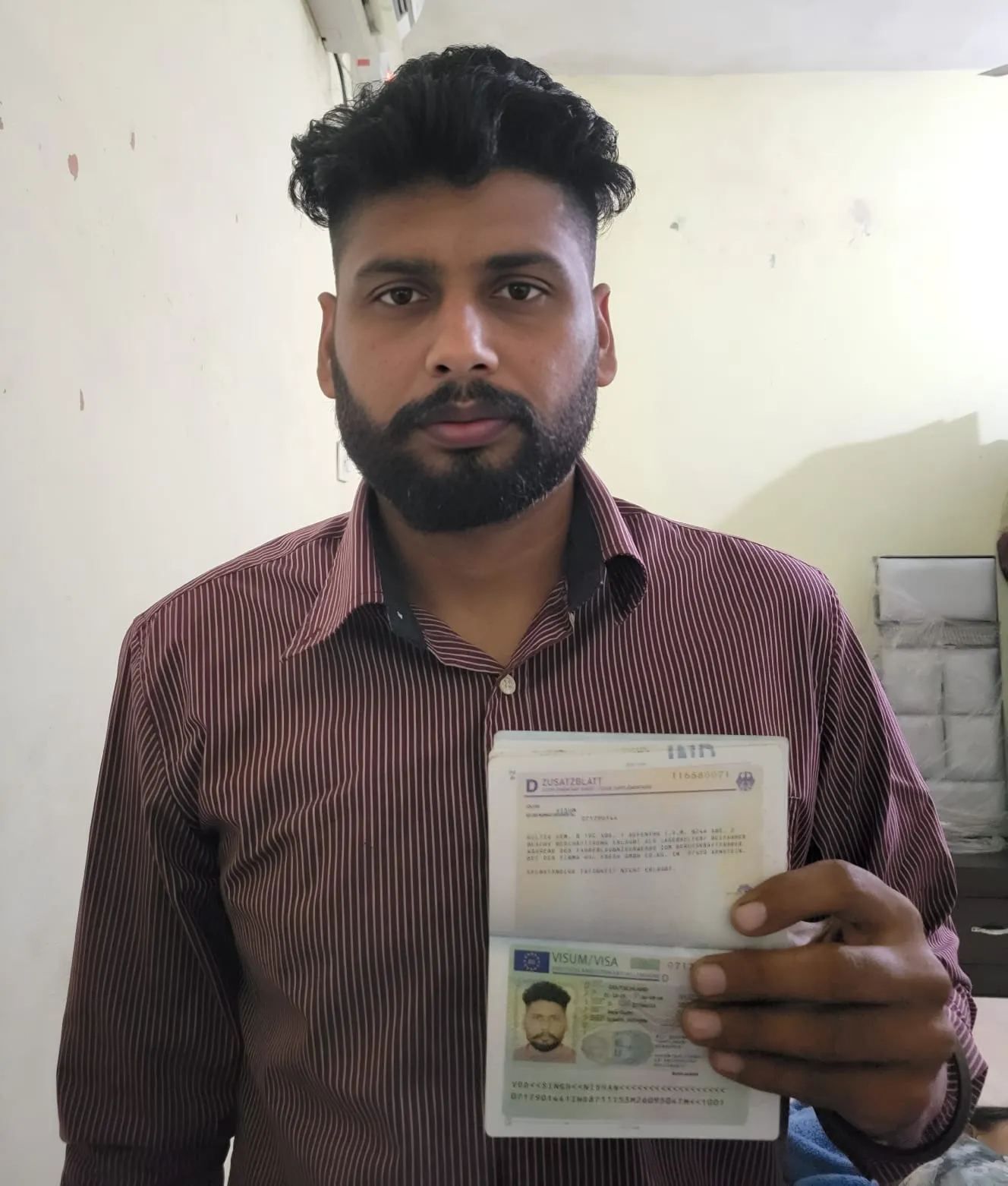
At AtoZ Serwis Plus, we help you become a global citizen with trusted support for jobs abroad, overseas education, and visa processing tailored to your goals.
Read More
Connecting employers, job seekers, students, and agencies across Europe and beyond.
Looking to hire skilled or semi-skilled workers from Asia, Africa, the CIS, or EU countries? AtoZ Serwis Plus supports your recruitment needs for Poland, Germany, Slovakia, Hungary, Lithuania, Estonia, and beyond. We deliver comprehensive legal recruitment services, visa support, and seamless onboarding solutions tailored to your business goals. Partner with us to build a reliable, compliant, and efficient workforce.
EmployerLooking to hire skilled or semi-skilled workers from Asia, Africa, the CIS, or EU countries? AtoZ Serwis Plus supports your recruitment needs for Poland, Germany, Slovakia, Hungary, Lithuania, Estonia, and beyond. We deliver comprehensive legal recruitment services, visa support, and seamless onboarding solutions tailored to your business goals. Partner with us to build a reliable, compliant, and efficient workforce.
Job SeekersAre you a recruiter looking to place workers in Poland, Germany, Slovakia, or other EU destinations? AtoZ Serwis Plus provides you with trusted employer connections, legal recruitment solutions, verified job placements, and full visa assistance. Expand your recruitment business with confidence, supported by clear processes, reliable documentation, and transparent migration services.
RecruiterLooking to work and live in Europe? At AtoZ Serwis Plus, we’re here to guide you every step of the way. Our experts provide support with job search assistance, work visa applications, qualification recognition, and European language learning. To connect with us and get started on your European journey, click one of the contact icons below.
Copyright © 2009-2026 AtoZ Serwis Plus. All Rights Reserved.