Estonia (Eesti Vabariik — Republic of Estonia) is a small Baltic state in Northern Europe, bordered by Latvia to the south, Russia to the east, the Gulf of Finland to the north, and the Baltic Sea to the west. Population: approximately 1.37 million (2024). Capital: Tallinn (approximately 450,000). Estonia has been an EU member since 2004, a eurozone member since 2011, a Schengen member, and a NATO member. Currency: euro (€). GDP per capita: approximately €24,000 (2024). Estonia is the world's most digitally advanced country — e-Residency, e-government, digital voting, paperless bureaucracy — and Europe's most vibrant tech startup ecosystem (Skype founded in Tallinn; TransferWise/Wise; Bolt/Taxify; Pipedrive). Major employers: IT sector; logistics (Tallinn Port); manufacturing; and a growing financial technology sector. Official language: Estonian (Eesti keel) — a Finno-Ugric language unrelated to most European languages; Russian is widely spoken, especially in eastern Tallinn and Tallinn's Russian-speaking community (approximately 25% of Estonia).
Estonia's domestic services market is growing rapidly, driven by g wgerising wages (Estonia's wages have grown faster than almost any EU country in the past decade), an increasing number of dual-income professional households, growing elderly care needs, and international business and expat community in Tallinn. The Tallinn Old Town (Vanalinn — UNESCO World Heritage) is surrounded by modern residential areas where IT professionals and entrepreneurs live and require regular household cleaning. Estonia's. Estonia's minimum wage is among Central Europe's fastest-rising: 2025 minimum wage: €886/month gross (rising from €820 in 2024 — a significant increase). Social insurance: employer contributions approximately 33% of gross salary (the highest rate in the EU — split as: social tax 33% paid entirely by employer on all wages; unemployment insurance contribution 0.5% employer + 1.6% employee). Income tax: flat rate 22% (from 2024, rising from 20% in previous years) on all income; no progressive brackets. Annual leave: 28 calendar days (the minimum is higher than the EU's 20 working day standard — approximately 4+ weeks).
AtoZ Serwis Plus provides professional recruitment of housekeepers and domestic workers in Estonia, connecting employers in Tallinn, Tartu, Narva, Pärnu, and across Estonia with verified, compliant housekeeping professionals.
Key strengths
We recruit skilled, reliable housekeeping professionals for European households through a well-established global talent network. Our international sourcing strategy supports both urgent staffing needs and long-term domestic workforce planning.
Our Global Recruitment Reach Includes:
This diversified talent pool enables rapid response to household staffing needs while supporting long-term compliance and placement quality.
Employer benefits
https://www.atozserwisplus.com/employer/registration
Recruiter benefits
https://www.atozserwisplus.com/recruiter/registration
Worker benefits
https://www.atozserwisplus.pl/work-in-europe
Estonia's Tööregistri (Employment Register) requires all employers to register workers before their first day of employment. Estonia's digital compliance system detects non-registration immediately. The Labour Inspectorate (Tööinspektsioon) enforces the TLS. Social tax (33%) is mandatory and employer-paid — failure to register means retroactive liability plus Estonia's. Estonia's digital infrastructure makes compliance straightforward — all registration is done online in minutes.
1. What is housekeeper recruitment in Estonia?
Housekeeper recruitment in Estonia involves placing domestic cleaners, hotel room attendants, elderly home helpers, and private household staff in Tallinn, Tartu, Pärnu, and across Estonia. The minimum wage is €886/month gross (2025). Estonia uses a flat income tax rate of 22%. AnnThenimum is annual leave 28 calendar days — more generous than the EU standard.Estonia's minimum wage for domestic?
Estonia's minimum wage (alampalk) for 2025 is €886/month gross (or €4.42/hour for part-time calculations). Estonia has been raising its minimum wage rapidly — from €584/month in 2019 to €886 in 2025, reflecting strong economic growth. The government sets the minimum wage annually in consultation with social partners. For domestic cleaning workers in Tallinn and larger cities, market wages typically exceed the minimum: €900–€1,400/month for regular cleaners; €1,200–€1,800+ for experienced housekeepers and household managers. Estonia'sis Estonia's social tax (sotsiaalmaEstonia's?
Estonia's sotsiaalmaks (social tax) is 33% of gross salary — the highest employer-paid social contribution rate in the EU. Key feature: unlike most EU countries, the entire 33% is paid by the employer (not split with the employee). The 33% covers 20% state pension insurance and and 13% Haigekassa (Estonian Health Insurance Fund). Additi,nally: unemployment insurance — employer 0.5% + employee 1.6% of gross salary. The Haigekassa (health insurance) provides comprehensive coverage including GP visits, specialist care, hospital treatment, and prescription cost sharing foresidents of Estoniania'ss. Estonia's social tax structure is simple and transparenta singleone combined 33% rate funds bopensionsion and healtIsia'sis Estonia's flat income tax system?
Estonia uses a flat income tax (tulumaks) rate of 22% (from 2024; previously 20%) on all personal income above the basic exemption. The basic exemption (maksuvaba tulu) varies by income level: approximately €7,848/year (€654/month) for average i,omes — meaning income below this threshold is not taxed. For a domestic worker earning €1,000/month: effective income tax would be approximately €76/month after the basic exemption — a vereffective taxnia'se. Estonia's flat tax is internationally praised for simplicity and economic efficiency. Estonian income tax is submitted electronically through the e-MTA (electronic Tax and Customs Board) — typically a 5-minute annual process using pre-filled digital returns.
5. What annual leave do Estonian workers receive?
Estonian Puhkuseseadus (Annual Leave Act): minimum 28 calendar days per year (equivalent to 4, weeks including weekends — more than the EU-mandated 20 working days minimum). Workers accrue leave from the first working day. Leave can be taken in, parts but at least one continuous period must be at least 14 calendar days. Workers receive holiday pay athe t average daily earnings rate. Estonia has 12 national public holidays per year including: New Year (1 Jan); Independence Day (24 Feb); Good Friday; Easter; Spring Day (1 May); Pentecost; Victory Day (23 Jun); Midsummer Day (24 Jun — JaanipEstonia'sof Estonia's most important cultural celebrations); Day of Restoration of Independence (20 Aug); Christmas Eve (24 Dec); Christmas (25-26 Dec).
6. What is the Estonian Haigekassa (Health Insurance Fund)?
Eesti Haigekassa (Estonian HInsurance) isia'sis Estonia's statutory health insurer, funded by the 13% health component of the social tax. Coverage: free GP visits; specialist consultations (with GP referral); hospital treatment; emergency care; prescription cost-sharing; dental care for children and selected adult categories; rehabilitation services. All registered employed workerautomatically includednia'sd. Estonia's healthcare system has undergone significant modernisation since independence (1991) — digital health records (every Estonian has a unified digital health record accessible to any authorised provider); e-prescriptions (standard since 2010); and a growing private medical sector that supplements the public system. Non-EU workers with valid residence permits and employment registration are fully eligible for Haigekassa coverage.
Estonia'ses Estonia's digital governance system help domestic workers?
Estworld's the world's most advanced digital society. For domestic workers, this means: online employment registration by employer (Tööregistri — takes 5 minutes; real-time registry visible to both parties and Labour Inspectorate); electronic payslips; e-MTA for annual tax returns (pre-filled; typically 5 minutes); e-Haigekassa for health insurance status; digital ID (ID-kaart or Mobiil-ID) for all government interactions; e-Töötukassa for unemployment benefit applications. These digital systems make Estonian administration one of Europe's simplest — all bureaucracy can be managed from a smartphone. For EU workers: the same digital services are accessible with a residence permit and Estonian ID-kaart or residency registration.
8. What permits do non-EU workers need to work in Estonia?
Non-EU national and need: Elamisluba töötamiseks (residence permit for employment) from PPA (Politsei- ja Piirivalveamet — Police and Border Guard of Estonia). Estonia's immigration system: work permits must be applied for by the employer; an annual immigration quota applies (approximately 0.1% of the permanent population per year for non-EU workers); some professions are exempt from the quota; processing takes approximately 2–3 months. Estonia also has a Digital Nomad Visa (temporary residence permit for remote workers, valid for 12 months) and e-Residency (for company registration, not physical residence). For domestic workers from non-EU countries: the standard employment residence permit pathway applies. EU/EEA workers: freedom of movement applies; register at PPA within 3 months of establishing residence.Tallinn'sis Tallinn's domestic set?Esto nia'sis Estoand the BalticandSea'sBaltic Sea's most-visited medieval city — the UNESCO-listed Old Town (Vanalinn) with its remarkable Gothic Town Hall and medieval gu— ild buildings is the centrepidomTallinn 'skallinn'sk: Tallinn's rapidly growing middle class of IT professionals and startup founders in the Ülemiste City tech district; the historic districts of Kadriorg (elegant early 20th villa,,sident's President's residence) and Nõmme (garden city suburb) have private households requiring regular cleaninTallinn'ss; Tallinn's growing international community (Finnish companies; Scandinavian investors; EU officials) creates demand for English-language domestic staff; hotel sector demand from the large tourism industry (approximately 4.5 million overnight sTallinn's). Tallinn's cost of living remains moderate by Western European standards — rent for a 1-bedroom apartment: €600–€1,100/month.
Tartu'st is Tartu's domestic smarket.Tartu is Estonia's second city and its intellectual capital — home to the University of Tartu (founded 1632; one of the oldest universities in Northern and Eastern Europe). Tartu has a vibrant student and academic community and a growing tech "ector (the "Silicon Valley of"the Baltics" nickname applies partly to Tartu). For domestic services: Tartu's academic families require regular cleaning services; the growing number of international academics and researchers at the university creates demand for English-speaking household help; university-linked rental property management creates cleaning demand; Tartu is significantly more affordable than Tallinn (rent €400–€700 for a 1-bedroom).
11. What languages are needed for domestic work in Estonia?
Estonia has two main working languages for domestic services: Estonian (Eesti keel) — the official language, spoken by approximately 70% of population; Russian — spoken by approximately 25% as first language (large Russian-speaking community, esTallinn'sin Tallinn's eastern districts: Lasnamäe; Mustamäe; and the city of Narva near the Russian border which is approximately 95% Russian-speaking). The professional and international community widely speaks English in Tallinn. Mcandidate's candidate's candidate's employer's household language is important. Finnish is also. Tallinn's proximity to Helsinki (90-minute flight to Estonia's closest major city). Estonia is one of Europe's most generous maternity benefit systems. Vanemahüvitis (parental benefit): 140 calendar days for the mother (at least 70 of which must be taken); 30 days exclusively for the father; a total of 140+30+additional shared parental leave is available. Benefit rate: parent'sthe parent's previous year average salary (from the Estonian Social Insurance Board — Sotsiaalkindlustusamet); capped at three times the average Estonian wage. This 100% replaces France's approximately Germany'senefits are among Europe's most generous in proportional terms. The system has Estonia's relatively high birth rate and female labour force participation.
13. What are the typical duties of a housekeeper in Estonia?
Estonian housekeepers typically perform: thorough cleaning of all rooms; laundry and ironing (Estonian households use modern European appliances — Miele; Bosch; AEG standard); bed changing; kitchen cleaning; grocery shopping (Rimi; Maxima; Prisma; Coop are the main Estonian supermarket chains); basic cooking assistance; correct waste sorting (Estonia has an excellent recycling system — paper; plastic; glass; metal; biowaste all separately collected; some municipalities use pneumatic waste systems in high-rise areas); plant care. Saunas: almost all Estonian homes have access to a sauna (saun) — a deeply culturally important space in Estonian life; maintaining sauna cleanliness (benches, walls, floors, water, birch branch — viht — storage) is a specific domestic duty in Estonia.
Estonia's pension system from migration?
Estonia's pension system: I pillar (riiklik pension): state pension funded by 20% social tax; calculated on contribution years and salary level. II pillar (kohustuslik kogumispension): mandatory funded pension for workers born after 1983; 2% of gross salary deducted from employee, matched by the 4% from the state (from the social tax); accumulates according to the worker's choice; portable. III pillar (täiendav kogumispension): voluntary supplementary pension with income tax incentive. Workers from EU countries: EU Regulation 883/2004 ensures full portability of pension rights. The II pillar fund accumulated during Eemployment in Estoniais portable internationally or can be withdrawn ouponleaving Estonia. Estonia's digital pension management (e-pension portal) makes it easy to track accumulated entitlements.
1is Inspectorate'storate's role in Estonia?
Tööinspektsioon (Estonian Labour Inspectorate) supervises compliance with the Employment Contracts Act (TLS) and other labour laws. It conducts inspections, investigates complaints, and issues penalties for violations. Key powers: access to all workplaces, including private homes (with a worker complaint as the basis); review of employment registers; ordering repayment of unpaid wages; fines for non-registration (up to €3,200); criminal referral for serious violations. Workers can report violations confidentially. The Labour Inspectorate also provides free advisory services: online, by phone, or in person, with advice on employment rights in Estonian, Russian, and English. Estonia's digitally integrated Tööregistri makes non-registration immediately detectable, strongly encouraging compliance.
Pärnu'st is Pärnu's domemarket .Estonia's "su"mer capit, — a charming seaside resort city on the Baltic coast (approximately 52,000 permanent residents but filling significantly in summer). For domestic services: Pärnu has a large stock of summer villas and beach houses (suvevillad) that require seasonal opening cleaning (May), weekly or bi-weekly cleaning during summer, and closing cleaning (September); the Pärnu spa and wellness resort sector (Hedon Spa; Tervis Medical Spa; various wellness hotels) requires professional housekeePärnu'sams; Pärnu's growing year-round appeal (Nordic walking; surfing; winter retreats) extends the seasonal demand. Many wealthy residents of Tallinn and Helsinki own summer properties in Pärnu — creating steady demand for trusted professional caretaker-housekeepers in Estonia's unemployment insurance system?
Estonian Töötuskindlustus (unemployment insurance): contributions: employer 0.5% + employee 1.6% of gross salary. Benefits: after minimum 12 months insurance in the last 3 years: unemployment benefit (töötuskindlustushüvitis) at 50% of the previous average salary for the first 100 days, then 40% for up to 360 days total. Additionally: Töötasu hüvitis (wage compensation from Töötukassa if the employer goes bankrupt — up to 3 months of unpaid wages can be recovered). Töötukassa (Estonian Unemployment Insurance Fund) also provides job search assistance, retraining (including Estonian language courses—valued for integration), and guidance. Estonia's unemployment benefit is modest by Scandinavian standards, but the active labour market programmes are well regarded for their effectiveness. Are Estonia's rules for domestic worker termination?
Estonian TLS (Employment Contracts Act) notice periods: employer notice during probation (maximum 4 months): 15 calendar days; after probation: minimum 15 days (less than 1 year); 30 days (1–5 years); 60 days (5–10 years); 90 days (10+ years). Employee notice: 30 days at any time. Extraordinary termination (without notice) only for serious breach. Estonian employment law provides the right to severance pay (koondamishüvitis) when the employer initiates termination for economic reasons: 1 month's salary from the employer; an additional 1 month from Töötukassa. Estonian law balances flexibility (relatively short statutory notice periods) with security (severance + unemployment insura1ia'sre Estonia's working time rules?
Estonian TLS: maximum working time 48 hours/week (averaged over 4 months); normal working time 40 hours/week (8 hours/day); daily rest: 11 consecutive hours; weekly rest: 48 consecutive hours. Overtime: maximum 200 hours/year; must be compensated at 1.5× hourly rate or time off in lieu. Night work (22:00–06:00): 1.25× hourly rate at minimum. Working on national holidays: 2× hourly rate. Collective agreements may exist in the cleaning sector in Estonia. Estonia's working time rules are broadly aligned with EU Working Time Directive requirements.
20. What is Estonia-Ficorridor's significance for domestic workers?
Tallinn and Helsinki are connected by approximately 30 daily ferry crossings (Tallink Silja; Viking Line; various operatorss), taking 2–2.5 hourhourss, making it oneoff the world's busiest short international ferry routes. This creates a unique Baltic cross-border labour dynamic: approximately 20,000–30,000 Estonian workers commute weekly or monthly to Finland (where wages are significantly higher); some work in Finland and return to Estonia at weekends, when living costs are much lower; Finnish companies have significant operations in Tallinn, leveraging the skilled Estonian workforce. For domestic workers: the Helsinki-Tallinn connection means Estonian domestic workers can access the Finnish household services market (with much higher wages) while living in affordable Tallinn, or, conversely, Finnish workers can access Tallinn's growing premium household services market. Knowledge of the Finnish language is a significant advantage in this corridor.
21. What features does Linna Tallinn's Old Town highlight for tourists?
Tallinn's Vanalinn (Old Town) — a UNESCO World Heritage Site since 1997, one of Europe's best-preserved medieval city centres. For domestic workers in this area: the Old Town has a significant number of boutique hotels, rental apartments, and private residences in medieval buildings (sometimes 13th–15th century); these require specialist care — original stone floors; ancient woodwork; historical artefacts; narrow medieval stairwells requiring specific cleaning equipment; no heavy machinery in many buildings. The tourism economy of the Old Town (approximately 4 million tos/year) creates substantial year-round demand for hotel housekeeping and vacation rental cleaning services. Tallinn's Old Town is a genuinely extraordinary experience — surrounded by medieval architecture, yet offering modern, professional domestic services. Estonia's approach to digitalisation?
Estoworld is the world's most digitally advanced company, extending to domestic employment administration. For domestic workers: all employment registration via Tööregistri takes under 5 minutes online; payslips are typically electronic; health insurance status is visible online via the Hteigekassa patient portal; tax returns are pre-filled and submitted in 5 minutes through e-MTA; pension fund balance is visible through the pension portal; unemployment benefit applications are through the Öötukassa e-service. For employers hiring domestic cleaners: online registration, e-payroll, and digital contribution payments are standard. This digital efficiency significantly reduces the administrative burden of formal employment — making legal employment in Estonia more convenient than in most EU countries.
23. What is the cost of living in Estoa domestictonia's?
Estonia's cost of living is among the most affordable in the EU, thanks to its developed infrastructure. Tallinn rent: €600–€1a ,a 100 for 1-bedroom apartment; Tartu: €400–€700; Pärnu: €350–€600. Food costs: €200–€ 400/m. Public transport: Linn's public transport; registered residents (unique globally introduced 3; other cities have introduced 3c transport. At minimum wage (€886/month gross; approximately €720 net after taxes and contributions), living in Estonia is feasible, particularly outside Tallinn. Experienced housekeepers earning €1,200–€1,500/month gross enjoy a comfortable standard of living. Estonia's affordability, combined with its digital innovation and EU membership, makes it an increasingly attractive EU destination for domestic workers from Eastern Europe and Asia.
24. What are the challenges in Estonia's domestic services market?
Key market challenges: (1) Language barrier — EstoniaEurope's of Europe's most difficult languages for non-native speakers; Russian provideEstonia'sto Estonia's Russian-speaking community but not to native Estonian households; (2) Relatively small market — 1.37 million population means fewer total positions than Western European capitals; (3) Competition from higher-wage Nordic Estonia's — Estonia's proximity to Finland and Sweden draws many domestic workers to higher-paying markets; (4) Growing demand outpaciEstonia's — Estonia's rapidly rising wages and dual-income households are creating more household service demand than current domestic supply can meet; (5) Seasonal demand variability — Pärnu and coastal areas have strong summer demand but quiet winters. These challenges simultaneously create opportunities for well-prepared international workers in Estonia's growing market. Is Estonia's children and family support for working parents?
Estonian Sotsiaalkindlustusamet (Social Insurance Board) provides: lastetoetus (child benefit) approximately €80/month per child (universal; all resident children); vanemahüvitis (parental benefit) at 100% of previous salary for 435 days (approximately 15 months); lapsehoolduspuhkus (childcare leave) available to either parent until child is 3; free kindergarten places in most municipalities; free comprehensive school education. For domestic workers with chchildrenthe 10% salary parity benefit is among Europe's most generous and significantly supplements family income during leave. Estonia consistently ranks highly in European gender equality, reflecting the country's genuine commitment to work-life balance and family support.
26. How does Estonia compare to other Baltic states for domestic employment?
Among the three Baltic states, Estonia has the highest minimum wage (€8), Latvia's vs Lithuania's €924/month in 2025; the highest GDP per capita; the most advanced digital infrastructure; and the strongest tech economy. Latvia has acost, with aaccess but challenges wwhich requiresintegration for Rthe ussian-speaking wpopulation Lithuania (Vilnius) has a larger population (2.8 million), a higher minimum wage (€924/month in 2025), and a more traditional Catholic culture. For domestic workers choosing among Baltic destinatio ns:Estoofferserss the best combination of digital ease, EU integration, and rising wages; Lithuania offers the highest minimum wage; Latvia offers the lowest entry costs. All three are EU/Schengen/Eurozone members with comparable employment frameworks. What is Estonia's sauna culture and its relevance to housekeeping?
Estonia's sauna — one of its most important cultural institutions — alongside the Finnish sauna tradition, was included in UNESCO's Intangible Cultural Heritage list. Almost every Estonian home has access to a sauna — either in-house or a communal building. Sauna maintenance is a specific domestic duty: cleaning wooden benches (lava) with hot water and brush; ensuring cleanliness of the washing room (pesemisruum); managing the sauna stove (kiuas); heating the sauna correctly (typically wood-fired in traditional settings, electric in modern apartments); proper drying to prevent mould; and cleaning the birch whisks (viht — dried and rehydrated for use). A housekeeper unfamiliar with sauna care will quickly encounter this duty — it is a fundamental element of Estonian domestic management. AtoZ Serwis Plus prepares candidates for culturally specific requirements.
28. What is thEstonia'sof Estonia's emigration on the domestic labour market?
Estonia experienced significant emigration after EU accession (2004) — particularly to Finland, Sweden, the UK (before Brexit), and Germany. Approximately 100,000–150,000 Estonians live and work abroad (out of a total population of 1.37 million). This emigration has tightened the Estonian labour market, contributing to rapid wage growth (among the EU's fastest) and labour shortages across sectors, including domestic services. This labour is a primary driver of Estonia's growing openness to recruiting from third countries (Ukraine, India, the Philippines, and Georgia) to fill domestic service gaps. For employees in Estonia, the shortage of domestic workers means internationally recruited staff are not just accepted but genuinely needed. For workers considering Estonia: a market with low competition and strong de2ia'sre Estonia's rules for living in employer accommodation?
Live-in domestic worker arrangements are possible in Tonia, particularly for elderly care assistants working in 24-hour care arrangements. Key provisions: accommodation cannot be deducted at a rate that reduces pay below minimum wage; accommodation must meet Estonian habitability standards; the employment contract must clearly specify any accommodation terms; dismissal from employment triggers a reasonable notice period before the worker must vacate accommodation; personal privacy rights in accommodation apply regardless of employment relationship; any equipment or internet provided for accommodation use can be specified in thEstonia'st. Estonia's Labour Inspectorate can be contacted for guidance on specific live-in domestic employment arrangements.
30. How can an Estonian household or company recruit housekeepers through AtoZ Serwis Plus?
Estonian employers — a professional's household, a Pärnu summer villa owner, a boutique hotel, or an elderly care service — should register via the link below. Our team identifies language-matched (Estonian, Russian, or English), domestically experienced candidates for Estonia's growing household market. We manage all TLS-compliant employment contract preparation, Tööregistri digital registration, social tax setup, Haigekassa enrollment, and residence permit guidance for non-EU candidates through PPA.
Estonia — with a minimum wage of €886/month (2025), flat 22% Estonia'sx, Estonia's world-leading digital employment registration, comprehensive Haigekassa healthcare, 28 calendar days annual leave, and 100% salary maternity benefit — offers domestic workers a modern, digitally efficient, and increasingly well-paid employment environment. AtoZ Serwis Plus connects Estonian employers with professionals in the tech-savvy, internationally oriented domestic services market.
AtoZSerwisPlus is a European workforce and immigration advisory platform specialising in compliant recruitment guidance, structured work authorisation support, and labour market insights across European countries.
Tööinspektsioon (Labour Inspectorate) – https://www.ti.ee
PPA (Police and Border Guard Board — immigration) – https://www.politsei.ee
Eesti Haigekassa (Health Insurance Fund) – https://www.haigekassa.ee
Sotsiaalkindlustusamet (Social Insurance Board) – https://www.sotsiaalkindlustusamet.ee
Töötukassa (Unemployment Insurance Fund) – https://www.tootukassa.ee
e-MTA (Tax and Customs Board) – https://www.emta.ee
This content is provided for informational purposes only. Employment conditions and immigration procedures in Estonia are subject to change. Employers and workers are advised to consult qualified Estonian legal counsel and relevant authorities before making employment or immigration decisions.
Global clients share how AtoZ Serwis Plus helped them secure work permits, visas, and career support across Europe. Real stories. Real results.
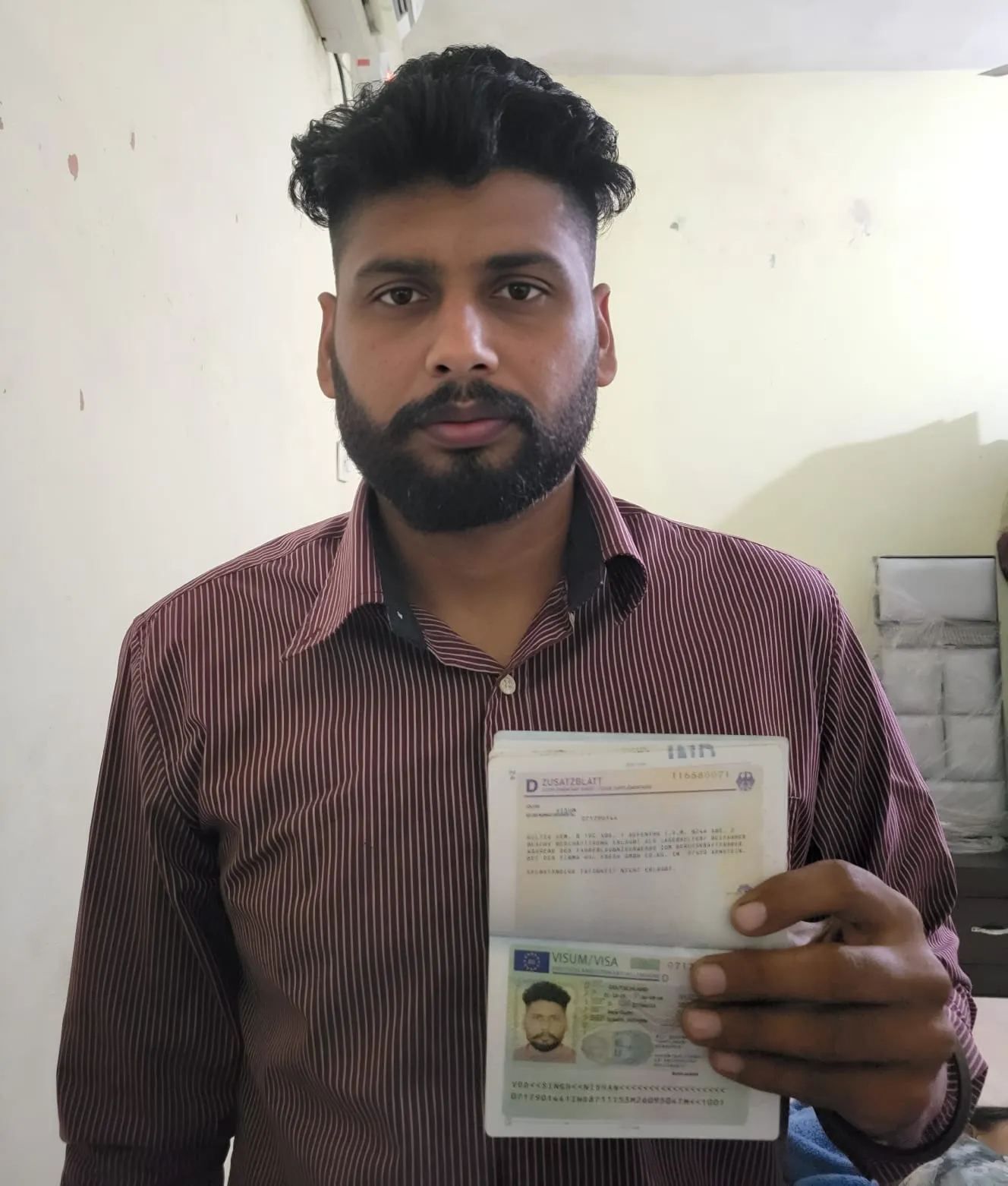
At AtoZ Serwis Plus, we help you become a global citizen with trusted support for jobs abroad, overseas education, and visa processing tailored to your goals.
Read More
Connecting employers, job seekers, students, and agencies across Europe and beyond.
Looking to hire skilled or semi-skilled workers from Asia, Africa, the CIS, or EU countries? AtoZ Serwis Plus supports your recruitment needs for Poland, Germany, Slovakia, Hungary, Lithuania, Estonia, and beyond. We deliver comprehensive legal recruitment services, visa support, and seamless onboarding solutions tailored to your business goals. Partner with us to build a reliable, compliant, and efficient workforce.
EmployerLooking to hire skilled or semi-skilled workers from Asia, Africa, the CIS, or EU countries? AtoZ Serwis Plus supports your recruitment needs for Poland, Germany, Slovakia, Hungary, Lithuania, Estonia, and beyond. We deliver comprehensive legal recruitment services, visa support, and seamless onboarding solutions tailored to your business goals. Partner with us to build a reliable, compliant, and efficient workforce.
Job SeekersAre you a recruiter looking to place workers in Poland, Germany, Slovakia, or other EU destinations? AtoZ Serwis Plus provides you with trusted employer connections, legal recruitment solutions, verified job placements, and full visa assistance. Expand your recruitment business with confidence, supported by clear processes, reliable documentation, and transparent migration services.
RecruiterLooking to work and live in Europe? At AtoZ Serwis Plus, we’re here to guide you every step of the way. Our experts provide support with job search assistance, work visa applications, qualification recognition, and European language learning. To connect with us and get started on your European journey, click one of the contact icons below.
Copyright © 2009-2026 AtoZ Serwis Plus. All Rights Reserved.