Liechtenstein (Fürstentum Liechtenstein — Principality of Liechtenstein) is a doubly landlocked microstate in Central Europe, bordered by Switzerland to the west and Austria to the east. It is the world's sixth-smallest country by area (160 km²) and one of only two doubly landlocked countries. Population: approximately 40,100 (2024). Capital: Vaduz (approximately 5,800 inhabitants). Largest municipality: Schaan. Liechtenstein is not an EU member but is part of the European Economic Area (EEA) and the Schengen Area; it uses the Swiss franc (CHF) as its currency. GDP per capita: approximately CHF 130,000–170,000 — among the very highest in the world, driven by precision manufacturing, financial services, and speciality chemicals. Major employers: Hilti (power tools; world HQ in Schaan); Ivoclar (dental products); LGT Bank (the princely family's bank); ThyssenKrupp Presta (automotive components). Liechtenstein has one of Europe's most favourable tax regimes (maximum income tax of approximately 8%, plus a municipal levy). Languages: German (official and universal).
Despite its tiny size, Liechtenstein has a significant demand for household and domestic services, driven by its extraordinary concentration of wealth. GDP per capita at PPP makes Liechtenstein residents among the world's wealthiest, with many professional and executive families requiring regular professional housekeeping, household management, and luxury domestic services. The principality's aristocratic tradition (the House of Liechtenstein is one of Europe's oldest ruling dynasties) and its concentration of private banking wealth mean that estate management, formal household staff, and professional cleaning services are active employment categories. Liechtenstein's labour market is deeply integrated with Switzerland: approximately 57% of Liechtenstein's workforce commutes daily from Switzerland, Austria, and Germany. Swiss labour law and collective agreements largely influence Liechtenstein's standards, though Liechtenstein has its own Allgemeines Bürgerliches Gesetzbuch (ABGB)-based legal framework adapted from Austrian law.
Liechtenstein employment law: based on the Liechtensteinisches Allgemeines bürgerliches Gesetzbuch and the Gesetz über die Allgemeinen Arbeitsbedingungen (LGAA — Law on General Working Conditions). There is no statutory national minimum wage in Liechtenstein — individual contracts and collective agreements set wages. However, given the EEA single market integration and Switzerland alignment, actual market wages for domestic workers are extremely high by global standards: a cleaner in Liechtenstein typically earns CHF 25–35/hour gross; a household manager CHF 50,000–80,000+/year. Social insurance (AHV/IV/EO): employer and employee each contribute 5.2% of gross salary to AHV/IV/EO; the employer also pays the minimum BVG (occupational pension) contributions. Withholding tax (Quellensteuer) for non-resident workers. Annual leave: minimum 4 weeks. Languages required: German is essential for all domestic positions in Liechtenstein.
AtoZ Serwis Plus provides professional recruitment of housekeepers and domestic workers in Liechtenstein, connecting employers in Vaduz, Schaan, Triesen, Balzers, and across the principality with verified housekeeping professionals.
Key strengths
We recruit skilled, reliable housekeeping professionals for European households through a well-established global talent network. Our international sourcing strategy supports both urgent staffing needs and long-term domestic workforce planning.
Our Global Recruitment Reach Includes:
This diversified talent pool enables rapid response to household staffing needs while supporting long-term compliance and placement quality.
Employer benefits
https://www.atozserwisplus.com/employer/registration
Recruiter benefits
https://www.atozserwisplus.com/recruiter/registration
Worker benefits
https://www.atozserwisplus.pl/work-in-europe
Liechtenstein's small size means its enforcement capacity relative to its workforce is highly effective. Undeclared employment (Schwarzarbeit) is penalised under the Liechtenstein Tax Act and LGAA. AHV/IV/EO contributions are mandatory from the first day; non-compliance results in retroactive contribution demands with interest. For EEA workers, failure to hold a valid Aufenthaltsbewilligung can result in loss of the right to remain. Proper registration also ensures access to Liechtenstein's excellent pension system and the AHV/IV/EO social security network.
1. What is housekeeper recruitment in Liechtenstein?
Housekeeper recruitment in Liechtenstein involves placing professional domestic cleaners, household managers, and estate caretakers with private households, princely properties, and corporate residences in one of the world's wealthiest countries. Domestic workers earn among Europe's highest wages — CHF 25–35+/hour. The German language is essential.
2. What currency and wages does Liechtenstein use?
Liechtenstein uses the Swiss franc (CHF). At CHF 1 ≈ €1.05 (approximate 2025 rate), domestic wages of CHF 25–35/hour translate to approximately €26–37/hour — among Europe's highest for domestic service. There is no statutory minimum wage; market rates are extremely competitive given the principality's extraordinary per capita wealth.
3. Do EEA workers need a permit to work in Liechtenstein?
Yes — uniquely among EEA members, Liechtenstein applies quantitative limits (quotas) on EEA residence permits due to its very small size. EEA workers must hold a valid Aufenthaltsbewilligung (residence permit) to work legally in Liechtenstein, even though they have, in principle, EEA free movement rights. Swiss nationals have preferential access under the bilateral Liechtenstein-Switzerland customs union. The Ausländer manages the permit quota and the Passamt.
4. What social insurance does Liechtenstein provide for domestic workers?
Liechtenstein's social insurance (AHV/IV/EO — Alters- und Hinterlassenenversicherung / Invalidenversicherung / Erwerbsersatzordnung) is closely aligned with the Swiss system. Contributions: employer and employee each pay 5.2% of gross salary. Additionally, BVG (occupational pension — Berufliche Vorsorge) is mandatory for workers earning above the annual threshold (CHF 22,050 in 2024). Health insurance is mandatory but privately arranged through approved insurers. The total social protection is comprehensive.
5. What German language level is required for Liechtenstein domestic work?
Fluent German (at least B1–B2 CEFR) is essential for all domestic positions in Liechtenstein. The principality is monolingual German and uses a distinctive Alemannic dialect (very similar to the Swiss German / Vorarlberger dialect). Standard High German (Hochdeutsch) speakers integrate without difficulty. No other language provides meaningful communication in a typical Liechtenstein household. This is the primary reason why cross-border workers from Switzerland, Austria, and German-speaking regions constitute the dominant workforce in Liechtenstein's domestic services sector.
6. What is Liechtenstein's income tax system for workers?
Liechtenstein has one of Europe's lowest income tax rates. The national income tax (Landessteuer) is levied at approximately 8% of net income; municipal Gemeindesteuer (municipal tax) adds approximately 100–150% of the national rate, bringing the total effective income tax to approximately 12–15% for most workers. For context, a worker earning CHF 60,000/year might pay approximately CHF 7,000–9,000 in income tax — significantly less than equivalent earners in Germany, Austria, or Switzerland. This very low tax burden makes take-home pay extremely attractive.
7. What is Liechtenstein's National Day and public holiday schedule?
Liechtenstein observes approximately 15 public holidays per year — one of the most generous in Europe. Notably, the Liechtenstein National Day (Staatsfeiertag) on 15 August (Assumption of Mary) is a unique national celebration in which Prince Hans-Adam II traditionally hosts a reception open to all residents at Vaduz Castle — one of the most distinctive public holidays in Europe. Other holidays include: New Year; Epiphany; Candlemas; St. Joseph's Day; Good Friday; Easter; Labour Day; Ascension; Whit Monday; Corpus Christi; Nativity of Mary; All Saints; Immaculate Conception; Christmas (25–26 December). The Catholic religious character of most holidays reflects Liechtenstein's strongly Roman Catholic culture.
8. What is the annual leave entitlement in Liechtenstein?
The LGAA (Law on General Working Conditions) sets the minimum annual leave at 4 weeks (20 working days on a 5-day-week basis). In practice, many Liechtenstein employment contracts provide 5 weeks (25 days). Holiday pay is full salary during leave. Given the extremely high wage levels, holiday pay is correspondingly valuable. The standard contract year follows the calendar year for leave accrual. Leave can generally be taken in agreement with the employer; the Urlaubsrecht (holiday entitlement) is legally enforceable.
9. What is Liechtenstein's approach to work-life balance for domestic staff?
Liechtenstein's small size (160 km² total; approximately 25 km north-south by 6 km east-west) means commuting distances are minimal — most workers live in the Rhine Valley within a few minutes of any employer. The balance of very high wages, low taxes, an excellent natural environment (direct access to Alpine hiking and skiing from the Rhine Valley floor), and manageable work demands (most private household positions involve 20–40 hours/week) creates one of Europe's highest-quality-of-life working environments for domestic staff. Liechtenstein residents have access to Austrian and Swiss cultural and leisure amenities within 30–60 minutes' driving.
10. How does Liechtenstein compare to Switzerland for domestic worker employment?
Liechtenstein and Switzerland offer similar wage levels (both use CHF), and both are high-cost, high-quality-of-life countries with German as the dominant language. Key differences: Liechtenstein's income tax is significantly lower than Swiss cantonal taxes (effective total ~12–15% in Liechtenstein vs ~20–35% in various Swiss cantons); Liechtenstein's permit quota system is more restrictive than Swiss free movement; Liechtenstein is much smaller (approximately 40,000 population vs 8.8 million) with correspondingly fewer job opportunities but typically lower competition; Liechtenstein households are on average wealthier even than Swiss households. For domestic workers choosing between the two countries, Liechtenstein offers higher after-tax income on equivalent gross wages but fewer total positions.
11. What is the cost of living in Liechtenstein?
Liechtenstein's cost of living is similar to Switzerland — among Europe's highest. Typical monthly expenses: rent for a 1-bedroom apartment approximately CHF 1,500–2,500; food approximately CHF 500–800; transport approximately CHF 100–300 (excellent bus system — "LIECHTENSTEINmobil"). However, Liechtenstein's very high wages and very low taxes mean that take-home pay is sufficient to live very comfortably even at entry-level domestic wages. Many cross-border workers choose to live in Switzerland (St. Gallen, Buchs) or Austria (Feldkirch, Rankweil), where rents are lower, and commute to Liechtenstein daily across the open border.
12. What is the cultural context for housekeeping in Liechtenstein?
Liechtenstein has a strongly conservative, Catholic, and tradition-respecting culture. Household employees are expected to be: punctual (Pünktlichkeit is a value as important as in Germany or Switzerland); discreet (in such a small community, household information travels easily — absolute privacy is expected); respectful of the household's religious practices (many families observe Catholic traditions including Friday abstinence, Advent calendar traditions, Corpus Christi processions); meticulous in their work (Swiss-German precision standards apply). The small size of Liechtenstein means that household staff often know the families they work for through community networks — reliability and reputation are paramount.
13. What is the princely estate and aristocratic market in Liechtenstein?
The House of Liechtenstein (Fürstenhaus Liechtenstein) is one of Europe's oldest ruling dynasties — Prince Hans-Adam II and his family reside in Vaduz Castle (Schloss Vaduz), which dominates the capital. The princely family owns extensive local properties, an international art collection (one of the world's most significant private art collections, and estates throughout Europe. The royal household employs domestic and estate staff to manage these properties. The princely connection gives Liechtenstein a distinctive aristocratic character among European microstates — the ruling family is genuinely active in daily public life in a way that is unique among European monarchies.
14. How does Liechtenstein's EEA membership affect domestic worker rights?
As an EEA member, Liechtenstein implements EU employment law directives, including: Working Time Directive (minimum rest periods; maximum working hours; paid leave); Equal Treatment Directive; Health and Safety Framework Directive; Parental Leave Directive; and others. Domestic workers in Liechtenstein therefore have the same minimum legal protections as workers in EU member states. The EFTA Surveillance Authority (the equivalent of the European Commission) monitors Liechtenstein's compliance with EEA employment law.
15. What makes Liechtenstein unique as an employment destination?
Liechtenstein is extraordinary as an employment destination for domestic workers for several reasons: it is one of the world's three or four highest GDP per capita countries; income taxes are among Europe's lowest; wages are CHF-denominated providing currency stability and very high purchasing power internationally; the quality of life (natural environment; safety; stability; excellent public services) is exceptional; the small size creates a community atmosphere unusual in modern employment; and the principality's stability (Liechtenstein has not been involved in armed conflict since 1866 when it last deployed soldiers and has not had an army since) makes it among the world's safest and most stable employment destinations.
16. What are the termination rules for domestic employment in Liechtenstein?
Liechtenstein's LGAA sets notice periods: during the trial period (Probezeit — typically 1 month): 1 week's notice; after 1 year: 1 month's notice; after 5 years: 2 months' notice; after 10 years: 3 months' notice. Notice can be given at the end of any calendar month. Fristlose Kündigung (immediate termination) is possible only for serious cause. Protection against dismissal applies during illness and pregnancy. Severance pay (Abfindung) is not obligatory under Liechtenstein law (unlike Austria's Abfertigung system) but may be included in contracts for senior household staff.
17. What working hours rules apply in Liechtenstein?
Maximum working time in Liechtenstein is 45 hours per week (consistent with Swiss law) for office and service-sector workers, including domestic service workers. Daily rest: minimum 11 consecutive hours. Weekly rest: minimum of 35 consecutive hours, including Sunday, where possible. Overtime above contracted hours must be compensated at a premium or compensated with equivalent rest time. For live-in domestic workers: on-call time (Pikettdienst) is compensated at a lower rate than active working time, but with a minimum guaranteed hourly compensation. These standards are among the most protective in Europe.
18. What health insurance is required for workers in Liechtenstein?
Health insurance is mandatory in Liechtenstein. Workers must take out basic health insurance (Grundversicherung) from an approved Liechtenstein or Swiss insurer. The system is similar to Switzerland's: monthly premiums of approximately CHF 300–500 for basic coverage; co-pays (Franchise) of CHF 300–2,500/year depending on the chosen plan. Employers do not directly pay health insurance premiums (unlike in most countries); however, they may contribute as an employee benefit. The coverage is comprehensive: GP, specialist, hospital, prescriptions, and emergency care. EU/EEA workers employed in Liechtenstein but resident in an EU/EEA state may instead be covered by their country of residence's social health insurance — a complex area requiring specific advice.
19. What is the process for getting a residence permit in Liechtenstein?
The Ausländer- und Passamt (Office for Foreign Nationals and Passport Affairs) manages residence permits in Liechtenstein. For EEA workers: application for Aufenthaltsbewilligung EWR; subject to annual quota; requires evidence of employment and accommodation; processing typically 1–3 months. For Swiss workers: preferential access under the bilateral agreement; still requires permit registration. For third-country workers: much more restricted; requires employer sponsorship and proof of inability to fill position from the EEA/Swiss market; very small annual quota. All permit holders receive an Ausländerausweis (residence card) and must re-register when changing employers.
20. What is Liechtenstein's Pensionskasse (BVG occupational pension) for domestic workers?
The BVG (Berufliche Vorsorge — occupational pension) is a mandatory supplementary pension in addition to the AHV/IV/EO state pension. Workers earning above the BVG annual entry threshold (CHF 22,050 in 2024) must be enrolled by their employer in a Pensionskasse (pension fund). Contributions: minimum 7–18% of coordinated salary (split between employer and employee); the specific rate depends on age. Upon retirement (or leaving Switzerland/Liechtenstein), accumulated BVG capital can be taken as a pension or as a lump sum. The BVG is a very significant long-term wealth-building mechanism — even a few years of contributions at Liechtenstein's high wage levels can accumulate substantial pension capital.
21. What is Vaduz like as a place to work?
Vaduz, the capital of Liechtenstein, is a small but dignified town of approximately 5,800 inhabitants. Notable features: Vaduz Castle perched on a hillside overlooking the town; the Kunstmuseum Liechtenstein (modern art museum); the Liechtensteinisches Landesmuseum; the Philatelic Museum (Liechtensteinische Post issues are world-famous among collectors); the Rhine riverfront promenade. Vaduz has a compact town centre with boutique shops, several good restaurants, and a weekly market. For domestic workers in Vaduz, the working distance is minimal; the town is walkable; and commuting to any point in the principality takes less than 20 minutes by bus. The principality's excellent public transport (LIECHTENSTEINmobil bus system) connects all municipalities.
22. What is Schaan like as a place for household employment?
Schaan is Liechtenstein's largest municipality (approximately 6,200 inhabitants) and its main industrial centre — home to Hilti's world headquarters and other major employers. Schaan has a more residential character than Vaduz and is home to a significant number of professional and executive families associated with its major employers. Household employment in Schaan is therefore significant, both regular private household positions and corporate-linked executive accommodation housekeeping. The town has good local amenities and bus connections to Vaduz and all other municipalities.
23. What is Liechtenstein's family and childcare support for workers?
Liechtenstein's family support system includes: Familienzulagen (family allowances) of CHF 230/month per child (2024); and child benefit (Kinderzulage) top-ups from cantonal equivalent systems. Liechtenstein has a very high birth rate relative to its size and strong family values. Childcare: Some public Kinderkrippen (crèches) are available in larger municipalities; private childcare is also available. For live-in domestic workers with families abroad: Liechtenstein's family reunification pathway is generally available for permit holders. For cross-border workers with families in Switzerland or Austria: Swiss/Austrian family benefits typically apply.
24. Does Liechtenstein have a wealth tax that affects employers of domestic staff?
Liechtenstein has an annual Vermögenssteuer (wealth tax), which is relevant to the high-net-worth households most likely to employ domestic staff. The Vermögenssteuer rate is very low by international standards (approximately 0.06% of net wealth per year). This very light tax burden is one of the reasons Liechtenstein has attracted significant international private wealth — and, by extension, why the private household domestic services market is disproportionately large relative to its population. High-net-worth employers of domestic staff benefit from Liechtenstein's overall extremely favourable fiscal environment.
25. What unique features make Liechtenstein's domestic services market distinct?
Liechtenstein's domestic services market is unique globally because of: (1) the combination of world-highest wages + very low income taxes = extraordinary after-tax earnings for domestic workers; (2) the tiny geographic footprint meaning positions are locally concentrated and community-known; (3) the aristocratic and princely cultural context giving certain household positions historical prestige; (4) the interface with Swiss and Austrian cultural and economic areas creating a unique trilateral (Liechtenstein/Switzerland/Austria) labour market for domestic services; (5) the absolute requirement for German language — creating a high-entry barrier that filters out competition from non-German-speaking workers; (6) the extremely high standards expected — matching the expectations of some of the world's wealthiest households.
26. What training is available for domestic workers in Liechtenstein?
Liechtenstein's small size means it lacks a large independent vocational training infrastructure — it closely follows Swiss vocational training standards. Workers can access Swiss vocational training (Berufsbildung) programmes, including the Hauswirtschafterin EFZ (Hauswirtschaft — Home Economics) apprenticeship, through Swiss cantonal institutions. The Liechtensteinische Industrie- und Handelskammer (LIHK) and the Stabsstelle für Chancengleichheit (Equal Opportunities Office) provide some coordination of training. In practice, domestic workers in Liechtenstein typically acquire their qualifications in Switzerland, Germany, or Austria.
27. What is the Rhine Valley landscape and environment for domestic workers?
The Liechtenstein Rhine Valley (Rheintal) is one of Central Europe's most beautiful settings. The valley floor — where all Liechtenstein municipalities are located — runs north-south between the Rhine River (forming the border with Switzerland) and the steep Alpine foothill range to the east (rising quickly to 2,000m+). The scenery is extraordinary: snow-capped peaks visible from the valley floor year-round; vineyards on the lower Alpine slopes (Liechtenstein produces modest quantities of high-quality Pinot Noir and Chardonnay); pristine meadows; the blue Rhine River. For domestic workers, Liechtenstein's natural environment provides exceptional recreational opportunities directly accessible from any workplace — hiking, cycling, and skiing (the Malbun ski resort is within 20 minutes of Vaduz) — as well as proximity to the Austrian Vorarlberg and Swiss canton St. Gallen's outdoor leisure infrastructure.
28. What is the employer's Fürsorgepflicht (duty of care) for domestic workers in Liechtenstein?
Under Liechtenstein law, employers have a comprehensive Fürsorgepflicht (duty of care) toward all employees. This includes: providing safe working conditions; providing necessary equipment (cleaning materials, protective equipment); protecting workers' personality rights (Persönlichkeitsrechte — privacy, dignity, non-harassment); not requiring work that endangers health; for live-in workers: providing accommodation meeting habitability standards; and ensuring that social insurance obligations are met. Failure to meet these duties can result in employer liability for damages and termination of the employment relationship by the worker. The Fürsorgepflicht is a fundamental principle of Liechtenstein- and Austrian-derived employment law.
29. What is Liechtenstein's public transport for domestic workers?
The LIECHTENSTEINmobil bus network connects all 11 Liechtenstein municipalities with regular services (approximately every 30 minutes on main routes). The network integrates with the Vorarlberg (Austria) Vorarlbergbus system and connects to the Swiss Rhine Valley railway at Buchs and Sargans. For a small country, the public transport coverage is excellent. Workers without a car can access all employment locations in the principality by bus within 20–30 minutes. Cross-border commuters from Switzerland and Austria use the excellent rail connections. Domestic workers living in Liechtenstein can travel by bus between all residential areas and employment sites at very low cost (Liechtenstein's bus fares are subsidised).
30. How can a Liechtenstein household recruit a housekeeper through AtoZ Serwis Plus?
Liechtenstein employers should register at the link below. Our team identifies German-speaking housekeeping professionals from Switzerland, Austria, or Germany (EEA/Swiss citizens) who meet the highest domestic service standards appropriate to Liechtenstein's exceptional household expectations. We manage EEA permit application guidance, employment contract preparation under Liechtenstein's LGAA, AHV/IV/EO social insurance registration, and BVG pension setup.
Liechtenstein offers domestic workers one of the world's most extraordinary employment opportunities: CHF-denominated wages (among the world's highest), very low income taxes, exceptional natural environment, and access to one of Europe's most affluent and sophisticated household markets. AtoZ Serwis Plus is equipped to help Liechtenstein employers find the German-speaking, professionally experienced household staff their prestigious residences require.
AtoZSerwisPlus is a European workforce and immigration advisory platform specialising in compliant recruitment guidance, structured work authorisation support, and labour market insights across European countries.
Amt für Volkswirtschaft Liechtenstein (Labour and Economy Office) – https://www.avw.llv.li
Ausländer- und Passamt Liechtenstein – https://www.apa.llv.li
AHV/IV Liechtenstein – https://www.ahv.li
Liechtensteinische Landesverwaltung – https://www.llv.li
This content is provided for informational purposes only. Employment conditions and immigration procedures in Liechtenstein are subject to change. Employers and workers should consult qualified legal counsel and relevant Liechtenstein authorities before making employment or immigration decisions.
Global clients share how AtoZ Serwis Plus helped them secure work permits, visas, and career support across Europe. Real stories. Real results.
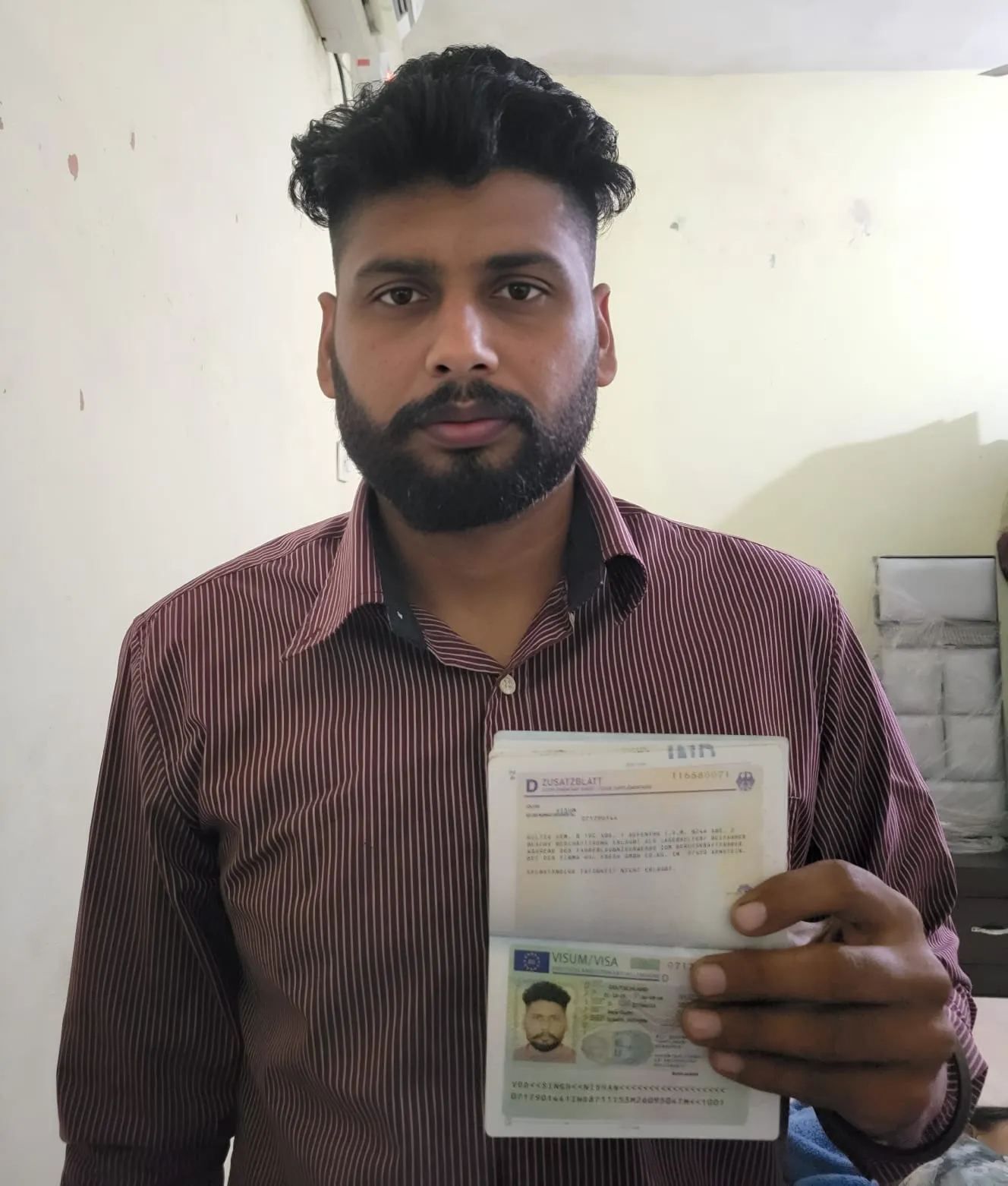
At AtoZ Serwis Plus, we help you become a global citizen with trusted support for jobs abroad, overseas education, and visa processing tailored to your goals.
Read More
Connecting employers, job seekers, students, and agencies across Europe and beyond.
Looking to hire skilled or semi-skilled workers from Asia, Africa, the CIS, or EU countries? AtoZ Serwis Plus supports your recruitment needs for Poland, Germany, Slovakia, Hungary, Lithuania, Estonia, and beyond. We deliver comprehensive legal recruitment services, visa support, and seamless onboarding solutions tailored to your business goals. Partner with us to build a reliable, compliant, and efficient workforce.
EmployerLooking to hire skilled or semi-skilled workers from Asia, Africa, the CIS, or EU countries? AtoZ Serwis Plus supports your recruitment needs for Poland, Germany, Slovakia, Hungary, Lithuania, Estonia, and beyond. We deliver comprehensive legal recruitment services, visa support, and seamless onboarding solutions tailored to your business goals. Partner with us to build a reliable, compliant, and efficient workforce.
Job SeekersAre you a recruiter looking to place workers in Poland, Germany, Slovakia, or other EU destinations? AtoZ Serwis Plus provides you with trusted employer connections, legal recruitment solutions, verified job placements, and full visa assistance. Expand your recruitment business with confidence, supported by clear processes, reliable documentation, and transparent migration services.
RecruiterLooking to work and live in Europe? At AtoZ Serwis Plus, we’re here to guide you every step of the way. Our experts provide support with job search assistance, work visa applications, qualification recognition, and European language learning. To connect with us and get started on your European journey, click one of the contact icons below.
Copyright © 2009-2026 AtoZ Serwis Plus. All Rights Reserved.