Luxembourg (Grand Duchy of Luxembourg — Grand-Duché de Luxembourg / Großherzogtum Luxemburg / Großherzogtum Lëtzebuerg) is a small but exceptionally wealthy landlocked country in Western Europe, bordered by Belgium to the west, France to the south, and Germany to the east. Population: approximately 672,000 (2024) — with one of the EU's highest proportions of foreign residents (approximately 47% of residents are non-Luxembourgish nationals). Capital: Luxembourg City (Luxemburg / Luxembourg — approximately 130,000 inhabitants). Luxembourg is an EU founding member, a eurozone member, a Schengen member, and a NATO member. Currency: euro (€). GDP per capita: approximately €120,000–130,000 — the highest in the EU and among the world's top three, driven by financial services (European banking hub; investment funds; EU institutions), steel (ArcelorMittal — world HQ), satellite communications (SES), media, and e-commerce (Amazon EU HQ). Official languages: Luxembourgish (Lëtzebuergesch — official national language); French (administrative and judicial); German (used in law and official documents). English is widely spoken in business and the expatriate community.
Luxembourg's domestic services market is one of Europe's most dynamic relative to its size. The extraordinary concentration of high-income professionals (EU officials; investment fund managers; private bankers; law firm partners; corporate executives of Luxembourg-domiciled multinationals) creates sustained demand for professional housekeeping, domestic cleaning, and household management services. Luxembourg has approximately 3,800 official household employees (salariés des particuliers) registered with the CCSS (Centre Commun de la Sécurité Sociale), but the actual number, including cross-border workers, is significantly higher. Key demand sectors: Luxembourg City's affluent residential districts (Kirchbe,g; Belair, Limpertsberg, Merl, Hamm); the Moselle Valley and southern Luxembourg vineyard estates; the Ardennes country properties of Luxembourg's professional class; and the EU Quarter (European Commission, European Court of Justice, European Investment Bank — all in Luxembourg City) expatriate professional community.
Luxembourg employment law is primarily governed by the Labour Code (Code du Travail) and the Convention Collective de Travail (CCT) for household employees. The minimum wage in Luxembourg is the highest in the EU: the SSQ (Salaire Social Minimum) from January 2025 is approximately €2,570/month gross for qualified workers; €2,570 × (2/3) for unqualified workers (~€1,713 for SSM non-qualifié). The specific category depends on the employee's qualifications. Social security (CCSS): employer contribution approximately 12–15% of gross salary; employee contribution approximately 12–13%. Income tax (impôt sur le revenu): Luxembourg's tax classes and rates are favourable — the maximum rate is 42% — but the combination of personal allowances and SSQ-level earnings means effective tax rates for domestic workers are typically 15–25%. Annual leave: minimum 26 working days (5-day week) per year — the most generous statutory minimum in the EU. Luxembourg has 10 public holidays per year, plus 1 on 1 November (Allerheiligen) in some communes.
AtoZ Serwis Plus provides professional recruitment of housekeepers and domestic staff in Luxembourg, connecting employers across Luxembourg City's financial district, the Grand Duchy's country properties, and EU institution staff residences with verified housekeeping professionals.
Key strengths
We recruit skilled, reliable housekeeping professionals for European households through a well-established global talent network. Our international sourcing strategy supports both urgent staffing needs and long-term domestic workforce planning.
Our Global Recruitment Reach Includes:
This diversified talent pool enables rapid response to household staffing needs while supporting long-term compliance and placement quality.
Employer benefits
https://www.atozserwisplus.com/employer/registration
Recruiter benefits
https://www.atozserwisplus.com/recruiter/registration
Worker benefits
https://www.atozserwisplus.pl/work-in-europe
Luxembourg's Inspection du Travail et des Mines (ITM) enforces labour regulations rigorously. Undeclared work (travail au noir) is penalised under the Luxembourg Labour Code — fines of up to €5,000 per undeclared worker, plus retroactive CCSS contributions with penalties. All workers must be registered with CCS on their first day of work. For non-EU workers, employment without a valid autorisation de travail is a criminal offence. Registration provides access to Luxembourg's world-class social security benefits — one of Europe's most comprehensive systems.
1. What is housekeeper recruitment in Luxembourg?
Housekeeper recruitment in Luxembourg involves placing domestic cleaners, household managers, room attendants, laundry specialists, and elderly home helpers with private households, EU institution staff residences, and hotels in the Grand Duchy. Luxembourg's SSQ minimum wage is approximately €2,570/month gross (qualified, 2025) — the EU's highest. Annual leave entitlement is 26 working days — the EU's most generous statutory minimum.
2. What is Luxembourg's minimum wage for domestic workers?
Luxembourg's SSQ (Salaire Social Minimum) is divided into: SSQ qualifié (qualified): approximately €2,570/month gross (2025); SSQ non-qualifié (unqualified — workers without relevant vocational qualifications): approximately €1,713/month gross (2/3the of the qualified rate). Qualification is determined by having a vocational diploma or 10 years of relevant work experience. Most experienced domestic workers qualify for the higher rate. Luxembourg's SSQ is the EU's highest minimum wage in absolute terms.
3. What languages are required for domestic work in Luxembourg?
Luxembourg is officially trilingual (Luxembourgish / French / German), but English is also widely used in the financial and EU sectors. For domestic positions: French is the most commonly used language in private households; German is also widely used, ed especially in eastern Luxembourg (near the German border); English is increasingly important for the EU institutions athe nd international banking communities. Luxembourgish-origin families use Luxembourgishs, but is not expected of foreign domestic workers. Our placements match candidate language profiles to household requirements.
4. What social security contributions apply in Luxembourg?
Luxembourg's CCSS (Centre Commun de la Sécurité Sociale) manages social contributions: employer contributions approximately 12–15% of gross salary; employee contributions approximately 12–13%. Covered: healthcare (CNS — Caisse Nationale de Santé); pension (CNAP — Caisse Nationale d'Assurance Pension); accident at work (AAA — Association d'Assurance Accident); unemployment (ADEM). Luxembourg's healthcare system (CNS) provides universal coverage — GPs, specialists, hospitals, and prescriptions are all heavily subsidised. All legally employed workers, including foreign nationals,als are fully covered from day one.
5. How many days of annual leave does Luxembourg provide?
Luxembourg provides the EU's highest statutory minimum annual leave: 26 working days per year (on a 5-day-week basis) for all employees. This is 6+ weeks of paid leave — significantly more than in most EU countries (Germany: 20 days minimum; France: 25 days). Additionally, Luxembourg observes 10 public holidays per year. Including public holidays, Luxembourg employees have approximately 36+ paid non-working days per year — among Europe's most generous.
6. What is Luxembourg's sick leave provision?
Luxembourg's sick leave (congé de maladie) provision is very generous. The employer must pay the full salary during sick leave for the first 77 working days of the year (approximately 3.5 months). From day 78 onwards: the CNS (Caisse Nationale de Santé) pays continued sick pay (indemnité pécuniaire de maladie) at approximately 100% of insured salary for up to 52 weeks. Workers must provide a medical certificate within the first day of absence. This extremely generous sick pay provision reflects Luxembourg's very high social protection standards.
7. What work permit does a non-EU housekeeper need in Luxembourg?
Non-EU/EEA nationals need an autorisation de séjour et de travail (combined residence and work authorisation) from the Direction de l'Immigration, coordinated with the OLAI (Office Luxembourgeois de l'Accueil et de l'Intégration). The employer must demonstrate that the position cannot be filled from the EEA labour market. Processing typically takes 2–4 months. Luxembourg has been progressively expanding its immigration capacity, due to labour shortages across multiple sectors, including domestic services. The permit is typically valid for 1 year and s renewable.
8. What is Luxembourg's Portuguese community's significance for domestic services?
Luxembourg has the EU's largest Portuguese diaspora per capita — approximately 90,000 Portuguese nationals (over 13% of the total population) alongside approximately 25,000 French and thousands of Belgian, German, and Italian nationals. The Portuguese community has been central to Luxembourg's domestic services, construction, and hospitality sectors for generations. Portuguese workers, who speak French (most do), are extremely well integrated into Luxembourg's French-language household employment environment. This is why AtoZ Serwis Plus includes Portuguese and Portuguese-speaking African workers (from Cape Verde, Mozambique, and Angola) as key talent pools for domestic placements in Luxembourg.
9. What are the typical duties of a Luxembourg housekeeper?
Luxembourg housekeepers in private households typically perform: thorough cleaning of all rooms; laundry and precise ironing; bed changing; kitchen cleaning; grocery shopping (Luxembourg has excellent supermarkets — Delhaize, Cactus, Auchan — and a vibrant market hall in Luxembourg City); basic cooking or full meal preparation; household organisation; silver and valuables care (important in the many banker and fund manager households); table setting for formal entertaining; coordination with other household staff and tradespeople. For EU institution staff: additional requirements for discreet handling of official documents and respectful behaviour toward diplomatic guests are standard.
10. What is living in Luxembourg City like for domestic workers?
Luxembourg City is a beautiful, compact, and very international city — a genuine European capital. Key features: the UNESCO World Heritage-listed Old Town (Bock Casemates; Place d'Armes; Vianden Château visible from the city on clear days); an excellent public transport system (free nationwide public transport since 2020 — Luxembourg became the world's first country to make all public transport free nationwide, including trains, buses, and trams); high cost of living (rent €1,500–€2,500 for a 1-bedroom apartment; food and services expensive); compensated by the EU's highest minimum wage; a vibrant restaurant scene reflecting the country's French/German/Italian/international character; excellent safety; and proximity to France (Thionville is 30 minutes), Germany (Trier is 50 minutes), and Belgium (Arlon is 20 minutes). Luxembourg's multilingual character means workers from many different European countries feel at home.
11. What is the Chèque-Service Accueil system in Luxembourg?
The Chèque-Service Accueil is a Luxembourg government programme for childcare and household services for families. It is specifically designed for childcare (crèche and child-minder services) rather than for general cleaning. Still, itintersects with household employment, asy au pairs and nannies also perform housekeeping duties. The programme provides subsidised childcare vouchers based on family income. For general household cleaning and housekeeping (outside childcare), Luxembourg does not have an equivalent to Belgium's dienstencheques system — households employ cleaners directly under the standard employment framework or through cleaning companies.
12. What is the EU institutions sector demand for domestic staff in Luxembourg?
Luxembourg hosts major EU institutions: the European Court of Justice (ECJ — the EU's highest court); the European Investment Bank (EIB — the world's largest multilateral lending institution); the European Court of Auditors; the General Secretariat of the European Parliament (shared between Luxembourg and Brussels/Strasbourg); Eurostat; and numerous other EU agencies. Senior EU officials (ECJ judges, EIB directors, Eurostat analysts) are typically well-compensated, internationally mobile professionals who require professional household management. Many rotate internationally every 3–5 years, creating continuous turnover in household staff requirements. These positions typically require proficiency in French or English, absolute discretion, adherence to formal service standards, and flexibility.
13. What is the Moselle Valley wine region's domestic market?
The Luxembourg Moselle Valley (from Schengen — where the Schengen Agreement was signed in 1985 on a boat on the Moselle River — north to Wasserbillig) is Luxembourg's premier wine region producing Riesling, Pinot Gris, Auxerrois, and Crémant de Luxembourg. The wine estates (domaines viticoles) of the Moselle have country manor houses and require caretaking staff. The region is also a popular weekend and holiday retreat for professionals in Luxembourg City, generating demand for seasonal housekeeping and property management services. The tranquil beauty of the Moselle vineyards and the proximity to Germany (Trier is 30 minutes from the southern Moselle) make this a particularly scenic work location.
14. What are Luxembourg's rules for live-in household employees?
Live-in domestic workers in Luxembourg are entitled to all standard Luxembourg employment rights including: SSQ-compliant wages (after regulated deduction for accommodation and meals at rates set by law); 26 working days annual leave; CNS healthcare; CCSS social security; sick leave provision; the regulated accommodation deduction cannot reduce net pay below the SSQ non-qualifié rate; workers retain privacy rights in their accommodation; dismissal trigger specific obligations regarding alternative accommodation provision. The ITM (Inspection du Travail et des Mines) provides guidance on live-in worker employment regulations.
15. What is Luxembourg's National Day and cultural calendar for household staff?
Luxembourg's National Day (Fête Nationale) is celebrated on 23 June — the official birthday of the Grand Duke (though the current Grand Duke Henri was born in April, the date was historically that of the Duchess of Luxembourg, Charlotte). The day includes: a military parade, fireworks,and public festivities. Other public holidays include Catholic religious days (Assumption 15 August; All Saints 1 November; Immaculate Conception 8 December) plus secular holidays (New Year; Labour Day 1 May; Europe Day 9 May — Luxembourg is the only EU country with a public holiday for Europe Day). Luxembourg's Catholic cultural tradition means religious feast days are observed in household scheduling. Grand Ducal family events (weddings, christenings, state occasions) generate additional social and entertainment service demand in Luxembourg City.
16. How does Luxembourg's income tax work for household employees?
Luxembourg has a progressive income tax (impôt sur le revenu) with rates from 8% to 42%, applied through the tax class (classe d'impôt) system: Class 1 (single person); Class 1a (single person with child or 65+); Class 2 (married couple or civil partners). Resident workers are taxed on worldwide income; non-resident cross-border workers are taxed on Luxembourg-source income only (subject to bilateral tax treaties with Belgium, France, and Germany). For most domestic workers, the effective income tax rate on SSQ earnings is approximately 15–25% after personal allowances. Luxembourg's tax system has several specific allowances and deductions for employment-related expenses.
17. What is the size and character of Luxembourg's household services market?
Luxembourg's domestic services market is small in absolute numbers (approximately 672,000 population) but very high in quality and wages. Approximately 3,800+ formal household employees (salariés des particuliers) are registered with CCSS, but significant additional employment occurs through cleaning companies and through undeclared work (a concern the ITM actively addresses). The market is dominated by: EU institution staff households; investment fund and banking professional families; established Luxembourgish business families; and the growing international tech and fintech community. The demand for quality is high — Luxembourg's households expect European-best domestic standards commensurate with the EU's highest wages.
18. What is Luxembourg's approach to elderly care household assistance?
Luxembourg has an Assurance Dépendance (long-term care insurance) system that funds home care for elderly and disabled persons. The CNS and finances administer the system: home help (aide et soins à domicile) through accredited home care services (HELP; Caritas; Croix-Rouge Luxembourg; others); material assistance for home adaptations; and residential care where needed. Domestic workers employed by elderly persons at home can access this funding through a referral from an accredited home care service. Luxembourg's generous social insurance means that domestic assistance for the elderly is typically well funded and professionally managed.
19. What protections do domestic workers have in Luxembourg?
Luxembourg's ITM (Inspection du Travail et des Mines) actively enforces labour law. CCSS conducts compliance audits. The Code du Travail provides: job security (dismissal protection after 6 months' seniority); notice periods (between 2 and 6 months, depending on seniority); protection during pregnancy and maternity leave; sick leave protection; equal treatment regardless of nationality. The Chambre des Salariés (employees' chamber — unique to Luxembourg) provids: free legal advice on employment matters; representation of workers' interests athe t nthe ational leveland ; publication of guides to employment rights in multiple languages. Workers can file complaints anonymously with ITM without fear of immigration consequences (for EU workers; non-EU workers should seek advice).
20. What are Luxembourg's notice periods for domestic employment?
Luxembourg Labour Code notice periods during the the trial period (typically 3 months): 2 weeks. After trial period: based on seniority — less than 5 years: 2 months; 5–10 years: 4 months; 10–15 years: 6 months. The employer must pay an indemnité de départ (departure indemnity/severance) equal to 1 month's salary for each year of service from year 5 onwards (capped). For dismissal by the employee (démission): 1 month notice for up to 5 years; 2 months for 5–10 years; 3 months for 10+ years. Luxembourg's notice periods are among the most protective in the EU for long-serving employees.
21. What is it like to work in the Kirchberg district of Luxembourg City?
The Kirchberg plateau in Luxembourg City is the European Quarter — housing the European Court of Justithe ce, European Investment Bathe nk, European Parliament officthe es, Philharmonie Luxembourg concert hathe ll, MUDAM contemporary art museum, and a rapidly expanding residential area of modern high-rise apartments and villas. This area hosts the highest concentration of EU officials and high-net-worth professionals in Luxembourg, creating intense demand for high-quality domestic staff. Working in Kirchberg means: working in a highly international, multilingual environment; exposure to EU institutional protocols and lifestyle; and access to some of Luxembourg's highest domestic wages. The Kirchberg is well-connected to Luxembourg City centre by tram and bus.
22. How does Luxembourg's free public transport benefit domestic workers?
Since 2020, Luxembourg has been the world's first country to make all public transport completely free for all passengers — including trains (CFL), buses (RGTR, TICE, LUXTRAM), and the tram network in Luxembourg City. For domestic workers: commuting to any employer location in Luxembourg is free; no monthly transport costs; excellent coverage across the small country (Luxembourg is only 82 km long and 57 km wide — any point reachable within 1.5 hours by public transport). This is a very significant financial benefit — a domestic worker earning the SSQ in Luxembourg has essentially zero commuting costs, unlike workers in larger countries who may spend €100–€300/month on public transport.
23. What are the opportunities for career advancement in Luxembourg domestic services?
Career progression for domestic workers in Luxembourg: from general cleaner to experienced housekeeper, to household manager or governess, to estate manager or household director for large multi-staff properties. The EU institutions community offers particularly clear career ladders — from domestic cleaner to executive household manager to protocol officer in some cases. Professional development: the Luxembourg INFPC (Institut national pour le développement de la formation professionnelle continue) offers continuing professional development, including service quality, language learning, and supervision skills. Workers who develop language skills (French, German, English, Luxembourgish) significantly expand their opportunities in Luxembourg's multilingual market.
24. What is the Grand Duchy's relationship with surrounding countries for domestic labour?
Luxembourg's domestic labour market is deeply integrated with its three neighbouring countries. Approximately 45,000 French workers, 47,000 Belgian workers, and 46,000 German workers commute daily across open borders to work in Luxembourg — making cross-border workers nearly equal in number to Luxembourg resident workers (total workforceof approximately 470,00,0, including cross-borde workersr). For domestic services: Belgian and French domestic workers (French-speaking) represent the largest pool of cross-border household staff; German workers (German-speaking) serve the eastern Luxembourg market. Cross-border workers retain social security coverage in their country of residence for most purposes (exfor accidentsident at work, ware covered in Luxembourgvered) under EU Regulation 883/2004.
25. What is Luxembourg's cost of living relative to wages for domestic workers?
Luxembourg is the EU's most expensive country for housing: average rent for a 1-bedroom apartment is approximately €1,800–€2,500/month in Luxembourg City. Food and services are also expensive. However, the SSQ minimum wage (€2,570 gross; approximately €1,900–€2,000 net) combined with free public transport means the budget equation is manageable for resident workers. Many domestic workers choose to live in neighbouring France (Thionville; Metz) or Belgium (Arlon),, where rents are 40–50% lower, commuting to Luxembourg daily using the free cross-border train services (CFL cross-border trains are also free for Luxembourg residents; residents of neighbouring countries pay the domestic portion). This cross-border living strategy is very common among domestic worker in Luxembourgs.
26. What cleaning products and standards are expected in Luxembourg households?
Luxembourg households share the high-quality domestic standards of neighbouring France, Germany, and Belgium. Additional characteristics: Luxembourg has a strong environmental consciousness — eco-friendly cleaning products are increasingly standard; the country's significant wine culture means care for crystal glasses, decanters, and fine tableware is important; Luxembourgish households typically have high standards for textile care including precise ironing of fine linens and clothing; the international character of Luxembourg City households means exposure to diverse cultural preferences for household management. Luxembourg has excellent access to high-quality professional cleaning products through its large commercial retail sector.
27. What is the maternity leave provision in Luxembourg?
Maternity leave (congé de maternité) in Luxembourg: 8 weeks before birth (congé prénatal) + 8 weeks after birth (congé postnatal) = 16 weeks total. This can be extended by up to 4 weeks before birth with medical justification. Maternity allowance: paid by CNS at 100% of average salary (calculated on the previous 3 months) up to a daily ceiling. The employer cannot dismiss an employee during pregnancy or maternity leave; the position must be held open. Congé parental (parental leave): each parent is entitled to 4 months leave (full-time) or 8 months (part-time or reduced hours) per child; paid by the Caisse pour l'Avenir des Enfants (CAE) at Luxembourg's indemnité de congé parental rate.
28. How does Luxembourg's Assurance Accident (accident at work insurance) protect domestic workers?
Luxembourg's AAA (Association d'Assurance Accident) provides mandatory accident at work and occupational disease insurance for all employed workers, including domestic staff. Employer-funded (no employee contribution). Coverage: full salary replacement during recovery; permanent disability pension if applicable; death benefit for dependants. For domestic workers: slipping on wet floors; chemical exposure during cleaning; injuries from lifting and carrying — all common domestic work accidents are covered. The AAA provides immediate coverage from the first day of employment. This protection is particularly important for domestic workers whose workplace (a private home) is less regulated for safety than a commercial workplace.
29. What are Luxembourg's rules about trial periods for domestic employment?
Under Luxembourg's Labour Code, the période d'essai (trial period) for domestic workers is typicall: 2 weeks for monthly wages below 3× the SS and; up to 3 months for higher-wage positions. During the trial period:,either party may terminate with 2 wweeks'notice. After the trial period, full dismissal protection applies with the standard notice periods and departure indemnity. This is a reasonable system that allows both parties to assess compatibility (particularly important for live-in or full-time household positions) before committing to a longer-term relationship.
30. How can a Luxembourg household recruit a housekeeper through AtoZ Serwis Plus?
Luxembourg employers should register at the link below. Our team identifies multilingual (French/German/English) housekeeping professionals with the European-standard domestic service quality expected by Luxembourg's unique EU-capital household market. We manage CCSS registration, Luxembourg Labour Code-compliant employment contracts, autorisation de séjour for non-EU candidates, and cross-border worker registration for Belgian, French, and German candidates.
Luxembourg's domestic services market — anchored by the EU's highest minimum wage (SSQ €2,570/month), the EU's most generous annual leave (26 working days), comprehensive CNS healthcare, and one of the world's most affluent household client bases — is an exceptional employment destination for professional housekeepers. AtoZ Serwis Plus connects Luxembourg employers with verified multilingual housekeeping talent from across Europe and the world.
AtoZSerwisPlus is a European workforce and immigration advisory platform specialising in compliant recruitment guidance, structured work authorisation support, and labour market insights across European countries.
Ministère du Travail, de l'Emploi et de l'Économie sociale et solidaire – https://mteoss.gouvernement.lu
Centre Commun de la Sécurité Sociale (CCSS) – https://www.ccss.lu
Inspection du Travail et des Mines (ITM) – https://itm.gouvernement.lu
Direction de l'Immigration (OLAI) – https://olai.gouvernement.lu
Chambre des Salariés – https://www.csl.lu
Caisse Nationale de Santé (CNS) – https://cns.lu
This content is provided for informational purposes only. Employment conditions and immigration procedures in Luxembourg are subject to change. Employers and workers are advised to consult qualified Luxembourg legal counsel and relevant authorities before making employment or immigration decisions.
Global clients share how AtoZ Serwis Plus helped them secure work permits, visas, and career support across Europe. Real stories. Real results.
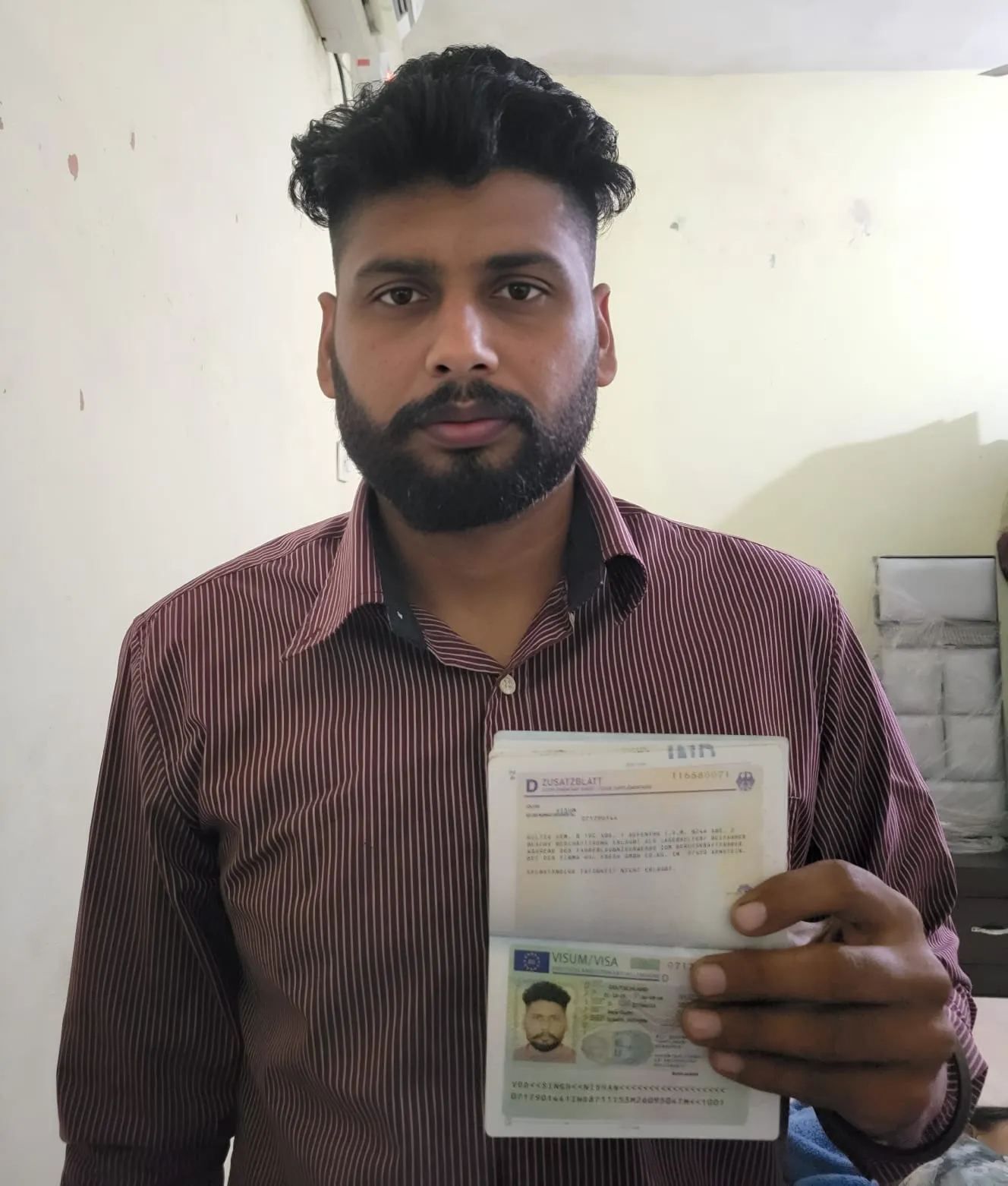
At AtoZ Serwis Plus, we help you become a global citizen with trusted support for jobs abroad, overseas education, and visa processing tailored to your goals.
Read More
Connecting employers, job seekers, students, and agencies across Europe and beyond.
Looking to hire skilled or semi-skilled workers from Asia, Africa, the CIS, or EU countries? AtoZ Serwis Plus supports your recruitment needs for Poland, Germany, Slovakia, Hungary, Lithuania, Estonia, and beyond. We deliver comprehensive legal recruitment services, visa support, and seamless onboarding solutions tailored to your business goals. Partner with us to build a reliable, compliant, and efficient workforce.
EmployerLooking to hire skilled or semi-skilled workers from Asia, Africa, the CIS, or EU countries? AtoZ Serwis Plus supports your recruitment needs for Poland, Germany, Slovakia, Hungary, Lithuania, Estonia, and beyond. We deliver comprehensive legal recruitment services, visa support, and seamless onboarding solutions tailored to your business goals. Partner with us to build a reliable, compliant, and efficient workforce.
Job SeekersAre you a recruiter looking to place workers in Poland, Germany, Slovakia, or other EU destinations? AtoZ Serwis Plus provides you with trusted employer connections, legal recruitment solutions, verified job placements, and full visa assistance. Expand your recruitment business with confidence, supported by clear processes, reliable documentation, and transparent migration services.
RecruiterLooking to work and live in Europe? At AtoZ Serwis Plus, we’re here to guide you every step of the way. Our experts provide support with job search assistance, work visa applications, qualification recognition, and European language learning. To connect with us and get started on your European journey, click one of the contact icons below.
Copyright © 2009-2026 AtoZ Serwis Plus. All Rights Reserved.