Finland's technology, telecommunications, gaming, cleantech, maritime, and public-sector organisations are expanding across Helsinki, Espoo, Tampere, Oulu, Turku, and Jyväskylä, creating strong and sustained demand for skilled IT professionals and software specialists. As a global leader in telecommunications technology — the birthplace of Nokia, Linux, and the SMS protocol — a world-class gaming industry hub, a major cleantech and sustainable-technology innovator, and a society that consistently ranks among the world's best in education, quality of life, and public trust, Finland requires experienced technology professionals capable of designing, building, securing, and maintaining complex digital infrastructure, telecommunications systems, gaming platforms, and innovative software products across a uniquely collaborative and technically ambitious environment.
From software development and cloud engineering to cybersecurity, data science, 5G and telecommunications platform engineering, game development, cleantech software, and digital transformation consulting, organisations across Finland rely on qualified technology professionals who understand modern development frameworks, Finnish and EU data-protection requirements (tietosuojalaki/GDPR), and the egalitarian, low-hierarchy working culture that characterises Finnish business. Whether for Nokia's global network and 5G engineering teams, the Helsinki gaming cluster that includes Supercell, Rovio, and Remedy Entertainment, cleantech scale-ups developing energy-management and sustainability platforms, or Finland's comprehensive public digital-services programme, demand for capable IT talent consistently exceeds what Finland's domestic workforce can supply.
AtoZ Serwis Plus provides specialised IT and software recruitment services in Finland, helping employers hire qualified software developers, cloud engineers, cybersecurity specialists, data professionals, IT infrastructure technicians, telecommunications engineers, game developers, and digital transformation consultants from trusted international labour markets. Our recruitment solutions support technology companies, gaming studios, telecommunications groups, cleantech firms, financial institutions, and public-sector bodies in building reliable and capable technology teams.
Our recruitment strategy aligns with Finland's world-leading telecommunications and 5G technology sector, its globally significant gaming industry, the growing cleantech and sustainability software ecosystem, and the digital transformation ambitions of its public services and industrial companies. We provide access to skilled international technology professionals while ensuring structured and compliant hiring processes.
Key strengths
Our services help Finnish employers reduce hiring timelines, access specialised skills not available domestically, and build stable, long-term technology teams.
AtoZ Serwis Plus recruits qualified professionals for a wide range of IT and software roles in Finland:
These professionals support telecommunications platform engineering, game development, cleantech software, digital transformation programmes, and IT infrastructure management across Finland's public and private sectors.
Our IT and software recruitment services support multiple high-demand sectors in Finland:
Each candidate is carefully matched based on employer requirements, technology stack, project type, and English or Finnish language proficiency appropriate to the employer's working environment.
AtoZ Serwis Plus sources qualified IT and software professionals from trusted international labour markets to meet Finland'sdemand for a technology workforcd.
All candidates are screened based on:
Our candidates meet the technical and professional standards required in Finland's innovative, egalitarian, and internationally oriented technology market.
This ensures faster time-to-productivity, reduced onboarding friction, and high-quality technology output for Finnish employers.
We follow a structured and transparent recruitment process:
This ensures smooth hiring and compliance with Finnish labour regulations, the työsopimuslaki (Employment Contracts Act), applicable työehtosopimukset (collective agreements), and the Migri permit process.
Whether organisations require software developers for game or telecommunications platform engineering, cloud engineers for cleantech infrastructure, cybersecurity specialists for NCSC-FI-aligned programmes, 5G protocol stack engineers, data scientists for energy analytics, or IT infrastructure technicians for enterprise operations, AtoZ Serwis Plus provides skilled professionals ready to contribute from day one across Finland.
We are a trusted recruitment partner for IT and software jobs in Finland, delivering technology workforce solutions aligned with real market demand.
Employers in Finland can register to hire experienced technology professionals.
Employer benefits
https://www.atozserwisplus.com/employer/registration
Recruitment agencies can collaborate on IT and software workforce projects in Finland.
Recruiter benefits
https://www.atozserwisplus.com/recruiter/registration
Qualified IT and software professionals seeking job opportunities in Finland can register and apply.
Worker benefits
https://www.atozserwisplus.pl/work-in-europe
Registration ensures:
Finland offers outstanding employment opportunities for software developers, cloud engineers, telecommunications engineers, game developers, cybersecurity specialists, cleantech software engineers, and IT infrastructure technicians. Nokia's global 5G leadership, the world-class Helsinki gaming cluster, the cleantech software ecosystem anchored by Wärtsilä and Neste, Finland's extraordinary English proficiency, a working culture defined by directness, trust, and genuine work-life balance, and a quality of life — shaped by pristine nature, strong public services, and a profound social equality — that is consistently rated among the world's highest all combine to make Finland one of Europe's most rewarding IT employment destinations. International IT professionals who bring genuine technical depth, a collaborative spirit, and an appreciation of Finland's substance-over-style professional culture will find both professional satisfaction and personal fulfilment in this unique Nordic society.
AtoZSerwisPlus is a European workforce and immigration advisory platform specialising in compliant recruitment guidance, structured work authorisation support, and labour market insights across European countries.
Government of Finland – https://valtioneuvosto.fi
Finnish Immigration Service (Migri) – https://migri.fi
Finnish Business Information System (YTJ) – https://www.ytj.fi
Work in Finland – https://www.workinfinland.fi
This content is independently created and provided for informational purposes only. It does not constitute legal advice, employment guarantees, or immigration approval. All recruitment and work authorisation decisions are subject to Finnish labour laws and approval by competent authorities.
It involves sourcing and placing qualified technology professionals — software developers, cloud engineers, telecommunications engineers, game developers, cybersecurity specialists, data scientists, DevOps engineers, and IT infrastructure technicians — with Finnish employers across telecommunications, gaming, cleantech, financial services, maritime technology, and the public sector. Finland combines world-class technical employers in unique sectors — Nokia in 5G, Supercell and Rovio in gaming, Wärtsilä in maritime and energy technology — with an English-friendly, egalitarian working culture that makes it one of Northern Europe's most accessible and rewarding IT employment markets.
Finland's technology sector has grown significantly beyond what its population of approximately 5.5 million can supply. Nokia's strategic transformation into a global 5G infrastructure provider has dramatically expanded its software engineering teams. The Helsinki gaming cluster — consistently among the most productive per capita in the world — competes intensely for the same developers that Nokia, the fintech sector, and cleantech companies need. Finland's public digital services programme and healthcare IT systems are simultaneously modernising at scale. The domestic STEM graduate pipeline from Aalto University, the University of Helsinki, Tampere University, and Oulu University is high quality but structurally insufficient for combined demand.
Yes. EU and EEA citizens work in Finland without a work permit, registering with the Digital and Population Data Services Agency (DVV — Digi- ja väestötietovirasto) and obtaining a Finnish personal identity code (henkilötunnus) for payroll, tax registration with Verohallinto (Finnish Tax Administration), and access to public services. Registration must be completed promptly after starting work.
Non-EU IT professionals apply for a residence permit for an employed person through Migri (Maahanmuuttovirasto — Finnish Immigration Service). The employer files a partial decision with the TE Office (Työ- ja elinkeinotoimisto — Employment and Economic Development Office), which confirms labour-market availability — for IT and software roles on the shortage-occupation list, this step is typically straightforward. Finland also operates a Talent Boost programme and a specific Fast Track process for highly qualified professionals in shortage occupations including IT, reducing processing times to approximately 2–4 weeks for qualifying cases. Processing typically takes 1–3 months for standard applications.
Talent Boost is Finland's national programme for attracting and retaining international talent, coordinated by the Ministries of Economic Affairs and Employment and Education. It encompasses streamlined permit processing for shortage occupations, Welcome Offices in major cities providing relocation and integration support for international professionals and their families, the Work in Finland service providing practical guidance for job seekers, and active engagement between Finnish employers, universities, and international talent networks. For IT professionals, Talent Boost reflects Finland's explicit policy commitment to international recruitment as a structural economic necessity rather than a temporary measure.
A relevant university degree (Bachelor's or Master's) in computer science, software engineering, or a related discipline is the standard baseline. Aalto University and Tampere University graduates are highly regarded by Finnish employers — but international degrees from recognised institutions are well-accepted given Finland's genuine international orientation. For telecommunications and 5G roles at Nokia, advanced degrees and deep protocol-stack or signal-processing knowledge are often expected. For gaming roles, a strong portfolio of shipped games or significant contributions to game projects typically weighs more heavily than the specific degree. Cloud and cybersecurity certifications (AWS, Azure, GCP, CISSP, CEH) are well-regarded alongside practical experience.
Python is broadly the most in-demand language, used across data science, machine learning, cleantech analytics, and backend development. Java and Kotlin are critical in enterprise applications and Android development across financial services and larger technology companies. C and C++ are essential at Nokia for embedded telecommunications systems, protocol stack development, and signal processing — a distinctive Finnish demand not common in most European markets. JavaScript and TypeScript dominate frontend and full-stack development across the gaming, startup, and product-company ecosystem. For gaming — Finland's unique strength — C++ (Unreal Engine), C# (Unity), and game-specific toolchains are essential. Cloud platforms — AWS (most widely adopted), Azure (enterprise and public sector), and GCP — drive DevOps demand. Rust is growing in systems and embedded contexts.
Software developers earn approximately EUR 50,000 to EUR 80,000 per year gross. Senior engineers, 5G protocol engineers, and data scientists earn EUR 75,000 to EUR 110,000 and above. Gaming companies — particularly Supercell — pay at or above Helsinki market rates and include equity participation. Nokia's compensation is competitive with senior-level roles often reaching EUR 100,000 and above including bonuses. Helsinki pays a premium over Tampere, Oulu, and other regional cities. Finland's progressive income-tax system involves high marginal rates but is offset by comprehensive public services — universal healthcare, free university education, subsidised childcare, and generous parental leave — that represent a substantial real-terms benefit.
Finland's income tax (tulovero) combines state and municipal tax. State income tax is progressive: 0% on income up to approximately EUR 19,900; rising through bands to a top state rate of 31.25% on income above EUR 85,800. Municipal tax (kunnallisveroprosentti) varies by municipality — typically 19–22% — and is applied on all taxable income above the personal deduction. The combined effective rate for a developer earning EUR 65,000 gross is approximately 30–37%. Employee social-insurance contributions add a further approximately 9% for pension (TyEL), health insurance (sairausvakuutusmaksu), and unemployment insurance. Verohallinto (the Finnish Tax Administration) administers the system, and the verokortti (tax card) is updated annually through the MyTax digital portal.
Finland has two official languages — Finnish (Suomi) and Swedish (Svenska) — but English is the dominant working language across the vast majority of Finnish technology employers, reflecting Finland's highly internationally oriented technology sector. Nokia, Supercell, Rovio, and most Finnish startups and scale-ups operate entirely or primarily in English. Finnish language skills are not required for most private-sector technology roles. The exceptions are: Finnish public-sector IT roles, which generally require Finnish; some Finnish-origin SMEs that operate primarily in Finnish; and client-facing roles serving Finnish-speaking customers. For social integration, navigating daily life, and building deeper professional and personal relationships, Finnish is valuable — though the Finnish language's grammatical complexity makes it one of the more challenging European languages to acquire. Most Finnish employers actively support language courses for international employees.
Nokia, headquartered in Espoo, is Finland's most internationally significant technology company and a global leader in 5G network infrastructure, cloud-native telecommunications software, and industrial private wireless networks. After its mobile phone era ended with the sale to Microsoft in 2014, Nokia reinvented itself as a software-centric telecommunications infrastructure provider. Its global R&D operations — with major software engineering centres in Espoo, Tampere, Oulu, and internationally — create substantial demand for protocol stack engineers (3GPP standards, LTE, 5G NR), cloud-native network function developers, embedded C/C++ engineers, network automation engineers, AI and machine-learning researchers for network optimisation, and cybersecurity specialists for telecommunications systems. Nokia's technical requirements are among the most demanding in the Finnish IT market and set a significant salary benchmark.
Finland's gaming cluster is one of the most productive per capita in the world, producing globally significant titles from a country of 5.5 million people. Supercell, headquartered in Helsinki, created Clash of Clans, Clash Royale, and Brawl Stars — mobile games with hundreds of millions of active players globally. Rovio, also Helsinki-based, created Angry Birds. Remedy Entertainment (Alan Wake, Control, Max Payne) and Next Games are further significant Finnish studios. The cluster benefits from a deeply collaborative ecosystem — studios actively share knowledge, and the Finnish culture of humility and substance-over-style creates a working environment where craft quality is paramount. Game developer roles require Unity (C#), Unreal Engine (C++), or proprietary game engine experience alongside programming fundamentals. Game designers, technical artists, and tools engineers are also consistently in demand.
Finland is one of the world's leading cleantech technology nations. Wärtsilä, headquartered in Helsinki, develops digital energy management systems, vessel optimisation software, and grid-balancing platforms — requiring software engineers with domain knowledge of energy systems, IoT, and real-time data processing. Neste, the world's largest producer of sustainable aviation fuel and renewable diesel, has a significant digital and data technology team building supply-chain analytics and production-optimisation platforms. KONE, the elevator and escalator company, has a significant software division building urban people-flow analytics and IoT platforms. ABB Finland contributes industrial automation and energy software. These companies create demand for IT professionals with energy, industrial IoT, and digital-twin platform experience — a profile that commands a premium in the Finnish market.
Finland implements the EU GDPR through the tietosuojalaki (Data Protection Act) and associated sector-specific regulations. The tietosuojavaltuutettu (Data Protection Ombudsman — DPO office) is the national supervisory authority. Finland's data-protection approach is thorough and compliance-oriented — Finnish organisations in healthcare, financial services, and the public sector apply particularly rigorous data-governance standards. For healthcare IT roles, the sosiaali- ja terveydenhuollon asiakastietojen käsittelystä annettu laki (Social and Health Care Client Data Act) and the Kanta Services (national health data repository) framework add specific data-architecture and security requirements. IT professionals working with Finnish health or citizen data must understand both the tietosuojalaki framework and sector-specific requirements.
Finland's working culture is characterised by directness, trust, flat hierarchies, and a deep respect for work-life balance. Silence and quietness are comfortable and valued — meetings are focused and purposeful rather than performative. Standard working time is 37.5–40 hours per week, with flexible arrangements standard across the technology sector. Annual leave is a minimum of 24 working days under the vuosilomalaki (Annual Leave Act), with most technology employers providing 30 days. Finnish parental leave — one of the most generous in the world — provides both parents with substantial paid leave entitlements. Finnish technology employers typically provide a phone benefit (puhelinetu), lunch vouchers or a subsidised canteen (lounasetuna), occupational healthcare (työterveydenhuolto — mandatory for all employers), and a professional development budget. Hybrid working is standard across the sector.
Helsinki and the greater capital region (Helsinki, Espoo, Vantaa, Kauniainen) — known as the Helsinki Metropolitan Area — have the largest concentration of technology companies, gaming studios, fintech, and Nokia's headquarters and major software teams. Espoo specifically hosts Nokia, KONE, and Aalto University's technology campus. Tampere is Finland's second technology hub, with a strong industrial technology cluster, Tampere University's technology faculties, and a growing startup ecosystem — including significant software companies including Relex Solutions. Oulu is Finland's northern technology centre, historically the base for Nokia's R&D and with a strong embedded and wireless technology cluster. Turku has maritime technology (Wärtsilä) and life-sciences digital infrastructure.
Yes. Toistaiseksi voimassa oleva työsopimus (indefinite-duration employment contract) is the standard and legally preferred form. Fixed-term contracts (määräaikainen työsopimus) require objective justification — using fixed-term contracts without justification is legally restricted. Finnish dismissal law under the työsopimuslaki requires either personal grounds or economic and production-related grounds (collective redundancy) for termination. Notice periods range from 14 days to 6 months depending on length of service. Finland's employment protection is moderately strong — more flexible than Germany or France but more protective than the US or UK.
Yes. EU citizens bring family members under EU free-movement rules. Non-EU permit holders apply for family reunification through Migri. Finland's family reunification process includes income and accommodation requirements. Finland's comprehensive family-support infrastructure — subsidised day care (päivähoito), parental leave for both parents, free comprehensive education from age 7 through university, and universal healthcare — makes it an exceptionally family-friendly destination for international professionals. The Welcome Offices in Helsinki, Espoo, Tampere, and Oulu provide practical support for international families navigating the Finnish system.
Yes — and it is one of Finland's most consistently reported economic challenges. the Confederation of Finnish Industries (EK) and Technology Industries of Finland consistently report shortfalls of thousands of technology professionals annually, concentrated in software development, 5G and telecommunications software engineering, data science, cybersecurity, and game development. The Finnish government's Talent Boost programme, the Migri Fast Track processing, and the Work in Finland service all reflect an explicit policy recognition that international IT recruitment is structurally essential to Finland's economic competitiveness and technology leadership.
AtoZ Serwis Plus sources and screens international IT and software professionals for verified Finnish employers across telecommunications, gaming, cleantech, financial services, maritime technology, and the public sector. We conduct technical screening aligned with employer requirements — including Nokia 5G protocol-stack, gaming engine (Unity/Unreal), and cleantech IoT specialisms where relevant — verify qualifications and project experience, confirm English and Finnish language proficiency as appropriate, and manage the Migri residence permit process for non-EU candidates. Register at atozserwisplus.com to begin.
Global clients share how AtoZ Serwis Plus helped them secure work permits, visas, and career support across Europe. Real stories. Real results.
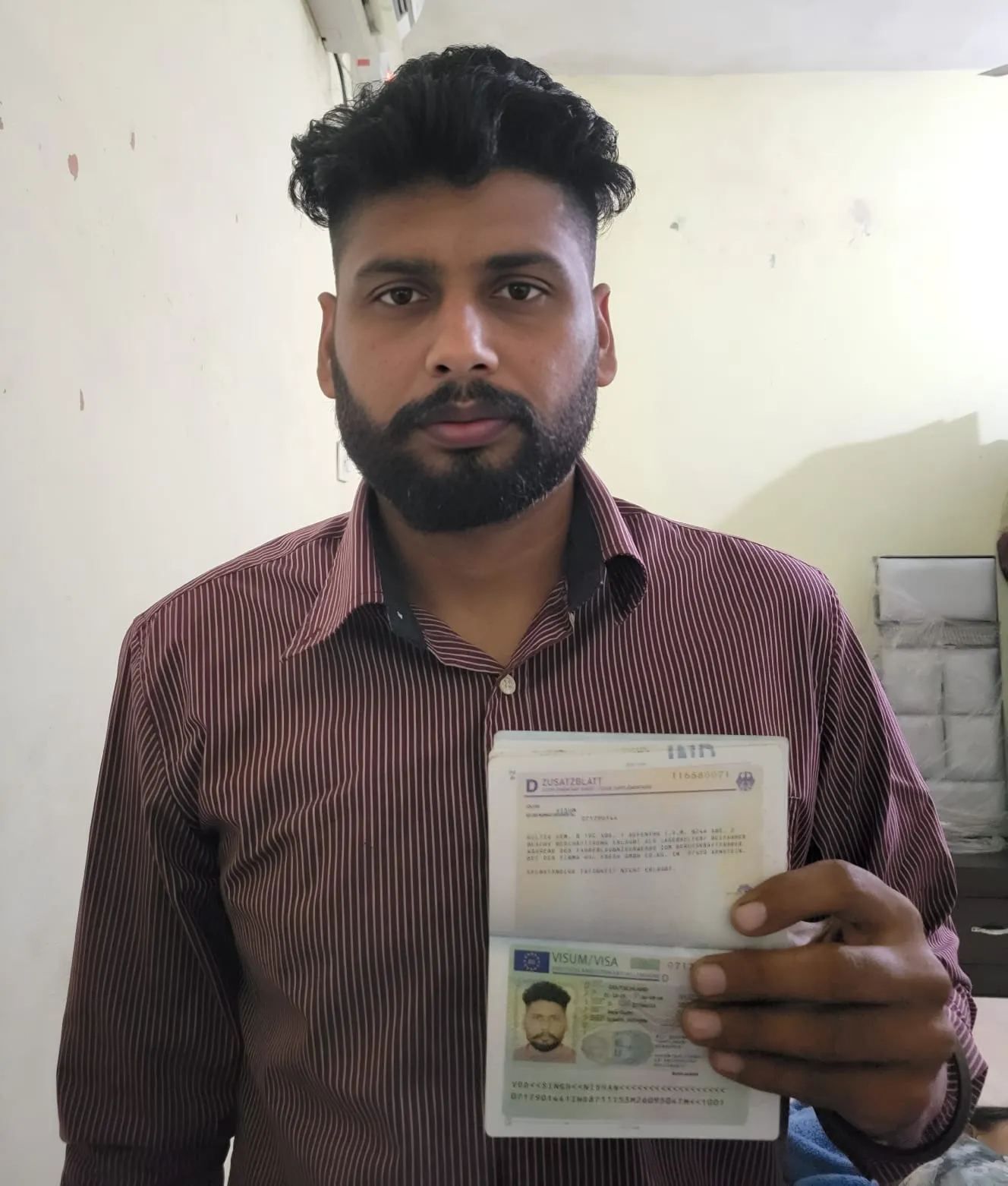
At AtoZ Serwis Plus, we help you become a global citizen with trusted support for jobs abroad, overseas education, and visa processing tailored to your goals.
Read More
Connecting employers, job seekers, students, and agencies across Europe and beyond.
Looking to hire skilled or semi-skilled workers from Asia, Africa, the CIS, or EU countries? AtoZ Serwis Plus supports your recruitment needs for Poland, Germany, Slovakia, Hungary, Lithuania, Estonia, and beyond. We deliver comprehensive legal recruitment services, visa support, and seamless onboarding solutions tailored to your business goals. Partner with us to build a reliable, compliant, and efficient workforce.
EmployerLooking to hire skilled or semi-skilled workers from Asia, Africa, the CIS, or EU countries? AtoZ Serwis Plus supports your recruitment needs for Poland, Germany, Slovakia, Hungary, Lithuania, Estonia, and beyond. We deliver comprehensive legal recruitment services, visa support, and seamless onboarding solutions tailored to your business goals. Partner with us to build a reliable, compliant, and efficient workforce.
Job SeekersAre you a recruiter looking to place workers in Poland, Germany, Slovakia, or other EU destinations? AtoZ Serwis Plus provides you with trusted employer connections, legal recruitment solutions, verified job placements, and full visa assistance. Expand your recruitment business with confidence, supported by clear processes, reliable documentation, and transparent migration services.
RecruiterLooking to work and live in Europe? At AtoZ Serwis Plus, we’re here to guide you every step of the way. Our experts provide support with job search assistance, work visa applications, qualification recognition, and European language learning. To connect with us and get started on your European journey, click one of the contact icons below.
Copyright © 2009-2026 AtoZ Serwis Plus. All Rights Reserved.