Iceland's technology, energy, financial services, fisheries, tourism, and public-sector organisations are expanding across Reykjavík, Akureyri, Keflavík, and the broader country, creating consistent demand for skilled IT professionals and software specialists. As one of the world's most connected and digitally engaged societies — with near-universal internet access, one of Europe's highest rates of internet use per capita, and a government that has consistently invested in digital public services — Iceland requires experienced technology professionals capable of designing, building, securing, and maintaining complex digital infrastructure, energy management systems, financial platforms, and innovative software products in a uniquely energised and internationally oriented environment.
From software development and cloud engineering to cybersecurity, data engineering, energy-sector software, financial systems, and IT infrastructure management, organisations across Iceland rely on qualified technology professionals who understand modern development frameworks, Icelandic and EEA data-protection requirements (persónuverndarlög/GDPR), and the direct, egalitarian working culture that characterises Icelandic professional life. Whether for the innovative Icelandic fintech sector, the geothermal and renewable energy companies that make Iceland carbon-neutral, the tourism technology platforms serving one of the world's most visited countries per capita, or the Icelandic government's comprehensive digital services programme, demand for capable IT talent consistently exceeds the supply that Iceland's small domestic workforce of approximately 200,000 can provide.
AtoZ Serwis Plus provides specialised IT and software recruitment services in Iceland, helping employers hire qualified software developers, cloud engineers, cybersecurity specialists, data professionals, IT infrastructure technicians, and energy-sector software engineers from trusted international labour markets. Our recruitment solutions support technology companies, financial institutions, energy operators, tourism platforms, and public-sector bodies in building reliable and capable technology teams.
Our recruitment strategy aligns with Iceland's unique energy and geothermal technology software sector, its growing fintech and digital services ecosystem, the cybersecurity demands of a highly connected small-nation digital economy, and the IT infrastructure needs of its tourism, fisheries, and public-sector organisations. We provide access to skilled international technology professionals while ensuring structured and compliant hiring processes under Iceland's EEA framework.
Key strengths
Our services help Icelandic employers access the technology talent that Iceland's small domestic workforce cannot fully supply, and build stable, long-term technology teams.
AtoZ Serwis Plus recruits qualified professionals for a wide range of IT and software roles in Iceland:
These professionals support energy platform engineering, digital public services, financial systems development, and IT infrastructure management across Iceland's public and private sectors.
Our IT and software recruitment services support the key sectors of Iceland's technology economy:
Each candidate is carefully matched based on employer requirements, technology stack, project type, and English or Icelandic language proficiency appropriate to the employer's working environment.
AtoZ Serwis Plus sources qualified IT and software professionals from trusted international labour markets to meet Iceland's technology workforce demand.
All candidates are screened based on:
Our candidates meet the technical and professional standards required in Iceland's small, high-trust, and internationally oriented technology market.
This ensures faster time-to-productivity, reduced onboarding friction, and high-quality technology output for Icelandic employers.
We follow a structured and transparent recruitment process:
This ensures smooth hiring and compliance with Icelandic labour regulations, the lög um starfskjör launafólks (Act on the Terms of Employment and Obligatory Rights), applicable kjarasamningar (collective agreements), and the Útlendingastofnun permit process.
Whether organisations require software developers for energy platform engineering, cloud engineers for green data centre infrastructure, cybersecurity specialists for financial systems, data engineers for geothermal analytics, or IT infrastructure technicians for enterprise operations, AtoZ Serwis Plus provides skilled professionals ready to contribute from day one across Iceland.
We are a trusted recruitment partner for IT and software jobs in Iceland, delivering technology workforce solutions aligned with the specific demands of this unique Nordic island economy.
Employers in Iceland can register to hire experienced technology professionals.
Employer benefits
https://www.atozserwisplus.com/employer/registration
Recruitment agencies can collaborate on IT and software workforce projects in Iceland.
Recruiter benefits
https://www.atozserwisplus.com/recruiter/registration
Qualified IT and software professionals seeking job opportunities in Iceland can register and apply.
Worker benefits
https://www.atozserwisplus.pl/work-in-europe
Registration ensures:
Iceland offers distinctive and rewarding employment opportunities for software developers, cloud engineers, cybersecurity specialists, data professionals, and energy-sector IT engineers. The combination of some of Europe's highest IT salaries, a flat 36.94% income-tax rate that is transparent and predictable, world-class renewable energy companies requiring sophisticated digital infrastructure, a green data centre industry exploiting Iceland's unique geothermal advantage, an English-dominant professional environment, and an extraordinary natural landscape make Iceland one of the most compelling and unusual IT employment destinations in Europe. International IT professionals who combine genuine technical depth with an appetite for a small, high-trust, and rapidly adapting working environment will find Iceland both professionally fulfilling and personally exceptional.
AtoZSerwisPlus is a European workforce and immigration advisory platform specialising in compliant recruitment guidance, structured work authorisation support, and labour market insights across European countries.
Government of Iceland – https://www.government.is
Directorate of Immigration (Útlendingastofnun) – https://www.utlendingastofnun.is
Directorate of Labour (Vinnumálastofnun) – https://www.vmst.is
Digital Iceland (Stafrænt Ísland) – https://www.island.is
This content is independently created and provided for informational purposes only. It does not constitute legal advice, employment guarantees, or immigration approval. All recruitment and work authorisation decisions are subject to Icelandic labour laws and approval by competent authorities.
It involves sourcing and placing qualified technology professionals — software developers, cloud engineers, cybersecurity specialists, data engineers, energy-sector software specialists, DevOps engineers, and IT infrastructure technicians — with Icelandic employers across energy technology, financial services, tourism platforms, fisheries technology, green data centres, and the public sector. Iceland's market is small in volume but distinctive in character, offering some of Europe's highest IT salaries alongside a working environment shaped by geothermal energy, midnight sun, and one of the world's most trusting and collaborative professional cultures.
Iceland's working-age population is approximately 200,000 — far too small to supply the technology workforce required by its energy, financial, tourism, and public-sector organisations. The country consistently ranks among the world's most technologically engaged societies, with near-universal internet penetration and government digital services that are among the most advanced in Europe. The growth of Iceland's green data centre industry — exploiting geothermal cooling and 100% renewable electricity — has added significant new technology demand. The fintech sector, the energy companies, and the Digital Iceland government programme all compete for the same small domestic talent pool, making international recruitment structurally essential.
No. Iceland is not an EU member state, but it is a member of the European Economic Area (EEA) and the Schengen Area. As an EEA member, Iceland participates in the EU single market and applies EU legislation — including the GDPR — in most relevant areas. EEA membership means that EU/EEA citizens have the right to live and work in Iceland on terms broadly equivalent to Icelandic nationals, without a work permit, though registration with the authorities is required.
Yes. EU and EEA citizens work in Iceland without a work permit, registering with Þjóðskrá (Registers Iceland) and obtaining a kennitala (national identification number) within a short period of starting work. The kennitala is essential for payroll, tax registration with Skatturinn (the Icelandic Tax Directorate), access to the healthcare system, and most everyday administrative purposes. Registration is straightforward and largely digital.
Non-EEA nationals require a work and residence permit from Útlendingastofnun (the Directorate of Immigration). The employer applies on behalf of the worker, and the application is assessed against Iceland's labour-market conditions — for IT and technology roles, which are consistently on the shortage-occupation list maintained by Vinnumálastofnun (the Directorate of Labour), applications are generally supported. Processing takes approximately 4–8 weeks. Iceland is not subject to the same annual quota system as Liechtenstein or Switzerland; applications are assessed individually rather than against fixed national caps.
A relevant university degree in computer science, software engineering, or a related discipline is the standard baseline for most professional IT roles. Icelandic technology companies — which tend to be small, agile, and team-oriented — evaluate candidates heavily on demonstrated practical ability: portfolio quality, GitHub contributions, and performance in technical interviews. For energy-sector software roles at Landsvirkjun or HS Orka, domain knowledge of energy management systems, SCADA platforms, or time-series data processing is valued alongside core programming skills. Cloud certifications (AWS, Azure, GCP) and cybersecurity credentials (CISSP, CEH) are well-regarded.
Python is the most broadly in-demand language, used across data engineering, machine learning, energy analytics, and backend development. JavaScript and TypeScript dominate frontend and full-stack development across fintech, tourism platforms, and product companies. Java and Kotlin are used in financial services and enterprise applications. For energy and geothermal data platforms — Iceland's distinctive specialisation — Python with time-series libraries, InfluxDB, and IoT data integration frameworks are relevant. Cloud platforms — AWS and Azure (most widely used), with GCP growing — drive DevOps and infrastructure demand. React and Vue.js dominate frontend frameworks.
Iceland offers some of Northern Europe's highest IT salaries. Software developers earn approximately ISK 700,000 to ISK 1,100,000 gross per month (approximately EUR 4,700–7,400). Senior engineers, cloud architects, and data scientists earn ISK 1,000,000 to ISK 1,500,000 and above. Iceland's income-tax system is relatively straightforward, with a combined state and municipal rate of approximately 36.94% for most earners. Iceland's cost of living is high — housing in Reykjavík in particular — but the combination of high salaries, a modest effective tax rate, and comprehensive public services creates a genuinely competitive net-pay position.
Iceland applies a two-tier income-tax system. State income tax (ríkisskattur) is 22.5% on income up to ISK 11,475,968 per year and 31.8% above that. Municipal income tax (sveitarfélagsskattur) averages approximately 14.44% and is applied on top — making the combined rate approximately 36.94% for most earners. A personal tax credit (persónuafsláttur) of approximately ISK 63,000 per month reduces the effective burden. Skatturinn administers the system, and returns are filed digitally with pre-populated data from employers. Social insurance contributions (lífeyrissjóður — pension) are additional, paid partly by the employer.
English is the dominant working language across the vast majority of Icelandic technology companies, financial institutions, and international businesses operating in Iceland. Iceland has one of the highest English proficiency levels among non-native English-speaking countries, and most professional IT environments operate primarily or entirely in English. Icelandic is useful for social integration and daily life — dealing with public authorities, navigating housing, and building social connections — but is not required for most private-sector technology roles. For public-sector IT roles and positions in organisations serving primarily Icelandic-speaking customers, Icelandic proficiency becomes important.
Iceland's combination of 100% renewable electricity (geothermal and hydropower) and a cold climate that provides natural cooling makes it one of the world's most energy-efficient data centre locations. Companies including Verne Global, atNorth, Borealis Data Center, and several smaller operators have established data centres in Iceland serving European cloud customers. These facilities create demand for data centre operations engineers, network engineers, Linux systems administrators, storage specialists, and cloud infrastructure architects. The sector is growing as European companies seek carbon-neutral data hosting options, and Iceland's geothermal advantage makes it structurally competitive for this purpose.
Iceland's three major banks — Arion Bank, Íslandsbanki, and Landsbankinn — have invested heavily in digital banking transformation following the 2008 financial crisis, building modern core banking platforms and digital customer channels. A growing cluster of fintech startups in Reykjavík — including payment platforms, investment management tools, and insurance technology companies — adds further technology demand. Financial sector IT roles include core banking system developers, open-banking API engineers, cybersecurity specialists for financial data, and data engineers for risk-management analytics. The financial sector applies European financial-regulation frameworks under Iceland's EEA membership, making GDPR and EEA financial regulation familiarity relevant.
Útlendingastofnun (Directorate of Immigration) handles work and residence permits for non-EEA nationals. Þjóðskrá (Registers Iceland) manages kennitala registration. Skatturinn (the Icelandic Tax Directorate) administers income tax. Vinnumálastofnun (Directorate of Labour) oversees employment services and maintains the shortage-occupation list. Tryggingastofnun (Social Insurance Administration) manages social benefits. Persónuvernd (Data Protection Authority) is the national GDPR supervisory authority. The main trade unions for IT professionals are part of ASÍ (Alþýðusamband Íslands — Confederation of Icelandic Labour).
Iceland implements the EU GDPR through the persónuverndarlög (Personal Data Protection Act) as an EEA member state. Persónuvernd (the Data Protection Authority) is the Icelandic supervisory authority. Iceland's data-protection approach is broadly aligned with the EU framework, and IT professionals working with personal data must understand GDPR principles — data minimisation, purpose limitation, data-subject rights, and cross-border transfer rules. For financial services IT, additional requirements under Iceland's EEA-incorporated financial regulations apply. Persónuvernd has been an active regulator, issuing guidance and decisions relevant to digital services, health data, and employer data processing.
Iceland's working culture is flat, direct, and based on high mutual trust. Individual autonomy and work-life balance are genuinely valued — Iceland was a pioneer in the four-day working week trial (2015–2019), which showed no loss of productivity, and many employers have adopted flexible or reduced-hour arrangements as standard. Standard contractual working time is 40 hours per week, but flexible arrangements are common across the technology sector. Annual leave is a minimum of 24 working days under the lög um orlof (Annual Leave Act). Kjarasamningar (collective agreements) negotiated by the trade unions set minimum wages and conditions across sectors — IT professionals are typically covered by agreements that provide above-statutory minimums.
EU/EEA citizens change employer freely at any time — their right to work in Iceland is based on their EEA status, not tied to a specific employer. Non-EEA permit holders must notify Útlendingastofnun when changing employer and may need to apply for an updated permit linked to the new employer before starting that role. In practice, for IT professionals in shortage occupations, the process of transferring a permit to a new employer is generally straightforward and supported by Vinnumálastofnun's acknowledgement of the structural IT skills gap.
Legal employment in Iceland enrols workers in a comprehensive social-insurance system. The lífeyrissjóður (pension fund) collects mandatory pension contributions — employers contribute 11.5% and employees 4% of gross salary — providing retirement income. Sjúkratryggingar Íslands (Icelandic Health Insurance) provides access to the public healthcare system, including GP services, specialist referrals, and hospital care. Atvinnuleysistryggingar (unemployment insurance) provides benefit of approximately 70% of previous salary for up to 30 months in cases of job loss. Sjúkradagpeningar (sickness benefit) is paid through the employer for the first period of illness. Maternity and paternity leave — nine months, shared between both parents — is among the most generous parental-leave systems in the world.
Yes, though the extent varies by role and sector. Most Icelandic IT employers verify qualifications, employment history, and professional references as standard. Financial sector employers — banks and insurance companies — conduct more thorough background checks including criminal record verification (sakavottorð) given the regulatory requirements of the financial sector. Data centre operators may require additional security checks given the sensitivity of the hosted infrastructure. Public-sector IT roles may require a security clearance relevant to the systems involved. Iceland's small society means that professional reputation is particularly important — references are taken seriously and networks are close-knit.
Yes. EU/EEA citizens bring family members under EEA free-movement rights. Non-EEA permit holders apply for family reunification through Útlendingastofnun, demonstrating adequate housing and financial means. Iceland's extraordinary natural environment, public safety, high quality of life, and free public education system make it very attractive for families. The international community in Reykjavík has grown substantially, and English-medium schooling options are available. The cost of living — particularly housing in the greater Reykjavík area — is high and requires planning, but Iceland's salaries and social infrastructure generally support comfortable family life.
Yes — and it is structurally embedded in Iceland's economic model. Vinnumálastofnun consistently lists IT and technology roles among the most difficult vacancies to fill. The green data centre sector, energy company digital transformation, fintech expansion, and the Digital Iceland programme all sustain demand beyond what a workforce of 200,000 can supply. Iceland's openness to international workers — both through EEA free movement and through Útlendingastofnun's individual permit assessment — reflects an explicit policy approach of welcoming skilled international talent to address these gaps.
AtoZ Serwis Plus sources and screens international IT and software professionals for verified Icelandic employers across energy technology, financial services, green data centres, tourism platforms, and the public sector. We conduct technical screening aligned with employer requirements, verify qualifications and project experience, confirm English and Icelandic language skills as appropriate, and manage the Útlendingastofnun residence permit process for non-EEA candidates. Register at atozserwisplus.com to begin.
Global clients share how AtoZ Serwis Plus helped them secure work permits, visas, and career support across Europe. Real stories. Real results.
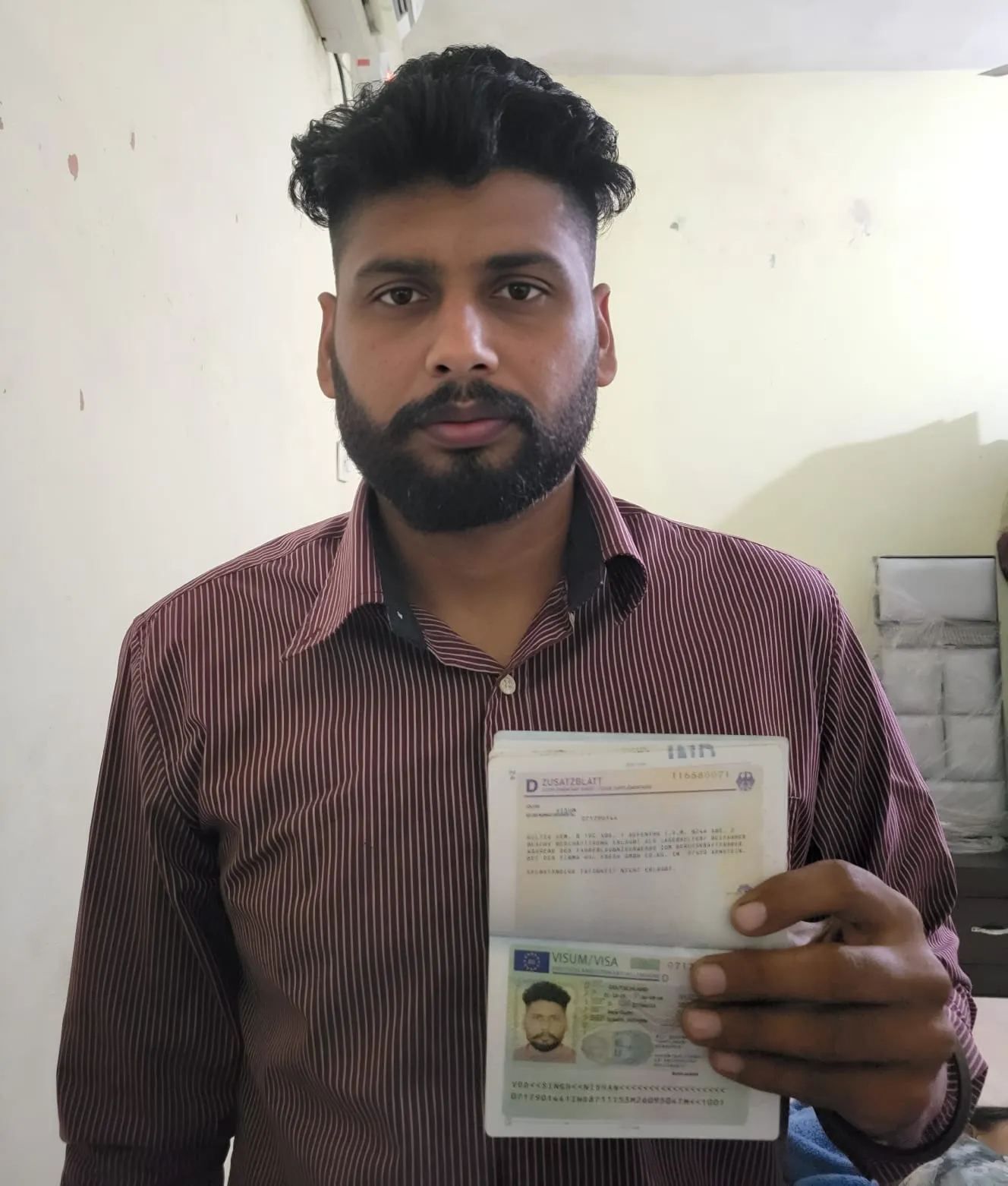
At AtoZ Serwis Plus, we help you become a global citizen with trusted support for jobs abroad, overseas education, and visa processing tailored to your goals.
Read More
Connecting employers, job seekers, students, and agencies across Europe and beyond.
Looking to hire skilled or semi-skilled workers from Asia, Africa, the CIS, or EU countries? AtoZ Serwis Plus supports your recruitment needs for Poland, Germany, Slovakia, Hungary, Lithuania, Estonia, and beyond. We deliver comprehensive legal recruitment services, visa support, and seamless onboarding solutions tailored to your business goals. Partner with us to build a reliable, compliant, and efficient workforce.
EmployerLooking to hire skilled or semi-skilled workers from Asia, Africa, the CIS, or EU countries? AtoZ Serwis Plus supports your recruitment needs for Poland, Germany, Slovakia, Hungary, Lithuania, Estonia, and beyond. We deliver comprehensive legal recruitment services, visa support, and seamless onboarding solutions tailored to your business goals. Partner with us to build a reliable, compliant, and efficient workforce.
Job SeekersAre you a recruiter looking to place workers in Poland, Germany, Slovakia, or other EU destinations? AtoZ Serwis Plus provides you with trusted employer connections, legal recruitment solutions, verified job placements, and full visa assistance. Expand your recruitment business with confidence, supported by clear processes, reliable documentation, and transparent migration services.
RecruiterLooking to work and live in Europe? At AtoZ Serwis Plus, we’re here to guide you every step of the way. Our experts provide support with job search assistance, work visa applications, qualification recognition, and European language learning. To connect with us and get started on your European journey, click one of the contact icons below.
Copyright © 2009-2026 AtoZ Serwis Plus. All Rights Reserved.