Sweden's technology, telecommunications, automotive, financial services, life sciences, and public-sector organisations are expanding across Stockholm, Gothenburg, Malmö, Uppsala, Linköping, and the broader country, creating strong and sustained demand for skilled IT professionals and software specialists. As one of Europe's most innovative and digitally mature economies — the birthplace of Spotify, Klarna, King, iZettle, and Mojang, and a country that has produced more billion-dollar technology companies per capita than any other nation outside the United States — Sweden requires experienced technology professionals capable of designing, building, securing, and maintaining complex digital infrastructure, enterprise software, embedded systems, and transformative technology products across a uniquely entrepreneurial and internationally competitive environment.
From software development and cloud engineering to cybersecurity, data science, embedded systems for automotive and telecom, fintech platform engineering, DevOps, and digital transformation consulting, organisations across Sweden rely on qualified technology professionals who understand modern development frameworks, Swedish and EU data-protection requirements (integritetsskyddslag/GDPR), and the flat, consensus-oriented working culture that characterises Swedish professional life. Whether for Stockholm's world-class startup and scale-up ecosystem, Ericsson's global 5G and telecom platform engineering teams, Volvo's and Northvolt's electrification and software-defined vehicle programmes, the Swedish public sector's comprehensive digital services programme, or the growing Malmö and Gothenburg technology clusters, demand for capable IT talent consistently outpaces domestic supply.
AtoZ Serwis Plus provides specialised IT and software recruitment services in Sweden, helping employers hire qualified software developers, cloud engineers, cybersecurity specialists, data professionals, IT infrastructure technicians, embedded systems engineers, and digital transformation consultants from trusted international labour markets. Our recruitment solutions support technology startups, telecommunications companies, automotive manufacturers, financial institutions, life sciences organisations, consulting firms, and public-sector bodies in building reliable and capable technology teams.
Our recruitment strategy aligns with Sweden's world-leading startup and scale-up ecosystem, its globally significant telecommunications and 5G technology sector, the software-defined vehicle transformation of its automotive industry, the growing fintech and cleantech ecosystems, and the digital transformation ambitions of its public services and financial institutions. We provide access to skilled international technology professionals while ensuring structured and compliant hiring processes.
Key strengths
Our services help Swedish employers reduce hiring timelines, access specialised skills not available domestically, and build stable, long-term technology teams.
AtoZ Serwis Plus recruits qualified professionals for a wide range of IT and software roles in Sweden:
These professionals support startup product engineering, telecommunications platform development, automotive software, digital transformation programmes, and technology infrastructure management across Sweden's public and private sectors.
Our IT and software recruitment services support multiple high-demand sectors in Sweden:
Each candidate is carefully matched based on employer requirements, technology stack, project type, and English or Swedish language proficiency appropriate to the employer's working environment.
AtoZ Serwis Plus sources qualified IT and software professionals from trusted international labour markets to meet Sweden's technology workforce demand.
All candidates are screened based on:
Our candidates meet the technical and professional standards required in Sweden's innovative, egalitarian, and internationally ambitious technology market.
This ensures faster time-to-productivity, reduced onboarding friction, and high-quality technology output for Swedish employers.
We follow a structured and transparent recruitment process:
This ensures smooth hiring and compliance with Swedish labour regulations, the Anställningsskyddslagen (LAS — Employment Protection Act), applicable kollektivavtal (collective agreements), and the Migrationsverket permit process.
Whether organisations require software developers for startup product engineering, embedded engineers for automotive software-defined vehicle platforms, 5G protocol stack engineers for Ericsson, cloud engineers for Northvolt battery management systems, cybersecurity specialists for NCSC-SE-aligned programmes, or IT infrastructure technicians for enterprise operations, AtoZ Serwis Plus provides skilled professionals ready to contribute from day one across Sweden.
We are a trusted recruitment partner for IT and software jobs in Sweden, delivering technology workforce solutions aligned with real market demand.
Employers in Sweden can register to hire experienced technology professionals.
Employer benefits
https://www.atozserwisplus.com/employer/registration
Recruitment agencies can collaborate on IT and software workforce projects in Sweden.
Recruiter benefits
https://www.atozserwisplus.com/recruiter/registration
Qualified IT and software professionals seeking job opportunities in Sweden can register and apply.
Worker benefits
https://www.atozserwisplus.pl/work-in-europe
Registration ensures:
Sweden offers outstanding employment opportunities for software developers, cloud engineers, embedded systems engineers, telecommunications specialists, cybersecurity professionals, data scientists, and fintech engineers. The country that gave the world Spotify, Klarna, Minecraft, and Ericsson continues to generate world-class technology companies and technical talent at a rate that its population of 10.5 million cannot fully sustain alone. Sweden's arbetstillstånd process — considered one of the most open work-permit systems in the developed world — combined with strong English proficiency, a flat and trust-based working culture, five weeks of statutory annual leave, generous parental leave, heavily subsidised childcare, and a quality of life consistently ranked among Europe's highest makes Sweden one of the most compelling and accessible IT employment destinations available to internationally mobile technology professionals.
AtoZSerwisPlus is a European workforce and immigration advisory platform specialising in compliant recruitment guidance, structured work authorisation support, and labour market insights across European countries.
Government of Sweden – https://www.government.se
Swedish Migration Agency (Migrationsverket) – https://www.migrationsverket.se
Swedish Public Employment Service (Arbetsförmedlingen) – https://www.arbetsformedlingen.se
Business Sweden – https://www.business-sweden.com
This content is independently created and provided for informational purposes only. It does not constitute legal advice, employment guarantees, or immigration approval. All recruitment and work authorisation decisions are subject to Swedish labour laws and approval by competent authorities.
It involves sourcing and placing qualified technology professionals — software developers, cloud engineers, cybersecurity specialists, embedded systems engineers, telecommunications engineers, data scientists, DevOps engineers, and IT infrastructure technicians — with Swedish employers across technology startups, telecommunications, automotive, financial services, gaming, life sciences, and the public sector. Sweden has produced more billion-dollar technology companies per capita than any country outside the US, and its IT employment market combines world-class employers with one of Europe's most internationally open and English-friendly working environments.
Sweden's technology sector has grown dramatically beyond what its 10.5 million population can supply. Stockholm consistently ranks among Europe's top three startup ecosystems by funding volume. Ericsson's global 5G engineering programme, Volvo's and Scania's automotive software transformation, Northvolt's battery management systems, and the gaming cluster's continuous expansion all compete for the same developers that fintech scale-ups, public-sector digitalisation, and the life-sciences sector need. Teknikföretagen (the Association of Swedish Engineering Industries) reports a structural deficit of tens of thousands of engineers and technology professionals annually. Sweden's arbetstillstånd (work permit) system — widely considered the most open in the developed world — is a deliberate policy response to this structural gap.
Yes. EU and EEA citizens work in Sweden without a work permit, registering with Skatteverket (the Swedish Tax Agency) to obtain a personnummer (personal identity number) for payroll, tax registration, and access to public services including healthcare. Registration should be completed as soon as reasonably possible after starting work — the personnummer is essential for practically all aspects of life and employment in Sweden.
The arbetstillstånd (work permit) issued by Migrationsverket (the Swedish Migration Agency) is Sweden's primary route for non-EU IT professionals. It is widely regarded as one of the most accessible and employer-friendly skilled-worker visa systems in the developed world. The employer — not a government authority — determines whether a role qualifies, sets the salary, and advertises the position. The only formal requirement is that the employment terms (salary and conditions) must meet the applicable kollektivavtal (collective agreement) or industry standard. There is no annual quota, no points system, and no labour-market needs test in most cases. Processing takes approximately 2–4 months for initial applications. The permit is tied to the specific employer and occupation initially, but after four years of work permits the holder becomes eligible for permanent residence (permanent uppehållstillstånd).
A relevant university degree (kandidatexamen or masterexamen) in computer science, software engineering, or a related discipline is the standard baseline for most professional roles. Swedish technology companies — particularly startups and scale-ups — evaluate candidates primarily on demonstrated technical ability: portfolio quality, open-source contributions, GitHub activity, and performance in practical coding assessments and system design interviews. For Ericsson and telecommunications roles, advanced degrees and deep knowledge of 3GPP standards, LTE/5G NR protocol stacks, or network function virtualisation (NFV) are frequently expected. Cloud certifications (AWS, Azure, GCP) and cybersecurity credentials (CISSP, CEH) are well-regarded.
Python is the most broadly in-demand language across data science, machine learning, backend development, and automation. Java and Kotlin are critical in financial services, enterprise applications, and Android-related work — Spotify's backend infrastructure uses Java and Python extensively. JavaScript and TypeScript dominate frontend and full-stack development across the startup and product ecosystem. Scala is used in data engineering at Spotify and financial services companies. C++ and C are essential in embedded systems and real-time applications for automotive (Volvo, Scania), telecommunications (Ericsson), and gaming engines (DICE, Mojang). Go is growing in cloud-native and microservices contexts. Cloud platforms — AWS (most widely adopted), GCP (Spotify's primary cloud), and Azure (enterprise) — drive DevOps demand.
Sweden offers competitive IT salaries within the Nordic context. Software developers earn approximately SEK 45,000 to SEK 70,000 gross per month (approximately EUR 4,000–6,200). Senior engineers, cloud architects, and data scientists earn SEK 65,000 to SEK 95,000 and above. Stockholm pays the highest rates — typically 15–25% above Gothenburg and Malmö. Sweden's progressive income-tax system involves high marginal rates, but the combination of five weeks' annual leave, heavily subsidised childcare, free university education, universal healthcare, and one of Europe's best parental-leave systems represents a substantial real-terms benefit. Spotify, Klarna, and other well-funded startups increasingly supplement base salary with equity (teckningsoptioner or synthetic options).
Swedish income tax (inkomstskatt) combines state tax and municipal tax. Municipal tax (kommunalskatt) averages approximately 32% and applies to all taxable income above the grundavdrag (basic deduction). State tax (statlig inkomstskatt) of 20% applies additionally on income above approximately SEK 598,500 per year, creating a combined marginal rate of approximately 52% for higher earners. The effective combined rate for a developer earning SEK 600,000 gross per year is approximately 30–35%. Skatteverket administers the system. Sweden does not offer a flat-rate tax incentive for new residents comparable to the Netherlands' 30% ruling, though the expertskatten (expert tax) provides a 25% reduction in taxable income for qualifying highly skilled non-Swedish researchers and specialists for the first three years of employment in Sweden.
The expertskatten (expert tax relief), formally known as the Forskarskattenämnden relief, provides a 25% reduction in taxable income — meaning only 75% of salary is subject to Swedish income tax — for qualifying highly skilled foreign workers for the first three years of employment. To qualify, the worker must: be a non-Swedish resident recruited to Sweden from abroad; have a monthly salary exceeding a threshold of approximately SEK 113,400 (2024) — which most senior IT professionals meet; and hold a key specialist role or have qualifications in a field where Swedish expertise is limited. The relief must be applied for within three months of starting work through Forskarskattenämnden (the Expert Tax Board). For senior engineers, cloud architects, and data scientists meeting the salary threshold, the expertskatten provides a meaningful net-pay benefit in the first three years.
Sweden has the highest English proficiency of any non-native English-speaking country in Europe, and English is the dominant working language across virtually all Swedish technology companies, startups, and internationally oriented businesses. Spotify, Klarna, Ericsson, and the vast majority of Stockholm's technology employers operate entirely or primarily in English. Swedish language skills are not required for most private-sector technology roles. However, Swedish proficiency becomes important for: public-sector IT roles; client-facing positions serving Swedish-speaking customers; smaller Swedish-owned companies; and for long-term career progression into management and leadership. Most Swedish employers actively support Swedish language courses (Svenska för invandrare — SFI) for international employees, and acquiring working Swedish significantly improves daily life and long-term social integration.
Stockholm is one of Europe's top three startup ecosystems by funding volume and has produced an extraordinary concentration of globally significant technology companies for a city of approximately 975,000 people. Spotify (music streaming), Klarna (buy-now-pay-later and banking), Mojang (Minecraft, acquired by Microsoft), King (Candy Crush, acquired by Activision), iZettle (payments, acquired by PayPal), Truecaller (caller identification), and Bambora (payments, acquired by Ingenico) are among the most prominent. The ecosystem is supported by EQT and Kinnevik as major technology investors, STING (Stockholm Innovation and Growth) as the primary accelerator, and the KTH (Kungliga Tekniska Högskolan) and Chalmers university ecosystems. The gaming cluster — anchored by Mojang, DICE (Battlefield), Massive Entertainment (Ubisoft), Avalanche Studios, and Paradox Interactive — is particularly distinctive.
Ericsson, headquartered in Stockholm, is the world's second-largest telecommunications equipment manufacturer and one of the two dominant global suppliers of 5G network infrastructure (alongside Nokia). Its R&D centres in Stockholm, Gothenburg, Lund, and Linköping employ thousands of software engineers working on 5G NR protocol stacks, cloud-native network functions, network management platforms, and AI-driven network optimisation. Ericsson's technical requirements are among the most demanding in the Swedish IT market — C++, Java, Python, knowledge of 3GPP standards, and experience with virtualized network environments are key skills. Ericsson's compensation, while below top Stockholm startup levels, is competitive and provides exceptional technical depth for career development in telecommunications software engineering.
Migrationsverket (Swedish Migration Agency) handles arbetstillstånd for non-EU nationals. Skatteverket (Swedish Tax Agency) manages personnummer registration and income tax. Arbetsförmedlingen (Swedish Public Employment Service) oversees employment services and the labour market. IMY (Integritetsskyddsmyndigheten — the Swedish Authority for Privacy Protection) is the GDPR supervisory authority. NCSC-SE (National Cyber Security Centre) coordinates cybersecurity for critical infrastructure. The main trade unions for IT professionals are Unionen and the Swedish Association of Graduate Engineers (Sveriges Ingenjörer), both affiliated with Saco. Teknikföretagen represents engineering and technology employers.
Sweden implements the EU GDPR through the lag med kompletterande bestämmelser till EU:s dataskyddsförordning (the Act with Supplementary Provisions to the EU Data Protection Regulation). IMY (Integritetsskyddsmyndigheten — the Swedish Authority for Privacy Protection) is the national supervisory authority. IMY is an active regulator that has issued significant fines and guidance — particularly relating to cookie consent, facial recognition, and health data processing. For IT professionals, Sweden's data-protection culture is notable for the offentlighetsprincipen (principle of public access to official documents) — a centuries-old tradition of government transparency that creates a distinctive data architecture requirement for public-sector IT systems, where most government-held data is presumptively public unless specifically exempted.
Sweden's working culture is shaped by the concept of lagom (balance and moderation), trust, flat hierarchies, and genuine respect for work-life balance. Standard working time is 40 hours per week, with many employers offering 37.5 hours. Annual leave is a minimum of 25 working days under the semesterlagen (Annual Leave Act) — one of Europe's most generous statutory entitlements. Most Swedish IT employers offer 30 days or more. The kollektivavtal (collective agreement) applicable to the role sets additional conditions above statutory minimums. Sweden's parental leave system — föräldraledighet — provides 480 days per child shared between both parents, at 77.6% of salary for most of the period. Heavily subsidised dagis (childcare) from age one to six is available, making family life practical for working parents.
EU citizens change employer freely at any time. Non-EU arbetstillstånd holders can change employer, but the permit is initially tied to the specific employer and occupation. Changing employer requires applying to Migrationsverket for an updated permit before starting with the new employer. However, if the new role is in the same occupational category (e.g., software developer to software developer), the application is generally straightforward. After four years of continuous work permits, the holder becomes eligible for permanent residence (permanent uppehållstillstånd), at which point they have full and unrestricted labour-market access equivalent to Swedish citizens.
Legal employment in Sweden provides access to the socialförsäkringssystemet (social insurance system) administered by Försäkringskassan (the Social Insurance Agency). Sjukpenning (sickness benefit) is paid at 77.6% of salary from day two of illness for up to 364 days. Föräldrapenning (parental benefit) provides 480 days per child at 77.6% of salary. A-kassa (unemployment benefit) through the applicable a-kassa fund provides approximately 80% of previous salary for the first 200 days and 70% for a further 100 days. The allmänna pensionssystemet (general pension system) accumulates both inkomstpension and premiepension contributions throughout working life. Access to the public healthcare system (landstingssjukvård) is available to all registered residents through the personnummer.
Yes, though the extent varies by sector and role. Most Swedish IT employers verify qualifications, employment history, and professional references as standard. For roles in financial services — Swedbank, SEB, Handelsbanken, and Klarna — background checks including criminal record verification (belastningsregisterutdrag) are required under Finansinspektionen's (Financial Supervisory Authority's) fit-and-proper requirements. For public-sector IT roles involving access to classified information, a säkerhetsprövning (security vetting) is required under the säkerhetsskyddslagen (Security Protection Act). For roles working with children or vulnerable persons, a utdrag ur belastningsregistret (extract from the criminal records register) is required under the lag om registerkontroll. Ericsson and defence-adjacent technology employers apply additional vetting aligned with NATO partner standards.
Yes. EU citizens bring family members under EU free-movement rules. Non-EU arbetstillstånd holders can apply for family reunification — spouses and registered partners receive their own residence permit with the right to work in Sweden without a separate work permit from day one of arrival. Sweden's universal healthcare, heavily subsidised dagis (childcare from age one), free schooling through university, and parental-leave system make it exceptionally family-friendly. Stockholm and Gothenburg have growing international communities and international schools. The Swedish social model actively supports working families, making Sweden one of the most genuinely family-compatible IT employment destinations in Europe.
Yes — and it is among the most acute in Europe. Teknikföretagen and the IT&Telekomföretagen industry associations consistently report tens of thousands of unfilled technology vacancies. The Swedish arbetstillstånd system — with no quota, no labour-market test, and employer-led salary setting — was specifically designed to address this structural challenge by making Sweden as accessible as possible to non-EU skilled workers. Despite this, demand continues to outpace supply as Stockholm's startup ecosystem generates new companies, Northvolt expands its battery technology engineering, and Ericsson's 5G programme accelerates.
AtoZ Serwis Plus sources and screens international IT and software professionals for verified Swedish employers across technology startups, telecommunications, automotive, financial services, gaming, life sciences, and the public sector. We conduct technical screening aligned with employer requirements — including Ericsson 5G protocol, automotive embedded systems, and startup product-engineering specialisms where relevant — verify qualifications and project experience, confirm English and Swedish language proficiency as appropriate, advise on the expertskatten application timeline, and manage the Migrationsverket arbetstillstånd process for non-EU candidates. Register at atozserwisplus.com to begin.
Global clients share how AtoZ Serwis Plus helped them secure work permits, visas, and career support across Europe. Real stories. Real results.
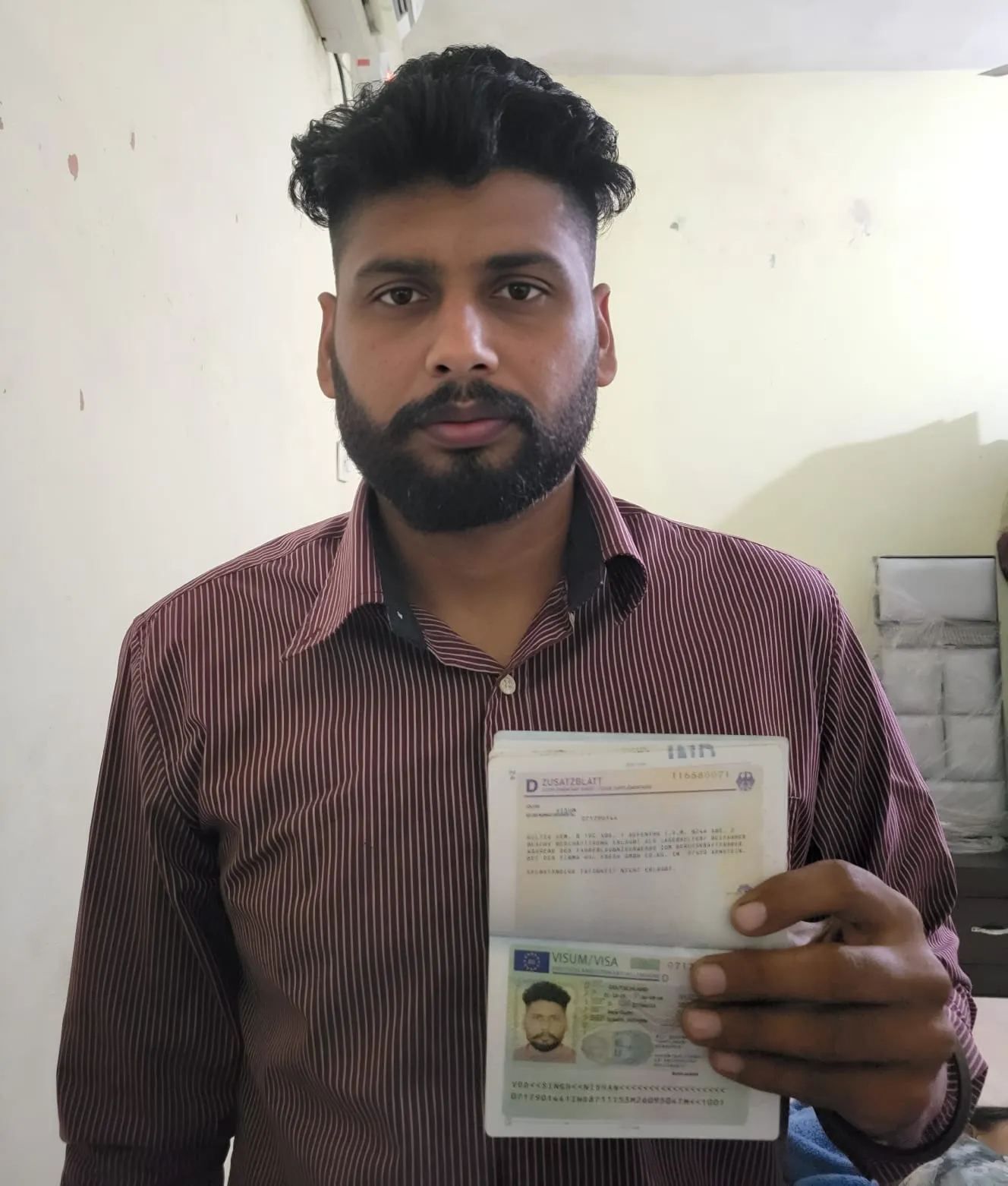
At AtoZ Serwis Plus, we help you become a global citizen with trusted support for jobs abroad, overseas education, and visa processing tailored to your goals.
Read More
Connecting employers, job seekers, students, and agencies across Europe and beyond.
Looking to hire skilled or semi-skilled workers from Asia, Africa, the CIS, or EU countries? AtoZ Serwis Plus supports your recruitment needs for Poland, Germany, Slovakia, Hungary, Lithuania, Estonia, and beyond. We deliver comprehensive legal recruitment services, visa support, and seamless onboarding solutions tailored to your business goals. Partner with us to build a reliable, compliant, and efficient workforce.
EmployerLooking to hire skilled or semi-skilled workers from Asia, Africa, the CIS, or EU countries? AtoZ Serwis Plus supports your recruitment needs for Poland, Germany, Slovakia, Hungary, Lithuania, Estonia, and beyond. We deliver comprehensive legal recruitment services, visa support, and seamless onboarding solutions tailored to your business goals. Partner with us to build a reliable, compliant, and efficient workforce.
Job SeekersAre you a recruiter looking to place workers in Poland, Germany, Slovakia, or other EU destinations? AtoZ Serwis Plus provides you with trusted employer connections, legal recruitment solutions, verified job placements, and full visa assistance. Expand your recruitment business with confidence, supported by clear processes, reliable documentation, and transparent migration services.
RecruiterLooking to work and live in Europe? At AtoZ Serwis Plus, we’re here to guide you every step of the way. Our experts provide support with job search assistance, work visa applications, qualification recognition, and European language learning. To connect with us and get started on your European journey, click one of the contact icons below.
Copyright © 2009-2026 AtoZ Serwis Plus. All Rights Reserved.