Switzerland's financial services, pharmaceutical, medtech, precision engineering, logistics, and research organisations are expanding across Zurich, Geneva, Basel, Bern, Lausanne, Zug, and the Leman Arc, creating strong and sustained demand for skilled IT professionals and software specialists. As one of the world's most innovative and prosperous economies — consistently topping the Global Innovation Index — and home to major technology and industrial groups including ABB, Roche, Novartis, Nestlé, UBS, Credit Suisse (now integrated into UBS), Zurich Insurance, the Google EMEA engineering hub, and a rapidly growing startup ecosystem, Switzerland requires experienced technology professionals capable of designing, building, securing, and maintaining complex digital infrastructure, financial systems, life-sciences software, and innovative technology products in one of the world's most technically demanding and highest-compensating professional environments.
From software development and cloud engineering to cybersecurity, data science, regulatory technology, clinical data systems, fintech platform engineering, DevOps, and digital transformation consulting, organisations across Switzerland rely on qualified technology professionals who understand modern development frameworks, Swiss and EU data-protection requirements (nDSG/GDPR), the multilingual working environment of Swiss business, and the precision and quality standards that define Swiss professional culture. Whether for global pharmaceutical companies in Basel, private banks and wealth managers in Geneva and Zurich, engineering groups in Zurich and Baden, life-sciences digital infrastructure providers along the Leman Arc, or the Zug Crypto Valley fintech and blockchain ecosystem, demand for capable IT talent consistently outpaces supply at every level.
AtoZ Serwis Plus provides specialised IT and software recruitment services in Switzerland, helping employers hire qualified software developers, cloud engineers, cybersecurity specialists, data professionals, IT infrastructure technicians, clinical data systems engineers, and digital transformation consultants from trusted international labour markets. Our recruitment solutions support pharmaceutical companies, financial institutions, engineering groups, medtech organisations, consulting firms, and technology companies in building reliable and capable technology teams.
Our recruitment strategy aligns with Switzerland's world-leading pharmaceutical and life-sciences digital infrastructure market, its dominant private banking and wealth management technology requirements, the engineering software demands of its precision-manufacturing and industrial groups, and the growing Zurich and Geneva startup and innovation ecosystems. We provide access to skilled international technology professionals while ensuring structured, compliant hiring processes within Switzerland's unique permit framework.
Key strengths
Our services help Swiss employers access specialised technology talent that is structurally scarce in Switzerland's highly competitive labour market, and build stable long-term technology teams.
AtoZ Serwis Plus recruits qualified professionals for a wide range of IT and software roles in Switzerland:
These professionals support pharmaceutical software validation, financial platform engineering, digital transformation programmes, and technology infrastructure management across Switzerland's public and private sectors.
Our IT and software recruitment services support the key sectors of Switzerland's economy:
Each candidate is carefully matched based on employer requirements, technology stack, project type, and language proficiency appropriate to the employer's working environment — which may be German, French, Italian, or English depending on the region and organisation.
AtoZ Serwis Plus sources qualified IT and software professionals from trusted international labour markets to meet Switzerland's technology workforce demand.
All candidates are screened based on:
Our candidates meet the high technical and professional standards required in Switzerland's exceptionally quality-focused and internationally oriented technology market.
This ensures faster time-to-productivity, reduced onboarding friction, and high-quality technology output for Swiss employers.
We follow a structured and transparent recruitment process:
This ensures smooth hiring and compliance with Swiss labour regulations, the Obligationenrecht (employment law provisions), the Ausländer- und Integrationsgesetz (AIG), and applicable Gesamtarbeitsverträge (collective labour agreements).
Whether organisations require software developers for product engineering, clinical data systems engineers for GxP-compliant pharmaceutical platform development, cloud engineers for financial infrastructure migration, cybersecurity specialists for FINMA-compliant programmes, fintech engineers for blockchain or payments platform development, or IT infrastructure technicians for enterprise operations, AtoZ Serwis Plus provides skilled professionals ready to contribute from day one across Switzerland.
We are a trusted recruitment partner for IT and software jobs in Switzerland, delivering technology workforce solutions aligned with the specific demands of this exceptional technology and financial centre.
Employers in Switzerland can register to hire experienced technology professionals.
Employer benefits
https://www.atozserwisplus.com/employer/registration
Recruitment agencies can collaborate on IT and software workforce projects in Switzerland.
Recruiter benefits
https://www.atozserwisplus.com/recruiter/registration
Qualified IT and software professionals seeking job opportunities in Switzerland can register and apply.
Worker benefits
https://www.atozserwisplus.pl/work-in-europe
Registration ensures:
Switzerland offers exceptional employment opportunities for software developers, cloud engineers, pharmaceutical validated-systems specialists, cybersecurity professionals, fintech engineers, data scientists, and IT infrastructure technicians. The combination of the world's highest technology salaries, a three-tier tax system that is moderate by international standards in many cantons, world-class pharmaceutical and financial employers, Google's EMEA engineering hub in Zurich, the Zug Crypto Valley, and an extraordinary quality of life in one of the world's safest and most beautiful environments makes Switzerland one of the most compelling technology employment destinations on earth. IT professionals who combine genuine technical depth with realistic expectations about Switzerland's language requirements, high cost of living, and relatively structured immigration process are exceptionally well-positioned in this demanding and richly rewarding market.
AtoZSerwisPlus is a European workforce and immigration advisory platform specialising in compliant recruitment guidance, structured work authorisation support, and labour market insights across European countries.
Swiss Confederation – https://www.admin.ch
State Secretariat for Migration (SEM) – https://www.sem.admin.ch
SECO (State Secretariat for Economic Affairs) – https://www.seco.admin.ch
Switzerland Global Enterprise – https://www.s-ge.com
This content is independently created and provided for informational purposes only. It does not constitute legal advice, employment guarantees, or immigration approval. All recruitment and work authorisation decisions are subject to Swiss labour laws, cantonal regulations, and approval by competent authorities.
It involves sourcing and placing qualified technology professionals — software developers, cloud engineers, pharmaceutical validated-systems specialists, cybersecurity analysts, fintech and blockchain engineers, data scientists, DevOps engineers, and IT infrastructure technicians — with Swiss employers across pharmaceutical companies, private banks, insurance groups, engineering firms, technology companies, and the public sector. Switzerland offers the highest technology salaries in Europe, a uniquely rich set of world-class employers, and a distinctive combination of pharmaceutical, financial, and industrial technology demand that is unlike any other European market.
Switzerland consistently tops the Global Innovation Index and has a domestic STEM education system — anchored by ETH Zurich and EPFL Lausanne, two of the world's top technical universities — that produces exceptional graduates but nowhere near enough of them for combined demand. The pharmaceutical sector alone — Roche, Novartis, Lonza, Sandoz — is one of the most IT-intensive industries in the world, requiring large numbers of GxP-validated systems engineers, clinical data platform developers, and regulatory technology specialists. The financial sector in Zurich and Geneva requires fintech engineers, cybersecurity specialists, and data architects. Google's EMEA engineering hub in Zurich competes with Swiss employers for the same talent. The result is a structural shortfall that international recruitment partially but not fully addresses.
No. Switzerland is not a member of the EU or the EEA. It has a bilateral agreement with the EU — the Agreement on the Free Movement of Persons (AFMP / FZA — Freizügigkeitsabkommen) — which grants EU/EEA nationals the right to live and work in Switzerland on broadly equivalent terms to Swiss nationals, subject to registration. This Agreement is a cornerstone of Swiss-EU relations, although it has been subject to periodic political uncertainty. Non-EU/EEA nationals are subject to annual quotas (Kontingente) and a more demanding admissions process, making Switzerland's immigration framework more restrictive for non-EU candidates than most EU member states.
EU/EEA nationals working in Switzerland under the AFMP require a residence permit but no separate work permit. The permit type depends on the employment duration: the L permit (Kurzaufenthaltsbewilligung) is for stays of up to one year; the B permit (Aufenthaltsbewilligung) is for stays of one to five years and is renewable; the C permit (Niederlassungsbewilligung) is a permanent settlement permit granted after five or ten years of legal residence depending on nationality. Applications are processed by the cantonal Migrationsamt (migration office) where the employer is based. In practice, B permit applications for EU/EEA nationals with confirmed employment are processed within 2–4 weeks.
Non-EU/EEA nationals face a more restrictive process. Switzerland applies annual federal quotas (Höchstzahlen) for non-EU/EEA L and B permits — a fixed number of permits is available nationally each year for non-EU workers, allocated among the cantons. The employer must apply to the cantonal Migrationsamt, demonstrating that no suitable Swiss, EU/EEA candidate was available (Inländervorrang — domestic priority rule). The application is reviewed by the cantonal authorities and, for B permits, by the State Secretariat for Migration (SEM). For highly skilled IT professionals — particularly those filling demonstrated shortage roles — applications are generally supported, but the quota system means that timing and advance planning are essential. Processing takes 6–12 weeks in most cantons.
A relevant university degree — ideally from a recognised Hochschule (university of applied sciences), Universität, or international institution of recognised standing — is expected for most professional IT roles. For pharmaceutical and medtech roles, additional knowledge of GxP (Good Practice) regulations — GMP (Good Manufacturing Practice), GCP (Good Clinical Practice), and the relevant 21 CFR Part 11 and EU Annex 11 computer-system validation frameworks — is practically essential and differentiates candidates significantly. For fintech and blockchain roles, relevant certifications (Certified Blockchain Professional, AWS Cloud Practitioner, Ethereum developer credentials) supplement core software skills. FINMA familiarity — the Swiss financial markets supervisory authority — is valued for financial-sector cybersecurity and compliance technology roles.
Java and Python are the most broadly in-demand languages, used across pharmaceutical clinical data systems, financial services platforms, and enterprise applications. Scala is widely used in data engineering and financial trading systems. JavaScript and TypeScript cover frontend and full-stack development. C++ and C# feature in industrial and embedded contexts at ABB, Georg Fischer, and Swiss engineering groups. For pharmaceutical roles, R is essential for biostatistics and clinical data analysis. For blockchain and crypto roles in Zug Crypto Valley, Solidity (Ethereum), Rust, and Go are relevant. Cloud platforms — AWS (dominant in pharma and fintech), Azure (enterprise and public sector), and GCP (Google Zurich influence) — drive DevOps and infrastructure demand. Veeva Vault, Medidata Rave, and Palantir experience commands significant premiums in pharmaceutical and clinical-data contexts.
Switzerland offers the highest IT salaries in Europe. Software developers typically earn CHF 110,000 to CHF 160,000 per year gross. Senior engineers, cloud architects, pharmaceutical validated-systems specialists, and data scientists earn CHF 140,000 to CHF 210,000 and above. Zurich pays the highest premiums — typically 10–20% above Basel and Geneva for comparable roles. Switzerland's three-tier tax system (federal, cantonal, and communal) means effective rates vary significantly by canton: Zug has the lowest combined effective rates (approximately 12–18% for most IT salary levels), while Bern and Geneva have higher rates (approximately 25–35%). The cost of living in Zurich and Geneva is among the highest in the world — but after accounting for tax levels and public services, the net purchasing power of Swiss IT salaries is genuinely exceptional.
Switzerland's Quellensteuer (withholding tax) or standard Veranlagung (assessment) system applies three layers of income tax: federal (Direkte Bundessteuer — flat progressive rates up to 11.5%), cantonal, and communal taxes. The combined effective rate varies dramatically by canton and municipality. Zug — home to many international holding companies and the Crypto Valley — has combined effective rates of approximately 12–18% for typical IT incomes. Schwyz, Nidwalden, and Uri are also low-tax. Zurich's effective combined rate for a developer earning CHF 150,000 is approximately 22–28%. Geneva — benefiting from its international organisation environment — is approximately 30–35%. Understanding the canton-level variation is important for IT professionals evaluating offers from employers in different Swiss cities, as the difference in take-home pay between a Zug-based and Geneva-based role at the same gross salary can be substantial.
Switzerland has four national languages — German (Deutsch / Schweizerdeutsch dialect), French, Italian, and Romansh — and their relevance depends entirely on the region and employer. Zurich and German-speaking Switzerland: German is the working language for most Swiss-origin employers, public-sector roles, and industrial companies. English is used extensively in international companies (Google, major banks, pharmaceutical multinationals) and is sufficient for many roles in Zurich's international technology environment. Geneva and French-speaking Switzerland (Romandy): French is the working language for local employers, international organisations, and most professional environments; English is used in multinational and EU institution contexts. Basel: strongly German-dominant, though the pharmaceutical multinationals operate largely in English. The Leman Arc (Lausanne, Sion) corridor: French-dominant. For most international IT professionals, English alone provides access to international employers across all regions; German (B2+) opens the full German-Swiss market; French (B2+) opens Romandy.
Google's Zurich engineering centre is the company's largest engineering hub outside the United States and is the primary engineering base for many of Google's core products, including Search, Maps, and YouTube infrastructure. It employs several thousand engineers, making it one of the largest technology employers in Switzerland and a major reference point for salary benchmarking across the Swiss technology market. Google Zurich's compensation — which includes equity — sets a ceiling for Swiss IT salaries that influences what other Swiss employers must pay to compete. The presence of Google, alongside Facebook's Zurich office, Twitter's research centre, and other major technology companies, anchors a premium technology employment cluster in Zurich's Hürlimann Areal and surrounding districts.
Zug, a small canton 30 minutes south of Zurich, has become the world's leading blockchain and crypto-asset regulation hub — known as Crypto Valley. Switzerland's progressive regulatory framework under the DLT (Distributed Ledger Technology) Act, FINMA's early guidance on ICOs and digital assets, and Zug's favourable tax rates have attracted over 1,000 blockchain and crypto companies, including the Ethereum Foundation (originally), Cardano Foundation, Tezos, Polkadot, and major crypto-asset firms including Bitcoin Suisse, SEBA Bank, and Sygnum. This creates distinctive demand for Solidity and Rust smart-contract developers, blockchain infrastructure engineers, DeFi platform developers, crypto custody system architects, and regulatory technology specialists familiar with Swiss FINMA digital-asset rules — a niche that is globally in acute shortage.
GxP (Good Practice) regulations govern the development, manufacture, and documentation of pharmaceutical products, clinical trials, and laboratory processes. For IT professionals in Swiss pharmaceutical companies — Roche, Novartis, Lonza, Sandoz — computer system validation (CSV) is a mandatory regulatory requirement: any software that impacts product quality, patient safety, or data integrity must be formally validated to GAMP 5 (Good Automated Manufacturing Practice) standards, compliant with EU Annex 11 and 21 CFR Part 11 (FDA). This creates a large and persistent demand for IT professionals with GxP validation experience — validation engineers, QA specialists for IT systems, clinical data management platform developers, and laboratory information management system (LIMS) administrators — who understand the intersection of pharmaceutical regulation and software development. These profiles command significant salary premiums over equivalent general software roles.
Switzerland has its own data-protection law — the nDSG (neues Datenschutzgesetz — new Federal Act on Data Protection), which entered into force on 1 September 2023. The nDSG is substantially aligned with the EU GDPR in principles, structure, and rights — reflecting Switzerland's effort to maintain EU data-protection adequacy status. The FDPIC (Federal Data Protection and Information Commissioner — Eidgenössischer Datenschutz- und Öffentlichkeitsbeauftragter / EDÖB) is the national supervisory authority. For pharmaceutical and financial-sector IT roles, additional data-protection requirements apply under Swiss banking secrecy law (Bankengesetz) and pharmaceutical GxP regulations. IT professionals in Switzerland are expected to understand both the nDSG's Swiss-specific provisions and its alignment with GDPR, particularly for roles that involve data flows between Switzerland and EU member states.
Standard working hours in Switzerland are typically 42–45 hours per week contractually — higher than in most EU countries, reflecting Swiss working culture. Annual leave is a statutory minimum of four weeks, with most professional employers providing five weeks. Overtime is compensated in accordance with the employment contract and the applicable Gesamtarbeitsvertrag (GAV — collective labour agreement) or as time off in lieu. SUVA (Schweizerische Unfallversicherungsanstalt) provides mandatory workplace-accident insurance. AHV/IV/EO (Alters- und Hinterlassenenversicherung / Invalidenversicherung / Erwerbsersatzordnung) pension and social-insurance contributions are shared between employer and employee. The Swiss working culture is precise, quality-focused, and professional — with high expectations of reliability, punctuality, and thorough documentation.
Zurich is the dominant technology hub — home to Google, the major banks and insurers, ABB, and the largest concentration of software product companies, consulting firms, and startups. Basel is the pharmaceutical technology centre — Roche, Novartis, Sandoz, and their digital health and validated-systems operations. Geneva and Lausanne (the Leman Arc) host international organisations, pharmaceutical companies, and a growing startup ecosystem in healthtech and sustainability technology. Zug is the Crypto Valley blockchain hub. Bern has federal government IT and public administration digital transformation. The ETH Zurich campus in the Zurich Zentrum and the EPFL campus in Lausanne are adjacent to major technology employers and spin-out ecosystems.
Yes. Swiss employment law (Obligationenrecht, Art. 319–362) provides for both fixed-term and indefinite-duration contracts. Indefinite contracts are the standard form in Swiss IT. Swiss dismissal law is relatively employer-friendly compared to Germany or France — notice periods are typically one to three months depending on length of service, without the requirement for socially justified grounds after a certain tenure. The Swiss system relies on individual contract provisions and, where applicable, collective agreement terms for additional protections. Probationary periods of one to three months are standard.
Yes. EU/EEA permit holders can bring family members under the AFMP family reunification provisions — spouses and registered partners receive their own residence permit and full labour-market access. Non-EU/EEA permit holders must apply for family reunification through the cantonal Migrationsamt, which assesses adequate housing and financial means. Switzerland's exceptional public safety, high-quality education system (including international schools in Zurich, Geneva, and Basel), and extraordinary natural environment make it highly attractive for families, despite the very high cost of living — particularly for housing in Zurich and Geneva.
Yes — and it is among the most acute in Europe. ICTswitzerland (the Swiss ICT industry association) estimates a structural shortage of over 30,000 IT professionals in Switzerland, a figure that grows each year as digital transformation deepens across pharmaceutical, financial, industrial, and public sectors. Switzerland's non-EU immigration quota system further constrains the volume of internationally recruited talent that can be admitted annually, meaning that despite the shortage, the supply of non-EU professionals is structurally limited. This makes early engagement with Swiss employers and the permit process essential for international IT professionals targeting the Swiss market.
AtoZ Serwis Plus sources and screens international IT and software professionals for verified Swiss employers across pharmaceutical and life sciences, financial services, engineering, blockchain, and technology companies. We conduct technical screening aligned with employer requirements — including GxP pharmaceutical validation, fintech, and FINMA-compliance knowledge where relevant — verify qualifications and project experience, assess German and French language proficiency for the appropriate Swiss region, and manage the cantonal Migrationsamt permit process for EU/EEA and non-EU candidates. We give particular attention to sourcing candidates with GxP validated-systems or Swiss financial-sector experience, which are the most acute shortage profiles in the Swiss IT market. Register at atozserwisplus.com to begin.
Global clients share how AtoZ Serwis Plus helped them secure work permits, visas, and career support across Europe. Real stories. Real results.
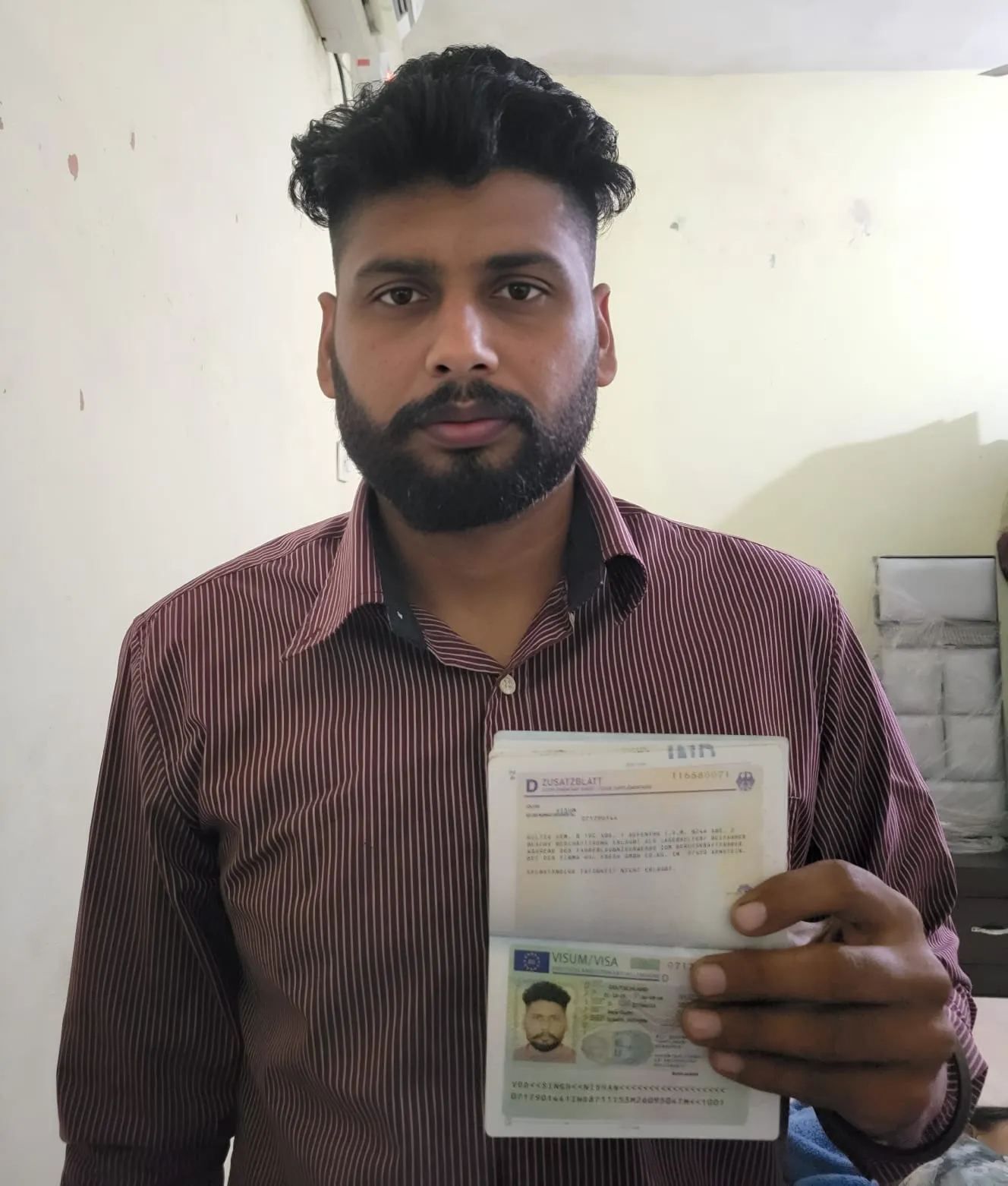
At AtoZ Serwis Plus, we help you become a global citizen with trusted support for jobs abroad, overseas education, and visa processing tailored to your goals.
Read More
Connecting employers, job seekers, students, and agencies across Europe and beyond.
Looking to hire skilled or semi-skilled workers from Asia, Africa, the CIS, or EU countries? AtoZ Serwis Plus supports your recruitment needs for Poland, Germany, Slovakia, Hungary, Lithuania, Estonia, and beyond. We deliver comprehensive legal recruitment services, visa support, and seamless onboarding solutions tailored to your business goals. Partner with us to build a reliable, compliant, and efficient workforce.
EmployerLooking to hire skilled or semi-skilled workers from Asia, Africa, the CIS, or EU countries? AtoZ Serwis Plus supports your recruitment needs for Poland, Germany, Slovakia, Hungary, Lithuania, Estonia, and beyond. We deliver comprehensive legal recruitment services, visa support, and seamless onboarding solutions tailored to your business goals. Partner with us to build a reliable, compliant, and efficient workforce.
Job SeekersAre you a recruiter looking to place workers in Poland, Germany, Slovakia, or other EU destinations? AtoZ Serwis Plus provides you with trusted employer connections, legal recruitment solutions, verified job placements, and full visa assistance. Expand your recruitment business with confidence, supported by clear processes, reliable documentation, and transparent migration services.
RecruiterLooking to work and live in Europe? At AtoZ Serwis Plus, we’re here to guide you every step of the way. Our experts provide support with job search assistance, work visa applications, qualification recognition, and European language learning. To connect with us and get started on your European journey, click one of the contact icons below.
Copyright © 2009-2026 AtoZ Serwis Plus. All Rights Reserved.